Introduction
Planning a trip to Amaravati? If you think this historic region is just a standard transit point, think again. Nestled on the scenic banks of the pristine Krishna River, Amaravati is a vibrant cultural powerhouse that smoothly bridges the gap between deep-rooted spiritual heritage and peaceful natural landscapes. While many parts of coastal India draw crowds for beach nightlife or modern skyscrapers, Amaravati calls out to travelers looking for something far more meaningful. It is a destination where ancient stone walls tell tales of ancient dynasties, majestic river views soothe the mind, and local culinary traditions excite the senses.
Whether you are coordinating a peaceful family vacation, a romantic couple’s getaway, a budget-conscious backpacking trail, or an independent solo expedition, centering your exploration around the iconic Amaralingeswara Temple opens up an incredible itinerary. This strategic Amaravati travel guide reveals the top experiences waiting for you just a stone’s throw from the holy temple town. Discover how to dive beneath the surface of this historic riverfront paradise to plan an unforgettable trip.
Why Amaravati is a Must-Visit City
Amaravati holds a rare position in India’s historical landscape as a sacred meeting ground for two major world religions: Hinduism and Buddhism. For centuries, it flourished under the patronage of mighty empires like the Satavahanas and Ikshvakus, leaving behind architectural wonders that continue to leave global travelers spellbound.
Unlike hectic metropolitan hubs, this beautifully planned riverfront city seamlessly balances historic architecture with open, green spaces. Over half of the wider regional plan prioritizes lush parks and public waterfront layouts. This deliberate focus makes it remarkably clean, breezy, and incredibly easy to navigate. From the towering, sacred Shivalinga of the Pancharama Kshetra to the massive monuments celebrating the teachings of the Buddha, every corner provides a refreshing break from modern hustle. It is an ideal, budget-friendly weekend escape that satisfies history buffs, nature enthusiasts, and food lovers alike.
Best Places or Experiences
To get the most out of your visit, focus on these incredible landmarks and sensory experiences located around the immediate vicinity of the holy temple.
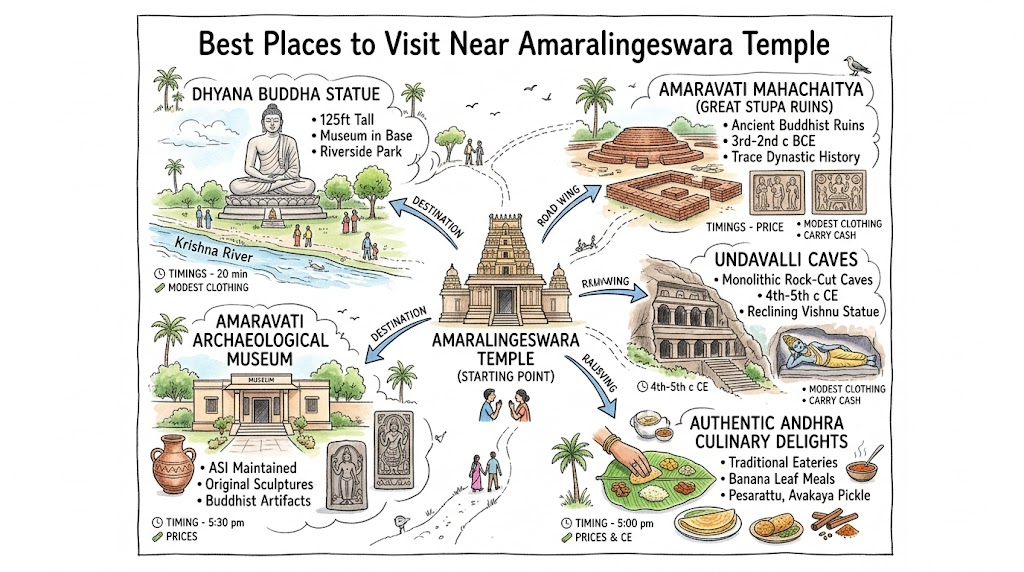
1. The Dhyana Buddha Statue
Location
Situated directly on the scenic banks of the Krishna River, sprawling across a beautifully manicured 4.5-acre green park complex in Amaravati Village. It is located just a quick 5-minute drive from the main Amaralingeswara Temple entrance.
- Why it is worth visiting: Standing at a towering height of 125 feet (38 meters), this is one of the tallest and most visually striking statues of Lord Buddha in a meditative posture across India. The structure sits elegantly facing the river, creating a stunning visual profile. The massive pedestal beneath the statue houses a three-tiered museum filled with intricate relief sculptures depicting ancient Buddhist art themes.
- Best things to do: Walk through the beautifully landscaped riverside gardens, explore the inner museum galleries underneath the statue structure, and practice quiet meditation in the designated seating zones to absorb the peaceful energy of the site.
- Best time to visit: Late afternoon between 4:00 PM and 6:00 PM. The soft, setting sun reflects beautifully off the concrete structure, and the riverside breeze keeps the open complex cool.
- Ideal for whom: Families seeking peaceful walkways, spiritual seekers, solo travelers looking to meditate, and photography enthusiasts chasing majestic golden hour frames.
- Travel tip: Remember to take off your footwear before climbing up onto the main concrete viewing decks surrounding the base of the statue out of respect for local customs.
2. Amaravati Mahachaitya (The Great Stupa Ruins)
Location
Conveniently located within Amaravati Village limits, less than 1 kilometer from the primary local bus station and a very short walk from the temple complex.
- Why it is worth visiting: Dating all the way back to the 3rd and 2nd centuries BCE during the historic reign of Emperor Ashoka, this archaeological site preserves the footprint of what was once one of the grandest Buddhist monuments in ancient India. While the primary marble railings and decorative panels have been carefully relocated to regional museums, walking through the foundational brick ruins lets you trace centuries of Satavahana and Ikshvaku imperial history.
- Best things to do: Walk along the circular brick pathways, read the detailed archaeological info plaques scattered around the site, and observe the scale of ancient Indian stone engineering up close.
- Best time to visit: Early morning between 8:00 AM and 10:00 AM before the sun gets too intense, as the entire archaeological excavation compound is completely open to the sky.
- Ideal for whom: History buffs, backpacking students, heritage researchers, and families looking for educational travel experiences.
- Travel tip: Consider hiring a verified local guide at the entry gate. Their deep storytelling brings these ancient, weather-worn foundational stones to life with historical context.
3. Amaravati Archaeological Museum
Location
Positioned directly opposite the ancient Mahachaitya Stupa grounds on the main Guntur–Amaravathi Road, roughly 1 kilometer from the temple.
- Why it is worth visiting: Maintained with great care by the Archaeological Survey of India (ASI), this three-gallery repository preserves the original artifacts unearthed from the surrounding 2000-year-old Buddhist settlements. It features stunning Purnakumbha designs, ornate lotus motifs, limestone panels, and ancient carvings that reveal the magnificent artistic skill of early Indian craftsmen.
- Best things to do: Marvel at the intricately carved stone drum slabs, view ancient monetary coins, and study the detailed descriptions tracking the evolution of the distinct Amaravati school of art.
- Best time to visit: Mid-day between 11:30 AM and 2:30 PM. It serves as an air-conditioned sanctuary to escape the heat while continuing your exploration.
- Ideal for whom: Art lovers, curious students, solo backpackers, and families traveling with children.
- Travel tip: Backpacks, large travel bags, and professional camera gear are not allowed inside the galleries. Use the secure locker facilities located at the main ticket counter.
4. The Undavalli Caves
Location
Located in Undavalli Village, sitting approximately 25 kilometers east of the Amaralingeswara Temple, right along the route linking the temple town to Vijayawada city.
- Why it is worth visiting: Cut out of solid sandstone hillsides between the 4th and 5th centuries CE, these spectacular monolithic rock-cut caves stand as a triumph of ancient Indian architecture. The highlight is the massive four-story structure that houses a monumental, 5-meter-long reclining statue of Lord Anantha Padmanabha Swamy sculpted skillfully out of a single granite block on the third floor.
- Best things to do: Climb the stone steps to explore each individual rock-cut level, examine the hidden carvings of lions and elephants along the pillars, and step out onto the upper balconies for a panoramic view of the green fields bordering the Krishna River.
- Best time to visit: Morning from 9:00 AM to 11:30 AM. The sunlight illuminates the inner chambers beautifully, making it easier to see the details of the ancient carvings.
- Ideal for whom: Adventure seekers, architecture enthusiasts, couples looking for scenic views, and solo travelers.
- Travel tip: Watch your step on the upper levels. The ancient stone staircases can be quite steep and narrow, so wearing sturdy walking shoes with good grip is highly recommended.
5. Tasting Authentic Andhra Culinary Delights
Location
Found along the bustling local market streets directly surrounding the outer car parking zones of the Amaralingeswara Temple.
- Why it is worth visiting: Food is an essential window into the local culture. The traditional eateries around the temple serve up unforgettable, authentic Andhra vegetarian meals and breakfasts. This is the place to try traditional culinary treats prepared using generational regional recipes.
- Best things to do: Sit down for a classic lunch served on a fresh banana leaf, sample local favorites like Pesarattu (savory green gram crepes), and try Avakaya (the famous fiery local mango pickle) paired with hot rice and ghee.
- Best time to visit: Stop by between 7:30 AM and 9:30 AM for a hot breakfast after morning temple prayers, or between 12:30 PM and 2:30 PM for a traditional lunch thali.
- Ideal for whom: Foodies, backpackers looking for affordable local meals, and families who love traditional food.
- Travel tip: If you have a lower tolerance for chili heat, explicitly ask the server for “less spicy” options or request extra curd to help cool things down.
Practical Travel Metrics & Guidance
To make your trip smooth and stress-free, here is a quick overview of what to expect regarding costs, transport, and planning:
- Entry Fees & Timings:
- Amaralingeswara Temple: Open 6:00 AM – 1:00 PM & 4:00 PM – 8:00 PM. Free entry.
- Dhyana Buddha Statue: Open 8:00 AM – 6:00 PM. INR 20 per person.
- Amaravati Mahachaitya: Open 9:00 AM – 6:00 PM (Closed on Fridays). INR 20 for Indians / INR 250 for Foreign Nationals.
- Archaeological Museum: Open 10:00 AM – 5:00 PM (Closed on Fridays). INR 5 per person.
- Undavalli Caves: Open 9:00 AM – 6:00 PM. INR 25 per person.
- Local Transport Options: Auto-rickshaws are widely available near the temple gate for quick trips within the village. For a full day of exploring nearby spots like the Undavalli Caves, hiring a local taxi from Guntur or Vijayawada is the most comfortable and reliable choice.
- Budget Planning: Amaravati is an incredibly budget-friendly destination. A budget of INR 1,500 – 2,500 per day comfortably covers your meals, local transport, and monument entry tickets for a small family or group.
- Safety Tips: The town is very safe and welcoming for solo travelers and families. Since you will be spending time near the Krishna River, always stay behind designated safety barricades and avoid swimming in the river, as undercurrents can be unpredictably strong.
Travel Planning Tips for Amaravati
- Book stays early during peak festival seasons: If your trip coincides with major festivals like Maha Shivaratri or special Buddhist holidays, secure your accommodation weeks in advance, as local guesthouses fill up rapidly.
- Rent vehicles only with proper documentation: If you rent a scooter or car from Vijayawada or Guntur, ensure you have a valid driving license and all official vehicle registration papers handy for routine transport checkpoints.
- Respect water safety regulations along the river: Enjoy the gorgeous river views from the banks, but stay clear of deep waters. Never enter unmonitored sections of the riverbank.
- Avoid isolated historic sites late at night: Stick to well-lit public temple areas or busy village markets once darkness sets in. Avoid walking through isolated archaeological zones late at night.
- Carry cash for local markets: While digital UPI payments are common in larger stores, carry physical cash for small auto-rickshaw rides, entry tickets, and buying fresh produce or handicrafts from local street vendors.
- Check weather conditions beforehand: The summer months (March to May) can bring intense heat. Plan your outdoor exploration for the cooler winter season between October and February for a much more comfortable experience.
- Respect local culture and traditions: When visiting active religious sites like the Amaralingeswara Temple, dress modestly (covering shoulders and knees) and follow all local guidelines regarding photography restrictions.
- Keep heritage sites clean: Show respect for these ancient landmarks by disposing of trash only in designated bins. Help preserve these historic spaces for future travelers.
Common Mistakes to Avoid
- Rushing through the town on a rushed itinerary: Many tourists make the mistake of allocating just an hour or two for a quick temple visit before leaving. Amaravati deserves a slow, deliberate pace to properly appreciate its layered history and peaceful riverside atmosphere.
- Overpaying for local transport rentals: Always clarify and agree on a final price with auto-rickshaw drivers before getting into the vehicle, or use reliable ride-hailing apps when booking from nearby cities to ensure fair pricing.
- Skipping the incredible regional food: Don’t rely solely on familiar hotel room service or fast food chains. Step out to try the authentic local breakfast stalls and traditional vegetarian mess halls around the temple area.
- Neglecting the rich Buddhist heritage: Some travelers visit solely for the Hindu pilgrimage sites, missing out on the world-class Buddhist stupas and museums located just down the street. Make sure your itinerary balances both facets of the city’s unique history.
Suggested Amaravati Itinerary Angle
Here is how you can easily fit these top regional attractions into your upcoming travel plans:
1-Day Express Plan
- Morning: Arrive early to attend the peaceful morning prayers at the Amaralingeswara Temple. Walk over to explore the ancient ruins of the Amaravati Mahachaitya Stupa while the morning weather is cool.
- Mid-day: Visit the Amaravati Archaeological Museum to view the ancient carvings up close, followed by an authentic Andhra banana-leaf lunch nearby.
- Afternoon: Spend your late afternoon wandering through the tranquil park grounds surrounding the massive Dhyana Buddha Statue, capturing stunning photos as the sun goes down over the river.
2-Day Extended Exploration Plan
- Day 1: Follow the complete 1-Day Express Plan outlined above to immerse yourself fully in the rich history of Amaravati Village.
- Day 2: Head out of the main village to explore the magnificent, four-story rock-cut Undavalli Caves. In the afternoon, take a relaxing boat ride out to nearby Bhavani Island or visit the majestic Mangalagiri Temple known for its unique traditions.
Weekend Travel Plan
- Friday Evening: Arrive at your hotel, settle in, and enjoy a relaxed dinner featuring local culinary specialties.
- Saturday: Dedicate your full day to the core landmarks of Amaravati—the Amaralingeswara Temple, the Great Stupa ruins, the museum, and the majestic Dhyana Buddha Statue.
- Sunday: Take a scenic morning drive out to see the incredible rock-cut architecture at the Undavalli Caves, do some souvenir shopping for traditional local handicrafts, and head home feeling completely refreshed.
FAQs
1. Where is the Amaralingeswara Temple located?
The temple is beautifully situated on the southern banks of the Krishna River in the historic Amaravati village, located within the Guntur district of Andhra Pradesh, India.
2. Why is the Amaralingeswara Temple famous?
It is deeply revered as one of the sacred Pancharama Kshetras—five ancient temples dedicated to Lord Shiva across Andhra Pradesh. It features a unique, 15-foot-tall white marble Shiva Lingam that draws pilgrims from all over the country.
3. What is the best time of year to visit Amaravati?
The winter season, spanning from October to February, is the absolute best time to visit. The weather stays pleasant and cool, making it perfect for walking around the outdoor archaeological sites.
4. Are there entry fees for the major monuments near the temple?
The Amaralingeswara Temple is completely free to enter. Nearby historical spots like the Dhyana Buddha Statue and the Mahachaitya Stupa charge a very nominal maintenance fee of around INR 20 for domestic visitors.
5. Can we visit both the Hindu and Buddhist sites in a single day?
Yes, absolutely! The Amaralingeswara Temple, the Great Stupa ruins, the Archaeological Museum, and the Dhyana Buddha Statue are all located within a 1.5-kilometer radius, making it incredibly easy to see them all in one day.
6. Is Amaravati a family-friendly destination?
Yes, it is excellent for families. The spacious, green parks around the Dhyana Buddha Statue provide plenty of open space for kids to stretch their legs, while the ancient ruins and museums offer fantastic educational experiences.
7. What are the best local transport options within the town?
Local auto-rickshaws are readily available and highly convenient for moving between attractions inside the village. For longer day trips out to the caves, booking a private taxi is your best option.
8. What should I wear when visiting the temple?
Visitors should wear modest, respectful clothing. It is best to choose outfits that cover both your shoulders and knees. Remember that footwear must be taken off before entering the temple compound.
9. Are there good accommodation options near the temple?
Amaravati village offers several clean, budget-friendly guesthouses and pilgrim amenities. For a wider selection of premium or luxury hotels, many travelers choose to stay in the nearby cities of Vijayawada or Guntur, which are just a 45-minute drive away.
10. Is it safe to swim in the Krishna River near the temple?
No, swimming is highly discouraged. While the river look calm from the banks, certain stretches have very strong, unpredictable undercurrents. Stick to enjoying the beautiful views from the safety of the steps along the designated ghats.
Conclusion
Amaravati is far more than a standard destination; it is an enriching travel experience where history, spirituality, and beautiful riverside nature come together perfectly. By planning your journey around the historic Amaralingeswara Temple, you can easily experience both profound sacred traditions and spectacular ancient architecture in a single, stress-free trip. From the detailed rock-cut engineering of the Undavalli Caves to the peaceful presence of the Dhyana Buddha Statue, this region rewards travelers who choose to slow down and explore intentionally.
