Introduction
Tired of commercialized holiday circuits overrun by homogenized fast food and packaged tours? Amaravati offers a refreshing retreat steeped in living spiritual history, authentic coastal culture, and deep-rooted culinary heritage. Set gracefully along the pristine southern banks of the Krishna River, this ancient town delivers an unfiltered window into Andhra Pradesh’s timeless soul.
Here, the scent of temple camphor blends with freshly ground ginger pachadi, and peaceful river breezes cool historic streets lined with generations-old eateries. Exploring the food scene around the sacred Amaralingeswara Temple means participating in an authentic culinary tradition that honors farm-fresh ingredients, fiery regional spice blends, and genuine hospitality.
Why Amaravati is a must-visit city
Amaravati represents a foundational chapter in South Indian heritage, serving as the storied capital of the Satavahana Empire and an ancient cradle of Buddhist philosophy. Today, it stands as an exceptional cultural hub where sacred Shaivite pilgrimage traditions intersect harmoniously with Buddhist heritage and rural Andhra charm. The region is remarkably accessible via four-lane national highways, rapid rail connectivity at nearby Vijayawada Junction, and Vijayawada International Airport, ensuring smooth transit for backpackers, families, and solo culture enthusiasts alike.
The local travel circuit connects ancient river ghats, intricately carved stupas, monolithic rock-cut caves, and riverside villages known for rustic gastronomy. Whether exploring age-old stone sanctums or sitting down on woven mats for a feast on fresh banana leaves, the journey delivers genuine cultural immersion at every step.
| Aspect | Key Fact |
| Location | Palnadu District, Andhra Pradesh |
| Nearest Rail Hub | Vijayawada Junction (BZA) ~32 km |
| Nearest Airport | Vijayawada International Airport (VGA) ~48 km |
| Primary Attraction Theme | Pancharama Shaivite Heritage & Ancient Buddhist Circuit |
| Best Travel Season | October to March |
| Culinary Identity | Spicy Andhra Vegetarian, Slow-Cooked Tiffins, River Sweets |
Best Places or Experiences
Amareswara Swamy Temple & River Ghats
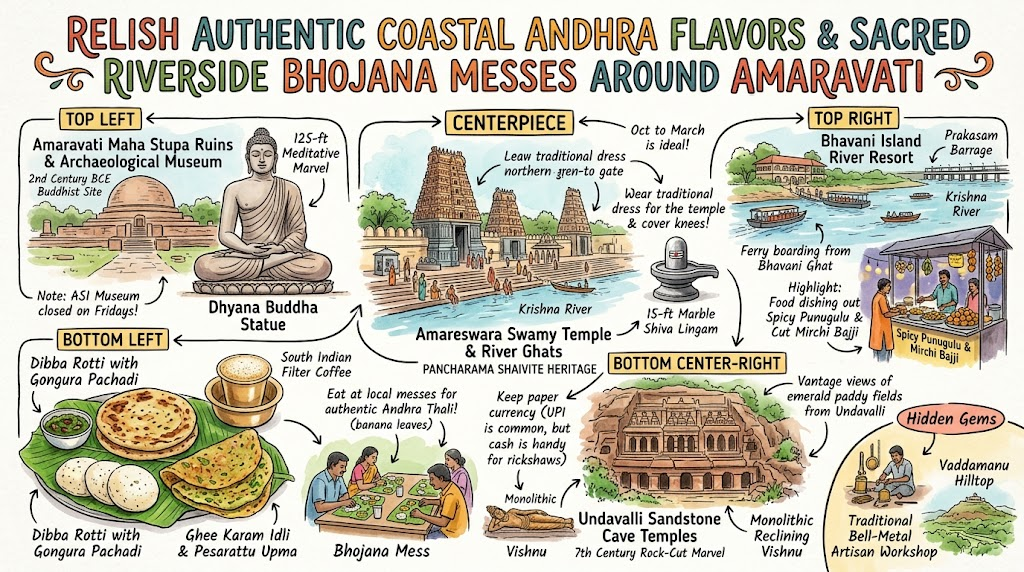
The revered Amareswara Swamy Temple, also known as the Amaralingeswara Temple, anchors the sacred heart of Amaravati as one of the celebrated Pancharama Kshetras. The sanctum sanctorum houses a rare 15-foot marble Shiva Lingam spanning two distinct vertical levels, originally consecrated according to legend by Lord Indra. Dravidian gopurams frame the complex, their weathered stone reliefs bearing witness to centuries of royal patronage from the Satavahanas and the Kings of Vijayanagara.
Directly behind the temple compound, broad granite steps descend straight into the sacred waters of the Krishna River. Morning rituals here provide a moving sensory experience, where soft Vedic hymns harmonise with gentle river currents as temple bells ring out into the morning mist.
- Location: Main Ghat Road, Amaravati Town, 32 km west of Vijayawada.
- Why it is worth visiting: It is one of the five holy Pancharama Shiva shrines, home to a uniquely soaring marble Lingam.
- Best things to do: Attend the sacred early-morning Abhishekam, take an early stroll along the river ghats, and admire the ancient stone courtyard architecture.
- Best time to visit: 6:00 AM to 8:30 AM for peaceful morning prayers and serene river reflections.
- Ideal for whom: Spiritual pilgrims, culture enthusiasts, photography lovers, and multi-generational families.
- Travel tip: Wear traditional clothing to enter the inner sanctum, and leave footwear at the dedicated counter outside the northern gate.
Amaravati Maha Stupa Ruins & Archaeological Museum
Dating back to the 2nd century BCE, the magnificent Amaravati Maha Stupa stands as one of the most historically significant Buddhist monastic sites in South Asia. Known anciently as Deepaladinne, or the Mound of Lamps, this enormous stupa was once clad in richly carved Palnadu limestone panels depicting events from the life of the Buddha and vibrant Jataka tales.
The adjacent Archaeological Museum safeguards recovered limestone reliefs, crystal relic caskets, ancient coins, and life-sized statues. Strolling across the manicured grounds provides an inspiring look into the sophisticated artistic traditions that once drew scholars and monks across ancient Asia.
- Location: Stupa Road, Amaravati Town, 1 km east of Amaralingeswara Temple.
- Why it is worth visiting: The cradle of the Amaravati School of Art, displaying world-renowned limestone reliefs.
- Best things to do: Walk around the ancient pradakshina path of the excavated mound, examine the museum’s carved rail panels, and photograph the tranquil stupa footprint.
- Best time to visit: 9:00 AM to 11:30 AM to tour the museum galleries in quiet comfort.
- Ideal for whom: History buffs, archaeological scholars, visual artists, and architecture students.
- Travel tip: Note that the Archaeological Museum is strictly closed on Fridays, so plan your itinerary around this schedule.
Dhyana Buddha Statue Cultural Park
Towering gracefully above the green riverbanks, the colossal 125-foot Dhyana Buddha Statue sits in deep meditative contemplation atop a lotus pedestal. Erected to celebrate the region’s enduring Buddhist heritage, the statue’s hollow base contains a three-tiered museum gallery showcasing painted panels, miniature models, and Buddhist philosophical teachings.
The surrounding park features landscaped lawns, manicured meditation pathways, and stone gazebos offering panoramic views across the Krishna River. As dusk falls, warm illumination bathes the statue, transforming the entire riverbank into a tranquil sanctuary of quiet contemplation.
- Location: Riverfront Road, Amaravati, 1.8 km from Amaralingeswara Temple.
- Why it is worth visiting: One of the tallest seated Buddha statues in Asia, complete with an internal interpretive museum.
- Best things to do: Walk through the three-level internal philosophical gallery, meditate on the elevated lotus terrace, and watch the sun set over the river.
- Best time to visit: 4:30 PM to 6:30 PM for cool river breezes and dramatic sunset lighting.
- Ideal for whom: Families, solo travelers, meditation practitioners, and landscape photographers.
- Travel tip: The open marble terrace can heat up under the afternoon sun, making early morning or late evening the most pleasant times to visit barefoot.
Undavalli Sandstone Cave Temples
Chiseled directly into a solid sandstone hillside during the 7th century, the Undavalli Caves showcase the finest rock-cut architectural genius of the Vishnukundina and early Chalukyan eras. The highlight of this multi-story complex is a four-tiered facade featuring a magnificent 5-meter-long monolith of Lord Vishnu reclining on the serpent Shesha, sculpted entirely out of the native bedrock.
Pillared verandahs, ancient monastic cells, and ornate ceiling rosettes demonstrate a fascinating transition between early Buddhist rock excavations and classical Hindu sacred architecture. Reaching the upper terrace reveals breathtaking panoramic vistas across emerald green paddy fields stretching to the horizon.
- Location: Undavalli Village, 22 km east of Amaravati, adjacent to Prakasam Barrage.
- Why it is worth visiting: A multi-level rock-cut marvel containing an enormous monolithic reclining Vishnu sculpture.
- Best things to do: Inspect the details of the colossal Anantasayana Vishnu carving, explore the top-level monk cells, and take in the panoramic countryside views.
- Best time to visit: 9:00 AM to 12:00 PM for clear natural light penetrating the inner rock halls.
- Ideal for whom: Explorers, architecture enthusiasts, heritage travelers, and photographers.
- Travel tip: The stone stairs inside the caves are steep and worn smooth, so wear sturdy footwear with reliable grip.
Prakasam Barrage & Evening Food Promenade
Spanning over 1.2 kilometers across the wide Krishna River, Prakasam Barrage stands as an iconic engineering landmark connecting Vijayawada to the Amaravati capital region. By day, the barrage regulates vital irrigation networks feeding Andhra’s coastal plains; by night, it transforms into a bustling, illuminated promenade filled with festive local energy.
The river banks and approach roads feature popular gathering spots where food carts dish out piping-hot snacks like spicy punugulu and freshly fried cut mirchi. Cool river breezes, water reflections, and panoramic views make this a beloved evening ritual for both locals and travelers.
- Location: Spanning the Krishna River between Vijayawada and Tadepalle, 28 km east of Amaravati.
- Why it is worth visiting: A grand river bridge offering panoramic water vistas and lively culinary street energy.
- Best things to do: Walk along the pedestrian causeway beneath evening illumination, savor freshly fried regional street snacks, and photograph the barrage reflections.
- Best time to visit: 6:30 PM to 9:00 PM when the vibrant LED lighting illuminates the river waters.
- Ideal for whom: Street food lovers, couples, evening strollers, and night photographers.
- Travel tip: Park your vehicle near the Bhavani Ghat entrance and cross the causeway on foot to bypass vehicular traffic jams.
Bhavani Island River Resort & Waterways
Resting gracefully within the Krishna River, Bhavani Island spans over 130 acres of lush greenery, making it one of the largest river island recreation reserves in India. Accessible exclusively via regular motor ferries from the mainland ghats, the island provides a peaceful natural refuge shaded by bamboo groves, mango trees, and riverine woodlands.
The island features open adventure parks, quiet walking trails, tranquil waterfront seating, and boating options ranging from relaxed pedal boats to thrilling speedboats. It offers an ideal change of pace after exploring ancient stone monuments.
- Location: Krishna River, boarded from Bhavani Ghat, 30 km east of Amaravati town.
- Why it is worth visiting: A sprawling river island reserve offering water recreation, shaded bamboo groves, and peaceful nature walks.
- Best things to do: Take a speedboat across the Krishna River, walk through the bamboo parks, and enjoy fresh coconut water under canopy trees.
- Best time to visit: 2:30 PM to 5:30 PM for pleasant river breezes and enjoyable water activities.
- Ideal for whom: Families with children, picnic groups, nature enthusiasts, and adventure seekers.
- Travel tip: Board the return ferry before sunset to avoid long lines at the island departure jetty.
Offbeat Exploration: Hidden Gems Tourists Miss
Dharanikota Mud Ramparts & Ancient Moat Walk
Just two kilometers west of the Amaralingeswara Temple lies Dharanikota, the ancient fortified citadel of the Satavahanas. While most tourists bypass it, walking the massive circular earthwork ramparts and brick outlines reveals undisturbed foundations dating back over two millennia. Stand along the old defensive moat at sunrise for complete solitude and sweeping views over lush farming hamlets.
Traditional Bell-Metal Artisan Workshops of Amaravati
Tucked inside the narrow lanes of old Amaravati, a few multi-generational artisan families still cast traditional brass oil lamps, temple bells, and bronze cookware using traditional lost-wax methods. Stepping into these home foundries lets you watch molten metal poured into earthen molds, offering an authentic glimpse into centuries-old craftsmanship.
Vaddamanu Hilltop Monastic Remains
Perched on a quiet hill 10 km southeast of Amaravati town, Vaddamanu preserves the ruins of an ancient Buddhist and Jain monastery. A gentle 15-minute stone stairway climb brings you to ancient brick terraces offering total silence and 360-degree vistas across lush paddy fields and the curving river basin.
Detailed Practical Guidance for Travelers
| Destination | Standard Entry Fee | General Timings | Best Local Food Options Nearby | Recommended Nearby Attractions |
| Amareswara Swamy Temple | Free (Special Darshan ₹50) | 6:00 AM – 1:00 PM, 4:00 PM – 8:00 PM | Local messes serving Dibba Rotti, Ghee Karam Idli, and temple pulihora | Krishna River Ghats (100 m) |
| Amaravati Maha Stupa & Museum | ₹25 (Indians), ₹300 (Foreigners) | 9:00 AM – 5:00 PM (Closed Fridays) | Traditional Andhra thali meals at town messes near Stupa Junction | Dhyana Buddha Statue (1.2 km) |
| Dhyana Buddha Cultural Park | ₹20 per adult | 8:00 AM – 6:30 PM Daily | Riverfront tea kiosks offering fresh ginger tea and mirchi bajji | Dharanikota Ramparts (2 km) |
| Undavalli Cave Temples | ₹25 (Indians), ₹300 (Foreigners) | 9:00 AM – 5:30 PM Daily | Filter coffee stalls and roadside tiffin stalls near entrance gate | Prakasam Barrage (3.5 km) |
| Prakasam Barrage Promenade | Free Public Access | Open 24 Hours (Illumination 6:30 PM – 9:30 PM) | Evening street carts serving hot punugulu, cut mirchi, and sweet corn | Kanaka Durga Temple (1.5 km) |
| Bhavani Island River Resort | ₹60 Ferry Ticket | 9:30 AM – 5:30 PM Daily | Island canteen meals and chilled fresh tender coconut water | Bhavani Ghat Promenade (Mainland) |
Logistics & On-Ground Navigation
Local Transport Options
- State Transport Buses (APSRTC): Frequent rural and express buses operate between Vijayawada Pandit Nehru Bus Station (PNBS), Guntur Central Bus Stand, and Amaravati town every 30 minutes.
- Auto-Rickshaws & E-Rickshaws: Three-wheelers are the most practical way to hop between the Amaralingeswara Temple, the Stupa, and the Dhyana Buddha. Always agree on a fixed price before boarding.
- Private Car Rentals: Hiring a dedicated taxi for the day provides maximum comfort and flexibility, allowing you to easily link Amaravati town with Undavalli Caves and Prakasam Barrage.
Budget Planning
- Backpacking / Budget Tier: ₹1,200 – ₹1,800 per day. Includes comfortable public transit via bus, budget guesthouse stays in Amaravati town, traditional tiffin meals, and standard heritage monument tickets.
- Mid-Range / Comfort Tier: ₹3,500 – ₹5,500 per day. Includes private taxi hire, comfortable hotel stays in Vijayawada or Tadepalle, full thali dining at established restaurants, and priority temple passes.
Safety and Inclusivity Tips
- Families: Most temples and cultural sites have wide paved pathways, but stone surfaces can get hot by midday; carry water bottles and lightweight footwear.
- Couples & Solo Travelers: The region is peaceful, hospitable, and safe. However, avoid walking along isolated, unlit riverbanks after 8:30 PM.
- General Safety: Drink sealed or filtered water, and take care when walking on moss-covered stone steps along the river ghats.
Strategic Travel Planning Guardrails
Travel Planning Tips for Amaravati
- Check Museum Schedules: The ASI Archaeological Museum remains closed on Fridays, so plan your itinerary around this day.
- Carry Paper Currency: While UPI QR payments work across many stores, small tiffin stalls, boatmen, and rural auto drivers still rely on cash.
- Begin Sightseeing at Dawn: Plan outdoor walks between 6:30 AM and 9:30 AM to beat coastal heat and enjoy soft morning light.
- Embrace Traditional Breakfasts: Make time to try local favorites like Dibba Rotti with Gongura Pachadi and hot Pesarattu Upma.
- Wear Cotton Clothing: Choose loose, breathable fabrics and carry wide-brimmed hats to stay comfortable in the coastal climate.
- Respect Traditional Dress Codes: When visiting the Amaralingeswara Temple, wear clothing that covers your shoulders and knees.
Common Mistakes to Avoid
- Rushing the Heritage Circuit: Trying to see the Stupa, caves, and temples in a single morning leaves little time to absorb the atmosphere.
- Skipping the ASI Museum: Overlooking the museum misses out on the world-class limestone panels that made Amaravati famous worldwide.
- Relying Only on Ride-Hailing Apps: App-based cabs often cannot be booked for pick-ups within rural Amaravati; hire a taxi for the round trip instead.
- Overlooking Riverfront Sunsets: Missing the sunset behind the Dhyana Buddha Statue skips one of the region’s most scenic views.
- Passing on Street Food: Avoiding local tiffin counters out of caution means missing out on fresh, delicious food prepared right before your eyes.
- Neglecting Midday Hydration: Forgetting to drink water during warm afternoons can quickly drain your energy while exploring open-air ruins.
Suggested Itinerary Blueprints
1-Day Quick Dash (The Sacred Core Route)
Tailored for travelers with limited time looking to cover the central spiritual, historical, and culinary landmarks in a single day.
- Morning: Begin with morning prayers at Amaralingeswara Temple, followed by traditional Dibba Rotti at temple-lane messes. Walk over to the Amaravati Maha Stupa and ASI Museum.
- Afternoon: Head to the Dhyana Buddha Statue for garden walks and internal museum exploration, followed by a hearty Andhra thali meal.
- Evening: Drive to the Undavalli Caves for late-afternoon rock exploration, ending your day with sunset snacks along the Prakasam Barrage promenade.
2-Day Deep-Dive (The Complete Heritage Trail)
Designed for travelers who want to dive deeper into ancient architecture, riverside village life, and authentic regional gastronomy.
- Day 1: Dedicate the day to Amaravati town. Start with the sacred river ghats and Amaralingeswara Temple, enjoy local street tiffins, visit the Maha Stupa and ASI Museum, explore the Dhyana Buddha, and discover the Dharanikota ramparts at sunset.
- Day 2: Focus on regional art and nature. Tour the multi-tiered Undavalli Caves, take a ferry out to Bhavani Island for lunch, and explore local brass and wooden toy artisan stalls in the afternoon.
Complete Weekend Travel Plan (The Capital Heritage Circuit)
- Friday Evening: Arrive in Vijayawada, check into your hotel, and enjoy evening strolls and street snacks near Prakasam Barrage.
- Saturday: Spend a full day in Amaravati exploring the temple ghats, ancient stupas, museum galleries, Dhyana Buddha gardens, and peaceful rural roads.
- Sunday: Explore the Undavalli Caves, spend a relaxing morning on Bhavani Island, shop for authentic local handicrafts, and depart in the evening.
Common Tourist Mistakes to Avoid
- Geographic Blunders: Don’t attempt to combine the distant Kondapalli hill range and Amaravati town in a single morning. They lie on opposite sides of the river corridor, and traffic across the bridges can cause unexpected delays.
- Commercial Traps: Skip generic shopping plazas in modern city centers. Instead, browse authentic brass-casting workshops and handloom weavers in old Amaravati’s historic alleys.
- Neglecting Modern/Alternative Zones: Don’t overlook the newly built riverside promenades and wide, green avenues in the modern capital development zone, which highlight the region’s emerging urban future.
- Transport Overpayment: Always agree on a fare with auto-rickshaw drivers before getting in, or ask your hotel concierge for typical route rates to ensure fair pricing.
- Luxury Dining Bias: Don’t stick exclusively to indoor hotel dining. Street-side tiffin carts near the temple gates serve the region’s freshest, most authentic flavors.
Frequently Asked Questions
1. Where can I find the best traditional breakfast near Amaralingeswara Temple?
The narrow lanes right outside the northern gopuram house legendary traditional tiffin messes. They serve piping-hot Dibba Rotti accompanied by spicy Gongura and roasted peanut chutneys, fresh Ghee Karam Idli, and crisp Punugulu straight from morning cauldrons.
2. Are there clean vegetarian dining options near the temple?
Yes, several pure-vegetarian Brahmin and Arya Vysya bhojana messes operate within a 400-meter radius of the temple. They serve wholesome, authentic Andhra meals on banana leaves, complete with pappu, rasam, curd, and seasonal vegetable vepudu.
3. What is the signature dish to try in Amaravati?
Dibba Rotti is the region’s standout culinary specialty. It is a thick, slow-cooked bread made from urad dal and rice rava, pan-fried with a crisp exterior and a tender crumb, served alongside zesty ginger or gongura chutney.
4. How far is the Dhyana Buddha Statue from Amaralingeswara Temple?
The Dhyana Buddha Statue is located just 1.8 kilometers east of the Amaralingeswara Temple along the scenic Riverfront Road. It takes roughly five minutes by auto-rickshaw or a pleasant 20-minute walk through rural lanes.
5. Can tourists find good coffee and tea stalls near the river ghats?
Yes, the approach roads to Amaralingeswara Ghat feature numerous traditional filter coffee and tea kiosks. They serve strong, frothed South Indian degree filter coffee, ginger-cardamom chai, and cooling local badam milk in earthen cups.
6. Is non-vegetarian food available near the temple complex?
Non-vegetarian food is strictly unavailable directly around the sacred temple and stupa perimeters. However, specialized regional eateries serving traditional spicy Andhra chicken fry and river fish curry operate on the outskirts along Guntur Road.
7. Are food stalls near the temple hygienic for sensitive stomachs?
Local tiffin stalls generally maintain high standards because food is prepared fresh right in front of customers. Stick to freshly cooked, steaming-hot items like freshly fried rottis and boiled idlis, and drink sealed bottled water.
8. What are the best evening snacks to enjoy along the Krishna River?
Popular local evening snacks include Mirchi Bajji stuffed with spiced onions and cumin, Cut Mirchi, crisp Punugulu, and spicy roasted corn roasted over open coals near the river ghat promenades and barrage walkways.
9. Are card payments and mobile UPI accepted at small eateries?
Most permanent tiffin stalls and sit-down messes accept mobile UPI payments via standard QR codes. However, smaller cart vendors and tea stalls prefer cash, so it is best to keep physical currency on hand.
10. How much does a typical traditional meal cost near the temple?
Food here remains exceptionally affordable. A full morning tiffin meal generally costs between ₹40 and ₹80 per person, while an unlimited traditional Andhra vegetarian thali served on a banana leaf ranges from ₹100 to ₹160.
11. Can I buy local food souvenirs to take home from Amaravati?
Yes, the bazaar lanes outside the temple feature specialty sweet shops selling authentic Andhra delicacies. Look for pure-ghee Pootharekulu (paper sweets), crunchy Ariselu, sun-dried lentil vadam, and jars of tangy coastal mango and gongura pickles.
12. When is the ideal time to eat at local tiffin centers?
The best hours to visit morning tiffin centers are between 7:00 AM and 9:30 AM when batches come straight from the griddles. For evening snacks, head to the carts between 5:00 PM and 7:30 PM.
Conclusion
Visiting the sacred grounds of Amaravati and the Amaralingeswara Temple offers far more than a simple sightseeing trip; it provides an authentic immersion into the flavors, traditions, and enduring spirit of coastal Andhra Pradesh. From the peaceful early morning river ghats to the comforting sizzle of fresh griddles in welcoming family messes, every moment here connects you with a rich cultural tapestry. By slowing down to savor its storied ruins and time-honored cooking, you leave with lasting memories of a destination where heritage and warm hospitality thrive side by side.
