Introduction
Escaping the relentless din of overcrowded, commercialized tourist circuits begins with choosing places where ancient roots quietly outshine modern haste. Amaravati offers precisely this balance, set peacefully along the curved, sacred banks of the Krishna River in Andhra Pradesh. Rather than funneling visitors through artificial tourist traps, this historic haven invites mindful travelers into an authentic rhythm shaped by two millennia of spiritual devotion and pastoral serenity.
Here, the delicate scent of morning temple camphor mingles with the irresistible aroma of golden, stone-ground pesarattu sizzling over iron griddles. The town carries a living heritage, where Buddhist monks once walked beside riverbanks and where traditional village cooks still preserve culinary methods handed down through generations. Exploring Amaravati feeds both intellectual curiosity and the senses, anchoring travelers in true cultural depth.
Why Amaravati is a must-visit city
Amaravati is an indispensable chapter in Indian cultural history. Once the thriving seat of the Satavahana rulers, it served as a premier global hub for Mahayana Buddhist learning, welcoming scholars and artists across Asia. Its geographical location between Vijayawada and Guntur anchors the region with remarkable connectivity, offering smooth access via four-lane state highways, extensive national rail lines through Vijayawada Junction, and regional air transit.
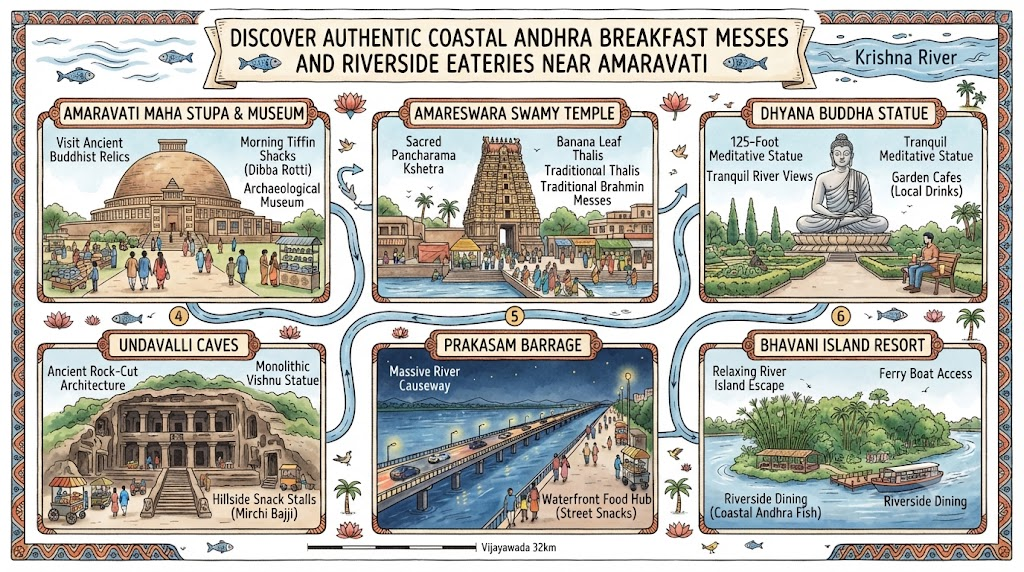
The surrounding travel circuit forms a natural loop encompassing monumental stupa ruins, multi-tiered rock-cut sanctuaries, sacred river ghats, and rich culinary kitchens. It is accessible for solo backpackers seeking quiet heritage, families looking for comfortable pilgrimage spaces, and curious food enthusiasts seeking fiery, unadulterated Andhra flavors.
| Factor | Regional Detail |
| Location | Palnadu District, Krishna River Basin, Andhra Pradesh |
| Nearest Airport | Vijayawada International Airport (VGA) ~50 km |
| Nearest Rail Hub | Vijayawada Junction (BZA) ~32 km |
| Circuit Highlights | Buddhist relics, Dravidian temples, rock architecture, coastal tiffins |
| Best Travel Window | October to March |
| Recommended Stay | 2 Days / 1 Night |
Best Places or Experiences
Amaravati Maha Stupa Food Stalls & Archaeological Museum
The monumental Amaravati Maha Stupa, dating back to the 2nd century BCE, was once among the grandest Buddhist structures in the world. Its intricate limestone drum slabs depicted vivid tales of the Buddha, preserved in part within the quiet ASI Archaeological Museum situated just beside the ruins. Surrounding this historic zone is an energetic cluster of family-run tiffin stalls and morning tea shacks that serve temple pilgrims and archaeologists alike.
Savoring hot breakfast plates under the morning breeze while gazing toward the ancient stupa mound offers a deeply grounding travel experience. The local street counters pride themselves on serving fresh, piping-hot Dibba Rotti—a thick, slow-cooked rice-lentil cake with a crisp exterior—alongside fiery ginger-tamarind chutneys.
- Location: Main Heritage Complex, Amaravati Town, 32 km west of Vijayawada.
- Why it is worth visiting: It combines access to world-famous Buddhist relief carvings with delicious, traditional coastal tiffin culture.
- Best things to do: Inspect the excavated stupa drum, study the limestone friezes inside the museum, and sample stone-ground breakfast tiffins outside.
- Best time to visit: 8:00 AM to 11:00 AM for soft morning light and fresh breakfast batches.
- Ideal for whom: History buffs, cultural photographers, and food explorers.
- Travel tip: The Archaeological Museum is closed on Fridays; plan your visit between Saturday and Thursday.
Amareswara Swamy Temple Brahmin Messes
Situated directly on the southern banks of the Krishna River, the Amareswara Swamy Temple is one of the five sacred Pancharama Kshetras dedicated to Lord Shiva. The temple is celebrated for its towering, 15-foot marble Shiva Lingam that ascends through two stories of the inner sanctum. The surrounding agraharam streets house time-honored traditional vegetarian messes that serve pure Andhra banana-leaf thalis to visiting pilgrims.
Dining in these modest traditional dining halls introduces visitors to generational recipes: steaming Sona Masoori rice topped with homemade cow ghee, pungent Gongura pachadi, and spiced Pappu Chaaru. The atmosphere is filled with the resonance of evening bells, winding stone alleyways, and the timeless hospitality of coastal Andhra.
- Location: Riverfront Street, Amaravati Town Center.
- Why it is worth visiting: It offers an authentic Pancharama temple experience paired with home-style vegetarian dining.
- Best things to do: Participate in the early morning riverbank rituals, walk the Dravidian temple corridors, and enjoy an authentic plantain-leaf lunch.
- Best time to visit: 6:30 AM to 9:30 AM for morning darshan and fresh tiffins.
- Ideal for whom: Pilgrims, couples, families, and lovers of regional vegetarian cuisine.
- Travel tip: Wear conservative temple clothing (covering shoulders and knees) and bring small cash notes for local meals.
Dhyana Buddha Garden Cafes
Rising gracefully above the Krishna River, the modern 125-foot Dhyana Buddha Statue sits in deep meditation atop an expansive three-level heritage museum. Commissioned to commemorate Amaravati’s historic role in Buddhism, the monument features landscaped green gardens that offer open views of the river. Along the perimeter road, small garden shacks and beverage stalls provide shaded seating and refreshing local drinks.
This spot provides a tranquil space to unwind after visiting stone ruins. Travelers can enjoy fresh coconut water, cold spiced buttermilk (Majjiga), and crisp, golden Punugulu while relaxing under flowering trees as afternoon winds sweep off the water.
- Location: Riverfront Road, Amaravati, 1.8 km from the bus stand.
- Why it is worth visiting: It features one of Asia’s tallest meditative Buddha sculptures combined with peaceful open-air riverfront spaces.
- Best things to do: Climb into the interior theme museum, meditate on the terrace grounds, and sip chilled spiced buttermilk at the garden stalls.
- Best time to visit: 4:30 PM to 6:30 PM for cooling evening breezes and vibrant sunset colors.
- Ideal for whom: Solo travelers, meditation practitioners, landscape photographers, and families.
- Travel tip: Remove footwear before ascending the marble base platform, as afternoon sun can heat the stone tiles.
Undavalli Caves Rock-Cut Precinct
Carved into a sandstone bluff overlooking emerald river plains, the 7th-century Undavalli Caves are a striking example of rock-cut architecture. The centerpiece of this multi-tiered cavern is a monolithic statue of Lord Vishnu reclining on the serpent Shesha, hewn directly from a massive sandstone cliff. The approach road leading toward the base of the caves is packed with local street vendors offering regional delicacies.
After climbing the steep rock flights to view the sculpted monastic cells, travelers gather at the hillside stalls below. Here, vendors prepare fried Mirchi Bajji sliced open and stuffed with chopped onions and roasted peanuts, served alongside strong south Indian filter coffee.
- Location: Undavalli Village, near Prakasam Barrage, 22 km east of Amaravati.
- Why it is worth visiting: Extraordinary four-story rock-cut caves hosting a giant monolithic Vishnu sculpture.
- Best things to do: Inspect the upper terrace carvings, view the lush Krishna delta fields, and enjoy fresh cut-chili bajjis at the entrance.
- Best time to visit: 9:00 AM to 12:00 PM for bright natural lighting inside the cavern chambers.
- Ideal for whom: Architecture enthusiasts, historians, adventure hikers, and spicy food fans.
- Travel tip: Wear sneakers with sturdy grip, as the rock steps inside the caves are worn smooth.
Prakasam Barrage Waterfront Eateries
Spanning over 1.2 kilometers across the Krishna River, the historic Prakasam Barrage joins the Amaravati region with Vijayawada city. The barrage forms an expansive reservoir that transforms into an energetic public promenade every evening. On either flank of the riverbanks, mobile food vans, tea stalls, and snack counters create an open-air food hub.
As the sun sets, cool river breezes settle over the bridge, and dazzling architectural lights turn the water into a shimmering spectacle. It is the perfect place to sample Andhra street food, from piping-hot fried Gaarlu to sweet corn tossed with lime and red chili.
- Location: Krishna River Causeway, linking Vijayawada and Tadepalle.
- Why it is worth visiting: A vibrant urban river crossing with scenic evening lighting and diverse street food options.
- Best things to do: Walk the pedestrian footpath across the barrage, watch evening illuminations, and try savory evening snacks.
- Best time to visit: 6:30 PM to 9:00 PM when lights are switched on.
- Ideal for whom: Couples, group travelers, night photographers, and casual foodies.
- Travel tip: The causeway has steady vehicle traffic; use designated pedestrian paths for walking and photography.
Bhavani Island River Resort Dining
Nestled in the center of the Krishna River, Bhavani Island spans more than 130 acres of mangrove paths, bamboo groves, and open parks. Accessible only by passenger ferries from the mainland ghat, the island offers an escape from highway traffic. Its open-sided river pavilion restaurants serve fresh meals alongside panoramic views of the water.
Visitors can spend hours beneath shaded groves before sitting down to a leisurely meal. The island eateries specialize in regional Andhra chicken roasts, fresh fish curry cooked with tamarind, and vegetarian platters, making it a peaceful daytime retreat.
- Location: Mid-river, accessed via Bhavani Ghat Ferry Terminal.
- Why it is worth visiting: An expansive, car-free river island offering waterside dining and open nature trails.
- Best things to do: Board the passenger ferry, enjoy watersports or rope courses, and dine at the open-air riverfront restaurant.
- Best time to visit: 1:00 PM to 5:30 PM for afternoon lunch followed by sunset boat rides.
- Ideal for whom: Families with children, adventure travelers, and outdoor dining fans.
- Travel tip: Ferry operations pause during harsh weather or heavy river currents, so check water levels beforehand.
Offbeat Exploration: Hidden Gems Tourists Miss
Dharanikota Rampart Tea Stalls
A short distance from the primary Stupa lies the ancient circular earthen fort of Dharanikota, which once shielded Satavahana royalties. The overgrown earthen mounds are rarely visited by mainstream tour groups. At the village junction nearby, modest roadside stalls brew sweet spiced ginger chai served in small glasses alongside crunchy fried rice murukku, offering an unhurried glimpse of rural life.
Kondapalli Fort Foothill Kitchens
Set high within the Eastern Ghats hills, Kondapalli Fort preserves ancient granaries, stone fortifications, and ramparts overlooking the valley. At the base of the hill lies the artisan settlement where woodworkers craft famous Kondapalli Toys. Small local homes here often double as welcoming lunch setups, preparing traditional country meals for visitors looking to buy wooden handicrafts straight from artisans.
Seethanagaram River Ghat Viewpoint
Tucked behind the hills near Undavalli, the quiet sandy banks of Seethanagaram offer clear, crowd-free views of the Krishna River. Monks and locals gather here at sunrise for quiet prayer and meditation. Visiting early in the morning lets travelers enjoy the dawn reflection across the river while sampling fresh sweet bananas and warm roasted peanuts from local farmers.
Detailed Practical Guidance for Travelers
| Destination | Standard Entry Fee | General Timings | Best Local Food Options Nearby | Recommended Nearby Attractions |
| Amaravati Stupa & Museum | ₹25 (Indians), ₹300 (Foreigners) | 9:00 AM – 5:00 PM (Closed Fridays) | Hot Dibba Rotti & ginger chutney at heritage tiffin counters | Amareswara Swamy Temple (1 km) |
| Amareswara Swamy Temple | Free (Special Entry ₹50) | 6:00 AM – 1:00 PM, 4:00 PM – 8:00 PM | Banana-leaf Andhra meals at traditional Brahmin messes | Krishna River Ghats (Adjacent) |
| Dhyana Buddha Statue | ₹20 per adult | 8:00 AM – 6:30 PM Daily | Fresh spiced buttermilk & crispy punugulu stalls | Dharanikota Fort Mounds (2 km) |
| Undavalli Caves | ₹25 (Indians), ₹300 (Foreigners) | 9:00 AM – 5:30 PM Daily | Stuffed Mirchi Bajji & filter coffee at base counters | Prakasam Barrage (3 km) |
| Prakasam Barrage | Free Access | Open 24 Hours (Lights on 6:30 PM – 9:30 PM) | Evening street snacks: cut mirchi, roasted corn, tea | Bhavani Ferry Ghat (1.5 km) |
| Bhavani Island | ₹60 (Ferry charge), Activity fees extra | 9:30 AM – 5:30 PM Daily | Coastal fish curries & Andhra thali buffets | Kanaka Durga Temple (3.5 km) |
Logistics & On-Ground Navigation
Local Transport Options
- APSRTC Express & Local Buses: Regular public buses connect Vijayawada’s Pandit Nehru Bus Station (PNBS) and Guntur City to Amaravati village. They run at frequent intervals and offer an affordable transit option.
- Auto-Rickshaws & E-Rickshaws: Shared and private three-wheelers are widely available across town centers and river ferry terminals. Always agree on a set fare before boarding private rides.
- Self-Drive & Private Cabs: Renting a car or booking a full-day private taxi in Vijayawada is the most convenient way to explore spread-out attractions like Undavalli, Amaravati town, and Kondapalli without scheduling delays.
Budget Planning
- Budget / Backpacker Tier: ₹1,100 – ₹1,700 per day. Covers public bus travel, budget hotel or temple lodge stays, roadside tiffins, mess lunches, and standard archaeological entry tickets.
- Comfort / Mid-Range Tier: ₹3,500 – ₹5,500 per day. Includes full-day private taxi hire, comfortable boutique hotel stays in Vijayawada or Tadepalle, full thali dining, and watersport excursions on Bhavani Island.
Safety and Inclusivity Tips
- Family Travelers: Walkways around the Dhyana Buddha and modern riverfronts are wide and flat for seniors, but carry lightweight umbrellas for shade when exploring open stupa grounds.
- Couples & Solo Explorers: The region is culturally warm, safe, and hospitable. Keep visits to isolated hill ruins or quiet river stretches limited to daylight hours.
- General Safety: Coastal Andhra weather can get very humid by afternoon. Keep oral rehydration salts and bottled drinking water handy during open-air exploration.
Strategic Travel Planning Guardrails
Travel Planning Tips for Amaravati
- Coordinate Around Friday Closures: Ensure you plan your itinerary so your visit to the Amaravati Archaeological Museum does not fall on a Friday.
- Keep Physical Currency Handy: While digital payments like UPI work well in established shops, small country tiffin shacks and boat jetty vendors often need cash.
- Start Sightseeing at Dawn: Begin morning walks around 7:00 AM to enjoy comfortable weather, early temple rituals, and freshly fried breakfast specialties.
- Try the Andhra Spice Balance: If you prefer mild food, request koddiga kaaram (less spicy) when ordering Andhra meals and curries at local messes.
- Pack Modest, Breathable Clothes: Wear lightweight cotton garments that keep you cool in the sun while respecting local temple dress codes.
Common Mistakes to Avoid
- Rushing the Heritage Walk: Walking past the Stupa ruins in 15 minutes misses the intricate historical details preserved on the relief panels.
- Relying Exclusively on App Cabs: Ride-hailing services like Uber and Ola work well in central Vijayawada but are scarce for return trips from rural Amaravati or Kondapalli.
- Skipping Local Breakfast Dishes: Choosing standard continental hotel spreads over traditional Pesarattu Upma or Dibba Rotti misses the best culinary experiences here.
- Climbing Caves During Midday: Ascending the exposed sandstone stairs of Undavalli during noon hours can be uncomfortably hot.
- Overlooking Cash for Entry Counters: While ASI counters offer online QR tickets, internet connectivity in rural pockets can drop, making cash backups helpful.
Suggested Itinerary Blueprints
1-Day Quick Dash (The Express Heritage & Flavors Loop)
Designed for travelers with just one day who want to balance major archaeological sites with classic regional dining.
- Morning: Arrive at Amaravati Stupa and the Archaeological Museum early. Enjoy a breakfast of Dibba Rotti outside, followed by a visit to the Amareswara Swamy Temple.
- Afternoon: Head to the Dhyana Buddha monument for garden views and lunch at a nearby vegetarian mess.
- Evening: Drive to Undavalli Caves for afternoon light on the rock sculptures, finishing with tea and Mirchi Bajji along Prakasam Barrage.
2-Day Deep-Dive (The Complete Culture, Rocks & River Circuit)
The ultimate route for travelers who want an unhurried, comprehensive regional journey.
- Day 1: Explore historic Amaravati town in depth. Visit the Stupa, Museum, Amareswara Temple, and the Dhyana Buddha. Unwind with an evening walk along the quiet Dharanikota riverbank.
- Day 2: Discover Undavalli Cave Temples in the morning, board the ferry to Bhavani Island for a river lunch, and finish with evening shopping for wooden toys at Kondapalli.
Complete Weekend Travel Plan (The Grand Capital Region Loop)
- Friday Evening: Check into your base in Vijayawada or Tadepalle. Enjoy evening views across Prakasam Barrage and sample street snacks along the river promenade.
- Saturday: Spend a full day exploring ancient Amaravati heritage sites, including the Stupa, Museum, Dhyana Buddha, and a serene evening ferry ride.
- Sunday: Explore Undavalli Caves at sunrise, visit Kondapalli Fort and artisan craft workshops, enjoy an authentic Andhra meal, and depart by evening.
Common Tourist Mistakes to Avoid
- Geographic Blunders: Grouping Kondapalli Fort and rural Amaravati sites into the same morning causes rushed sightseeing and hours lost in traffic.
- Commercial Traps: Spending meal times in generic shopping mall food courts instead of family-run messes where authentic Andhra flavors shine.
- Neglecting Modern Expansions: Focusing solely on ancient stone ruins while missing the wide boulevards, river parks, and architecture of the developing capital zone.
- Transport Overpayment: Agreeing to auto-rickshaw rides without agreeing on the price beforehand; check reasonable rates with hotel staff first.
- Luxury Dining Bias: Missing out on local street vendors serving hot Punugulu and fresh roasted groundnuts because of relying only on luxury hotel dining.
Frequently Asked Questions
1. What are the best local breakfast dishes to try near Amaravati Stupa?
The standout local specialties are Dibba Rotti served with tangy ginger chutney, crisp Pesarattu loaded with onions and upma, and freshly fried Punugulu. These traditional tiffins are prepared daily at modest stalls right outside the heritage entrance, using freshly ground lentil batters cooked over hot griddles for the crispest texture.
2. Are there authentic vegetarian dining messes near Amareswara Temple?
Yes, the traditional streets surrounding Amareswara Swamy Temple host several family-run vegetarian messes. These establishments serve wholesome Andhra meals on fresh banana leaves, featuring hot steamed rice, aromatic ghee, freshly ground Gongura pickle, seasonal vegetable curries, and spiced rasam, offering an authentic taste of home-cooked regional food.
3. What is the standard entry ticket cost for the Amaravati Maha Stupa?
The standard entry fee for Indian citizens is ₹25, while tickets for foreign nationals are ₹300. Children below 15 years enter free of charge. Tickets can be purchased directly at the on-site ASI ticket counter using cash or through digital payment QR codes displayed at the entrance.
4. When is the Archaeological Museum in Amaravati closed?
The Archaeological Museum at Amaravati remains closed to visitors every Friday as per Archaeological Survey of India regulations. On all other days, including weekends and public holidays, the museum welcomes travelers between 9:00 AM and 5:00 PM, displaying exceptional ancient Buddhist marble sculptures.
5. How far is Amaravati Stupa from Vijayawada Railway Station?
Amaravati Stupa is located approximately 32 kilometers west of Vijayawada Junction Railway Station. Travel by car or private taxi takes about 45 to 60 minutes via the scenic Amaravati Riverfront Road, while state-run APSRTC buses take around 75 minutes depending on traffic conditions.
6. Can I find good non-vegetarian dining options in Amaravati town?
Amaravati town primarily features vegetarian eateries near its sacred temple and stupa grounds. For travelers craving authentic non-vegetarian Andhra specialties like fiery country chicken curry (Kodi Vepudu) or river fish fry, the restaurants along the highway toward Vijayawada and Tadepalle offer the best selections.
7. Is street food safe to eat around the Krishna River Barrage?
Street food stalls along Prakasam Barrage and Undavalli are popular and serve freshly cooked snacks. Look for vendors preparing hot Mirchi Bajji, roasted corn, and Gaarlu right in front of you. To stay healthy, avoid pre-cut uncooked fruits and choose freshly boiled or fried items.
8. What should tourists wear when visiting the religious sites in Amaravati?
Visitors should wear modest, respectful attire covering both shoulders and knees when entering Amareswara Swamy Temple and the Dhyana Buddha sanctuary. Loose, breathable cotton clothing is best, as it respects religious traditions while keeping you comfortable during warm, humid coastal afternoons.
9. Is digital UPI payment widely accepted by food vendors in Amaravati?
Most established restaurants, cafes, and tiffin centers across Amaravati and Vijayawada accept UPI digital payments via smartphones. However, having ₹500 to ₹1,000 in small cash notes is recommended for paying auto drivers, boat ferry crews, and small roadside snack vendors in rural areas.
10. What unique edible souvenirs should I purchase from the Amaravati region?
Travelers should pick up freshly prepared Andhra pickles, especially fiery Gongura and spicy mango avakaya, along with authentic Pootharekulu (delicate paper-thin sweets made with rice flour and jaggery) and locally roasted spice powders (Karam Podi) available at traditional food stores in nearby towns.
11. How much time should I dedicate to exploring the Undavalli Caves?
You will need approximately 1.5 to 2 hours to comfortably climb and explore the four levels of Undavalli Caves. This allows enough time to study the intricate rock-cut shrines, admire the monolithic reclining Vishnu sculpture, take panoramic photos of the green valley, and enjoy local snacks at the base.
12. Can elderly travelers easily access the Dhyana Buddha complex?
Yes, the Dhyana Buddha complex features wide, well-maintained paved pathways throughout its garden grounds, making it easy for elderly visitors to walk. While ascending the monument’s upper museum terraces involves stairs, the ground-level gardens offer flat pathways, plenty of benches, and peaceful resting spots.
Conclusion
Choosing a journey to Amaravati rewards you with an experience that goes far beyond ordinary vacation trips. Sitting on the banks of the sacred Krishna River where ancient Buddhist scholars once meditated, while savoring regional recipes perfected over centuries, creates a lasting connection to Indian heritage. Amaravati invites you to slow down, leave the rushed tourist crowds behind, and enjoy the authentic flavors, stone monuments, and peaceful river breezes of this storied ancient capital.
