Introduction
Mainstream weekend vacations often land you in commercialized, overcrowded spaces where authentic heritage is buried beneath rows of concrete souvenir stalls. If you are looking for a journey that offers deep personal connection and historical weight, the ancient landscapes surrounding the Krishna River basin provide the perfect escape. Consequently, escaping the city to explore these sacred terrains allows you to walk through millennia of spiritual devotion and architectural genius. Exploring these sites reveals the profound roots of dynasties that shaped classical Indian civilization.
Why Amaravati is a must visit city
Amaravati stands as an exceptional epicentre of classical history, serving as the ancient capital for the Satavahana dynasty more than two thousand years ago. Furthermore, the region beautifully preserves a multi-layered heritage where prominent Buddhist learning centres flourished seamlessly alongside sacred Hindu shrines. Travelers find this entire circuit easily accessible via well-maintained national highways and extensive railway connections centered around Vijayawada and Guntur. Consequently, families, photographers, and history enthusiasts can navigate the geographical layout with relative ease while enjoying modern local hospitality.
| Feature | Key Destination Details |
| Primary Region | Palnadu and Guntur Districts, Andhra Pradesh |
| Ideal Duration | 2 to 3 Days (Full Weekend) |
| Best Transit Hub | Vijayawada Junction Railway Station (32 km away) |
| Key Terrains | Riverbanks, rock-cut caves, and fortified hilltops |
Best Places or Experiences
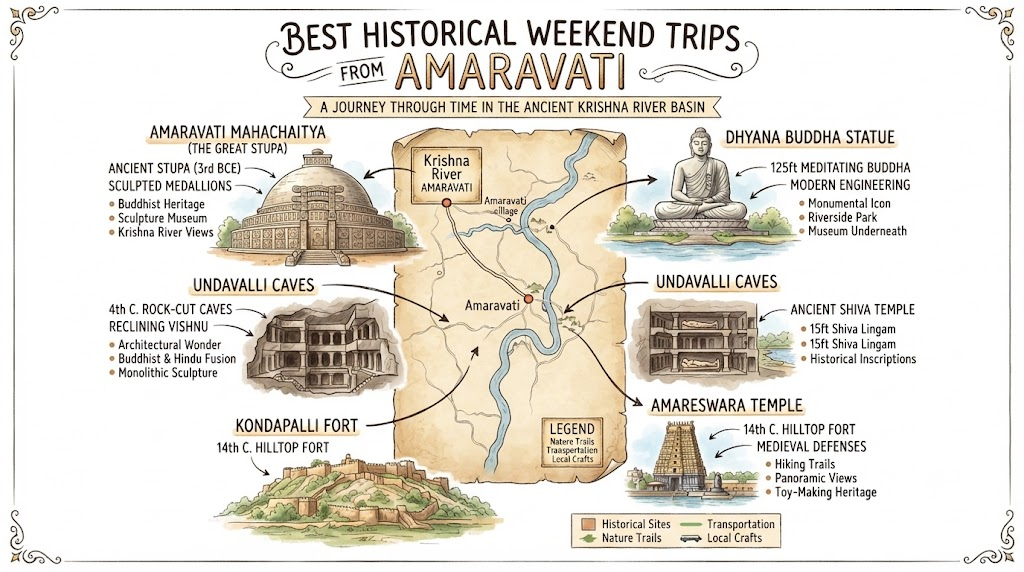
Amaravati Mahachaitya
The Great Stupa or Mahachaitya stands as one of the most significant monuments of ancient India, originally founded during the third century BCE under Mauryan rule. Subsequently, the structure received magnificent expansions from the Satavahana and Ikshvaku rulers, who decorated the architecture with exquisite limestone panels illustrating the life of Buddha. Today, walking past the preserved foundation mounds offers a deep glimpse into the early artistic traditions that influenced art styles across Southeast Asia.
The surrounding complex serves as an open-air museum where the remnants of a once-grand monastery illustrate ancient monastic life. Furthermore, the sheer scale of the surviving brick platforms highlights the incredible geometric precision achieved by builders centuries ago.
- Location: Amaravati Village, roughly 35 km north-west of Vijayawada.
- Why it is worth visiting: It is one of the oldest and largest Buddhist structures in India, showcasing unparalleled ancient relief carvings.
- Best things to do: Walk along the circular stone path, observe the detailed limestone base reliefs, and study the foundational layout of the ancient monastery.
- Best time to visit: Early morning between 8:00 AM and 10:00 AM when the soft sunlight highlights the intricate patterns on the stone.
- Ideal for whom: History buffs, archeology scholars, and peaceful solo travelers.
- Travel tip: Ensure you carry an umbrella or a hat, as the open ruins offer very little shade during noon.
Dhyana Buddha Statue
Reaching a monumental height of 125 feet, the Dhyana Buddha Statue serves as a grand tribute to the region’s historical connection with Buddhist philosophy. This modern architectural masterpiece sits gracefully on the banks of the Krishna River, featuring a massive three-layered museum space directly beneath the seating structure. Inside, the galleries display detailed replicas of ancient artwork alongside artistic panels depicting central historical milestones.
Visiting this site allows you to appreciate how modern engineering can beautifully honor classical heritage. The serene surrounding park offers a quiet space for contemplation while gazing at the towering figure set against the open sky.
- Location: Amaravati Riverside Road, 1 km from the local bus stand.
- Why it is worth visiting: It is an iconic landmark featuring a unique seminar hall and museum embedded directly within the giant structure.
- Best things to do: Explore the multi-level relief museum underneath, walk through the manicured meditation gardens, and capture panoramic views of the river.
- Best time to visit: Late afternoon from 4:30 PM to 6:00 PM to witness a breathtaking sunset behind the silhouette.
- Ideal for whom: Families with kids, spiritual seekers, and landscape photographers.
- Travel tip: Remove your shoes at the designated lower platform before ascending the main concrete staircase.
Undavalli Caves
Carved directly out of solid sandstone hillsides between the fourth and fifth centuries, the Undavalli Caves stand as an outstanding example of early rock-cut architecture. The centerpiece of this multi-tiered monolithic structure is a massive, reclining statue of Lord Vishnu carved masterfully out of a single granite block on the third level. As you climb through the columns, you can see how master craftsmen blended Buddhist monastic design elements with early Hindu temple aesthetics.
The design choices reflect an era of shifting religious patronage under the Vishnukundina kings. Additionally, the skillfully carved verandas provide a cool breeze even during warm summer afternoons.
- Location: Tadepalle Municipality, approximately 31 km from Amaravati core.
- Why it is worth visiting: It features a rare four-storied cave design housing a colossal 5-meter-long reclining sculpture.
- Best things to do: Examine the hidden ancient stone inscriptions, climb to the top level for views of green fields, and inspect the detailed statues of lions and elephants.
- Best time to visit: 9:00 AM to 11:30 AM to catch natural light illuminating the inner caverns.
- Ideal for whom: Architecture enthusiasts, structural engineers, and adventure travelers.
- Travel tip: Be careful around the steep rock-cut steps as some sections do not have protective iron railings.
Amareswara Temple
Positioned right on the southern banks of the sacred Krishna River, the Amareswara Temple represents one of the highly revered Pancharama Kshetras dedicated to Lord Shiva. The temple layout features unique multi-tiered outer walls and houses an incredibly tall 15-foot white marble Shiva Lingam that rises through two distinct floors. Historically, the zamindar rulers expanded the core shrine, adding grand Dravidian gopurams that dominate the regional river landscape.
The spiritual energy here remains vibrant, with priests conducting traditional rituals that have continued unaltered for centuries. Furthermore, observing the unique architectural adjustments made to accommodate the tall main shrine provides a fascinating engineering lesson.
- Location: Amaravati Town center, easily reachable on foot from the river ghats.
- Why it is worth visiting: It holds immense religious and historical value as one of the five ancient spiritual pillars of the region.
- Best things to do: Observe the complex rituals from the upper viewing platform, study the ancient Satavahana inscriptions, and sit near the quiet steps of the riverfront.
- Best time to visit: 6:00 AM for the peaceful morning prayers, or during festive evenings.
- Ideal for whom: Spiritual pilgrims, cultural explorers, and traditional families.
- Travel tip: Traditional modest clothing is required to enter the main inner sanctum area.
Kondapalli Fort
Perched securely on a rugged hill range, the Kondapalli Fort showcases a long history of military strategy, originally constructed by the Reddi kings during the fourteenth century. The expansive fortifications include massive battlements, historical storage units, and the iconic English Palatial ruins that offer wide views over the plains below. Additionally, the nearby forest area is home to specialized local artisans who create the globally recognized, lightweight wooden toys.
Exploring the hidden pathways reveals ruined granaries and ancient water tanks that once sustained large armies during long sieges. Consequently, walking through these arches offers an immersive journey into regional medieval history.
- Location: Kondapalli Village, roughly 55 km from Amaravati via the main highway.
- Why it is worth visiting: It stands as a majestic hilltop fortress blending medieval military architecture with traditional toy-making heritage.
- Best things to do: Hike through the main entry gates, photograph the ruined palace arches, and visit the toy workshops down in the village.
- Best time to visit: November to February when the cool weather makes the hillside walk highly enjoyable.
- Ideal for whom: Hikers, history lovers, and groups of young travelers.
- Travel tip: Bring enough drinking water along, as there are no shops inside the upper fort area.
Offbeat Exploration: Hidden Gems Tourists Miss
Bhattiprolu Buddhist Stupa Site
This ancient site sits within a quiet town that once served as a flourishing trade center under the early Sala kingdom. Excavated by British archeologists, this historic stupa revealed invaluable ancient relics and early script variants that significantly aided scholars in decoding southern language roots. Today, visiting this peaceful spot offers a quiet look at early history, far removed from the busier tourist locations.
Kondaveedu Fort Ramparts
Situated atop a beautiful hill range, this expansive fourteenth-century mountain fortress features ancient defense walls and old stone entry gates built by the Reddi rulers. Travelers can explore old palace ruins, vintage cannons, and ancient temple structures hidden deep within the green hillsides. The newly developed hill road provides a scenic driving experience, making it a wonderful option for adventure seekers.
Detailed Practical Guidance for Travelers
| Destination | Standard Entry Fee | General Timings | Best Local Food Options Nearby | Recommended Nearby Attractions |
| Amaravati Mahachaitya | INR 20 for Adults | 9:00 AM – 6:00 PM (Closed Friday) | Traditional Andhra Meals, Idli | Archaeological Museum |
| Dhyana Buddha Statue | INR 20 per person | 8:00 AM – 6:00 PM Daily | Filter Coffee, Mirchi Bajji | Krishna Riverfront Park |
| Undavalli Caves | INR 25 per person | 8:30 AM – 6:30 PM Daily | Spicy Tomato Rice, Punugulu | Prakasam Barrage |
| Amareswara Temple | Free Admission | 6:00 AM – 1:00 PM, 4:00 PM – 8:00 PM | Pure Vegetarian Tiffins | Amaravati Village Markets |
| Kondapalli Fort | INR 20 per person | 10:00 AM – 5:00 PM Daily | Local Bamboo Chicken, Biryani | Kondapalli Toy Workshops |
Logistics & On-Ground Navigation
Local Transport Options
- Railways: Vijayawada Junction serves as the primary railway hub, offering excellent express train connections to all major Indian cities.
- Auto-Rickshaws: Local auto-rickshaws are widely available near transit hubs, providing a flexible way to complete short point-to-point journeys.
- E-Rickshaws: Eco-friendly battery rickshaws operate frequently within flatter heritage zones, offering an affordable option for quick hops.
- Car Rentals: Renting a private taxi from Vijayawada remains the most convenient approach to cover distant hill forts in a single day.
Budget Planning
- Backpacking Tier: Expect to spend around INR 1,200 to INR 1,800 per day by utilizing local public buses, staying in budget guesthouses, and eating at authentic street-side tiffin centers.
- Comfort Tier: A budget of INR 3,500 to INR 5,500 per day allows for private air-conditioned cab rentals, comfortable mid-range hotels, and dining at established sit-down regional restaurants.
Safety and Inclusivity Tips
- Families: The primary historical gardens are well-fenced and highly safe, though parents should keep a close eye on children near steep rock steps.
- Couples: The riverfront parks and quiet heritage lawns provide pleasant walking environments, but it is best to avoid isolated fort sections after dark.
- General Safety: Local residents are generally helpful and welcoming; however, keeping emergency contacts handy and using registered transport apps adds peace of mind.
Strategic Travel Planning Guardrails
Travel Planning Tips for Amaravati
- Advance Booking: Secure your hotel rooms early if your trip aligns with major regional festivals like Mahashivratri.
- Digital Payments: While UPI works seamlessly across town, carrying sufficient physical cash remains essential for rural auto rides and small entry tickets.
- Local Etiquette: Always remove your shoes before stepping onto any sacred temple platforms or monastic base structures.
- Physical Preparation: Wear sturdy walking shoes with good grip, as navigating these historical structures involves climbing old stone staircases.
- Hydration Rules: Drink plenty of water throughout the day to stay energetic while exploring open, sun-exposed archeological fields.
Common Mistakes to Avoid
- Over-packing Itineraries: Avoid trying to visit Kondapalli Fort and Kondaveedu Fort on the same day, as they are located in entirely opposite directions.
- Ignoring Rural Sub-regions: Do not skip the smaller village museums, which often hold fascinating regional artifacts.
- Transport Assumptions: Never assume auto drivers will automatically use meters; always confirm fares clearly before starting your journey.
- Skipping Regional Cuisine: Do not limit yourself to standard hotel buffets when local tiffin centers serve fresh, authentic Andhra specialities.
- Overpaying at Sites: Always purchase official entry tickets at designated department counters to avoid local guide markups.
Suggested Itinerary Blueprints
- 1-Day Quick Dash (The Heritage Core): Start early at the Amaravati Mahachaitya, explore the nearby Museum, visit the Amareswara Temple before noon, and finish your evening at the scenic Dhyana Buddha Statue.
- 2-Day Deep-Dive (Caves & Fortresses): Dedicate your first day entirely to the core Amaravati monastic ruins and riverfront shrines. On the second day, travel outward to explore the impressive Undavalli Caves and the historic hilltop ramparts of Kondapalli Fort.
- Complete Weekend Travel Plan (The Grand Circuit): Arrive on Friday afternoon to enjoy a peaceful sunset boat ride along the Krishna River. Spend Saturday exploring the rich heritage structures of Amaravati and Undavalli, and use Sunday to hike the majestic Kondaveedu Fort before heading home.
Common Tourist Mistakes to Avoid
- Geographic Blunders: Trying to combine distant, opposing heritage circuits on the exact same afternoon results in spending your vacation stuck in highway traffic rather than exploring ruins.
- Commercial Traps: Spending your limited evening hours in modern shopping centers or crowded malls instead of walking through authentic, atmospheric local heritage markets.
- Neglecting Modern/Alternative Zones: Forgetting to explore the quieter, newly developed riverfront parks and artistic cafe spaces that showcase the evolving lifestyle of the region.
- Transport Overpayment: Agreeing to random premium pricing requests from transit operators instead of cross-referencing standard digital ride-sharing rates.
- Luxury Dining Bias: Sticking exclusively to high-end luxury hotel restaurants, which often deprives you of tasting the real spice and authentic soul of local street-side culinary masters.
Frequently Asked Questions
- What is the exact location of the main Amaravati archeological site?
The main site is located within Amaravati Village in the Palnadu district, situated approximately 35 km north-west of Vijayawada city. - Are there any entry fees for visiting the ancient rock-cut caves?
Yes, visiting the Undavalli Caves requires a standard entry ticket of INR 25 for Indian citizens, while young kids can enter for free. - Can we easily find pure vegetarian food options near the heritage venues?
Absolutely, the town features numerous traditional vegetarian mess halls serving authentic Andhra meals and fresh breakfast items like idlis and dosas. - Is photography permitted inside the Archaeological Museum premises?
Handheld photography is generally permitted in open garden sections, but using cameras inside the main antique display galleries is strictly prohibited. - Which specific months constitute the ideal time to plan this trip?
The winter months from November to February offer pleasant weather, making it the perfect time to explore outdoor ruins comfortably. - Are the hilltop fort locations safe for solo female travelers?
Yes, these historical landmarks are generally safe during main daylight hours, though it is smart to complete your exploration before sunset. - How much time should we ideally allocate for the Great Stupa?
Allocating roughly 1 to 2 hours allows you to comfortably explore the ancient ruins and read the informational displays. - Do local auto-rickshaws accept smartphone digital wallet payments?
Most local operators now accept standard UPI payments, but keeping some physical cash handy is highly recommended for rural routes. - Is there a dress code enforced for entering the local shrines?
Devotees must wear traditional, modest attire that covers shoulders and knees to enter the inner prayer halls. - Can we hire local registered guides at the historical monuments?
Yes, official tour guides approved by the tourism department are available near the entrance gates of major sites for a nominal fee. - Are these ancient heritage sites wheelchair accessible?
The newer parks feature flat pathways, but the historic rock-cut caves and old forts involve navigating steep, uneven stone steps. - What is the closest major airport to this historical circuit?
Vijayawada International Airport located at Gannavaram is the nearest airport, situated roughly 55 km away from the core heritage town.
Conclusion
Choosing an authentic journey through the historic corridors of Amaravati offers a profound cultural reward that standard commercial vacations simply cannot replicate. As you stand before ancient stone carvings and gaze across the wide Krishna River, you connect deeply with centuries of artistic and spiritual devotion. Ultimately, leaving the familiar path behind rewards you with lasting inspiration and a true appreciation for the rich heritage of classical India.
