Introduction
Mainstream travel itineraries across South India frequently push visitors toward crowded beach resorts or sprawling modern metropolises. Travelers seeking authentic soul often find themselves battling heavy commercial traffic rather than connecting with genuine heritage.
Amaravati offers a refreshingly quiet, deeply evocative alternative along the banks of the sacred Krishna River. This ancient land blends thousands of years of Buddhist history, royal Satavahana heritage, and vibrant Andhra traditions without the overwhelming noise of typical tourist traps.
Why Amaravati is a must-visit city
Amaravati occupies a unique place in the historic and cultural landscape of India. Situated along the Krishna River in Andhra Pradesh, it served as the majestic capital of the Satavahana Dynasty over two millennia ago. It also developed into one of the world’s premier centers of Theravada and Mahayana Buddhist learning, drawing monks, scholars, and pilgrims across ancient Asia.
Reaching this historic circuit is remarkably straightforward for modern travelers. The city lies adjacent to Vijayawada, connecting seamlessly via National Highway 16, major rail trunk lines at Vijayawada Junction, and domestic flights landing at Vijayawada International Airport. Travelers can easily combine spiritual exploration, ancient rock-cut architecture, and relaxed riverfront leisure within a single accessible circuit.
| Travel Parameter | Regional Details |
| State & Region | Andhra Pradesh, Coastal Andhra / Palnadu Belt |
| Primary Appeal | Ancient Buddhist Monuments, Dravidian Temples, Rock-Cut Caves |
| Nearest Airport | Vijayawada International Airport (VGA) – 45 km |
| Nearest Railway Hub | Vijayawada Junction (BZA) – 32 km |
| Ideal Trip Duration | 2 to 3 Days |
| Peak Season | October to March |
Best Places or Experiences
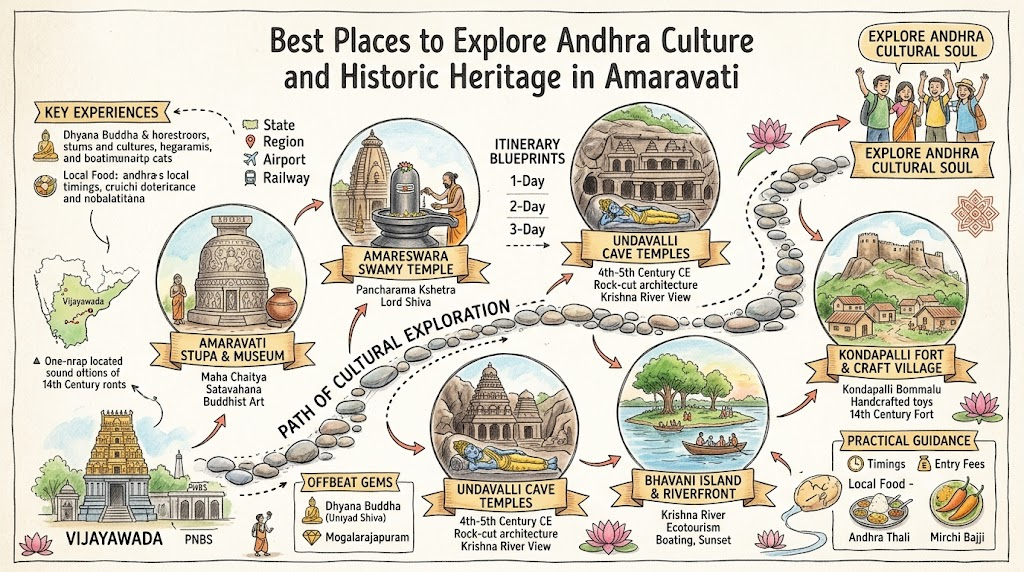
The Great Amaravati Stupa and Archaeological Museum
The Great Amaravati Stupa, known historically as the Maha Chaitya, dates back to the 3rd century BCE during the reign of Emperor Ashoka. Over subsequent centuries under Satavahana patronage, sculptors carved intricate marble and limestone reliefs depicting the life of the Buddha, Jataka tales, and ornate floral medallions that set a benchmark for ancient Indian art.
Today, walking around the surviving mound and perusing the adjacent Archaeological Museum reveals incredible stone panels, relic caskets, and ancient inscriptions. The site reflects an era when philosophy, international trade, and artistic mastery flourished together along the Krishna river valley.
- Location: Amaravati Town, Guntur District, 35 km from Vijayawada city center.
- Why it is worth visiting: It is one of the oldest and largest Buddhist monuments in Southern India, showcasing world-renowned Satavahana sculpture.
- Best things to do: Examine the carved limestone panels in the museum, walk the peaceful circular pradakshina path, and read the epigraphical inscriptions.
- Best time to visit: November to February during early morning hours (8:00 AM – 10:30 AM) for cool weather and soft light.
- Ideal for whom: History enthusiasts, archaeology buffs, spiritual seekers, and architecture scholars.
- Travel tip: The Archaeological Museum remains closed on Fridays, so plan your day trip accordingly.
Amareswara Swamy Temple
Dedicated to Lord Shiva, the Amareswara Swamy Temple stands as one of the sacred Pancharama Kshetras of Andhra Pradesh. According to regional tradition, the nine-foot-tall marble Shiva Lingam inside the sanctum grew continuously until a holy spike was tapped onto its top to stabilize its height.
Architecturally, the temple features soaring gopurams built across successive South Indian dynasties, including the Satavahanas, Eastern Chalukyas, and Vijayanagara kings. The sanctum requires priests to stand on a raised pedestal to perform daily abhishekam rituals, creating a rare ritualistic spectacle.
- Location: Heart of Amaravati Town, situated right on the banks of the Krishna River.
- Why it is worth visiting: It is a major pilgrimage center combining deep Vedic tradition with centuries of Dravidian architectural evolution.
- Best things to do: Observe the unique elevated abhishekam ritual, walk down to the river ghats, and admire the detailed temple stone carvings.
- Best time to visit: 6:00 AM to 8:30 AM for morning prayers or during Mahashivratri for vibrant cultural festivals.
- Ideal for whom: Spiritual travelers, cultural researchers, and photography enthusiasts interested in temple architecture.
- Travel tip: Wear traditional attire covering shoulders and knees to comfortably enter the inner sanctum.
Undavalli Cave Temples
Cut directly into a solid sandstone hillside during the 4th and 5th centuries CE, the Undavalli Caves are a monumental example of Indian rock-cut architecture. Associated with the Vishnukundina dynasty and early Chalukyan influences, the multi-tiered cave complex houses shrines dedicated to Shiva, Brahma, and Vishnu.
The crowning highlight sits on the top floor: a gigantic reclining statue of Lord Anantasayana Vishnu carved from a single block of granite. Standing on the upper balconies offers magnificent views across surrounding green emerald fields and the shimmering Krishna River.
- Location: Undavalli Village, Tadepalle Mandal, 6 km from Vijayawada and 28 km from core Amaravati.
- Why it is worth visiting: It represents one of the earliest surviving rock-cut architectural feats in coastal Andhra Pradesh.
- Best things to do: Climb to the top level to view the monolithic reclining Vishnu, admire ancient ceiling fresco remnants, and capture panoramic views.
- Best time to visit: 3:30 PM to 5:30 PM when the afternoon sun warms the sandstone rock carvings nicely.
- Ideal for whom: Architecture aficionados, family groups, photographers, and solo explorers.
- Travel tip: The stone steps inside can be slick and steep, so wear slip-resistant walking shoes.
Bhavani Island and Krishna Riverfront
Spanning over 130 acres in the middle of the wide Krishna River, Bhavani Island provides a serene natural retreat just off the mainland heritage trail. Surrounded by gentle river currents and lush vegetation, the island blends nature walks with water sports and open-air relaxation.
Visitors reach the island via short boat transfers from the ferry terminal. It serves as an ideal spot to unwind after touring stone monuments, offering peaceful riverfront breezes and sunset vistas across the water.
- Location: Krishna River near Prakasam Barrage, Vijayawada side of the riverfront circuit.
- Why it is worth visiting: It is one of the largest river islands in India, offering a tranquil eco-tourism break amid historical sightseeing.
- Best things to do: Ride the river ferry boat, try kayaking or speed boating, and walk through leafy canopy trails.
- Best time to visit: 4:00 PM to 7:00 PM for sunset boating and cool evening river breezes.
- Ideal for whom: Families with children, couples, nature lovers, and leisure travelers.
- Travel tip: Book ferry tickets early on weekend evenings to skip queue delays at the boat terminal.
Kondapalli Fort and Craft Village
Perched atop a forested hill range, the 14th-century Kondapalli Fort was constructed by Prolaya Vema Reddy as a strategic military outpost. Over centuries, control shifted through the Bahmani Kingdom, Vijayanagara Empire, and the British East India Company, leaving behind imposing stone ramparts and ruined palace halls.
At the foot of the hill lies Kondapalli village, famous worldwide for its handcrafted wooden toys known as Kondapalli Bommalu. Skilled artisans use light softwood (Tella Puniki) to hand-carve vibrant mythological figures, village scenes, and wildlife toys using natural vegetable dyes.
- Location: Kondapalli Village, Ibrahimpatnam Mandal, 24 km northwest of Vijayawada.
- Why it is worth visiting: It combines medieval fortress exploration with an authentic encounter with GI-tagged traditional craft heritage.
- Best things to do: Trek through the hill fort ruins, visit artisan workshops in the village, and purchase authentic handmade wooden souvenirs directly.
- Best time to visit: 9:00 AM to 1:00 PM when artisan workshops are active and temperatures remain manageable.
- Ideal for whom: Souvenir collectors, trek lovers, history buffs, and culture enthusiasts.
- Travel tip: Buy toys directly from home workshops in the craft village rather than tourist gift shops to ensure fair pricing for artisans.
Offbeat Exploration: Hidden Gems Tourists Miss
Dhyana Buddha Statue Park
Standing 125 feet tall along the banks of the Krishna River, the colossal Dhyana Buddha Statue is a modern architectural masterpiece honoring Amaravati’s ancient Buddhist legacy. The massive seated Buddha rests atop a large lotus structure that houses an interactive museum gallery showcasing Buddhist art and history.
The hollow base of the statue features relief panels recreating famous scenes from ancient Buddhist centers across Southeast Asia, offering quiet spaces for reflection.
Sitanagaram Anjaneya Swamy Temple Overlook
Located on a high riverbank hill near the Prakasam Barrage, Sitanagaram is tied to regional lore from the Ramayana. The hill temple provides one of the best elevated view points of the Krishna River as it surges past the barrage gates into wide coastal plains.
Mogalarajapuram Rock-Cut Caves
Tucked inside Vijayawada urban limits near Amaravati, these 5th-century rock caves receive a fraction of the tourists that visit Undavalli. The caves feature carved shrines dedicated to Nataraja and Ardhanarishwara, along with ancient pillars cut straight out of the cliffside.
Detailed Practical Guidance for Travelers
| Destination | Standard Entry Fee | General Timings | Best Local Food Options Nearby | Recommended Nearby Attractions |
| Amaravati Stupa & Museum | ₹25 (Indians), ₹300 (Foreigners) | 9:00 AM – 5:00 PM (Closed Fridays) | Andhra Thali at local riverfront mess | Amareswara Swamy Temple |
| Amareswara Swamy Temple | Free (Special Darshan ₹50) | 6:00 AM – 1:00 PM, 4:00 PM – 8:00 PM | Tiffin centers offering hot Punugulu & Idli | Dhyana Buddha Statue |
| Undavalli Cave Temples | ₹25 per person | 9:00 AM – 5:30 PM Daily | Mirchi Bajji stalls near cave road | Prakasam Barrage |
| Bhavani Island | ₹120 (Ferry + Entry) | 9:30 AM – 8:00 PM Daily | Fresh river fish curry & Gongura Rice | Kanaka Durga Temple |
| Kondapalli Fort & Village | ₹20 Entry | 10:00 AM – 5:00 PM Daily | Spicy Guntur chicken & bamboo biryani | Ibrahimpatnam Ferry Point |
Logistics & On-Ground Navigation
Local Transport Options
- Auto-Rickshaws & E-Rickshaws: Ideal for short intra-town transfers around Amaravati town and connecting between the temple, stupa, and riverbank.
- State Buses (APSRTC): Frequent regional buses operate between Vijayawada Pandit Nehru Bus Station (PNBS) and Amaravati town every 20-30 minutes.
- Private Taxi/Cab Rentals: Renting a car for a full day (8 hours/80 km) is the most comfortable way to seamlessly cover Undavalli, Amaravati, and Kondapalli.
- River Ferries: Boat transfers run continuously between mainland ghats and Bhavani Island from morning until early evening.
Budget Planning
- Backpacker / Budget Tier (₹1,200 – ₹1,800 per day): Stays in comfortable budget guesthouses, travel via APSRTC public buses and shared auto-rickshaws, and dining at local tiffin centers and mess halls.
- Mid-Range / Comfort Tier (₹3,500 – ₹5,500 per day): Stays in 3-star business or heritage hotels in Vijayawada/Tadepalle, private cab rentals for day trips, and dining at traditional Andhra specialty restaurants.
Safety and Inclusivity Tips
- For Families: Stick to daytime hours for hill fort visits like Kondapalli and keep bottled hydration handy during temple tours.
- For Couples: Bhavani Island and riverfront parks offer quiet, respectable environments; avoid isolated ruins after dusk.
- General Safety: Andhra summer temperatures can exceed 40°C between April and June, so carry sun umbrellas, wear light cottons, and drink fresh coconut water frequently.
Strategic Travel Planning Guardrails
Travel Planning Tips for Amaravati
- Schedule around Museum Holidays: The Archaeological Museum at Amaravati Stupa is closed on Fridays; plan your itinerary to visit on weekends or mid-week days.
- Carry Cash for Rural Crafts: While UPI digital payments are widely accepted in cities, carrying cash helps when purchasing toys directly from Kondapalli home artisans.
- Dress Respectfully for Sanctums: Ancient active temples require modest attire covering shoulders and legs for entry.
- Start Sightseeing Early: Begin morning tours by 7:30 AM to explore outdoor stone monuments before noon heat sets in.
- Taste Seasonal Produce: If traveling between November and February, try local seasonal fruits like sugar apples (Seethaphal) sold along rural roadsides.
Common Mistakes to Avoid
- Overpacking Daily Itineraries: Don’t try to visit Kondapalli Fort, Amaravati Stupa, and distant rock caves all on a single rushed afternoon.
- Skipping Local Culinary Outlets: Avoid eating solely at hotel continental buffets; authentic spicy Andhra cuisine is best experienced at specialized regional eateries.
- Assuming Direct Metro Links: Amaravati relies on road, bus, and private auto connectivity, so budget adequate road travel time.
- Overpaying Auto Drivers: Always negotiate auto rates beforehand or use app-based ride services when starting from Vijayawada hubs.
- Ignoring Hydration Needs: Coastal humidity along the Krishna river plain requires constant water and electrolyte intake throughout the day.
Suggested Itinerary Blueprints
1. Day Quick Dash (Heritage & Sacred Core Express)
- Target Audience: Travelers on a tight schedule or short business layover in Vijayawada.
- Morning: Drive early to Amaravati town (35 km). Visit the Amareswara Swamy Temple for morning darshan and walk down to the Krishna River ghats.
- Midday: Explore the Great Amaravati Stupa and examine Satavahana sculptures in the Archaeological Museum. Enjoy a traditional Andhra thali lunch.
- Afternoon: Head back toward the city and stop at the Undavalli Caves to marvel at the four-story rock-cut architecture and reclining Vishnu statue before departure.
2. Day Deep-Dive (Culture and Architecture Exploration)
- Day 1: Dedicate the full day to ancient history and sacred riverfront sites. Tour the Amaravati Stupa, Archaeological Museum, Amareswara Temple, and the colossal Dhyana Buddha Statue. Spend your evening watching sunset currents along the riverbank.
- Day 2: Focus on rock-cut heritage and artisan craft villages. Explore the multi-tiered Undavalli Caves in the morning, followed by an afternoon drive to Kondapalli Fort. Spend late afternoon shopping for wooden toys directly from craft families in Kondapalli village.
3. Complete Weekend Travel Plan (The Grand Amaravati Circuit)
- Friday Evening: Arrive in Vijayawada/Amaravati hub, check into hotel, and enjoy hot local snacks like Punugulu along the river embankment.
- Saturday: Full Amaravati heritage immersion—visit the Stupa, Museum, Amareswara Temple, and Dhyana Buddha Park. In the late afternoon, take the boat ferry to Bhavani Island for evening water leisure and riverfront dining.
- Sunday: Architectural and craft exploration—visit Undavalli Caves, Mogalarajapuram Caves, and Kondapalli Fort. Complete your trip with souvenir shopping in Kondapalli craft village before heading home.
Common Tourist Mistakes to Avoid
- Geographic Blunders: Attempting to combine Kondapalli Fort (northwest) and Amaravati Stupa (west) without factoring in bridge crossing points across the Krishna River can add unnecessary hours in traffic.
- Commercial Traps: Spending afternoon hours in Vijayawada shopping malls instead of exploring atmospheric heritage spaces like Kondapalli artisan alleys deprives you of true cultural connection.
- Neglecting Modern/Alternative Zones: Skipping the newly developed riverfront promenades and modern parks around Dhyana Buddha misses how ancient heritage blends into modern regional identity.
- Transport Overpayment: Accepting unmetered auto quotes at railway hubs without checking app-based cab baselines often leads to inflated fares.
- Luxury Dining Bias: Restricting meal stops to star hotel restaurants means missing legendary street-side meals like Gongura pachadi, Royyala vepudu, and hot Guntur mirchi bajji.
Frequently Asked Questions
1. What is the historical significance of Amaravati in Andhra Pradesh?
Amaravati was the glorious capital of the ancient Satavahana Dynasty during the 2nd century BCE. It emerged as a world-renowned center for Buddhist learning, art, and philosophy, famous for its magnificent marble stupa reliefs.
2. How do I reach Amaravati from Vijayawada?
Amaravati is located approximately 35 km from Vijayawada city center. You can easily reach it via state transport buses (APSRTC), private auto-rickshaws, or booked private taxis via the Vijayawada-Amaravati road.
3. What is the best time of year to visit Amaravati?
The ideal time to visit is during the cooler winter months between October and March. Temperatures during this period range from 18°C to 30°C, making outdoor exploration pleasant.
4. Are the Undavalli Caves suitable for elderly visitors?
While the ground level of Undavalli Caves is easily accessible, reaching the upper floors with the reclining Vishnu statue requires climbing steep, uneven stone steps that may prove challenging for visitors with mobility issues.
5. What are Kondapalli toys made of?
Kondapalli toys (Kondapalli Bommalu) are hand-carved using a lightweight softwood locally called Tella Puniki. Artisans paint them using natural vegetable dyes and traditional enamel colors.
6. Is photography allowed inside the Amaravati Archaeological Museum?
Still photography is generally permitted in designated areas of the museum, though flash photography and commercial videography are restricted to protect ancient stone artifacts.
7. How much time is needed to explore the Amaravati Stupa complex?
A thorough visit to the Great Stupa mound and the adjoining Archaeological Museum takes about 1.5 to 2 hours.
8. What dishes should food lovers try in the Amaravati region?
Visitors should try authentic Andhra thalis served on banana leaves, Gongura rice, spicy Guntur chicken fry, Punugulu with peanut chutney, and fresh river fish curry.
9. Are there good stay options directly in Amaravati town?
Amaravati town offers comfortable pilgrim guesthouses and basic budget lodges. For luxury or mid-range accommodation, staying in nearby Vijayawada or Tadepalle provides broader options.
10. What is unique about the Amareswara Swamy Temple?
The temple houses a sacred nine-foot-tall marble Shiva Lingam. Due to its unique height, priests stand on an elevated wooden platform to perform daily holy bath rituals.
11. Can I visit Bhavani Island without staying overnight?
Yes, Bhavani Island is open to day visitors who can take short round-trip ferry rides across the Krishna River to enjoy water sports, gardens, and restaurants.
12. What dress code should be followed at heritage temples in Amaravati?
Travelers should dress modestly when visiting active places of worship. Men typically wear trousers or dhoti, while women wear sarees, salwar kameez, or modest long dresses.
Conclusion
Choosing Amaravati over standard, mass-tourism destinations rewards the traveler with a profound sense of timeless discovery. Walking past ancient Satavahana stone carvings, listening to temple bells along the Krishna River, and watching artisans hand-carve heritage toys offers an authentic slice of Indian culture. It is a trip that replaces tourist crowds with rich historical narrative, leaving you deeply connected to the enduring soul of Andhra Pradesh.
