Introduction
Escaping the relentless noise of overcrowded commercial travel hubs often requires venturing beyond the predictable tourist trail. While mainstream itineraries direct travelers toward commercialized resorts and congested urban monuments, the ancient geography surrounding Amaravati offers a profoundly serene alternative. Here along the banks of the Krishna River, layers of profound history and living traditions thrive away from mass commercialization.
Stepping into this region means stepping straight into centuries of untamed heritage, where monolithic rock-cut cave temples meet soaring medieval fortresses. Authentic regional storytelling, timeless architecture, and pristine countryside vistas remain intact for the conscious traveler seeking genuine discovery.
Why Amaravati is a Must-Visit City
Amaravati represents a foundational chapter in South Indian history, functioning as a nexus of ancient imperial dynasties, Buddhist monastic learning, and sacred Dravidian architecture. From its legacy as a major Satavahana capital to its central role in ancient maritime trade routes along the Krishna River basin, this destination carries immense historical weight. Geographically, it serves as an accessible bridge between rolling Eastern Ghats hill tracts, lush agricultural deltas, and historic urban corridors. Modern arterial highways and well-connected railway networks make navigating the region effortlessly smooth for solo explorers, families, and culture enthusiasts alike.
The broader travel circuit seamlessly connects ancient Buddhist stupa complexes, formidable hill forts, migratory bird sanctuaries, and artisan handicraft settlements within short driving radii. Excellent regional hospitality, vibrant local markets, and affordable transit options further solidify the region as an ideal destination for experiential journeys.
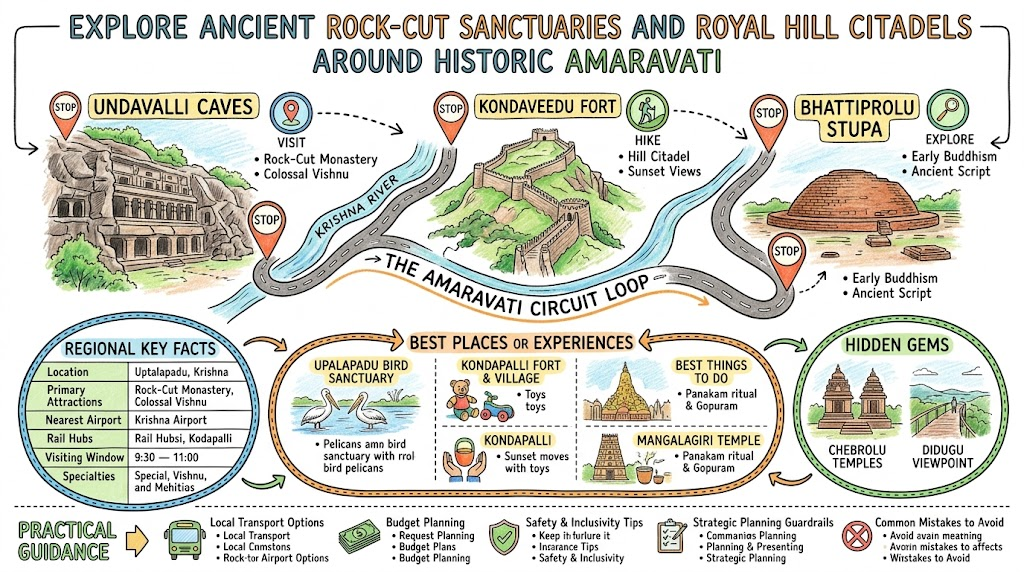
| Regional Key Fact | Details & Specifications |
| Geographic Location | Palnadu and Guntur Districts, Andhra Pradesh (Krishna River Basin) |
| Primary Attractions | Rock-Cut Caves, Hill Fortresses, Buddhist Stupas, Bird Reserves |
| Nearest Airport | Vijayawada International Airport (VGA) (~35–45 km) |
| Major Rail Hubs | Vijayawada Junction (BZA) and Guntur Junction (GNT) |
| Ideal Visiting Window | October to March (Pleasant winter weather) |
| Key Regional Specialties | Mangalagiri Handlooms, Kondapalli Toys, Spicy Guntur Chili Cuisine |
Best Places or Experiences
Undavalli Caves
Carved directly into solid sandstone hillsides during the 4th and 5th centuries CE, the Undavalli Caves stand as a monumental feat of early Indian rock-cut architecture. Originally carved out by Buddhist monks as monsoon retreats, the multi-tiered cave complex was later transformed under the Vishnukundina dynasty into a dedicated Hindu shrine. The crowning architectural highlight is the colossal 5-meter-long reclining statue of Lord Anantha Padmanabha Swamy on the second floor, sculpted masterfully out of a single granite block.
Walking through the lower pillared halls reveals ancient monastic cells, intricate rock friezes depicting mythological narratives, and structural pillars that demonstrate incredible rock-masonry precision. The upper terraces offer sweeping panoramic views across emerald rice paddies stretching toward the flowing waters of the Krishna River.
- Location: Undavalli Village, Tadepalle Mandal, approximately 22 km from the core capital region.
- Why it is worth visiting: Rare four-storied monolith showcasing seamless Buddhist and early Hindu cave carving transitions.
- Best things to do: Examine the gigantic reclining Vishnu monolith, photograph the river basin from the top terrace, and explore the lower monastic cells.
- Best time to visit: Early morning between 8:00 AM and 10:30 AM for cool temperatures and optimal natural lighting for photography.
- Ideal for whom: Architecture enthusiasts, historical researchers, photography lovers, and families.
- Travel tip: Wear slip-on shoes as footwear must be removed when stepping onto the sacred upper shrine levels.
Kondaveedu Fort
Perched dramatically atop a rugged ridge in the Nallamala range, Kondaveedu Fort is an expansive 14th-century hill citadel constructed by the Reddi Dynasty. The fortress later passed through the hands of the Vijayanagara Empire, the Golconda Sultans, the French, and the British, with each power leaving distinct architectural imprints across its vast ramparts. Spanning multiple hilltop levels, the site features fortified defense walls, ancient granaries, stone guard towers, and deep mountain reservoirs.
The ascent to the fort passes through dense forest canopy and scenic ghat roads that reveal breathtaking vistas of the surrounding countryside. Exploring the inner ruins reveals historic arched gateways, royal residential quarters, and military outposts that evoke tales of medieval warfare and regional chivalry.
- Location: Kondaveedu Village, Chilakaluripet constituency, approximately 42 km southwest of Amaravati.
- Why it is worth visiting: One of the most impregnable hill fortresses in South India offering stunning panoramic photography and rich history.
- Best things to do: Trek along the hilltop ramparts, photograph the sunset from the western watchtowers, and explore the ancient water storage tanks.
- Best time to visit: Late afternoon between 3:30 PM and 6:00 PM to catch spectacular sunset views over the valley.
- Ideal for whom: Adventure seekers, trekkers, history buffs, and landscape photographers.
- Travel tip: Carry sufficient drinking water and wear sturdy hiking shoes as walking across uneven stone ruins requires sure footing.
Bhattiprolu Buddhist Stupa Site
Dating back to the 3rd century BCE, the Bhattiprolu Stupa site is one of the earliest Buddhist monastic establishments in Southern India. Constructed during the reign of King Kuberaka of the Sala kingdom, this ancient brick mound yielded sacred bone relics attributed directly to the Lord Buddha during archaeological excavations. The site is historically famous for the discovery of the Bhattiprolu script, an early variant of Brahmi script that directly influenced the evolution of modern Telugu writing.
Visiting Bhattiprolu offers a quiet, contemplative experience far removed from typical tourist traps. The massive circular brick foundation layout reveals the sophisticated architectural planning and structural engineering executed by ancient builders over two millennia ago.
- Location: Bhattiprolu Village, Guntur district, roughly 65 km south of the main capital complex.
- Why it is worth visiting: The birthplace of early southern Brahmi script and a vital pilgrimage site of authentic Buddhist heritage.
- Best things to do: Study the ancient brickwork layout, read the informative ASI inscription panels, and enjoy the tranquil heritage gardens.
- Best time to visit: November through February during mild morning hours.
- Ideal for whom: Heritage researchers, spiritual seekers, archaeology lovers, and quiet travelers.
- Travel tip: Combine this trip with nearby coastal heritage stops to maximize your travel time.
Uppalapadu Bird Sanctuary
Tucked quietly within a agricultural wetland basin, the Uppalapadu Bird Sanctuary is a thriving natural refuge for thousands of migratory avian species. Every year, endangered bird species including Spot-billed Pelicans, Painted Storks, Glossy Ibises, and Cormorants travel thousands of miles from Siberia and Australia to nest in these protected waters. The sanctuary features specially designed wire-mesh nesting trees planted in water tanks to ensure predator-free breeding habitats.
Observational boardwalks and high watchtowers allow visitors to watch parental feeding rituals, soaring flight formations, and nesting activities without disturbing wildlife. The air fills with the vibrant chatter of bird calls, creating a sensory paradise for nature lovers.
- Location: Uppalapadu Village, Guntur district, about 32 km from the urban core.
- Why it is worth visiting: An incredible ecological success story where human-engineered nesting structures protect global migratory birds.
- Best things to do: Observe pelican feeding displays from the viewing towers, capture bird photos with telephoto lenses, and walk along the wetland perimeter.
- Best time to visit: December to February when migratory bird density reaches its peak.
- Ideal for whom: Wildlife photographers, nature enthusiasts, birdwatchers, and eco-tourists.
- Travel tip: Bring quality binoculars and avoid wearing brightly colored clothing to ensure you do not startle nesting birds.
Kondapalli Fort and Artisan Village
Situated on a lush forested hill, Kondapalli Fort is a medieval 14th-century stronghold established by Prolaya Vema Reddi. The fortress complex features the grand Gajashala (elephant stables), the royal Rani Mahal palace quarters, and intact stone ramparts overlooking scenic mountain passes. Beyond its military grandeur, the hill fortress overlooks the historic village of Kondapalli, world-renowned for its traditional handcrafted wooden toys (Kondapalli Bommalu).
Visiting the artisan workshops in the village below allows travelers to witness master craftspeople carving lightweight Tella Poniki wood into exquisite, hand-painted figurines using natural vegetable dyes. This unique dual experience seamlessly blends rich military history with living folk artistry.
- Location: Kondapalli Village, Ibrahimpatnam Mandal, approximately 38 km northwest of the capital area.
- Why it is worth visiting: Rare combination of a medieval hill fortress and a UNESCO-recognized toy-making artisan heritage hub.
- Best things to do: Walk through the palace ruins, buy hand-carved wooden toys directly from local artisans, and explore the ancient armory.
- Best time to visit: Morning hours from 9:00 AM to 1:00 PM for artisan visits and fort exploration.
- Ideal for whom: Culture collectors, families with children, history buffs, and handicraft lovers.
- Travel tip: Purchase authentic toys directly from the artisan cooperative societies to support local traditional craft families.
Sri Panakala Narasimha Swamy Temple, Mangalagiri
Revering a fierce avatar of Lord Vishnu, the Sri Panakala Narasimha Swamy Temple is situated on the sacred hill of Mangalagiri. This ancient temple is famous for its unique ritual: priest offerings of Panakam (sweet jaggery water mixed with cardamom and pepper) are poured directly into the mouth of the deity’s rock-cut image. Invariably, exactly half of the jaggery liquid is accepted by the deity, while the remaining half is returned as sacred Prasadam. Despite tons of sweet liquid poured daily, not a single ant or insect is found on the temple premises.
At the base of the hill stands the Lakshmi Narasimha Swamy Temple, featuring an imposing 11-storeyed Gopuram (tower) measuring 153 feet tall, making it one of the tallest temple towers in South India. The surrounding streets are renowned for producing exquisite, hand-woven Mangalagiri cotton sarees.
- Location: Mangalagiri Town, Guntur district, approximately 18 km from the center of Amaravati.
- Why it is worth visiting: Unique spiritual mysteries combined with master handloom weaving traditions.
- Best things to do: Witness the Panakam ritual at the hilltop shrine, admire the towering 11-storey gopuram, and buy handloom sarees from local weavers.
- Best time to visit: Early morning between 6:00 AM and 10:00 AM to participate in the hill temple rituals comfortably.
- Ideal for whom: Spiritual travelers, culture lovers, handloom textile buyers, and photography enthusiasts.
- Travel tip: Dress modestly in traditional attire (dhotis/trousers for men, sarees/salwars for women) to ensure smooth entry.
Offbeat Exploration: Hidden Gems Tourists Miss
Chebrolu Ancient Temples Complex
Chebrolu was once a prominent military capital under the Eastern Chalukyas and Kakatiya rulers. Today, it remains a quiet countryside treasure filled with dozens of ancient, scattered stone temples. The highlight is the rare Nageswara Swamy Temple complex, which houses a unique shrine dedicated directly to Lord Brahma, surrounded by carved granite pillars and historic temple tanks.
Pedakakani Weaving Villages
Tucked away from mainstream tourist circuits, the rural artisan hamlets near Pedakakani offer intimate glimpses into traditional pit-loom weaving methods. Visitors can watch master weavers transform raw thread into vibrant textiles, experiencing authentic village culture and buying genuine woven products directly from source artisans.
Didugu Krishna River Viewpoint
Located along a pristine bend of the river, Didugu offers serene views of untouched riverbanks, sandbars, and lush greenery. It provides a quiet alternative to urban riverfronts, perfect for peaceful evening walks, birdwatching, and watching golden sunsets over the water.
Detailed Practical Guidance for Travelers
| Destination | Standard Entry Fee | General Timings | Best Local Food Options Nearby | Recommended Nearby Attractions |
| Undavalli Caves | ₹25 (Indians), ₹300 (Foreigners) | 9:00 AM – 5:30 PM | Andhra meals, Punugulu, Mirchi Bajji stalls | Prakasam Barrage, Prakasam Park |
| Kondaveedu Fort | ₹20 per person | 9:00 AM – 5:00 PM | Local roadside tiffins, fresh coconut water | Phirangipuram Village, Guntur City |
| Bhattiprolu Stupa | Free Entry | 8:00 AM – 6:00 PM | Traditional South Indian breakfast, Idli-Dosa | Repalle Town, coastal wetlands |
| Uppalapadu Sanctuary | ₹20 adults, ₹10 children | 6:00 AM – 6:00 PM | Local meals, Rayalaseema/Andhra tiffins | Guntur city center, craft markets |
| Kondapalli Fort | ₹20 per person | 10:00 AM – 5:00 PM | Spicy Andhra Biryani, traditional Thali | Kondapalli Toy Colony, Ibrahimpatnam |
| Mangalagiri Temple | Free (Special Darshan ₹50–₹100) | 5:00 AM – 12:30 PM, 4:00 PM – 8:30 PM | Sweet Panakam, Jaggery sweets, Andhra Thali | Handloom Weaving Streets, Kanaka Durga Temple |
Logistics & On-Ground Navigation
Local Transport Options
- Railways & Trains: Vijayawada Junction (BZA) and Guntur Junction (GNT) serve as major regional hubs connecting to local passenger trains across the circuit.
- Auto-Rickshaws & E-Rickshaws: Ideal for short, intra-city travel between shrines, local market streets, and nearby transport stands.
- Private Car Rentals & Taxis: Best choice for covering multi-stop circuit days (such as visiting Kondaveedu Fort, Undavalli, and Mangalagiri in a single trip) efficiently.
- State Bus Services (APSRTC): Frequent and very affordable bus connections link major towns, though local village stops may require short auto-rickshaw connections.
Budget Planning
Budget Travel Tip: Exploring regional heritage sites is remarkably affordable, as most entry fees are minimal and local transport options remain very budget-friendly.
- Backpacker / Budget Tier: ₹1,200 – ₹1,800 per day (Includes budget guesthouses, public bus transport, street food, and standard entry tickets).
- Mid-Range / Comfort Tier: ₹3,500 – ₹6,000 per day (Includes 3-star AC hotels, private rental car with driver, mid-tier restaurant dining, and guided experiences).
Safety and Inclusivity Tips
- For Families: Stick to well-maintained heritage complexes during daylight hours. Carry bottled drinking water and light snacks, especially when visiting hill fort sites with limited shops.
- For Couples: Enjoy peaceful walks along quiet river decks and hill vistas, but respect conservative local social norms in rural areas and temple towns.
- General Traveler Safety: Stay hydrated in warm weather, wear appropriate footwear for rock-cut steps, and keep emergency contact numbers saved on your phone.
Strategic Travel Planning Guardrails
Travel Planning Tips for Amaravati
- Season Choice: Plan your visit between November and February to enjoy pleasant weather suitable for outdoor fort hikes and cave explorations.
- Payment Preferences: While digital payments (UPI) are widely accepted in cities, carry physical cash for rural auto rides, artisan toy purchases, and small village eateries.
- Local Etiquette: Always remove footwear before entering temple premises and sacred cave shrines. Dress modestly in traditional or conservative attire.
- Physical Preparation: Expect moderate step climbing at hill fortresses and multi-level cave sites like Undavalli.
- Sun Protection: Carry wide-brimmed hats, sunglasses, and high-SPF sunscreen, as mid-day sun exposure can be intense even in winter.
- Early Starts: Begin day tours by 7:30 AM to beat afternoon heat and capture optimal lighting for photography.
Common Mistakes to Avoid
- Over-packing Daily Itineraries: Trying to visit too many distant sites in a single day leads to travel fatigue; limit plans to 2–3 nearby spots per day.
- Ignoring Rural Crafts: Passing through artisan villages without visiting weaving units or toy workshops misses out on authentic cultural connections.
- Relying Only on Rideshare Apps: Rideshare services may not operate in distant fort areas like Kondaveedu; pre-arrange round-trip taxi rides instead.
- Skipping Local Tiffin Stalls: Choosing only hotel buffets deprives you of authentic regional culinary specialties like spicy Mirchi Bajji and Guntur Idli.
- Overpaying for Transport: Always negotiate auto-rickshaw fares beforehand or ask drivers to use fixed local rate cards.
Suggested Itinerary Blueprints
1-Day Quick Dash (Heritage & Citadel Express)
- Target Audience: Short-stay travelers, business visitors, and day-trippers.
- Morning: Start early at Undavalli Caves (8:00 AM), exploring multi-tiered rock carvings and admiring views of the Krishna River basin.
- Mid-Day: Head to Mangalagiri to visit Sri Panakala Narasimha Swamy Temple, taste sacred Panakam, and browse local handloom saree shops.
- Afternoon/Evening: Drive to Kondaveedu Fort to explore hilltop ramparts and capture scenic sunset views over the valley.
2-Day Deep-Dive (Ancient Caves & Fortress Trail)
- Day 1 (Buddhist & Cave Heritage): Visit the Amaravati Mahachaitya Stupa, explore the Archaeological Museum, visit Undavalli Caves, and take an evening boat ride along the Krishna River.
- Day 2 (Fortresses & Wildlife): Spend the morning at Kondapalli Fort and Artisan Village, enjoy an authentic Andhra thali lunch, and spend the afternoon birdwatching at Uppalapadu Bird Sanctuary.
Complete Weekend Travel Plan (The Grand Amaravati Circuit Loop)
- Friday Evening: Arrive, check into your hotel, and relax with an evening walk near the Prakasam Barrage riverfront.
- Saturday: Complete the 2-Day Deep-Dive itinerary covering Undavalli, Mangalagiri, and Kondaveedu Fort.
- Sunday: Take a morning drive to the ancient Bhattiprolu Stupa, visit the quiet temple cluster at Chebrolu, buy wooden toys in Kondapalli, and depart in the evening.
Common Tourist Mistakes to Avoid
- Geographic Blunders: Combining distant locations—such as Bhattiprolu in the south with Kondapalli in the northwest—on the same morning causes wasted hours in transit. Group attractions by geographic clusters instead.
- Commercial Traps: Spending precious vacation time in modern air-conditioned shopping malls rather than exploring traditional artisan markets like Mangalagiri weaving lanes deprives you of authentic experiences.
- Neglecting Modern/Alternative Zones: Focusing strictly on ancient ruins while ignoring vibrant, tree-lined modern expansion areas, cafe corridors, and scenic river decks leaves your travel experience incomplete.
- Transport Overpayment: Accepting unmetered fare quotes from transport operators at major transit stations without cross-referencing standard local rates leads to unnecessary expense.
- Luxury Dining Bias: Eating exclusively at upscale hotel dining rooms causes travelers to miss out on authentic regional flavors available at celebrated local tiffin centers.
Frequently Asked Questions
1. What is the best season to explore heritage sites around Amaravati?
The ideal window is winter, spanning from November through February, when daily temperatures stay comfortable for outdoor fort walking and cave explorations.
2. How far are the Undavalli Caves from the main urban center?
Undavalli Caves are conveniently located approximately 22 kilometers from the core capital area and about 6 kilometers from Vijayawada city center.
3. Are there entrance fees for visiting historical monuments in this circuit?
Most historical monuments charge minimal tickets ranging between ₹20 and ₹25 for domestic visitors, making this heritage circuit very budget-friendly.
4. Can Kondaveedu Fort be accessed by road directly?
Yes, a well-maintained ghat road now allows vehicles to drive right up to the hilltop fort entrance, significantly reducing trekking effort for visitors.
5. What unique souvenirs should travelers buy in this region?
Top authentic souvenirs include hand-carved Kondapalli wooden toys (Kondapalli Bommalu) and genuine Mangalagiri handloom cotton sarees purchased directly from weavers.
6. Is public transport readily available to reach Uppalapadu Bird Sanctuary?
Local buses run regularly toward Uppalapadu from Guntur bus station, though auto-rickshaws provide much more direct, hassle-free door-to-door access.
7. What is the spiritual significance of the ritual at Mangalagiri Temple?
Devotees offer sweet jaggery water (Panakam) directly into the deity’s mouth, with legend holding that the shrine miraculously returns exactly half of every offering.
8. Are these destinations suitable for elderly travelers and families with young children?
Yes, major sites like Undavalli Caves and Mangalagiri feature paved paths, though hill forts require comfortable walking shoes and light assistance on uneven stone steps.
9. How many days are ideal to explore all major hidden places in this circuit?
A 2 to 3-day itinerary allows you to explore major rock-cut caves, medieval forts, bird sanctuaries, and artisan villages at a comfortable pace without rushing.
10. What local food dishes should every traveler try while visiting?
Don’t miss authentic Andhra thalis, spicy Guntur Mirchi Bajji, soft Pesarattu, and traditional jaggery-based sweets available at local eateries.
11. Is photography permitted inside the Undavalli Caves and fort sites?
Non-commercial photography is permitted across almost all fort and cave complexes, though tripod usage may require special permission from site security.
12. Which nearby airport provides the fastest regional access?
Vijayawada International Airport (VGA) is the nearest airport, located roughly 35 to 45 kilometers away with direct flights connecting to major Indian cities.
Conclusion
Choosing to journey beyond familiar tourist trails reveals a world rich in ancient artistry, dramatic fortresses, and living cultural traditions. From marveling at the multi-tiered rock-cut architecture of Undavalli to standing atop the windy battlements of Kondaveedu, every stop along this circuit offers deep, unforgettable connection. Beyond spectacular stone monuments, it is the authentic warmth of local weavers, master toy artisans, and quiet countryside river bends that truly lingers in the heart long after your journey ends.
