Introduction
Modern leisure travel too often routes eager travelers through sanitized food courts, international franchises, and overpriced tourist traps that leave little memory on the palate. Amaravati offers an immediate, sensory antidote to this monotony, rooting its culinary identity in centuries-old agricultural traditions, temple kitchens, and fiery coastal spice profiles. Situated along the Krishna River in Andhra Pradesh, this historic capital region invites travelers to taste history through stone-ground chutneys, red chili curries, and wood-fired tiffins.
Food here is neither decorative nor diluted for tourist crowds; it is an unapologetic, soul-stirring cultural expression of local life. From humble breakfast stalls near ancient stupas to revered banana-leaf lunch messes, dining in Amaravati is an authentic voyage into the heart of regional Andhra gastronomy.
Why Amaravati is a must-visit city
Amaravati sits at a distinctive culinary and cultural crossroad, blending the agrarian abundance of the Krishna River delta with the deep spice heritage of nearby Guntur. Historically significant as the seat of the Satavahana empire and a profound Buddhist spiritual epicenter, the region’s foodways celebrate indigenous grains, fragrant ghee, and complex spice blends honed over generations. Modern travelers can easily access Amaravati via smooth multi-lane highways from Vijayawada and Guntur, with premier railway junctions and airport links placing authentic coastal Andhra dining within easy reach for weekend explorers, passionate foodies, and family road-trippers alike.
The local food circuit takes visitors from rustic temple ghat tiffin carts to heritage vegetarian messes and riverfront seafood eateries. Navigating these food hubs is delightfully straightforward, supported by well-paved roads, frequent regional state buses, and ubiquitous local auto-rickshaws.
| Feature | Details |
| Culinary Region | Krishna-Guntur Delta Zone, Andhra Pradesh |
| Primary Flavor Profile | Fiery red chili heat, tangy gongura leaves, fragrant pure ghee |
| Signature Staples | Pesarattu, Dibba Rotti, Gongura Mamsam, Pot-curd rice |
| Average Meal Cost | ₹80 – ₹350 per person depending on dining format |
| Best Culinary Season | October to March (cooler months for spicy fare) |
| Key Food Hubs | Amaravati Temple Street, Undavalli Junction, Prakasam Barrage |
Best Places or Experiences
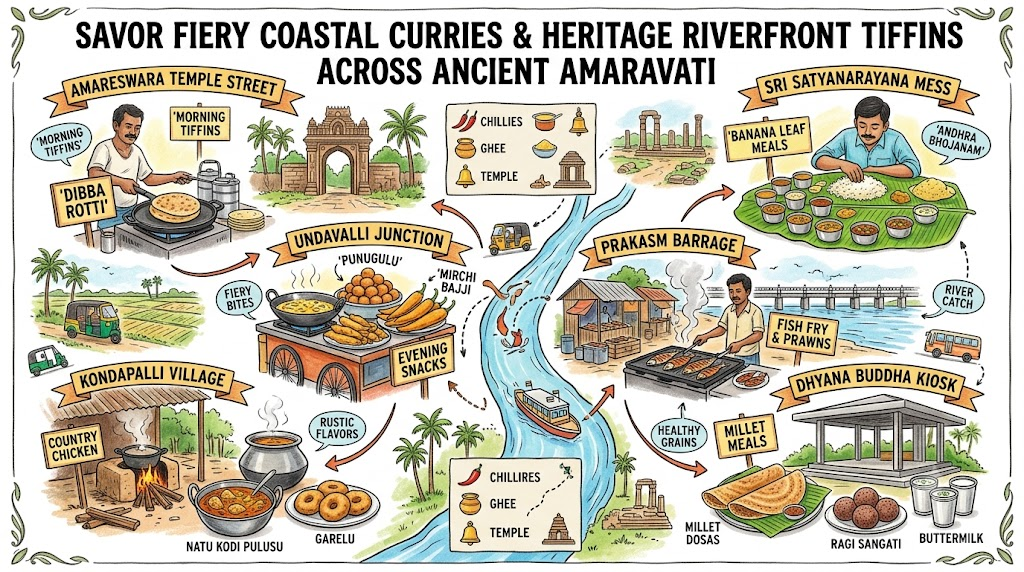
Amareswara Temple Street Morning Tiffin Stalls
Clustered right outside the towering entrance arch of the ancient Amareswara Swamy Temple, these humble morning stalls hum with energy starting before sunrise. The aroma of mustard seed tempering, crackling curry leaves, and freshly ground ginger floats across the river breeze, drawing pilgrims and food enthusiasts alike. Generations-old family cooks prepare breakfast items over roaring cast-iron pans, ladling fermented lentil batters with practiced speed.
The undisputed champion here is the local Dibba Rotti—a thick, slow-cooked lentil cake with an ultra-crispy golden crust and a soft, airy interior. Paired with fiery allam (ginger) chutney and mild coconut dip, it sets an exceptional standard for traditional South Indian street food.
- Location: Car Street, near Amareswara Swamy Temple Main Entrance, Amaravati Town.
- Why it is worth visiting: It is the regional epicenter for traditional, slow-cooked breakfast items untouched by commercial restaurant shortcuts.
- Best things to do: Order a fresh plate of piping hot Dibba Rotti, watch the street vendors flip crispy dosa varieties, and finish with strong filter coffee served in brass tumblers.
- Best time to visit: 6:30 AM to 9:00 AM for the freshest batters and vibrant temple atmosphere.
- Ideal for whom: Street food adventurers, early risers, vegetarian foodies, and budget backpackers.
- Travel tip: These morning stalls sell out rapidly; arrive before 8:30 AM to ensure you get hot Dibba Rotti before the daily batch finishes.
Sri Satyanarayana Mess: Banana Leaf Meals
Tucked into the heritage residential lanes of Amaravati town, Sri Satyanarayana Mess is an unassuming culinary landmark dedicated to the classic Andhra bhojanam (full meals). The dining room is stripped of modern pretension, focusing entirely on rows of steel tables where servers lay down fresh, steaming banana leaves before eager diners.
The meal is an intricate ceremony of flavors, beginning with a mound of steaming Sona Masuri rice, a dollop of fresh yellow ghee, and fragrant Kandi Podi (gunpowder lentil spice mix). Course after course follows, featuring sour Gongura Pachadi, spicy vegetable vepudu (stir-fries), pepper-infused tomato rasam, and thick artisanal pot curd that cools the palate.
- Location: Main Bazaar Road, 500 meters from Amaravati Maha Stupa, Amaravati.
- Why it is worth visiting: Offers an authentic, uncompromised traditional Andhra full-course vegetarian meal experience.
- Best things to do: Savor the signature first bite of hot rice mixed with pure ghee and Kandi Podi, ask for extra servings of seasonal raw mango pachadi, and finish your meal with cool butter milk.
- Best time to visit: 12:30 PM to 2:30 PM for peak lunch service.
- Ideal for whom: Culture enthusiasts, vegetarian travelers, families, and lovers of traditional thali dining.
- Travel tip: Andhra spice levels are assertive; ask the servers for an extra scoop of ghee or sweet majjiga (buttermilk) if the chili intensity becomes overwhelming.
Undavalli Junction Punugulu & Mirchi Bajji Carts
As the afternoon sun dips low over the sandstone caves of Undavalli, street vendors along the village crossroad ignite their giant iron woks filled with bubbling oil. This junction transforms into an electric evening snacking hub where locals and commuters gather for freshly fried Andhra street treats.
The standout specialty is Punugulu—golden, crisp fritters made from fermented urad dal and rice batter, tossed in raw chopped onions, fresh coriander, and a splash of piquant peanut-chili chutney. Alongside, thick green Bhavani chillies are slit, stuffed with ajwain and tamarind paste, battered in gram flour, double-fried, and sliced into mouthwatering Cut Mirchi.
- Location: Undavalli Caves Approach Road, near NH16 bypass, Undavalli (20 km east of Amaravati).
- Why it is worth visiting: Renowned regional pitstop for authentic Andhra evening tea-time fried delicacies.
- Best things to do: Try a mixed platter of Cut Mirchi and Punugulu, watch the artisanal double-frying technique, and wash it down with ginger-infused cutting chai.
- Best time to visit: 4:30 PM to 7:00 PM when snacks are prepared fresh to order.
- Ideal for whom: Street snack lovers, evening explorers, road trippers, and casual groups.
- Travel tip: Always ask the vendor to fry a fresh batch rather than choosing pre-fried items sitting under display glass.
Prakasam Barrage Riverfront Fish Fry & Prawn Shacks
Perched along the embankment near the Prakasam Barrage causeway, a cluster of evening seafood shacks celebrates the daily freshwater catch from the Krishna River. Fishermen pull their wooden boats ashore just downstream, supplying fresh river murrel (korrameenu), rohu, and succulent freshwater prawns directly to open-air tawa stalls.
Cooks marinate the fish fillets on large circular iron griddles using thick coats of Guntur red chili paste, crushed garlic, turmeric, and freshly squeezed lemon juice. Searing over high flame creates a smoky, caramelized crust while keeping the interior sweet and tender, producing a flavor profile that captures coastal Andhra living.
- Location: Barrage Road, River Embankment, connecting Vijayawada and the Amaravati Capital Region.
- Why it is worth visiting: It delivers river-to-plate freshwater seafood prepared using hyper-local marinades and griddle-fry techniques.
- Best things to do: Select your choice of whole fresh fish from the display tray, request a customized spice marinade, and dine while enjoying river views.
- Best time to visit: 6:30 PM to 9:30 PM when the barrage lights create a vibrant waterfront backdrop.
- Ideal for whom: Seafood lovers, non-vegetarian foodies, night owls, and couples.
- Travel tip: Inquire about bone structure before ordering; local Korrameenu (murrel) has single central bone structures, making it much easier to eat than smaller river varieties.
Kondapalli Village Tandoori & Country Chicken Messes
Situated near the historic foot of Kondapalli Fort just northwest of the capital zone, this cluster of countryside family kitchens is legendary among local food connoisseurs. Known regionally as “military messes,” these open-sided establishments specialize in robust, spice-heavy meat dishes simmered in heavy aluminum pots over wood embers.
The crown jewel of the menu is Natu Kodi Pulusu (country chicken curry simmered with poppy seed paste, black pepper, and fiery dry chilies), served alongside steaming Garelu (crisp, savory lentil donuts). Dipping hot, crunchy vadas into thick, fiery chicken gravy creates an unmatched textural and spicy contrast.
- Location: Fort Road foothills, Kondapalli Village, 24 km northwest of Amaravati town.
- Why it is worth visiting: World-famous pairing of authentic country fowl curry with savory lentil vadas.
- Best things to do: Order the Natu Kodi Garelu combination plate, observe traditional wood-fire cooking setups, and purchase authentic Kondapalli toys nearby.
- Best time to visit: 1:00 PM to 3:30 PM for fresh lunch batches.
- Ideal for whom: Adventurous meat lovers, traditional food explorers, and road-trip enthusiasts.
- Travel tip: Country chicken is naturally leaner and firmer than commercial broiler meat; chew slowly to appreciate the deep, concentrated flavor of the broth.
Dhyana Buddha Garden Tea & Artisan Millets Kiosk
Located adjacent to the landscaped grounds of the 125-foot Dhyana Buddha monument, this modern, eco-conscious open-air pavilion focuses on revived ancient grains and regional agrarian produce. Run by regional self-help groups, it serves as an educational and refreshing pause for heritage sightseers looking for lighter culinary heritage.
The kiosk specializes in steaming hot Ragi Sangati (finger millet balls) served with tangy country tomato pappu, alongside crispy Korralu (foxtail millet) dosas. Pair these with cold, spiced earthen-pot buttermilk scented with crushed mint, roasted cumin, and black salt to recover from afternoon sightseeing.
- Location: Dhyana Buddha Monument Complex, Amaravati Town.
- Why it is worth visiting: Showcases traditional millet recipes that formed the foundational diet of the ancient Satavahana populace.
- Best things to do: Try crisp foxtail millet dosas, drink earthen-pot buttermilk, and sample regional palm jaggery snacks.
- Best time to visit: 10:30 AM to 1:00 PM or 4:00 PM to 6:00 PM.
- Ideal for whom: Health-conscious travelers, elderly visitors, vegetarians, and wellness enthusiasts.
- Travel tip: The kiosk offers sealed packets of organic palm jaggery and roasted flax seed powders that make excellent gifts.
Offbeat Exploration: Hidden Gems Tourists Miss
Guntur Mirchi Yard Canteen
While everyday travelers bypass the massive commercial spice yard on the outskirts of Guntur, food purists make the pilgrimage to its internal market canteens. Here, cooks prepare seasonal Mirchi Vepudu using newly harvested dry and fresh peppers directly from auction lots, creating a dish with nuanced fruitiness, smoke, and searing heat that is impossible to replicate elsewhere.
Bhavani Island Riverside Bamboo-Steamed Biryani Huts
Reached only by a brief ferry crossing on the Krishna River, these hidden huts tucked into bamboo groves prepare regional poultry and vegetable biryanis sealed entirely inside thick green bamboo stalks. Placed directly over glowing coals, the bamboo imparts sweet woody notes into the spiced rice, yielding an unforgettable earthy flavor profile.
Pedakakani Jaggery Sweet Workshops
Located in a quiet village pocket south of the capital line, multi-generational sweet-makers reduce fresh sugarcane juice in massive copper cauldrons over crushed cane fires. Visitors can witness raw molasses turned into Bellam Jalebi and crumbly sesame-jaggery bars, purchasing sweets hot off the cooling stones before commercial distributors arrive.
Detailed Practical Guidance for Travelers
| Destination | Standard Entry Fee | General Timings | Best Local Food Options Nearby | Recommended Nearby Attractions |
| Amareswara Temple Street Stalls | Free Access | 6:00 AM – 11:00 AM | Authentic Dibba Rotti & Allam Chutney | Amareswara Swamy Temple (Adjacent) |
| Sri Satyanarayana Mess | Meal price ~₹120–₹160 | 12:00 PM – 3:30 PM, 7:30 PM – 10:00 PM | Banana-leaf Andhra Meals with Kandi Podi | Amaravati Maha Stupa (500 m) |
| Undavalli Junction Carts | Snack price ~₹30–₹60 | 4:00 PM – 9:30 PM | Crispy Punugulu & Double-Fried Cut Mirchi | Undavalli Cave Temples (1 km) |
| Prakasam Barrage Shacks | Dish price ~₹150–₹350 | 5:30 PM – 10:30 PM | Pan-fried Korrameenu & Spicy River Prawns | Prakasam Barrage Promenade (Adjacent) |
| Kondapalli Country Messes | Meal price ~₹200–₹400 | 12:30 PM – 4:00 PM | Natu Kodi Pulusu with Savory Crispy Garelu | Kondapalli Fort & Toy Colony (2 km) |
| Dhyana Buddha Kiosk | Monument entry ₹20 | 8:30 AM – 6:00 PM | Foxtail Millet Dosa & Spiced Pot Buttermilk | 125-ft Dhyana Buddha Statue (Adjacent) |
Logistics & On-Ground Navigation
Local Transport Options
- APSRTC Express & Palle Velugu Buses: Frequent, highly economical buses run between Vijayawada Pandit Nehru Bus Station, Guntur, and Amaravati town every 15 to 20 minutes.
- Auto-Rickshaws & E-Rickshaws: Excellent for short hops between temple street eateries, the Dhyana Buddha complex, and town markets. Always settle the fare beforehand.
- Self-Drive or Hired Cab: The most practical option for multi-point culinary itineraries covering Undavalli, Kondapalli, and Amaravati in a single day.
Budget Planning
- Backpacker / Street Food Tier: ₹600 – ₹1,000 per person/day. Covers authentic morning tiffins, unlimited thali mess lunches, evening street fritters, and public transport.
- Mid-Range / Comfort Tier: ₹2,000 – ₹3,800 per person/day. Includes private cab hires, premium dining at traditional multi-cuisine restaurants, fresh river seafood platters, and guided food stops.
Safety and Inclusivity Tips
- Family Travelers: Most traditional messes welcome children warmly; ask servers to omit dry podis and spicy gunpowders from your children’s rice portions, swapping them with mild plain ghee and mild dal (pappu).
- Couples & Solo Explorers: Casual dining spots and tea shops are safe, friendly, and community-centered. Solo diners are treated with hospitality at family-run lunch messes.
- General Spice Safety: Unfiltered tap water should be avoided. Always stick to sealed bottled water or fresh coconut water when cooling down from spicy meals.
Strategic Travel Planning Guardrails
Travel Planning Tips for Amaravati
- Balance Heat with Dairy: Always conclude high-spice Andhra meals with a generous serving of fresh curd rice (perugannam) to soothe digestion.
- Carry Paper Currency: While digital UPI payments are widespread, small roadside bajji vendors and temple flower carts occasionally experience poor network signals.
- Pace Breakfast Early: Traditional tiffins like Dibba Rotti are deeply filling; avoid heavy hotel breakfasts so you can explore authentic street food by 7:30 AM.
- Confirm Meat Days: Many traditional countryside mess kitchens run purely vegetarian menus on Tuesdays and Saturdays out of religious observance; check ahead for chicken specialties.
- Dress for Humidity: Light, loose cotton garments make warm afternoons between street stalls comfortable.
Common Mistakes to Avoid
- Assuming All South Indian Food is Identical: Expecting mild Tamil-style sambar here will surprise you; Andhra dishes are sharper, tangier, and significantly spicier.
- Skipping Ghee at Meals: Avoiding ghee to “cut calories” is a mistake; pure ghee is culinarily essential to temper fiery chili pastes and unlock herbal podi aromas.
- Arriving Late for Mess Lunches: Most authentic thali messes close strictly by 3:00 PM; showing up late means missing fresh vegetable gravies.
- Relying Only on App Cabs for Return Legs: While app-based cabs operate in central Vijayawada, hail services dry up near rural Amaravati after dusk.
- Overlooking Street Hygiene Basics: Choose bustling stalls where oil is maintained at a rolling sizzle and food turns over continuously rather than quiet, stagnant carts.
Suggested Itinerary Blueprints
1-Day Quick Dash (The Express Food Trail)
Designed for travelers passing through who want maximum flavor impact in minimal time.
- Morning (7:30 AM – 10:00 AM): Start at Amareswara Temple Street for hot Dibba Rotti and ginger chutney, followed by strong filter coffee.
- Lunch (12:30 PM – 2:30 PM): Head to central Amaravati for an authentic banana-leaf bhojanam meal with Kandi Podi and Gongura pickle at Sri Satyanarayana Mess.
- Evening (5:00 PM – 7:30 PM): Stop at Undavalli Junction for crispy Punugulu and double-fried Mirchi Bajji, watching the sun set over the Krishna River.
2-Day Deep-Dive (The Epicurean Explorer)
Ideal for foodies wishing to combine cultural monument visits with deep culinary discovery.
- Day 1: Explore Amaravati town. Start with temple tiffins, visit the Maha Stupa, enjoy an unhurried traditional thali meal, explore Dhyana Buddha gardens with afternoon millet snacks, and wrap up with riverfront sweets.
- Day 2: Focus on outskirts and river treasures. Begin with Pesarattu breakfasts in Vijayawada, explore Undavalli Caves, drive up to Kondapalli for rustic Natu Kodi Garelu, and finish at night with grilled freshwater fish along Prakasam Barrage.
Complete Weekend Travel Plan (The Grand Delta Circuit)
- Friday Evening: Arrive, check into your stay, and take a night stroll near Prakasam Barrage while sampling street corn, mirchi bajji, and fresh tea.
- Saturday: A full heritage and food immersion across Amaravati town, focusing on morning Dibba Rotti, museum walks, home-style banana-leaf messes, and hidden sweet-making workshops.
- Sunday: Outlying culinary gems. Take the morning boat to Bhavani Island, venture to Kondapalli for spicy country-chicken lunch and artisan toy shopping, and end with an evening feast of river fish fry.
Common Tourist Mistakes to Avoid
- Geographic Blunders: Trying to schedule lunch in Amaravati town and an immediate afternoon snack in distant Kondapalli often leads to hours stuck in highway traffic.
- Commercial Traps: Booking expensive international buffet dinners at luxury hotels while missing the extraordinary, authentic meals cooked in modest family-run messes.
- Neglecting Modern/Alternative Zones: Focusing only on ancient temple alleys while skipping the clean, artisan millet kiosks and scenic riverfront promenades in the new capital sector.
- Transport Overpayment: Accepting initial inflated quotes from auto drivers at highway junctions; always request the standard local rate or use metered counters where available.
- Luxury Dining Bias: Believing that refined flavors exist only inside air-conditioned dining halls; Amaravati’s deepest, most complex spice mastery lives at unassuming street stalls and leaf messes.
Frequently Asked Questions
1. What makes the cuisine of Amaravati distinctly different from other South Indian regions?
Amaravati cuisine relies heavily on the fiery Guntur red chili, complemented by souring agents like red sorrel (gongura) leaves, tamarind, and cold-pressed sesame oil. Unlike the slightly sweet sambars of Karnataka or coconut-heavy dishes of Kerala, food here is bold, tangy, and unapologetically spicy, balanced with generous servings of pure country ghee.
2. Is Amaravati’s local food suitable for travelers with low spice tolerance?
Yes, travelers with low spice tolerance can comfortably enjoy the local food scene by requesting milder preparations. When eating traditional meals, you can simply skip raw chili chutneys, ask for extra ghee with your rice, and rely on curd rice, mild yellow lentil pappu, and coconut-based tiffin accompaniments to keep heat levels manageable.
3. What is the single most iconic breakfast dish a first-time visitor must try?
The essential breakfast dish to try is Dibba Rotti, also known regionally as Minapa Rotti. This thick, crispy-crusted bread is crafted from a slow-cooked urad dal and coarse rice ravva batter, yielding a crunchy exterior and an airy, steaming center that pairs with spicy ginger and tangy tomato chutneys.
4. Where can I experience an authentic traditional meal served on a banana leaf?
Head directly to Sri Satyanarayana Mess or local family-run bhojanam halls on Main Bazaar Road in Amaravati town. These venues serve authentic, unlimited vegetarian meals featuring seasonal vegetable fries, multiple varieties of spiced lentil powders, podi, tangy rasam, traditional sambar, and fresh pot-set buffalo curd on freshly cut plantain leaves.
5. Are non-vegetarian food options available near the sacred heritage monuments?
The immediate streets surrounding the ancient Amareswara Swamy Temple and the Maha Stupa complex are strictly vegetarian out of religious respect. However, exceptional non-vegetarian food, including local freshwater fish fry and country chicken curry, is widely available just a short auto ride away along the river barrage and surrounding bypass highways.
6. What is the signature specialty snack sold around the Undavalli Caves area?
Undavalli Junction is celebrated for its freshly fried Punugulu and Cut Mirchi Bajji. Punugulu are golf-ball-sized fritters made from fermented rice-dal batter fried to an airy crunch, while Cut Mirchi features large banana peppers stuffed with ajwain and tamarind, battered, fried, sliced into segments, and refried for maximum crunch.
7. Can travelers easily find healthy or dietary-restricted meal alternatives in the area?
Yes, Amaravati has deeply preserved millet traditions. The kiosks near the Dhyana Buddha statue and several local green cafes serve nutrient-rich preparations such as Ragi Sangati (finger millet balls), foxtail millet dosas, and steamed sprouts, providing wholesome options for health-conscious diners, diabetics, and those looking to avoid refined flours.
8. What should first-time visitors drink to cope with the fiery spice levels?
Skip carbonated soft drinks and opt for traditional Challa (spiced buttermilk seasoned with crushed ginger, green chilies, and curry leaves), fresh sweet lime juice, or natural tender coconut water sold along every major road. These beverages cool your core body temperature and quickly soothe spice heat on the palate.
9. Are food hygiene standards acceptable at street food stalls in the capital region?
Street food hygiene is generally good, particularly at high-turnover stalls where hot oil stays boiling and tiffin griddles run continuously. As a standard safety practice, stick to busy vendors with high local patronage, make sure your food is fried or cooked fresh to order, and always drink sealed bottled water.
10. What edible souvenirs or packaged food gifts are worth taking home from Amaravati?
Do not leave the region without picking up authentic Gongura Pickle, freshly ground Kandi Podi (spiced toor dal powder), sealed packs of Nallakaram Podi, and traditional rolled Pootharekulu (paper-thin rice wafers filled with jaggery and ghee) from authentic sweet and spice merchants in town.
11. What are the typical meal timings at traditional mess halls in Amaravati?
Traditional Andhra messes run on precise schedules: morning breakfast tiffins are served from 7:00 AM to 10:30 AM, lunch is served strictly between 12:00 PM and 3:00 PM, and dinner service runs from 7:30 PM to 10:00 PM. Arriving outside these hours typically means missing the fresh daily curries.
12. Is tap water safe to drink at local restaurants and street stands?
It is strongly advised to avoid drinking unfiltered tap water or unsealed table carafes. Always request commercially packaged, sealed mineral water bottles with unbroken caps, or carry your own filtered, insulated water flask while touring temple streets and village eateries across the region.
Conclusion
Embarking on a food journey through Amaravati is far more than an ordinary dining holiday; it is an unforgettable sensory initiation into coastal Andhra’s resilient, fiery, and generous spirit. Standing beside a sizzling breakfast cart as the morning temple bells ring, or blending fragrant yellow ghee and gunpowder podi over steaming rice, creates an emotional and cultural connection that polished dining rooms simply cannot duplicate. By venturing onto the riverfronts and into the humble village mess halls, you taste the true pulse of an ancient capital whose culinary soul remains vibrant and timeless.
