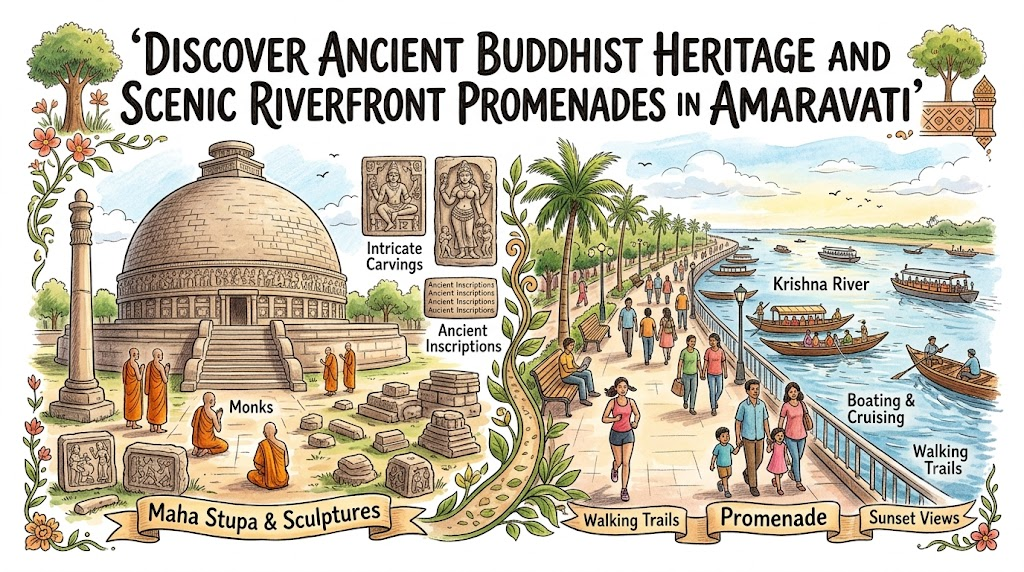
Introduction
Escaping mainstream, overcrowded tourist destinations often begins with a craving for something profoundly authentic and rooted in centuries of living tradition. While ordinary vacation spots overwhelm travelers with cloned cafes and commercial food courts, Amaravati connects your senses directly to the soil, spices, and historic soul of coastal Andhra. Situated gently along the sacred banks of the Krishna River, this ancient seat of dynasties serves up an extraordinary culinary landscape that mirrors its deep spiritual and cultural heritage.
Here, food is not merely sustenance; it is a sacred offering and an artistic craft honed across dynasties. The aroma of freshly crushed Guntur chilies, temperings of mustard and curry leaves in pure cold-pressed sesame oil, and sizzling griddles serving fermented rice-and-lentil delicacies create an intoxicating trail for curious culinary explorers.
Why Amaravati is a must-visit city
Amaravati commands immense weight in the cultural, geographical, and culinary annals of Southern India. Once the majestic capital of the Satavahana rulers and a pivotal sanctuary for Mahayana Buddhist philosophy, the region evolved into a dynamic crossroads of trade and fertile agriculture. Fed by the perennial Krishna River, the surrounding alluvial plains produce world-renowned Guntur chilies, aromatic paddy, and tender pulses that form the bedrock of Andhra’s fiery, complex culinary canon.
Modern connectivity makes exploring this gastronomic and cultural treasure effortless for weekenders, culinary travelers, and heritage enthusiasts alike. Flanked by Vijayawada and Guntur, Amaravati offers smooth access via National Highways, major rail interchanges at Vijayawada Junction, and domestic air links at Gannavaram Airport. Modern boutique stays and traditional rural hospitality provide comfortable bases for an unforgettable regional exploration.
| Aspect | Details |
|---|---|
| Location | Palnadu/NTR District borders, Andhra Pradesh |
| Nearest Airport | Vijayawada International Airport (VGA) ~45 km |
| Nearest Major Railway Station | Vijayawada Junction (BZA) ~32 km |
| Primary Attraction Theme | Gastronomy, Pancharama Heritage, Buddhist Archaeology |
| Best Travel Season | October to March |
| Ideal Trip Duration | 2 Days / 1 Night |
Best Places or Experiences
Amareswara Swamy Temple Prasadam and River Ghat Tiffins
The historic Amareswara Swamy Temple, dedicated to Lord Shiva, sits majestically upon the southern embankment of the holy Krishna River as one of the sacred Pancharama Kshetras. Beyond its soaring gopuram and revered 15-foot marble Shiva Lingam, the temple’s sacred precinct represents a living culinary time capsule. Here, the traditional temple kitchen prepares sanctified Daddojanam (curd rice seasoned with crushed ginger, mustard, and green chilies) and Pulihora (tangy tamarind rice laced with roasted peanuts and asafoetida).
Outside the temple gates, rustic pushcarts and traditional tiffin sheds serve morning pilgrims piping hot, skillet-roasted Dibba Rotti accompanied by spicy Allam Pachadi (fresh ginger chutney). Watching the sunrise mist rise off the river waters while savoring crisp regional breakfast items straight off cast-iron griddles delivers an unmatched sensory encounter with local community traditions.
Amareswara Swamy Temple riverfront shrine
- Location: Riverfront Road, Amaravati Town Center, 32 km from Vijayawada PNBS.
- Why it is worth visiting: Unites deep spiritual devotion with quintessential temple foods and authentic street tiffins found only in this river belt.
- Best things to do: Receive fresh sacred temple Pulihora, sit by the river ghats enjoying crisp hot Dibba Rotti, and observe early morning temple rituals.
- Best time to visit: 6:30 AM to 9:00 AM for fresh breakfast griddles and morning temple pujas.
- Ideal for whom: Culinary explorers, cultural travelers, spiritual pilgrims, and photography enthusiasts.
- Travel tip: Arrive before 8:30 AM to catch the freshest batch of tiffins before popular local stalls sell out for the morning.
Amaravati Heritage Messes & Traditional Andhra Thali Circuit
The traditional culinary mess halls peppered throughout Amaravati town and the adjacent Dharanikota belt serve the legendary, unadulterated Andhra Bhojanam on fresh banana leaves. Rooted in rustic agrarian lifestyles, this multi-course feast showcases the fiery complexity of regional culinary craftsmanship. Courses arrive in disciplined succession: steaming Sona Masoori rice topped with fragrant golden ghee, fiery Gongura Pachadi (tangy sorrel leaf relish), Kandi Podi (spiced lentil powder), and simmering vegetable Sambar.
These dining halls avoid artificial colorings and heavy commercial oils, relying instead on seasonal country vegetables, freshly grated coconut, and freshly pounded spice blends. Dining in these heritage spaces feels like entering an authentic village home, where warm hospitality and seconds of spiced buttermilk never run dry.
- Location: Main Temple Bazaar and Car Street, Amaravati Town.
- Why it is worth visiting: The definitive destination to experience authentic Gongura relishes and fiery lentil powders in an uncommercialized local setting.
- Best things to do: Experience the traditional dining sequence from Podi to curd, taste seasonal raw mango relishes, and refresh with spiced Majjiga.
- Best time to visit: 12:30 PM to 2:30 PM for lunch when all curries and rice varieties are served fresh from the stove.
- Ideal for whom: Foodies, families, culinary writers, and cultural purists.
- Travel tip: Mix a dollop of pure buffalo ghee into your first rice serving with Podi or Gongura to temper the vibrant chili heat.
Dhyana Buddha Garden Tea Stops & Millet Cafe Counters
Standing tall against the Amaravati skyline, the 125-foot Dhyana Buddha Statue sits peacefully upon an elevated riverfront lotus pedestal. Underneath the serene gaze of this mammoth monument, the surrounding landscaped garden complex houses artisanal snack stalls and health-conscious millet refreshment kiosks. These counters revive native grain traditions, offering warm glasses of Ragi Ambali (spiced finger millet porridge) alongside steamed snacks.
The open breeze flowing off the Krishna River creates a tranquil atmosphere where visitors unwind after browsing the three-story museum housed within the statue’s base. Sipping rich filter coffee or chilled buttermilk while observing the sun sinking behind the colossal statue provides a calming interlude during intense days of sightseeing.
The majestic Dhyana Buddha Statue.
- Location: Riverfront Cultural Complex, Amaravati, 1.5 km west of the town bus stand.
- Why it is worth visiting: Spectacular river vistas combined with refreshing native millet beverages and serene open-air garden strolls.
- Best things to do: Walk through the museum exhibits beneath the statue, taste traditional Ragi Ambali, and photograph panoramic sunset river views.
- Best time to visit: 4:30 PM to 6:30 PM for pleasant weather, cool breezes, and soft golden-hour light.
- Ideal for whom: Solo wanderers, wellness seekers, families, and landscape photographers.
- Travel tip: Wear slip-on footwear since shoes must be deposited at designated garden kiosks before ascending the monument stairs.
Undavalli Cave Footpath Mirchi Bajji & Street Food Hub
The 7th-century rock-cut Undavalli Caves showcase ancient architectural mastery, featuring a grand four-story sandstone facade carved into a hillside. While the monolithic reclining statue of Lord Vishnu inside draws art historians, the village square at the foot of the hill is equally celebrated for its lively evening street food culture. Rustic carts set up deep cast-iron woks bubbling with hot oil, frying colossal Guntur green chilies encased in seasoned chickpea batter.
The standout dish is Cut Mirchi Bajji, double-fried for crunch, sliced open, and stuffed with chopped red onions, roasted peanuts, cilantro, and a squeeze of fresh lime juice. Pairing these fiery fritters with a warm tumbler of strong, frothy South Indian chicory filter coffee as dusk settles over the rock caves delivers an unforgettable local culinary ritual.
Rock-cut Undavalli Cave Temples.
- Location: Undavalli Village Foothills, 22 km east of Amaravati Town, near Prakasam Barrage.
- Why it is worth visiting: The premier location to experience authentic Andhra Cut Mirchi street snacks right beside monolithic rock-cut cave monuments.
- Best things to do: Climb the four cave tiers to view the reclining Vishnu monolith, sample double-fried Cut Mirchi Bajji, and watch roadside tea masters brew frothy filter coffee.
- Best time to visit: 3:30 PM to 6:00 PM for cave exploration followed immediately by fresh evening street-side frying.
- Ideal for whom: Street food adventurers, backpackers, young couples, and history buffs.
- Travel tip: If you have a sensitive palate, request stalls to tone down the raw onion and chili seed stuffing inside your Mirchi Bajji.
Prakasam Barrage Promenade Night Food Stalls
Spanning over 1.2 kilometers across the Krishna River, the Prakasam Barrage links the historic capital plains with Vijayawada. By day, it serves as a crucial irrigation artery; by night, the illuminated barrage transforms into a bustling promenade frequented by evening stroll walkers and street food enthusiasts. Portable vendors line the bridge approaches, hawking a colorful array of savory delicacies.
Crowds gather around carts serving freshly crisped Punugulu (golden fritters made from fermented idli-dosa batter) served with fiery peanut and tomato relishes. Steaming sweet corn cobs rubbed with lime and red chili powder, roasted groundnuts, and spiced chickpea chaat make this breezy river walk a vibrant community celebration of local street tastes.
- Location: Krishna River crossing connecting NH16 and Amaravati River Road.
- Why it is worth visiting: Electrifying evening street atmosphere, panoramic water reflections, and an endless array of fast savory local finger foods.
- Best things to do: Take an evening walk across the illuminated bridge promenade, eat piping hot Punugulu, and sip tender coconut water.
- Best time to visit: 6:30 PM to 9:30 PM when architectural lighting illuminates the water and food vendors hit peak operations.
- Ideal for whom: Night owls, group travelers, street food lovers, and couples.
- Travel tip: Parking on the barrage itself is strictly prohibited, so park your vehicle at the dedicated lots near Bhavani Ghat before walking across.
Kondapalli Foothills Country Kitchens & Artisan Enclave
Perched in the forested ridges of the Eastern Ghats near Amaravati, Kondapalli is celebrated worldwide for its 14th-century hill fortress and GI-tagged wooden toys. Beyond the craft workshops, the village has preserved rustic country cooking methods. Family-run roadside kitchens still prepare meals using wood-fired earthen hearths and unglazed clay pots.
Dishes like Gongura Mamsam (tender mutton simmered with sour sorrel leaves) and Natu Kodi Pulusu (free-range country chicken in a peppery coriander gravy) are served alongside soft, steamed Ragi Mudda (finger millet dumplings). Visiting these rustic eateries rewards travelers with authentic regional flavors untouched by commercial culinary trends.
- Location: Kondapalli Village, 28 km northwest of Amaravati capital zone.
- Why it is worth visiting: Exceptional country-style wood-fired cooking paired with visits to generational master artisans crafting wooden toys.
- Best things to do: Watch artisans carve lightweight Tella Poniki softwood into colorful figures, taste wood-fired country chicken curry, and hike to the fort ruins.
- Best time to visit: 11:30 AM to 3:30 PM for artisan workshops and a hearty rural lunch.
- Ideal for whom: Cultural travelers, artisanal craft collectors, hearty meat lovers, and explorers.
- Travel tip: Purchase authentic wooden figurines directly from registered artisan cooperative societies in the village rather than highway souvenir shops.
Offbeat Exploration: Hidden Gems Tourists Miss
Dharanikota Organic Jaggery Sheds & Sugarcane Fields
Located just two kilometers west of central Amaravati, the fertile rural fields of Dharanikota host seasonal, artisanal jaggery-boiling units (Bellam Bhattis). Fresh sugarcane juice pressed straight from surrounding riverfront farms is simmered in massive open cast-iron cauldrons over sugarcane bagasse fires. Travelers can pause here to taste warm, unrefined liquid jaggery (Paakam) and sip raw sugarcane juice infused with crushed ginger and lime.
Kaza Bellam Jalebi Village Workshop
A brief turn off the old national highway near the capital zone leads to the rustic village hub of Kaza, renowned among regional food connoisseurs for its signature Bellam Jalebi. Unlike mainstream jalebis made with refined white sugar, these oversized, crispy coils are soaked in rich, deep amber jaggery syrup infused with cardamom. Watching halwais squeeze fermented batter into bubbling ghee and transfer them to steaming jaggery vats is a culinary spectacle.
Seethanagaram Riverbank Fishing Shacks
Tucked near the northern bank across from Undavalli lies the quiet fishing hamlet of Seethanagaram. In the early morning hours, traditional wooden catamarans bring in fresh catches of freshwater carp and catfish (Chepala Pulusu candidates) from the Krishna River. A few unpretentious thatched shacks cook small-batch freshwater fish curries seasoned with green mango slices, crushed garlic, and fiery regional chilies.
Detailed Practical Guidance for Travelers
| Destination | Standard Entry Fee | General Timings | Best Local Food Options Nearby | Recommended Nearby Attractions |
|---|---|---|---|---|
| Amareswara Temple | Free (Special Darshan ₹50) | 6:00 AM – 1:00 PM, 4:00 PM – 8:00 PM | Fresh Dibba Rotti & ginger chutney at temple gates | Amaravati Maha Stupa (1 km) |
| Amaravati Heritage Messes | Free entry (Meals ₹120–₹180) | 12:00 PM – 3:30 PM, 7:00 PM – 10:00 PM | Full banana leaf thali with Gongura and Podi | Archaeological Museum (800 m) |
| Dhyana Buddha Statue | ₹20 per adult | 8:00 AM – 6:00 PM Daily | Ragi Ambali and fresh coconut water at garden kiosks | Dharanikota Fort Ramparts (2 km) |
| Undavalli Caves | ₹25 (Indians), ₹300 (Foreigners) | 9:00 AM – 5:30 PM Daily | Cut Mirchi Bajji & South Indian chicory filter coffee | Prakasam Barrage (3 km) |
| Prakasam Barrage | Free public access | Open 24 Hours (Vendors 5 PM – 11 PM) | Crispy Punugulu, steamed sweet corn, and Mirchi Bajji | Bhavani Island Ferry Point (2 km) |
| Kondapalli Village | Free (Fort entry ₹25) | 10:00 AM – 5:00 PM (Artisans daily) | Natu Kodi Pulusu & Ragi Mudda in rustic country messes | Kondapalli Fort Ruins (4 km) |
Logistics & On-Ground Navigation
Local Transport Options
- APSRTC Express & Palle Velugu Buses: Frequent state-run buses link Vijayawada Pandit Nehru Bus Station (PNBS) and Guntur Central Bus Stand with Amaravati town center, stopping directly beside major heritage nodes.
- Auto-Rickshaws & Shared Tempos: Three-wheelers are the most practical way to hop between Amaravati Stupa, riverside messes, and the Dhyana Buddha statue. Establish flat fares before boarding.
- Private Car Rentals & Taxis: Booking an app-based cab or private rental for a full day from Vijayawada provides maximum flexibility to explore rural culinary detours like Kaza and Kondapalli.
Budget Planning
- Backpacker / Budget Tier: ₹1,200 – ₹1,800 per day. Covers public bus commutes, stays in clean heritage town lodges, unlimited banana-leaf mess meals, and street-side evening snacks.
- Mid-Range / Comfort Tier: ₹3,500 – ₹5,500 per day. Covers a private air-conditioned cab, comfortable modern hotel stays, specialized multi-course dining, and entry passes with local guide services.
Safety and Inclusivity Tips
- Family Travelers: Most traditional mess halls offer separate family dining sections (Kutumba Vibhagam), and kitchen staff will happily prepare mild curd rice or plain lentil ghee rice for young children.
- Couples & Solo Explorers: The towns and rural pilgrimage belts are exceptionally welcoming and culturally conservative. Dress respectfully when visiting temple zones, covering shoulders and knees.
- General Food Safety: When enjoying roadside delicacies, patronize busy stalls where high turnover guarantees that items like Punugulu and Mirchi Bajji are fried fresh to order in bubbling oil.
Strategic Travel Planning Guardrails
Travel Planning Tips for Amaravati
- Respect Spice Thresholds: Andhra cuisine is celebrated for bold chili levels; always ask mess servers for extra Neyi (clarified butter) or Majjiga (buttermilk) to balance the heat.
- Carry Liquid Cash for Rural Eateries: While digital UPI payments are ubiquitous in towns, rural jaggery units and small roadside tiffin stalls often require cash.
- Coordinate with Temple Darshan Timings: Major shrines close their sanctums between 1:00 PM and 4:00 PM, making this the ideal window for leisurely multi-course lunches.
- Time Visits for Seasonal Sweets: Visiting between November and February coincides with the sugarcane harvesting season, guaranteeing fresh jaggery sweets and cooler weather.
- Carry Refillable Water Bottles: Wandering unshaded archaeological sites builds quick thirst, so maintain steady hydration throughout the day.
Common Mistakes to Avoid
- Skipping the Breakfast Tiffins: Relying on generic hotel buffet breakfasts causes travelers to miss iconic local delicacies like Dibba Rotti and green gram Pesarattu.
- Rushing Lunch in Thirty Minutes: An authentic Andhra banana leaf meal is a paced cultural ceremony meant to be savored slowly through distinct flavor courses.
- Missing the Local Sweet Stalls: Skipping small confectionery shops means missing out on paper-thin Pootharekulu (rice wafer rolls layered with ghee and jaggery).
- Underestimating Midday Distances: Attempting to walk under open sun between the Stupa and outer river viewpoints can lead to quick exhaustion.
- Assuming All Curries Are Fiery: Believing that every dish is excessively spicy overlooks creamy yogurts, fragrant lentil broths, and mild vegetable stir-fries (Vepudu).
Suggested Itinerary Blueprints
1-Day Quick Dash (The Gastronomic & Heritage Sprint)
Tailored for travelers with limited time who want to experience the defining monuments and signature flavors in a single day.
- Morning: Begin at 7:00 AM with fresh Dibba Rotti and filter coffee near Amareswara Temple. Tour the temple sanctum and walk through the historic Amaravati Maha Stupa ruins.
- Afternoon: Enjoy a traditional full-course Andhra vegetarian thali at a local town mess. Afterward, explore the Dhyana Buddha statue and museum.
- Evening: Drive to Undavalli Caves for late afternoon photography, followed by hot Cut Mirchi Bajji and Punugulu along the breezy Prakasam Barrage.
2-Day Deep-Dive (The Connoisseur’s Cultural Journey)
Designed for culture and food lovers wanting a paced immersion into regional culinary secrets and ancient architecture.
- Day 1: Explore the sacred river precinct. Savor morning temple tiffins, examine the Buddhist reliefs at the Archaeological Museum, and enjoy a traditional banana-leaf lunch. Spend the late afternoon visiting the Dharanikota jaggery units, finishing with sunset riverfront views by the Dhyana Buddha.
- Day 2: Discover rock-cut caves and craft heritage. Explore Undavalli Caves early in the morning, followed by a visit to the artisan workshops and wood-fired kitchens of Kondapalli. Wrap up your evening tasting Bellam Jalebi in Kaza and strolling along the vibrant Prakasam Barrage.
Complete Weekend Travel Plan (The Epicurean Capital Trail)
- Friday Evening: Check into your hotel in Vijayawada or along the Amaravati River Road. Enjoy dinner featuring regional biryanis and explore illuminated river viewpoints.
- Saturday: Devote the entire day to historical Amaravati. Experience temple tiffins, the Maha Stupa, banana-leaf mess dining, rural sugarcane fields, and tranquil sunset boat rides.
- Sunday: Explore Undavalli Caves, hike around Kondapalli Fort ruins, enjoy a country lunch of Natu Kodi Pulusu, shop for wooden toys, and sample Pootharekulu before departing.
Common Tourist Mistakes to Avoid
- Geographic Blunders: Planning to eat lunch in central Kondapalli while scheduling early afternoon temple darshans in far-off Amaravati results in wasted hours navigating regional traffic.
- Commercial Traps: Spending meal hours inside chain restaurants in commercial shopping malls rather than patronizing generational town messes serving regional recipes.
- Neglecting Modern Extensions: Forgetting to explore the newly constructed, tree-lined river boulevards and public waterfront plazas of the evolving capital region.
- Transport Overpayment: Agreeing to unmetered auto-rickshaw fares outside major stations without comparing rates on ride-hailing apps or asking local store owners for standard pricing.
- Luxury Dining Bias: Patronizing only air-conditioned fine-dining hotels, which often dilute traditional spice blends and miss the vibrant soul found at local food carts.
Frequently Asked Questions
1. What makes the culinary culture of Amaravati unique compared to other parts of Andhra Pradesh?
Amaravati’s culinary traditions represent a direct blend of ancient temple prasadam heritage, riverfront agrarian harvests, and world-famous Guntur chilies. The cooking emphasizes fresh stone-ground relishes, unrefined cold-pressed oils, native pulses, and traditional cast-iron griddle techniques. This approach preserves authentic rural flavors that commercial city dining establishments often dilute with heavy fats and artificial additives.
2. Which iconic breakfast dish should every first-time visitor prioritize in Amaravati?
You must seek out Dibba Rotti (also locally known as Mandige). Crafted from a stone-ground batter of black lentils and rice coarse rava, this thick pancake is slow-cooked inside heavy cast-iron skillets until the crust turns golden-brown and crackling crisp, while the interior remains pillowy and soft, traditionally served with fiery ginger relish.
3. How intense is the spice level in local mess meals, and how can travelers manage it?
The spice profile is notably robust and chili-forward, driven by indigenous dried red chilies and black pepper. To balance the vibrant heat like a seasoned local, drizzle generous spoonfuls of clarified butter (Neyi) over hot rice courses, pair curries with refreshing Perugu (curd), and sip cool spiced buttermilk (Majjiga) throughout your meal.
4. Where can travelers find authentic Kondapalli toys and wood-fired village meals?
Head straight to Kondapalli village, situated roughly 28 kilometers from the capital core. The dedicated artisan lanes house multigenerational workshops where masters hand-carve soft Tella Poniki wood. Nearby rustic roadside kitchens prepare homestyle country chicken curry (Natu Kodi Pulusu) and steamed millet balls (Ragi Mudda) slow-cooked over wood-fired earthenware hearths.
5. Are traditional dining options in Amaravati suitable for strict vegetarian travelers?
Amaravati is an exceptional sanctuary for vegetarian travelers. Anchored by the centuries-old Amareswara Shiva Temple and sacred pilgrimage circuits, the town boasts an array of pure vegetarian dining messes, brahmin tiffin homes, and street counters serving wholesome plant-based lentil curries, sorrel relishes, seasonal gourds, fresh yogurts, and crisp fritters.
6. What are the operating timings and entry protocols for the Amaravati Maha Stupa?
The excavated grounds of the Amaravati Maha Stupa welcome visitors daily from sunrise to sunset, generally between 9:00 AM and 5:00 PM. A nominal entry fee applies, and visitors are required to take off their footwear before walking upon protected sacred stone foundations. The adjoining Archaeological Museum remains strictly closed to the public on Fridays.
7. What is the signature local sweet to purchase as a gift from this region?
Seek out authentic Pootharekulu (paper sweets) and Kaza Bellam Jalebi. Made by wrapping paper-thin translucent rice batter sheets around powdered jaggery, crushed dry fruits, and pure ghee, Pootharekulu offers a melt-in-the-mouth texture. These sweets have a long shelf life, making them ideal culinary gifts to pack for your journey home.
8. Is street food around Undavalli Caves and Prakasam Barrage safe for sensitive stomachs?
Yes, provided you choose vendors with rapid customer turnover where snacks are fried fresh right in front of you. Delicacies like Cut Mirchi Bajji and Punugulu undergo high-temperature boiling oil frying, making them safe to consume. Always choose freshly boiled or peeled items and drink only bottled or purified water.
9. How do travelers easily commute between Vijayawada railway station and historic Amaravati?
Travelers can board direct APSRTC express buses leaving every twenty minutes from Pandit Nehru Bus Station (PNBS), reaching Amaravati in roughly an hour. Alternatively, booking a private app cab or hiring a dedicated taxi allows you to comfortably explore the river highway and cave monuments at your own relaxed pace.
10. What role does Gongura play in everyday regional dishes across Amaravati?
Gongura (sorrel leaf) is widely considered the culinary crown jewel of the region. Possessing a naturally sour, herbaceous flavor profile, it is pickled with red chilies, garlic, and oil to yield the iconic Gongura Pachadi, or stewed alongside meats and lentils to impart a rich, tangy depth that defines festive family dining.
11. Can visitors witness traditional jaggery processing near Amaravati, and when is the best time?
Yes, rural agricultural pockets around Dharanikota and riverside hamlets run seasonal open-air boiling units (Bellam Bhattis) from November through February. Visitors can observe sugarcane being crushed, juice bubbling in massive iron pans, and natural jaggery being set into molds, offering travelers sweet samples of warm, fresh liquid Paakam.
12. What dress codes should travelers observe when exploring religious and dining sites?
Modest, respectful attire covering shoulders and knees is strictly recommended when visiting active worship centers like the Amareswara Swamy Temple. Traditional mess halls and street markets welcome relaxed casual wear, though wearing breathable cotton fabrics, sun hats, and easy-to-remove slip-on shoes ensures maximum comfort across all ancient archaeological monuments.
Conclusion
A journey through Amaravati is an invitation to experience an ancient world where profound spiritual history and bold culinary traditions thrive along the currents of the Krishna River. Leaving behind the sterile, repetitive tourist trails rewards you with the unforgettable warmth of wood-fired kitchens, the crackle of fresh-fried street delicacies, and the timeless dignity of stone-carved heritage. Amaravati nourishes the spirit and satisfies the appetite, offering a deep cultural connection that lingers long after your journey home.
