Introduction
Modern tech workers oversee vast clouds of interconnected computers every single day. TheAIOps.com explains how Artificial Intelligence for IT Operations equips engineers with automated assistants. Modern apps pump out gigabytes of digital signals every second, creating massive data avalanches. Humans cannot catch up without algorithmic help to digest this endless stream of clues. Our guide uncovers how smart tools transform troubleshooting, boost system uptime, and speed up IT careers.
What Is AIOps?
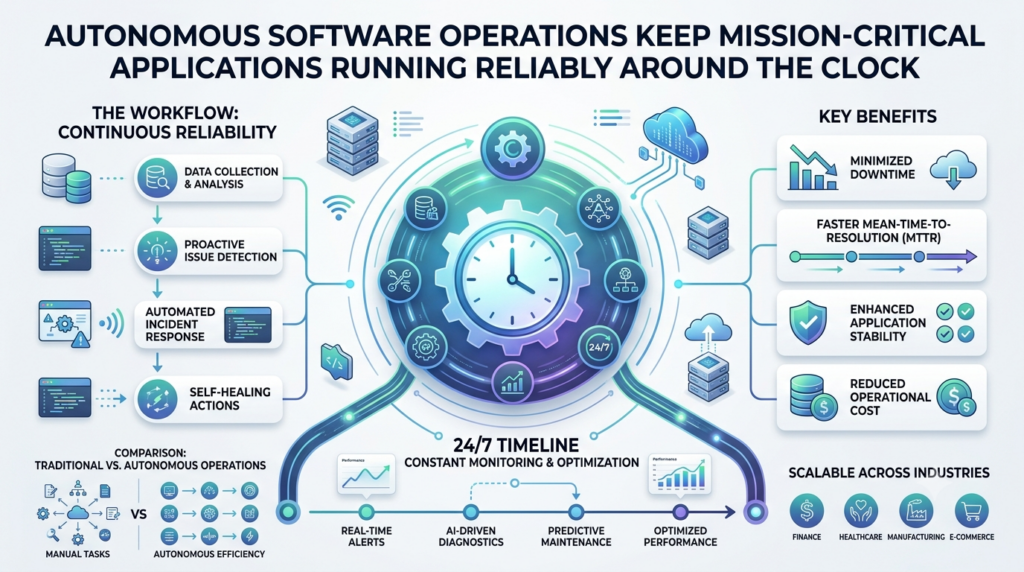
Computers use AIOps to spot errors before websites crash or freeze. The software relies on machine learning, which means apps discover patterns from historical records. It performs continuous monitoring by watching system health signals every single minute. It reads logs, which are written diaries describing app actions. The system also tracks metrics, which are simple speed and memory numbers. Furthermore, it records events, which are sudden occurrences like a network disconnect. When hundreds of warning buzzers sound, alert analysis groups matching messages together. Next, root-cause analysis follows the error trail to find the broken component. Finally, automation runs simple repair scripts without waiting for a human hand.
Why Do IT Teams Need AIOps?
Running modern software creates huge headaches for tech workers across the globe. Companies spread their databases across many distant cloud data centers today. These scattered computers send out thousands of alarms during a single afternoon. Workers get tired from reading false alarms all day long. Therefore, real errors slip past workers who feel swamped by noise. Engineers waste valuable hours searching through endless lines of digital diary text. Broken apps make customers mad and cost companies lots of money. In addition, identical bugs crash the same programs week after week. Smart platforms bring order to this chaos by filtering out harmless blinks. Still, no program can fix sloppy code or bad engineering plans alone.
AIOps Tasks and Benefits
| AIOps Task | Simple Meaning | Possible Benefit |
| Telemetry Ingestion | Taking in records from every server. | Engineers view everything in one clean place. |
| Noise Filtering | Muting repeated alarms from normal hiccups. | Specialists focus on genuine emergencies only. |
| Pattern Tracking | Spotting strange data dips early. | Teams prevent major crashes before launch. |
| Alarm Linking | Bundling related warnings into one file. | Technicians find broken hardware much faster. |
| Self Healing | Running reboot scripts right away. | Systems bounce back without human delays. |
What Does TheAIOps.com Offer?
Engineers visit TheAIOps.com to study modern operational methods and concepts. The portal breaks down Artificial Intelligence for IT Operations using direct examples. Readers discover paths for AIOps Training that match real workplace needs. It reviews steps for AIOps Certification so technicians can test their knowledge. Learners explore each AIOps Course to build practical troubleshooting confidence. The site also investigates popular AIOps Tools used by top tech companies. Leaders evaluate each AIOps Platform to pick tools that fit their architecture. In addition, organizations check out AIOps Consulting and AIOps Services for project guidance. The site also shows students how to become an AIOps Engineer.
AIOps Training and AIOps Course
Practical lessons give students skills that textbooks cannot deliver on paper. Every good AIOps Course begins with data intake and basic monitoring concepts. Learners practice gathering metrics from busy web servers and cloud services. Next, lessons teach smart alert management to silence harmless duplicate alarms. Students practice anomaly detection to catch weird traffic spikes before outages happen. They run root-cause analysis to find out which microservice broke first. Training also introduces basic machine learning models built for IT tasks. Then, learners write automation scripts that fix known application faults safely. Hands-on labs build real confidence because production servers break in strange ways.
AIOps Learning Areas
| Learning Area | What Learners Should Practice |
| Health Tracking | Measuring memory numbers, network limits, and disk space. |
| Text Parsing | Searching error logs for hidden software bugs. |
| Alarm Pruning | Collapsing hundred alerts into one clear trouble ticket. |
| Origin Tracing | Following failed requests to a broken database server. |
| Model Training | Teaching algorithms to recognize normal system behavior. |
| Safe Scripting | Writing code that safely restarts stuck worker processes. |
| Status Views | Designing clear visual graphs for company management. |
AIOps Certification and AIOps Engineer Skills
Earning an AIOps Certification demonstrates that a person understands smart operations. The credential shows managers that you understand modern monitoring and automation patterns. Even so, paper badges alone cannot replace actual engineering ability. Tech companies look for an AIOps Engineer who fixes broken systems quickly. You need sharp monitoring instincts to watch complex cloud networks. Strong troubleshooting habits help you isolate buggy application layers under pressure. You must manage data pipelines well because machine brains need tidy numbers. Basic coding skills allow you to automate routine server fixes safely. Clear speaking skills also help you share technical updates with non-tech bosses.
AIOps Tools and AIOps Platform
An AIOps Platform acts like a central command center for enterprise computers. It gathers measurements from traditional monitoring tools and newer observability tools. It drinks up information from log parsers, incident boards, and analytics tools. Then, the platform compares these different streams to find hidden patterns. Teams must check software costs and business goals before buying new tools. They must verify that new software integrates smoothly with current cloud setups. Security rules matter too, because system logs hold private business details. In addition, leaders must check whether current staff can operate the software. A good platform scales effortlessly as daily telemetry data expands over time.
AIOps Implementation: How Does It Work?
Begin your AIOps Implementation by targeting one single, painful operational bottleneck. Select an app that rings alarms and wakes people up at midnight. Next, gather clean metrics and logs from those specific noisy servers. Discard messy, useless records because garbage data confuses machine learning models completely. Then, link those clean feeds directly into your smart operations software. Create basic rules to group identical notifications during a single failure. Test anomaly detection against older incident records to check detection accuracy. Next, try out simple automation, like clearing cache memory when disks fill up. Always keep human approval for dangerous tasks, like restarting primary database clusters. Track your recovery speeds, tune your models, and expand gradually.
AIOps Consulting and AIOps Services
Growing companies often purchase AIOps Consulting to design clean technical roadmaps. Professional AIOps Services inspect existing server pipelines before teams spend software money. Expert advisors review current observability tools, network designs, and engineer skill sets. They help executives choose platforms that fit real business budgets and workloads. Next, consultants create safe step-by-step rollout plans that avoid sudden service drops. They guide staff through connecting complex data pipes without causing unexpected crashes. Advisors also host training sessions so internal operators master the new workflows. Even so, companies must define concrete goals before hiring outside advisory firms. If you lack clear goals, consultants cannot deliver magical business outcomes.
Real-Life Scenarios / Experiences
- An online grocery app suffered checkout delays, so smart algorithms spotted an overloaded database pool and doubled server memory automatically.
- A payment gateway lost a network cable, but the platform grouped twelve thousand alarms into one ticket pointing to the bad port.
- A streaming company kept running out of disk space, but an automated maintenance script wiped temporary video caches before playback failed.
How TheAIOps.com Can Help
Navigating modern IT operations requires steady practice and clear, honest advice. TheAIOps.com equips engineers and technical directors with deep operational resources. Readers discover thorough comparisons of top monitoring platforms and enterprise tools. The platform publishes clear study plans suitable for junior techs and senior architects. Organizations preparing for big migrations can explore practical consulting approaches. You will find hands-on tutorials explaining noise filtering, trace analysis, and automated healing. The site gathers critical industry insights so you can advance your technical career.
A Practical Implementation Approach
Start your project by tackling one noisy service with frequent failures. Trace the exact logs and performance metrics that describe its common faults. Next, route those clean operational data feeds into your intelligent monitoring tool. Set strict correlation rules so twin alarms fuse into one clean message. Then, turn on anomaly detection to catch weird response slowdowns early. Test your remediation scripts in a safe staging lab before touching production systems. Always require a human confirmation click before executing destructive maintenance scripts. Compare your mean time to resolution against past records to prove real value. Finally, tune your detection thresholds and adopt more systems only after proving success.
Common Mistakes to Avoid
- Automating risky production fixes without conducting dry runs in test labs.
- Pumping uncleaned, disorganized log data into machine learning detection tools.
- Purchasing pricey enterprise software licenses before establishing clear operational goals.
- Enabling full automation without building manual human approval safety checkpoints.
- Forgetting team training and assuming complex tools run themselves without humans.
- Chasing zero alerts while ignoring slow response times in base code.
- Storing oceans of useless debug messages that run up giant cloud bills.
- Neglecting correlation rule maintenance after developers alter app network architecture.
Frequently Asked Questions
1. What is AIOps in simple words?
Specialized software uses Artificial Intelligence for IT Operations to maintain business computer systems. It helps engineers observe active servers, analyze system notifications, and repair bugs quickly. Instead of people reading through gigabytes of logs, algorithms detect patterns automatically. This prevents unexpected site downtime and keeps services running smoothly for visitors.
2. Can AIOps replace human system engineers?
Smart tools assist engineers rather than replacing them in the workplace. The software takes over boring, repetitive monitoring chores that drain human energy. Engineers still architect systems, write custom features, and evaluate critical recovery steps. In short, these tools free up valuable time so technicians can build better products.
3. What is the difference between DevOps and AIOps?
DevOps describes a collaborative culture uniting software developers with infrastructure teams. AIOps supplies specific software platforms that apply machine learning to server data. Development teams frequently leverage smart operations platforms to monitor microservices and deploy updates with fewer unexpected bugs.
4. How does AIOps reduce alert noise?
Multiple servers blast out separate warnings whenever a major network switch dies. Smart software reads incoming notifications and recognizes that they share a single root cause. It compresses those duplicate alarms into one clean incident file. This eliminates panic and directs technicians straight to the broken hardware.
5. What skills does an AIOps Engineer need?
Aspiring engineers need solid Linux skills, basic Python coding, and monitoring fundamentals. You should know how web apps talk to back-end databases across networks. Grasping cloud architecture and basic data analysis helps immensely. Strong interpersonal communication also remains vital because engineers must explain complex system fixes to executives.
6. Is an AIOps Certification worth getting?
Earning a recognized industry credential gives direction to your personal study journey. It shows recruiters that you understand modern monitoring methods and operational terminology. Even so, hiring managers always favor hands-on project labs and actual troubleshooting experience over a paper certificate alone.
7. What data types does an AIOps platform use?
Intelligent platforms consume several main telemetry data formats every second. They digest metrics, which describe numerical values like memory consumption. They ingest text logs that record software updates and errors. They also inspect network traces and warning events broadcast by connected hardware.
8. How does root-cause analysis work here?
The platform maps out how every microservice communicates across the company network. When something crashes, the engine calculates which service threw the initial error. It traces downstream failures back to that original failure point. This pinpoints the broken container within seconds.
9. Can small companies use these smart methods?
Growing startups can easily adopt lightweight machine-assisted monitoring tools today. Many major cloud providers offer built-in anomaly detection features at low price points. Small teams should start with simple alert consolidation before buying large enterprise platforms that demand full-time maintenance.
10. What is automated remediation?
This concept means software fixes an operational problem without manual human clicks. For instance, a script restarts a frozen background worker when memory runs out. Teams only automate simple, predictable recovery actions while reserving hard decisions for experienced human engineers.
11. Why do some AIOps projects fail?
Rollouts usually fail when companies purchase flashy software without defining real problems first. Feeding messy, unstructured logs into algorithms also ruins predictive accuracy completely. Additionally, skipping team education leads to abandoned tools because technicians never learn how to operate them properly.
12. Where can I learn more about this field?
Engineers can read vendor whitepapers, browse open-source documentation, and follow specialized tech guides. TheAIOps.com offers structured learning materials, platform comparisons, and practical operational advice. Setting up open-source monitoring stacks in personal home labs also provides tremendous hands-on experience.
Conclusion
Smart technology offers the exact leverage tech teams need to manage modern, sprawling computer environments. Algorithmic platforms silence annoying alert chatter, flag unseen failures, and trigger safe automated fixes day and night. Successful rollouts always depend on clean metrics, clear operational targets, and skilled human engineers. Trying to automate everything overnight only creates fresh operational headaches for your staff. Instead, take thoughtful, steady steps to improve system uptime and reclaim productive engineering hours each week. As you plan your educational track or software rollout, TheAIOps.com shares valuable blueprints, tool reviews, and practical knowledge to support your journey.
