Introduction
Modern leisure travel often funnels people into commercial dining corridors and identical souvenir strips that offer little real connection to a place. Amaravati offers something completely different: a timeless cultural geography rooted along the fertile banks of the Krishna River, where culinary traditions date back across generations.
Exploring this historic realm means tasting handcrafted confectioneries that rely on slow-churned pure ghee, local jaggery, and culinary recipes passed down through families. Discovering the historic sweet shops and dessert hubs around Amaravati lets you connect with genuine coastal Andhra heritage through taste, warmth, and hospitality.
Why Amaravati is a must-visit city
Amaravati is far more than an ancient archaeological landmark; it serves as a culinary and cultural focal point where deep agricultural abundance feeds rich regional traditions. Positioned directly between the vibrant trading cities of Guntur and Vijayawada, this area enjoys bountiful dairy production from the Krishna river basin, giving its traditional confections distinct richness and depth. Traveling through this territory allows visitors to experience historic Buddhist monastic sites, centuries-old Shaivite pilgrimage shrines, and bustling traditional bazaars where the aroma of roasting gram flour and hot ghee fills the morning air.
The wider regional circuit seamlessly links ancient Amaravati town, the river crossings at Prakasam Barrage, the historic temple town of Mangalagiri, and the bustling merchant avenues of Vijayawada and Guntur. Major transport links make the region easy to navigate: National Highway 16 cuts directly through the area, Vijayawada Junction serves as a major railway crossroads, and Vijayawada International Airport connects visitors from across the country. Whether traveling as an independent food lover, an architecture buff, or a family exploring regional roots, this corridor provides an unmatched journey into authentic southern Indian flavors.
| Key Travel Factor | Details & Practical Highlights |
| Geographic Zone | Krishna River Delta, Palnadu & Guntur District Belt |
| Culinary Identity | Pure Ghee Confections, Bellam (Jaggery) Sweets, Rice Paper Mithai |
| Nearest Transit Hubs | Vijayawada Junction (BZA) & Pandit Nehru Bus Station (PNBS) |
| Regional Highway Access | NH-16, Amaravati-Vijayawada River Road, Guntur-Tenali Link |
| Best Travel Season | October through March (Pleasant weather for food walks) |
| Core Circuit Focus | Heritage shrines, riverside sweet markets, legacy halwai houses |
Best Places or Experiences
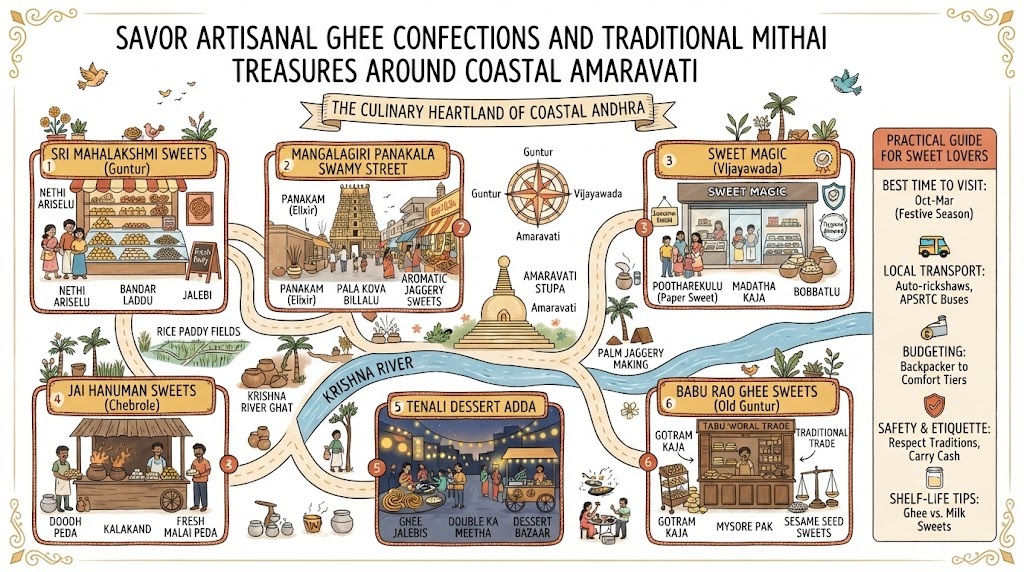
Sri Mahalakshmi Sweets, Brodipet Circuit
Sri Mahalakshmi Sweets is a culinary benchmark in the Amaravati-Guntur commercial artery, celebrated for its craftsmanship in traditional Telugu confectioneries. Established decades ago, this sweet house preserves authentic preparation methods by using farm-fresh dairy and stone-ground flours. Walking into the store surrounds you with rows of golden ghee-laden sweets, roasted dry-fruit mixtures, and the delicate warmth of freshly simmered sugar and jaggery syrups.
The master cooks here prepare regional confections with meticulous care, ensuring each delicacy maintains an authentic texture without commercial preservatives. Visitors travel from across the state to purchase festive sweet packs, making it an essential first stop on any regional confectionery tour.
- Location: Brodipet Commercial Zone, Guntur, approximately 32 km from Amaravati core town.
- Why it is worth visiting: Famous for authentic Andhra Nethi Ariselu and pure ghee Bandar Laddu crafted with traditional ghee extraction techniques.
- Best things to do: Sample hot ghee jalebis fresh from the kadai, pack assorted gift hampers of Kaju Katli, and taste authentic local Sunnundalu made with aromatic jaggery.
- Best time to visit: 10:00 AM to 12:30 PM when fresh morning batches arrive on display shelves.
- Ideal for whom: Family foodies, culinary souvenir hunters, and travelers seeking authentic festive gift boxes.
- Travel tip: Request airtight vacuum packaging if carrying delicate ghee sweets on long-distance return flights or trains.
Mangalagiri Panakala Swamy Temple Sweet Street
Clustered around the base of the sacred hill shrine in Mangalagiri, this vibrant street market has catered to pilgrims and sweet enthusiasts for centuries. The street is directly associated with the legendary worship ritual of Panakam (a cooling, spiced jaggery-pepper elixir), and the surrounding family-run sweet stalls specialize in traditional jaggery-based sweets. Walking down this colorful alley reveals sweet masters stirring copper cauldrons over firewood, maintaining age-old rural cooking methods.
The atmosphere reflects pure devotional nostalgia, blending incense, jasmine garlands, and bubbling sugar pots. It is one of the few places in coastal Andhra where traditional confections retain their rural recipes and direct connection to temple folklore.
- Location: Temple Bazaar Footsteps, Mangalagiri Town, 24 km east of Amaravati.
- Why it is worth visiting: The historical birthplace of temple-crafted Panakam and classic Pala Kova prepared using fresh village buffalo milk.
- Best things to do: Drink consecrated Panakam poured fresh from bronze vessels, buy soft milk Kova Billalu, and explore neighboring handloom weaver colonies.
- Best time to visit: 7:00 AM to 9:30 AM when devotional morning rituals conclude and fresh sweet batches hit the stalls.
- Ideal for whom: Cultural explorers, spiritual travelers, and lovers of traditional milk desserts.
- Travel tip: Carry smaller currency notes, as many traditional street stalls operate without point-of-sale card machines.
Sweet Magic, Bandar Road Heritage Branch
Sweet Magic has grown from a regional mithai kitchen into one of the most respected culinary institutions across coastal Andhra Pradesh. Renowned for standardizing regional sweets while protecting ancestral recipes, this flagship outlet offers an extensive display of both classical and contemporary Telugu sweets. The interiors are clean and bright, pairing an inviting counter experience with quick table service for afternoon savories.
Their sweet counter is celebrated for authentic Pootharekulu (paper-thin rice crepes folded around sugar, dry fruits, and pure ghee) alongside regional delights sourced directly from the Krishna delta. The store also features an impressive namkeen counter that balances the sweetness with spicy lentil snacks.
- Location: MG Road (Bandar Road), Vijayawada, roughly 30 km from central Amaravati.
- Why it is worth visiting: Unmatched quality control for traditional Pootharekulu, Madatha Kaja, and authentic Bobbatlu.
- Best things to do: Watch staff hand-pack delicate paper-sweet rolls, sample warm Nethi Bobbatlu paired with coconut milk, and purchase spiced regional savories.
- Best time to visit: 4:00 PM to 7:00 PM for fresh evening sweet preparation and evening tea pairings.
- Ideal for whom: Business travelers, hygiene-conscious family vacationers, and road trippers.
- Travel tip: Purchase Dry Fruit Bellam Pootharekulu as they hold a longer shelf life compared to milk-based varieties.
Jai Hanuman Sweets & Milk Bar, Chebrole Route
Jai Hanuman Sweets is an authentic roadside institution favored by long-distance drivers and local farmers along the southern approaches to Amaravati. Operating with rustic charm, the shop relies directly on milk supplied by local cattle owners, ensuring their milk pedas and kalakand carry unmatched freshness and richness. The establishment uses open-air cooking bays where guests can watch milk reducing slowly over wood-fired ovens.
The straightforward setting prioritizes rich flavors over fancy decor. Regular travelers stop here intentionally to break up journeys across the agricultural plains, savoring sweets served directly on banana leaves.
- Location: Chebrole-Amaravati Connector Road, Guntur District, 28 km south of the capital core.
- Why it is worth visiting: Renowned for unadulterated milk sweets, country-style Kalakand, and intensely flavorful Malai Peda.
- Best things to do: Taste freshly reduced hot Doodh Peda, enjoy chilled local badam milk in glass bottles, and watch large-batch milk boiling techniques.
- Best time to visit: 3:00 PM to 6:00 PM during afternoon dairy deliveries and processing.
- Ideal for whom: Solo road explorers, culinary purists, and highway travelers.
- Travel tip: Arrive before early evening, as their daily milk sweets are produced in small batches and frequently sell out.
Tenali Double Ka Meetha & Jalebi Adda
Situated in the historic canal town of Tenali within the greater Amaravati cultural orbit, this vibrant evening market is famous for its lively dessert stalls. Tenali is known for its cultural theater scene and vibrant night food bazaars where local vendors serve oversized, crisp Ghee Jalebis and fragrant Double Ka Meetha (rich bread pudding infused with saffron, cardamom, and fried cashews). The bustling street atmosphere comes alive after sunset under glowing yellow street lights.
The sweet offerings here showcase the historic cross-cultural culinary ties between the Nizam’s royal courts and Andhra agricultural heartlands. Visitors gather around wide iron tawas, enjoying the theatrical flips of sweet artisans working through steady lines of patrons.
- Location: Gandhi Chowk & Canal Road Junction, Tenali, 35 km southeast of Amaravati.
- Why it is worth visiting: Legendary destination for hot, syrupy desserts and coastal interpretations of Hyderabadi royal confections.
- Best things to do: Order piping-hot saffron jalebis fresh from the pan, enjoy a warm bowl of cashew-topped bread pudding, and take an evening walk along the old canals.
- Best time to visit: 7:00 PM to 10:00 PM for peak night bazaar atmosphere and warm dessert batches.
- Ideal for whom: Night owls, street food explorers, couples, and budget backpackers.
- Travel tip: Pair rich sweet bowls with locally brewed strong filter coffee to cut through the heavy sugar syrup.
Babu Rao Ghee Sweets, Old Guntur Market
Tucked inside the labyrinthine stone alleys of Old Guntur, Babu Rao Ghee Sweets has operated quietly for decades without commercial marketing. The kitchen relies exclusively on cold-pressed sesame oil, stone-clarified butter, and palm jaggery, preserving heirloom recipes that larger commercial bakeries have long abandoned. The shop’s signature item is authentic Kakinada Gottam Kaja, known for its crisp shell and pockets of sweet syrup.
Visiting this shop offers a look into traditional trade, with customers served across teakwood display counters that have stood for half a century. It provides an authentic encounter with the region’s culinary past.
- Location: Old Guntur Market Bazaar, 30 km south of Amaravati core.
- Why it is worth visiting: Masters of traditional fried flour confections, especially syrupy Gottam Kaja and crumbly Mysore Pak.
- Best things to do: Buy fresh boxes of layered Kaja, sample authentic gram-flour Mysore Pak, and explore the old spice wholesale lanes nearby.
- Best time to visit: 11:00 AM to 2:00 PM to avoid heavy market traffic while counters are fully stocked.
- Ideal for whom: Culinary historians, photographers, and fans of heritage sweets.
- Travel tip: Navigate these narrow historic alleys on foot or via e-rickshaw, as four-wheel vehicles cannot enter the street.
Sasi Sweets, Tadepalli Riverside Corridor
Conveniently located along the modern approach route connecting Amaravati with the national highway, Sasi Sweets provides a bridge between classic recipes and modern accessibility. Known for exceptional Tokkudu Laddu (smooth, melt-in-your-mouth Bandar Laddu crafted by grinding fried gram flour into a velvety paste with ghee), this establishment serves daily commuters, government officials, and weekend explorers alike.
The bright, spacious interior makes it easy to sample different confections before purchasing. It remains one of the most reliable stops for premium packaging, ensuring fragile regional sweets stay intact throughout extended travel.
- Location: Tadepalli Bypass Junction, 18 km east of central Amaravati.
- Why it is worth visiting: Famous for silky Bandar Laddu and aromatic Nethi Sunnundalu made with wild mountain honey.
- Best things to do: Taste smooth Tokkudu Laddu, try savory spiced cashew nuts, and order regional gift boxes.
- Best time to visit: 9:00 AM to 8:30 PM throughout regular operating hours.
- Ideal for whom: Families traveling with small children, corporate visitors, and road trip groups.
- Travel tip: Ask the staff for insulated travel boxes if your journey involves extended bus or train travel in summer months.
Offbeat Exploration: Hidden Gems Tourists Miss
The Village Palm Jaggery Makers of Tulluru
Just minutes outside the modern government complex in Amaravati lies the rural farming belt of Tulluru, where small-scale farmers harvest palm sap (Neera) during the winter months. Visiting these fields at dawn allows you to watch artisans boil fresh sap over open fires in earthen vats to create pure, unrefined palm jaggery (Thati Bellam). Tasting warm, unrefined jaggery straight from the drying pots offers an earthy sweetness impossible to find in city supermarkets.
The Jaggery Kajjikayalu of Dharanikota
In the ancient fortified village of Dharanikota adjacent to Amaravati Stupa, home-based sweet artisans make traditional Kajjikayalu during harvest festivals. These crescent-shaped pastries are filled with dry coconut, roasted sesame seeds, and crushed jaggery before being fried in pure ghee. Because they are rarely sold in formal retail shops, travelers must ask local tea stall owners to point them toward the neighborhood homes that make them fresh to order.
Pattiseema Sweet Chariot at Krishna River Ghats
During evening Aarti along the Amaravati river ghats, mobile boat vendors dock along the riverbanks carrying terracotta pots filled with Palathalikelu (soft handmade rice noodles simmered in cardamom milk and jaggery). Enjoying a warm clay bowl of this sweet milk dish while sitting on stone steps and watching the river drift by at dusk provides a calm, reflective regional experience.
Detailed Practical Guidance for Travelers
| Destination | Standard Entry Fee | General Timings | Best Local Food Options Nearby | Recommended Nearby Attractions |
| Sri Mahalakshmi Sweets | Free Entry (Purchases per weight) | 8:30 AM – 10:00 PM Daily | Pesarattu Dosa at nearby Brodipet breakfast messes | Amaravati Heritage Roadway (30 km) |
| Mangalagiri Sweet Street | Free Entry (Temple prasad options) | 6:00 AM – 9:00 PM Daily | Steamed Idli with Podi at local temple gates | Panakala Swamy Hill Temple (500 m) |
| Sweet Magic Bandar Road | Free Entry (Dining & Retail) | 8:00 AM – 10:30 PM Daily | Spicy Guntur Mirchi Bajji at adjacent tea hubs | Prakasam Barrage Scenic Walk (3 km) |
| Jai Hanuman Sweets | Free Entry (Highway retail) | 7:30 AM – 9:00 PM Daily | Fresh Masala Vada from roadside stalls | Chebrole Historical Monoliths (12 km) |
| Tenali Dessert Adda | Free Entry (Street food market) | 5:00 PM – 11:00 PM Daily | Traditional Andhra meals at local market messes | Vaikuntapuram Temple Tenali (4 km) |
| Babu Rao Ghee Sweets | Free Entry (Heritage stall) | 9:30 AM – 8:30 PM Daily | Hot Mysore Bonda at Old Guntur bazaar stalls | Jinnah Tower Historic Landmark (1.5 km) |
| Sasi Sweets Tadepalli | Free Entry (Retail center) | 8:30 AM – 10:00 PM Daily | Filter coffee and onion pakodas at highway stops | Undavalli Cave Temples (4 km) |
Logistics & On-Ground Navigation
Local Transport Options
- State RTC Bus Connectivity: Frequent APSRTC buses link Vijayawada Pandit Nehru Bus Station, Guntur Central Stand, and Amaravati town, offering an economical way to travel between sweet hubs.
- Auto-Rickshaws & E-Rickshaws: Shared and private auto-rickshaws work well for navigating crowded inner-city sweet streets like Old Guntur and Mangalagiri bazaar. Always settle the fare before boarding.
- Private Taxi / Self-Drive Rentals: Booking a dedicated cab for a day is the most comfortable way to visit dispersed heritage sweet shops across Vijayawada, Mangalagiri, and rural Amaravati without managing multiple transfers.
Budget Planning
- Budget / Solo Backpacker Tier: ₹1,000 – ₹1,500 per day. Covers public bus travel, casual street sweet tastings, standard budget stays near rail hubs, and regional vegetarian meals.
- Mid-Range / Comfort Family Tier: ₹3,500 – ₹5,500 per day. Covers dedicated private car hire, boutique hotel accommodation along MG Road or Tadepalli, generous sweet souvenir shopping, and sit-down restaurant meals.
Safety and Inclusivity Tips
- For Families: Most prominent sweet showrooms like Sweet Magic and Sri Mahalakshmi provide clean, air-conditioned environments with seating, making them comfortable stops when traveling with young children or elderly family members.
- For Couples & Solo Travelers: Street sweet lanes around Tenali and Mangalagiri are welcoming and safe until late evening, though sticking to main illuminated roads is recommended after 10:00 PM.
- General Hygiene & Dietary Advice: Always check that milk-based sweets like Pala Kova are stored in chilled display cases, and verify fresh frying oils when purchasing hot fried sweets from open-air street stalls.
Strategic Travel Planning Guardrails
Travel Planning Tips for Amaravati
- Align with Regional Harvest Festivals: Visiting around Makar Sankranti (January) allows you to experience seasonal treats like Nethi Ariselu and sugarcane jaggery specialties at their best.
- Mix Cash with Digital Payments: Digital payment apps work reliably across medium and large shops, but smaller village sweet makers and ghat vendors operate mainly on cash.
- Understand Shelf Life Realities: Pure ghee sweets like Bandar Laddu last for several weeks, whereas delicate milk sweets like Kalakand or Pala Kova should be eaten within 48 to 72 hours.
- Carry Insulated Shopping Bags: If you are touring in warm afternoon weather, keep an insulated tote bag in your vehicle to protect chocolate or ghee-based sweets from melting.
- Dress for Easy Walking: Exploring heritage bazaar lanes requires navigating narrow footpaths and stone steps, so wear supportive walking shoes and light cotton clothing.
Common Mistakes to Avoid
- Rushing the Travel Circuit: Avoid trying to cover shops in Vijayawada, Guntur, and rural Amaravati within a single morning; heavy traffic across river bridges will leave you exhausted.
- Skipping Jaggery-Based Options: Do not focus solely on refined-sugar sweets; the region’s true heritage lies in wood-fired jaggery treats like Sunnundalu and Bellam Pootharekulu.
- Ignoring Packaging Instructions: Avoid leaving delicate paper sweets like Pootharekulu unpacked in humid air, as exposure can make the crisp rice film soft and chewy.
- Assuming Consistent Timings: Do not assume street sweet vendors follow shopping mall hours; traditional temple stalls open at sunrise and often close their fryers by midday.
- Drinking Tap Water at Street Stalls: Stick to purified bottled water while touring bustling street markets to keep your stomach comfortable throughout your trip.
Suggested Itinerary Blueprints
1-Day Quick Dash (The Express Sweet & Shrine Trail)
Targeted at travelers with limited time who want to combine core heritage sites with the region’s signature desserts.
- Morning: Begin at 8:00 AM with fresh Pesarattu breakfast in Vijayawada, cross Prakasam Barrage, and visit Undavalli Caves before heading to Sasi Sweets in Tadepalli for morning Bandar Laddu.
- Afternoon: Drive directly to the Amaravati Dhyana Buddha Statue and Maha Stupa, stopping for lunch and sampling rustic village milk sweets in Amaravati town.
- Evening: Return through Mangalagiri to visit the hill shrine, drink sacred Panakam, sample Pala Kova from street vendors, and wrap up your day with dinner along MG Road.
2-Day Deep-Dive (The Confectioner’s Cultural Circuit)
Designed for travelers who want to dive deeper into rural traditions, artisan villages, and heritage sweet kitchens.
- Day 1 (Riverside Heritage & Temple Sweets): Spend your morning exploring the ancient Stupa ruins and village sweetmakers of Dharanikota. Move to Mangalagiri in the afternoon for textile shopping and temple desserts. End the evening enjoying dinner and picking up Pootharekulu boxes at Sweet Magic in Vijayawada.
- Day 2 (Old Bazaars & Canal Town Flavors): Travel south to Guntur to explore the historic spice alleys and pick up Kakinada Kaja at Babu Rao Ghee Sweets. In the afternoon, head to Tenali to explore old canals and spend the evening enjoying hot jalebis and Double Ka Meetha at Gandhi Chowk.
Complete Weekend Travel Plan (The Ultimate Capital Epicurean Loop)
- Friday Evening: Arrive at Vijayawada, check into your hotel, and take an evening walk across Prakasam Barrage. Stop by local carts for hot jalebis and spiced corn while enjoying illuminated river views.
- Saturday: Dedicate the day to ancient Amaravati. Visit the Dhyana Buddha, tour archaeological ruins, visit the Tulluru palm jaggery groves, and enjoy riverside dining along the Krishna.
- Sunday: Take a culinary road trip through Mangalagiri and Old Guntur’s heritage lanes. Purchase sweets for your return trip at Sri Mahalakshmi Sweets, sample street sweets in Tenali, and catch your return flight or train by evening.
Common Tourist Mistakes to Avoid
- Geographic Blunders: Don’t attempt to jump back and forth across the Krishna River multiple times in one day. Group your stops logically—dedicate one part of your day to the Vijayawada side and another to the Amaravati-Guntur belt.
- Commercial Traps: Don’t spend your entire souvenir budget at generic highway rest stops. Authentic heritage sweets taste best when purchased directly from the legacy shops in local bazaar quarters.
- Neglecting Alternative Zones: Don’t focus exclusively on high-traffic downtown corridors. The quieter residential streets of Brodipet and the rural lanes around Tulluru house some of the finest sweet kitchens.
- Transport Overpayment: Always confirm auto-rickshaw fares beforehand or use app-based ride services in city centers to avoid paying inflated fares outside train stations.
- Luxury Dining Bias: Sticking exclusively to five-star hotel buffets means missing out on the region’s culinary foundation. The freshest Nethi Bobbatlu and hot milk pedas are found at modest, street-side counters.
Frequently Asked Questions
1. What is the most iconic local dessert to try around Amaravati?
Pootharekulu, often called the “paper sweet,” is the region’s crowning dessert achievement. It is made by layering translucent rice batter crepes with pure ghee, powdered sugar or jaggery, and crushed dry fruits. Its unique, melt-in-the-mouth texture cannot be found in other styles of Indian confectionery.
2. How long do authentic Bandar Laddus stay fresh after purchase?
Because authentic Bandar Laddus are crafted using thoroughly roasted gram flour and pure clarified butter without added water, they remain fresh for two to three weeks when stored in a cool, dry place inside an airtight container. Avoid refrigeration, as cold temperatures cause the ghee to harden and alter the smooth texture.
3. Are there jaggery-based sweets available for health-conscious travelers?
Yes, the region specializes in Bellam (jaggery) sweets. Travelers can choose Bellam Sunnundalu (urad dal and jaggery balls), Bellam Pootharekulu, and Nethi Ariselu. These traditional treats offer an authentic molasses flavor while avoiding refined white sugar entirely.
4. Where can I find the freshest temple-style Pala Kova nearby?
The best place to buy fresh Pala Kova is along the temple foothill street in Mangalagiri, located just twenty minutes from the central Amaravati capital region. Local dairy-farming families prepare these sweets in small daily batches using whole buffalo milk simmered slowly over firewood embers.
5. Can traditional sweets be safely packed for air travel abroad?
Most prominent sweet shops, including Sweet Magic and Sri Mahalakshmi Sweets, offer commercial vacuum sealing and sturdy tin-box packaging. Ghee-based items such as Kaja, Sunnundalu, and Laddu travel well internationally and easily stay fresh throughout long-haul flights.
6. What makes Krishna delta ghee sweets taste distinct from northern mithai?
The distinction comes down to the rich local buffalo milk produced across the Krishna River basin, combined with traditional single-clarification methods. Coastal Andhra sweets also balance savory and sweet elements by adding cardamom, crushed black pepper, and hints of edible camphor, creating a multi-layered flavor profile.
7. How do I get to the offbeat Tulluru jaggery making units?
Tulluru is situated along the main arterial roads of the Amaravati capital zone, roughly fifteen minutes by car from the central administrative buildings. Visiting during the winter harvest season between December and February allows you to hire a local auto-rickshaw to reach the open-air sugarcane and palm boiling units.
8. Are digital wallets and cards accepted across all regional sweet shops?
Large multi-branch establishments and town sweet centers accept credit cards, debit cards, and standard UPI smartphone apps. However, small roadside doodh peda shops, rural highway carts, and temple-gate vendors still rely primarily on cash, so keep small-denomination currency notes handy.
9. Is it safe to sample street sweets during the monsoon season?
Freshly fried, hot sweets like jalebis and Kajjikayalu are generally safe to enjoy during monsoon months. However, caution is advised with unchilled milk-based sweets, cream-filled pastries, or open containers of Panakam from roadside stalls; always purchase from clean, high-turnover shops.
10. What is the difference between Madatha Kaja and Kakinada Gottam Kaja?
Madatha Kaja consists of delicate ribbon-like pastry layers folded together so that sugar syrup rests between crisp sheets of fried dough. In contrast, Gottam Kaja is formed as a hollow cylinder with a firm outer crust that holds generous amounts of fragrant syrup inside its central tube.
11. Which local sweet is best paired with morning filter coffee?
A warm Nethi Bobbattu (sweet lentil and jaggery flatbread brushed with hot ghee) makes a wonderful accompaniment to strong South Indian filter coffee. The earthy jaggery filling and flaky crust contrast pleasantly with the bitter, chicory-rich roast of the coffee.
12. When do sweet shops typically discount or clear daily inventories?
Traditional Andhra sweet shops do not use clearance discount models. Instead, master sweet makers adjust batch sizes throughout the day based on customer footfall. To get the freshest selections, plan your visits either mid-morning between 9:30 AM and 11:30 AM or during the early evening rush around 5:00 PM.
Conclusion
Exploring the confectionery heritage around Amaravati connects you directly to the culinary soul of the Krishna River delta. Moving through historic bazaar streets, listening to the rhythm of copper ladles against wide pans, and tasting sweets perfected over generations offers a cultural depth that conventional vacations rarely provide. Taking the time to discover these authentic dessert houses and riverside sweet stops leaves you with rich memories of warmth, generous hospitality, and the timeless culinary flavors of coastal Andhra.
