Introduction
Modern travel often herds people into sterile, mass-produced shopping malls that look identical from city to city, stripping away the soul of discovery. Stepping away from these generic commercial loops reveals the heartbeat of coastal Andhra Pradesh, where ancient craft traditions still thrive in quiet artisan workshops. Exploring the handicraft clusters surrounding Amaravati connects you directly to generations of master carvers, weavers, and metal smiths. Here, every carved wooden toy, woven cotton drape, and hand-beaten brass piece tells an enduring story of regional heritage.
Why Amaravati is a must-visit city
Amaravati serves as a remarkable cultural crossroads where deep Satavahana history meets vibrant living traditions. Geographically positioned in the heart of Andhra Pradesh along the fertile Krishna River basin, the region acts as an accessible nexus for art lovers and cultural explorers. Excellent connectivity via national highways, nearby railway junctions like Vijayawada, and well-maintained state transport networks make this artistic circuit effortless to explore.
The local travel circuit blends archaeological wonder with immersive artisan village trails, bustling craft bazaars, and rich regional culinary traditions. Whether you are a solo backpacker navigating by bus or a family touring by car, the welcoming hospitality and structured craft clusters ensure an enriching journey.
| Aspect | Details |
|---|---|
| Location | Palnadu and NTR District border, Andhra Pradesh |
| Nearest Major Hub | Vijayawada City (~30 km away) |
| Primary Craft Specialties | Kondapalli Wooden Toys, Mangalagiri Handlooms, Budithi Brassware |
| Best Travel Season | October to March |
| Ideal Trip Duration | 2 Days / 1 Night |
Best Places or Experiences
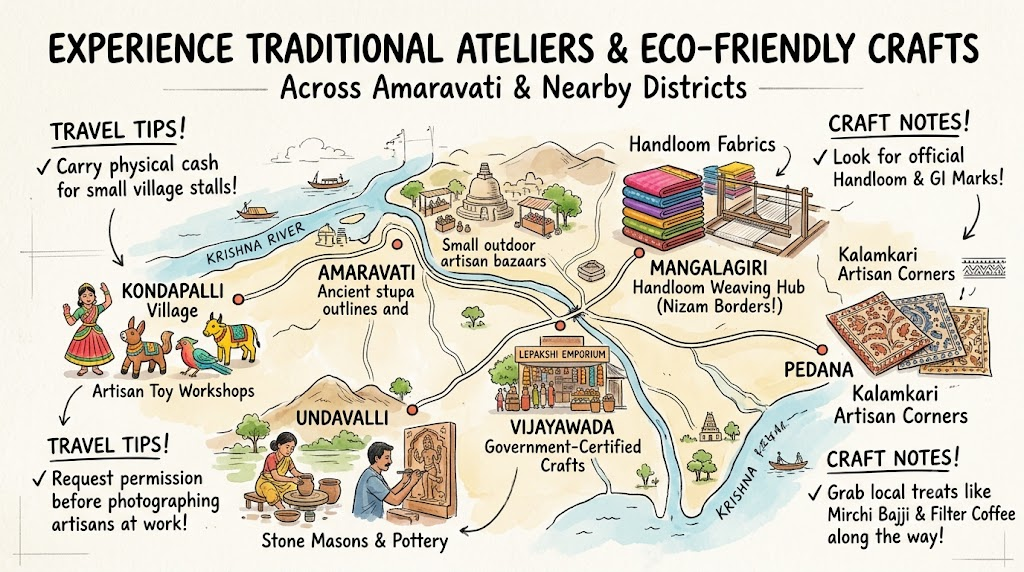
Kondapalli Artisan Village & Toy Workshops
Nestled at the foothills of the Eastern Ghats, Kondapalli village is world-famous for its traditional lightweight wooden toys crafted from soft Tella Poniki wood. Artisans meticulously carve intricate figures representing rural life, mythology, dancing dolls, and animals, then paint them with vibrant vegetable and eco-friendly colors. Visiting the open-air workshops allows travelers to watch master craftsmen shape raw wood blocks into vibrant cultural masterpieces using centuries-old techniques.
The village atmosphere offers an authentic peek into rural artisan life, where entire families collaborate on detailed painting and finishing work. Purchasing directly from these artisan households ensures that your travel budget supports grassroots craftsmen and preserves this priceless UNESCO-recognized intangible heritage
Handcrafted Kondapalli wooden toys and artisan workshop.
- Location: Kondapalli Village, 22 km northeast of Amaravati capital region.
- Why it is worth visiting: It is the historic birthplace of Geographical Indication (GI) tagged Kondapalli wooden toy craft.
- Best things to do: Watch live wood-carving demonstrations, purchase GI-certified dancing dolls directly from makers, and explore the nearby 14th-century fort ruins.
- Best time to visit: 10:00 AM to 4:00 PM when artisan workshops are fully operational.
- Ideal for whom: Culture enthusiasts, families with children, art collectors, and photographers.
- Travel tip: Carry small cash denominations as many rural artisan cooperatives prefer direct cash transactions over digital gateways.
Mangalagiri Handloom Weaving Hub
Mangalagiri is a legendary textile center renowned for its exquisite cotton sarees and fabrics featuring characteristic Nizam zari borders and distinctive checks. The rhythmic clacking of handlooms echoes through the narrow lanes of the weaver colony, where master artisans interlace fine cotton yarns into breathable, elegant drapes. Visitors can tour traditional weaver homes to inspect the warp-and-weft techniques that make Mangalagiri fabrics famous across India.
Shopping here bypasses commercial markups, allowing you to select pure cotton yardage, dupattas, and ready-to-wear garments in vibrant earth tones. The local weavers take immense pride in explaining the unique pit-loom mechanisms and dye processes used to craft durable, skin-friendly textiles.
Authentic Mangalagiri handloom cotton saree.
- Location: Mangalagiri Town, 18 km east of Amaravati.
- Why it is worth visiting: Home to authentic GI-certified handloom cotton weaving and traditional pit-loom culture.
- Best things to do: Tour active weaving co-operatives, buy direct-from-loom fabrics, and visit the historic Panakala Narasimha Swamy temple nearby.
- Best time to visit: 9:00 AM to 5:00 PM on weekdays for a quieter shopping experience.
- Ideal for whom: Textile historians, fashion designers, shoppers, and cultural explorers.
- Travel tip: Always check for the official Handloom Mark tag to guarantee authentic hand-woven quality over power-loom imitations.
Lepakshi State Handicrafts Emporium, Vijayawada
For travelers seeking a curated collection under one roof, the Lepakshi Emporium in nearby Vijayawada offers an exceptional retail showcase of Andhra Pradesh’s finest crafts. Operated by the state government to support local artisans, the emporium displays authentic brass statues, Kalamkari painted textiles, Nirmal paintings, and exquisite Nirmal wooden boxes. Every piece is thoroughly vetted for authenticity and fair pricing.
The spacious air-conditioned showroom makes browsing comfortable, while knowledgeable staff explain the distinct origins and crafting techniques behind each artifact. It serves as an ideal final stop to pick up polished gifts and souvenirs before concluding your trip.
Curated regional handicrafts display at Lepakshi Emporium.
- Location: MG Road, Vijayawada, about 28 km from Amaravati core zone.
- Why it is worth visiting: Government-certified emporium guaranteeing authentic rural handicrafts from across Andhra Pradesh.
- Best things to do: Browse Kalamkari wall hangings, purchase brass metal craft, and select genuine Kondapalli and Etikoppaka toys.
- Best time to visit: 11:00 AM to 7:00 PM daily.
- Ideal for whom: Travelers short on time, souvenir hunters, and art collectors.
- Travel tip: Major credit and UPI digital payments are fully accepted here, unlike remote rural artisan units.
Amaravati Local Artisan Bazaars
Positioned right around the historic Amaravati Stupa and archaeological museum complex, local seasonal bazaars offer a charming collection of small-scale souvenirs. Local vendors set up stalls featuring terracotta pottery, replica limestone sculptures modeled after ancient Satavahana reliefs, and beaded jewelry. These items capture the ancient Buddhist aesthetic of the region in miniature form.
Strolling through these stalls provides a relaxed shopping experience accompanied by views of ancient brick ruins. It is a wonderful spot to pick up low-cost mementos that directly celebrate the deep heritage of the Krishna riverbank.
Open-air handicraft stalls near the Amaravati heritage zone.
- Location: Near Amaravati Maha Stupa and Museum complex.
- Why it is worth visiting: Perfect for picking up archaeological replica souvenirs and affordable local mementos.
- Best things to do: Inspect miniature terracotta sculptures, bargain politely for handmade trinkets, and chat with local street vendors.
- Best time to visit: 3:00 PM to 6:00 PM during cooler evening hours.
- Ideal for whom: Casual shoppers, budget travelers, and history enthusiasts.
- Travel tip: Inspect fragile items carefully before purchase and arrange your own protective padding if traveling with delicate terracotta artifacts.
Offbeat Exploration: Hidden Gems Tourists Miss
Dharanikota Pottery Trail
Located just beyond the ancient fort earthworks, Dharanikota is an active archaeological settlement where historic pottery shards surface naturally after monsoon rains. Walking through the quiet village lanes reveals glimpses of traditional potters spinning clay on manual wheels using age-old coiling techniques.
Undavalli Stone Mason Enclave
Tucked away near the base of the Undavalli rock-cut cave hills, a small community of traditional stone sculptors still hand-chisels granite and sandstone figures. Observing these artisans at work offers a rare window into the continuous lineage of temple architecture that built the region’s famous caves.
Kalamkari Artisan Corners in Pedana
A short drive across the river delta leads to Pedana, the legendary hub of authentic vegetable-dyed block-printed Kalamkari textiles. Visiting these family-run printing units reveals the elaborate multi-step washing, mordanting, and block-stamping process using organic roots and natural minerals.
Detailed Practical Guidance for Travelers
| Destination | Standard Entry Fee | General Timings | Best Local Food Options Nearby | Recommended Nearby Attractions |
|---|---|---|---|---|
| Kondapalli Toy Workshops | Free Access | 9:00 AM – 6:00 PM Daily | Local roadside tiffins serving hot Idli & Vada | Kondapalli Fort Ruins (3 km) |
| Mangalagiri Handloom Hub | Free Access | 9:00 AM – 7:00 PM Daily | Authentic Andhra meals at local town messes | Panakala Narasimha Temple (1 km) |
| Lepakshi Emporium, Vijayawada | Free Access | 10:00 AM – 8:00 PM Daily | Multi-cuisine restaurants along MG Road | Prakasam Barrage (2 km) |
| Amaravati Heritage Bazaars | Free Access | 8:00 AM – 6:30 PM Daily | Traditional meals near the bus station | Amaravati Maha Stupa (Adjacent) |
| Pedana Kalamkari Units | Free Access | 9:00 AM – 5:00 PM (Mon-Sat) | Coastal Andhra fish meals and rice specials | Machilipatnam Beach (15 km) |
| Undavalli Stone Carvers | Free Access | 9:00 AM – 5:00 PM Daily | Local filter coffee and bajji stalls | Undavalli Cave Temples (0.5 km) |
Logistics & On-Ground Navigation
Local Transport Options
- State Bus Networks: APSRTC operates frequent, budget-friendly buses connecting Vijayawada Pandit Nehru Bus Station to Mangalagiri, Kondapalli, and Amaravati.
- Auto-Rickshaws: Ideal for navigating local artisan lanes within Kondapalli and Mangalagiri towns. Always agree on fares before boarding.
- Private Car Rental: Renting a cab for the day is the most efficient way to hop between spread-out craft clusters like Kondapalli and Pedana.
Budget Planning
- Backpacker / Budget Tier: ₹1,200 – ₹1,800 per day. Covers public bus transit, local street food meals, budget lodging, and small souvenir purchases.
- Mid-Range / Comfort Tier: ₹3,500 – ₹5,500 per day. Covers private taxi hire, comfortable 3-star hotel stays in Vijayawada, sit-down restaurant meals, and moderate handicraft shopping budgets.
Safety and Inclusivity Tips
- Family Travelers: Artisan workshops can have narrow alleyways and heavy woodworking tools; keep a close eye on young children in active craft zones.
- Couples & Solo Travelers: Craft villages are warm and welcoming communities. Standard respectful dress and polite local interactions ensure a smooth experience.
- General Safety: Keep drinking water handy and wear comfortable walking shoes when navigating dusty rural craft lanes during midday.
Strategic Travel Planning Guardrails
Travel Planning Tips for Amaravati
- Carry Physical Cash: While city emporiums accept digital UPI, rural artisan households in Kondapalli and Pedana appreciate cash for small purchases.
- Verify GI Certification: Ask weavers and toy makers for Cooperative Society tags to ensure you are buying genuine GI-marked crafts.
- Shop During Morning Hours: Visiting workshops between 9:00 AM and 12:00 PM allows uninterrupted interaction with artisans before their busy afternoon schedules.
- Pack Protective Wrapping: Bring bubble wrap or soft cloth bags if you plan to transport fragile terracotta or wooden toys in luggage.
- Respect Local Workshop Etiquette: Always ask permission before photographing artisans at work on their handlooms or carving benches.
Common Mistakes to Avoid
- Rushing Craft Visits: Treating artisan workshops as quick photo stops rather than taking time to understand the labor-intensive crafting process.
- Bargaining Aggressively: Demanding steep discounts from grassroots artisans whose handmade work represents days of intricate labor.
- Skipping Quality Checks: Failing to inspect wooden toy joints or fabric color fastness before finalizing bulk purchases.
- Relying Solely on Apps: Assuming ride-sharing cabs are readily available in rural artisan villages like Kondapalli for return trips.
- Ignoring Shipping Logistics: Forgetting to check airline baggage limits when purchasing large wooden craft pieces or heavy brassware.
Suggested Itinerary Blueprints
1-Day Quick Dash (The Artisan Express)
Designed for travelers on a tight schedule who want to experience the core handicraft highlights near Amaravati in a single day.
- Morning: Arrive early at Kondapalli village to watch wood-carving masters and buy traditional dancing dolls.
- Afternoon: Head to Mangalagiri weaver cooperatives to select pure cotton handloom fabrics and enjoy a traditional thali lunch.
- Evening: Conclude your shopping trip at the Lepakshi Emporium in Vijayawada for certified brassware and Kalamkari artifacts.
2-Day Deep-Dive (The Complete Craft Loop)
Ideal for serious collectors and design enthusiasts wanting an immersive exploration of regional artisan clusters.
- Day 1: Dedicate the day to Kondapalli toy village and the historic Amaravati heritage bazaars, exploring archaeological replicas and local craft stalls.
- Day 2: Explore Mangalagiri’s handloom weaving lanes in the morning, visit the Undavalli stone sculptors, and spend the afternoon at Pedana Kalamkari printing units.
Complete Weekend Travel Plan (The Ultimate Artisan Circuit)
- Friday Evening: Arrive in Vijayawada, settle into your hotel, and sample local street snacks near the riverfront.
- Saturday: Spend a full day exploring Kondapalli craft village, exploring the nearby fort ruins, and shopping for wooden toys.
- Sunday: Tour the Mangalagiri handloom sector, visit the Lepakshi state emporium for curated artifacts, and depart in the evening.
Common Tourist Mistakes to Avoid
- Geographic Blunders: Trying to combine distant craft hubs like Pedana and Kondapalli on the same morning without accounting for delta traffic.
- Commercial Traps: Spending hours in modern shopping malls instead of supporting authentic grassroots artisan households in rural clusters.
- Neglecting Modern Extensions: Forgetting to explore contemporary design studios and modern handicraft exhibitions in Vijayawada.
- Transport Overpayment: Failing to negotiate auto-rickshaw fares beforehand when traveling between rural weaver colonies.
- Luxury Dining Bias: Skipping local roadside tiffin centers and missing out on authentic regional flavors during craft excursions.
Frequently Asked Questions
1. What are the most famous handicrafts to buy near Amaravati?
The region is internationally celebrated for GI-certified Kondapalli wooden lightweight toys, Mangalagiri handloom cotton sarees, Budithi brassware, and vegetable-dyed Pedana Kalamkari printed textiles. These crafts reflect centuries of royal patronage and deep rural traditions.
2. Where can I watch artisans actually making the crafts?
You can visit active artisan workshops in Kondapalli village for wood carving, Mangalagiri weaver cooperatives for pit-loom textile production, and Pedana units for traditional Kalamkari block printing. Artisans are generally welcoming to respectful visitors.
3. Are credit cards and digital payments accepted in rural craft villages?
While state-run emporiums in Vijayawada accept all major digital UPI and credit card payments, individual rural artisans and small family workshops in villages still rely heavily on physical cash.
4. How can I ensure the handicrafts I purchase are authentic?
Look for official Geographical Indication (GI) tags, Handloom Mark labels on textiles, and purchase from government-certified outlets like the Lepakshi Emporium or verified artisan cooperatives to guarantee authentic craftsmanship.
5. Is shipping available for fragile or large handicraft items?
Most government emporiums and established private craft stores in Vijayawada offer secure packaging and domestic or international shipping services for heavy wooden artifacts and fragile brassware.
6. What is the best time of year for a handicraft shopping trip?
The cooler winter months between October and March offer pleasant weather for exploring outdoor artisan villages, open-air craft bazaars, and rural production units without summer heat exhaustion.
7. Can I request customized designs from local artisans?
Some master weavers in Mangalagiri and wood carvers in Kondapalli accept customized color or size orders, though this requires advance notice and additional processing time depending on complexity.
8. Are bargaining practices common in rural handicraft markets?
Polite and respectful price negotiation is acceptable in open-air local street bazaars, but it is considered inappropriate when purchasing directly from grassroots artisans at their workshops.
9. How do I travel between the different handicraft clusters?
Renting a private taxi for the day is the most efficient way to cover dispersed craft towns like Kondapalli, Mangalagiri, and Pedana. Frequent local buses connect major hubs affordably.
10. What souvenirs are best for travelers with limited luggage space?
Lightweight items like Mangalagiri cotton stoles, wooden miniature fridge magnets, small Kalamkari fabric pouches, and brass bookmarks fit easily into backpack luggage without excess weight.
11. Are there craft workshops where children can participate?
Several family-run units in Kondapalli offer basic toy-painting demonstrations where children can safely try applying natural colors under artisan guidance.
12. What local snacks should I try while exploring craft markets?
Sample local delicacies such as Mangalagiri Punugulu, crispy Mirchi Bajji, authentic Andhra meals with Gongura pickle, and traditional filter coffee available near local artisan squares.
Conclusion
A craft-focused journey through the artisan heartland surrounding Amaravati offers far more than material souvenirs; it provides a profound connection to the living heritage of coastal Andhra Pradesh. Standing inside a sunlit village workshop while watching a master carver bring raw wood to life or listening to the rhythmic clatter of pit-looms bridges the gap between past and present. Choosing to support these dedicated craftsmen ensures that centuries of traditional skill continue to flourish for generations to come.
