Introduction
Stepping away from generic consumerist shopping malls brings us to places where commerce intertwines with sacred devotion. Amaravati stands as a magnificent destination where ancient spiritual heritage thrives alongside vibrant traditional bazaars. Located along the holy banks of the Krishna River in Andhra Pradesh, this region invites mindful travelers to discover authentic cultural artifacts, sacred brass lamps, and handcrafted ritual items without the rush of overcrowded commercial hubs. Here, generations of artisan families preserve ancient craftsmanship, offering visitors a genuine connection to coastal Andhra’s spiritual soul.
Why Amaravati is a must-visit city
Amaravati holds immense historical, cultural, and geographical weight in Southern India as a legendary center of spiritual pilgrimage and ancient Buddhist learning. Geographically positioned near major transit corridors between Vijayawada and Guntur, the region provides seamless connectivity via national highways and railways, ensuring effortless accessibility for pilgrims, collectors, and cultural explorers.
The local shopping and travel circuit blends ancient temple precincts, sacred river ghats, bustling artisan lanes, and traditional craft markets. Excellent road access, welcoming local hospitality, and straightforward navigation make exploring these sacred artifact hubs entirely stress-free for solo travelers, families, and devout seekers.
| Aspect | Details |
|---|---|
| Location | Palnadu/NTR District border, Andhra Pradesh |
| Nearest Airport | Vijayawada International Airport (VGA) ~45 km |
| Nearest Major Railway Station | Vijayawada Junction (BZA) ~30 km |
| Primary Shopping Theme | Brass Artifacts, Puja Samagri, Handcrafted Temple Decor |
| Best Travel Season | October to March |
| Ideal Trip Duration | 2 Days / 1 Night |
Best Places or Experiences
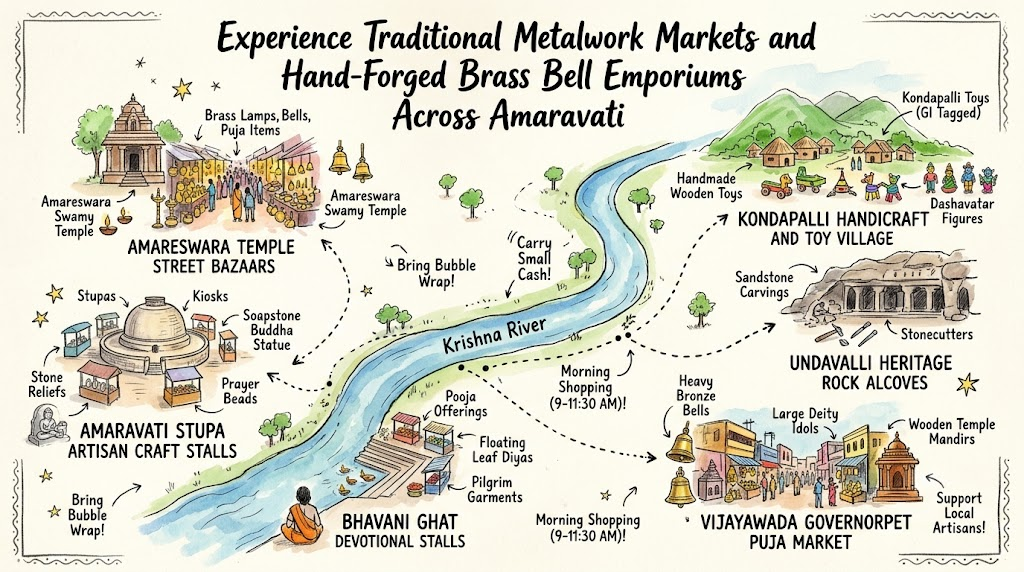
Amareswara Temple Street Bazaars
The vibrant lanes immediately surrounding the historic Amareswara Swamy Temple form the beating heart of traditional religious commerce in Amaravati. Lining these bustling pedestrian pathways are family-run storefronts glowing with gleaming brass oil lamps, polished copper vessels, hand-woven sacred threads, and fragrant sandalwood incense. Artisans here display centuries-old metalworking traditions, crafting exquisite ritual plates and bells designed for daily worship.
Walking through these vibrant temple bazaars offers a sensory-rich experience filled with the scent of fresh jasmine garlands and ringing temple bells. Engaging directly with local multigenerational shopkeepers provides fascinating insights into traditional pooja customs and the provenance of each handcrafted artifact.
- Location: Immediate perimeter of Amareswara Swamy Temple, Amaravati Town Center.
- Why it is worth visiting: It is the primary regional hub for authentic brass puja vessels, sacred threads, and consecrated temple mementos.
- Best things to do: Inspect handcrafted brass Nilavilakku lamps, purchase pure temple kumkum and Vibhuti, and converse with local artisan vendors.
- Best time to visit: 9:00 AM to 11:30 AM before afternoon heat peaks and crowds gather for midday rituals.
- Ideal for whom: Spiritual seekers, brass artifact collectors, cultural tourists, and devout families.
- Travel tip: Carry small denomination cash currency as traditional street vendors prefer physical cash over digital transactions for small devotional items.
Amaravati Stupa Artisan Craft Stalls
Situated adjacent to the world-famous Amaravati Maha Stupa and archaeological museum complex, specialized souvenir kiosks offer remarkable replicas of ancient Buddhist sculptures and meditative artifacts. Artisans craft miniature limestone relief panels, soapstone Buddha statues, and prayer beads using techniques inspired by ancient Satavahana stone carvers. These unique items capture the profound artistic legacy of early Buddhist monastic life.
Collecting a piece of this ancient aesthetic allows travelers to bring home a tangible fragment of India’s classical heritage. The serene atmosphere near the excavation grounds provides a tranquil backdrop for browsing these meditative artworks.
- Location: Main Stupa Complex Approach Road, Amaravati Town.
- Why it is worth visiting: It offers rare, hand-carved stone replicas of Buddhist stupa friezes and meditative figurines unavailable in standard city shops.
- Best things to do: Browse carved soapstone Buddha heads, purchase wooden prayer bead malas, and examine miniature limestone relief plaques.
- Best time to visit: 3:00 PM to 5:30 PM for pleasant evening weather while exploring museum surroundings.
- Ideal for whom: History enthusiasts, art collectors, Buddhist practitioners, and mindful travelers.
- Travel tip: Check fragile stone items carefully and request secure bubble-wrap packing from the vendors before transit.
Vijayawada Governorpet Puja Goods Market
Located just a short journey across the river near Vijayawada’s central commercial zone, Governorpet hosts wholesale and retail markets renowned across the district for comprehensive religious goods. Massive emporiums here stock everything from heavy temple bronze bells and silver-plated idols to specialized havan herbs, sacred rudraksha beads, and ornate wooden home temple shrines (mandirs).
The sheer variety available in Governorpet makes it an essential stop for anyone setting up a home altar or seeking specialized ritual paraphernalia. Experienced merchants here provide expert guidance on authentic scriptural specifications for sacred items.
- Location: Governorpet Commercial District, Vijayawada, 30 km from Amaravati.
- Why it is worth visiting: It is the premier regional wholesale destination for complete home temple altars, heavy brass deities, and rare ritual herbs.
- Best things to do: Commission custom-sized wooden home mandirs, select authentic rudraksha malas, and purchase specialized copper yantras.
- Best time to visit: 10:00 AM to 1:00 PM when shops are fully stocked and less crowded than evening hours.
- Ideal for whom: Homeowners setting up shrines, spiritual practitioners, and wholesale buyers.
- Travel tip: Bargaining is common in wholesale lanes; compare prices across two or three adjacent shops before finalizing heavy metal purchases.
Bhavani Ghat Riverside Devotional Stalls
Positioned along the bustling riverbanks near the sacred bathing ghats, seasonal and permanent stalls cater specifically to pilgrims performing ancestral rites and river worship. These shops specialize in organic puja items, unstitched sacred cotton garments, fresh flower venis, turmeric roots, and ritual coconut offerings. The immediate proximity to flowing water imbues these items with deep spiritual significance for participating pilgrims.
Interacting with local stall owners here provides a direct window into the living ritual traditions of Krishna river worship. The vibrant displays of colorful powders and fresh garlands create a deeply atmospheric shopping experience.
- Location: Bhavani Ghat Waterfront, Vijayawada / Amaravati border approach.
- Why it is worth visiting: Ideal for sourcing fresh, ritually pure puja offerings, river worship items, and traditional ceremonial garments.
- Best things to do: Purchase biodegradable floating leaf lamps for evening river prayers, acquire pure silk ritual dhotis, and buy fresh marigold garlands.
- Best time to visit: Early morning between 6:00 AM and 8:30 AM during active river prayer ceremonies.
- Ideal for whom: Pilgrims, ritual participants, and cultural photographers.
- Travel tip: Purchase eco-friendly leaf boats with earthen diyas to support local artisans and protect river cleanliness.
Kondapalli Handicraft and Toy Village
Nestled in the forested hill foothills near Amaravati, Kondapalli village is internationally famous for its traditional wooden toys and religious figurines carved from soft Tella Poniki wood. Local master artisans meticulously shape intricate divine figures, mythological characters, and festive Dashavatar sets, painting them with brilliant organic vegetable dyes. Buying directly from these artisan households supports centuries-old craft traditions.
Visiting the craft workshops allows travelers to witness skilled carvers transforming raw wood into vibrant devotional masterpieces. The village atmosphere remains wonderfully calm compared to bustling city markets.
- Location: Kondapalli Village, 22 km northeast of Amaravati town.
- Why it is worth visiting: It is the exclusive source for authentic, GI-tagged Kondapalli wooden mythological figurines and festive display dolls.
- Best things to do: Watch master woodcarvers at work, purchase handmade Dashavatar sets, and inspect natural vegetable-dye painting techniques.
- Best time to visit: 10:00 AM to 4:00 PM to ensure artisan workshops are open and active.
- Ideal for whom: Craft connoisseurs, families, collectors of folk art, and cultural explorers.
- Travel tip: Ask artisans for certificate labels confirming genuine GI-tagged Kondapalli wood craftsmanship to avoid factory-made plastic imitations.
Offbeat Exploration: Hidden Gems Tourists Miss
Undavalli Heritage Rock Alcoves
Tucked away near the ancient monolithic cave temples, quiet stone alcoves carved into sandstone cliffs often host local spiritual practitioners and traditional stonecutters. Exploring these less-visited rocky corners reveals weathered rock carvings and peaceful nooks far away from mainstream tourist pathways.
Prakasam Riverbank Artisan Nooks
Hidden behind the bustling main bridge approaches, small family cooperatives mend traditional fishing nets and handcraft ritual bamboo baskets. Visiting these quiet riverbank corners offers an authentic glimpse into the daily working lives of local rural craftspeople.
Dharanikota Ancient Brick Kiln Mounds
Located on the outskirts of the ancient citadel ruins, quiet agricultural mounds preserve remnants of ancient brick-making sites. Walking through these untamed fields provides a profound sense of historical continuity connecting modern religious clay artifact creation with antiquity.
Detailed Practical Guidance for Travelers
| Destination | Standard Entry Fee | General Timings | Best Local Food Options Nearby | Recommended Nearby Attractions |
|---|---|---|---|---|
| Amareswara Temple Bazaars | Free Access | 8:00 AM – 8:00 PM Daily | Hot Idlis and Punugulu at street-side tiffin stalls | Amareswara Swamy Temple (Adjacent) |
| Amaravati Stupa Craft Stalls | Free Access | 9:00 AM – 6:00 PM Daily | Traditional Andhra thali meals at local town messes | Archaeological Museum (100 meters) |
| Governorpet Puja Market | Free Access | 9:30 AM – 8:30 PM Daily | Filter coffee and local Vijayawada street snacks | Kanaka Durga Temple (2 km) |
| Bhavani Ghat Stalls | Free Access | 6:00 AM – 7:00 PM Daily | Fresh coconut water and sweet sugarcane juice carts | Prakasam Barrage (1 km) |
| Kondapalli Toy Village | Free Access | 9:00 AM – 5:00 PM Daily | Home-cooked rural Andhra meals at village eateries | Kondapalli Fort Ruins (3 km) |
| Undavalli Rock Alcoves | ₹25 (Indians), ₹300 (Foreigners) | 9:00 AM – 5:30 PM Daily | Mirchi bajji and tea stalls near cave entrance | Undavalli Cave Temples (Adjacent) |
Logistics & On-Ground Navigation
Local Transport Options
- State Bus Connectivity: Regular APSRTC buses connect Vijayawada Pandit Nehru Bus Station directly to Amaravati and Kondapalli artisan village at economical fares.
- Auto-Rickshaws & E-Rickshaws: Auto-rickshaws serve as the ideal transport mode for navigating between temple markets and artisan stalls within Amaravati town. Always negotiate rates beforehand.
- Private Car Rentals: Hiring a dedicated taxi for the day provides maximum convenience when transporting fragile brass idols and wooden artifacts between markets.
Budget Planning
- Backpacker / Budget Tier: ₹1,200 – ₹1,800 per day. Covers public bus travel, budget lodge stays, street-side tiffin meals, and essential small souvenir purchases.
- Mid-Range / Comfort Tier: ₹3,500 – ₹5,500 per day. Covers private car hire, comfortable 3-star hotel stays in Vijayawada, full-service dining, and moderate artifact investments.
Safety and Inclusivity Tips
- Family Travelers: Navigating crowded temple lanes requires holding children’s hands firmly; keep lightweight bags securely zipped in bustling markets.
- Couples & Solo Travelers: The local shopping districts are exceptionally welcoming and safe. Dress modestly when exploring traditional religious markets.
- General Safety: Keep cash safely distributed in multiple pockets when purchasing valuable brass or silver items in busy wholesale bazaars.
Strategic Travel Planning Guardrails
Travel Planning Tips for Amaravati
- Verify Store Holidays: Many traditional artisan workshops and temple market stalls close early on festival full-moon nights or specific weekly maintenance days.
- Carry Robust Wrapping Materials: Bring bubble wrap or soft cotton cloth if you plan to purchase delicate clay artifacts or heavy brass oil lamps.
- Start Shopping Early: Morning hours offer cooler weather and undivided attention from artisan shopkeepers before afternoon crowds arrive.
- Embrace Local Payment Flexibility: While digital UPI is widespread, keeping physical cash on hand ensures smooth transactions with rural woodcarvers.
- Respect Artisan Copyrights: Avoid photographing proprietary woodcarving patterns without asking workshop owners for polite permission first.
Common Mistakes to Avoid
- Overpacking Fragile Items: Forgetting to pack sturdy containers for heavy brass idols and delicate stone carvings risks transit damage.
- Skipping Governorpet Variety: Relying solely on small town stalls without exploring Governorpet’s wholesale market misses out on rare ritual items.
- Rushing Through Craft Villages: Rushing a visit to Kondapalli without conversing with master carvers deprives you of understanding the true cultural heritage.
- Ignoring Weight Limits: Purchasing excessively heavy brass items without checking airline luggage weight restrictions can cause airport hassle.
- Neglecting Local Snack Breaks: Skipping street-side tiffin stalls misses out on authentic culinary experiences while browsing markets.
Suggested Itinerary Blueprints
1-Day Quick Dash (The Artisan Market Express)
Designed for travelers pressed for time who want to experience the core religious shopping hubs in a single efficient sweep.
- Morning: Arrive early at Amareswara Temple Street Bazaars to select brass lamps and puja essentials.
- Afternoon: Drive to Kondapalli village to purchase authentic handcrafted wooden toys directly from artisan workshops.
- Evening: Conclude the day browsing souvenir stalls near Amaravati Stupa while watching the sunset.
2-Day Deep-Dive (The Complete Devotional Circuit)
Ideal for collectors and spiritual seekers seeking an immersive journey through all regional craft centers and sacred markets.
- Day 1: Explore Amaravati town markets, Amareswara temple lanes, Stupa artifact stalls, and peaceful river ghat vendors.
- Day 2: Spend the day exploring Governorpet’s wholesale puja emporiums in Vijayawada followed by an afternoon artisan tour in Kondapalli.
Complete Weekend Travel Plan (The Ultimate Heritage Loop)
- Friday Evening: Check into your hotel, stroll through illuminated evening markets near Prakasam Barrage, and sample local street food.
- Saturday: Dedicate a full day to exploring Amaravati temple markets, ancient ruins, and riverside ritual stalls.
- Sunday: Visit Kondapalli village workshops in the morning, explore Governorpet wholesale markets in the afternoon, and depart.
Common Tourist Mistakes to Avoid
- Geographic Blunders: Trying to visit distant wholesale markets in Vijayawada and remote craft villages on opposite sides of the river within a single hour.
- Commercial Traps: Spending time in modernized urban shopping malls instead of authentic, atmospheric local temple bazaars.
- Neglecting Modern Extensions: Ignoring modern craft centers that blend traditional spiritual motifs with contemporary home decor designs.
- Transport Overpayment: Failing to fix auto-rickshaw fares in advance or not checking standard local pricing before hiring private cabs.
- Luxury Dining Bias: Avoiding traditional street-level tiffin centers near market gates that offer the most authentic local culinary flavors.
Frequently Asked Questions
1. What are the best religious items to buy near Amaravati?
Travelers frequently purchase traditional brass oil lamps (diyas), handcrafted soapstone Buddha replicas, wooden Kondapalli mythological figurines, copper puja vessels, and authentic rudraksha beads from local artisan markets.
2. Are the prices in Amaravati temple markets fixed or negotiable?
Prices in small temple street stalls are generally fixed or subject to mild respectful bargaining. However, in wholesale markets like Governorpet, polite negotiation for multiple artifact purchases is common practice.
3. Can I find authentic Buddhist artifacts in Amaravati?
Yes, specialized craft stalls near the Amaravati Maha Stupa and archaeological museum offer high-quality limestone relief replicas, meditation beads, and carved soapstone figurines reflecting the region’s Buddhist heritage.
4. Where can I buy heavy brass home temple altars near Amaravati?
The specialized wholesale and retail emporiums located in the Governorpet commercial district of nearby Vijayawada offer the widest selection of heavy brass deities and complete home shrines.
5. Are digital UPI payments accepted in traditional artifact shops?
While digital UPI payments are increasingly accepted by most urban shops in Vijayawada and major Amaravati stores, carrying physical cash remains essential when purchasing from rural woodcarvers and street vendors.
6. How do I ensure my purchased brass items are authentic and pure?
Look for reputable multi-generational store owners who provide certification or weight-based verification. Pure brass items feature a distinct golden sheen, solid weight, and lack cheap surface plating peeling.
7. What are the operating timings for temple street markets?
Most traditional market shops open around 9:00 AM and remain active until 8:30 PM. Morning hours between 9:00 AM and 11:30 AM offer the calmest shopping environment.
8. Is it safe to transport heavy stone and metal souvenirs?
Yes, but it requires careful packing. Ask local vendors for bubble wrap and secure cardboard boxing, and consider shipping extremely heavy brass items if traveling via airlines.
9. Are there special craft items unique only to this region?
Kondapalli wooden toys and GI-tagged festive dolls crafted from soft Tella Poniki wood are completely unique to this specific Andhra Pradesh region and cannot be authentically sourced elsewhere.
10. Do I need any special permits to buy cultural artifacts?
No special permits are required for Indian or foreign nationals to purchase, own, or transport standard religious items, brass lamps, or handcrafted wooden toys from local markets.
11. What is the best way to travel between different market areas?
Hiring a private taxi for the day provides the most comfortable and secure transport when carrying multiple fragile artifacts and heavy metal purchases across different towns.
12. Are market vendors helpful in explaining the religious significance of items?
Yes, local multigenerational shopkeepers near temple gates are exceptionally knowledgeable and eager to explain the scriptural uses and symbolic meanings behind various ritual items.
Conclusion
Choosing to explore the traditional markets and sacred artifact hubs of Amaravati offers a deeply rewarding journey far beyond ordinary commercial tourism. Sourcing handcrafted brass lamps, authentic puja vessels, and timeless wooden figurines connects you directly to the living hands of coastal Andhra’s master artisans. By supporting these generational craft traditions and immersing yourself in authentic temple bazaars, you return home with more than mere souvenirs—you carry forward the enduring spiritual soul and cultural heritage of an ancient river capital.
