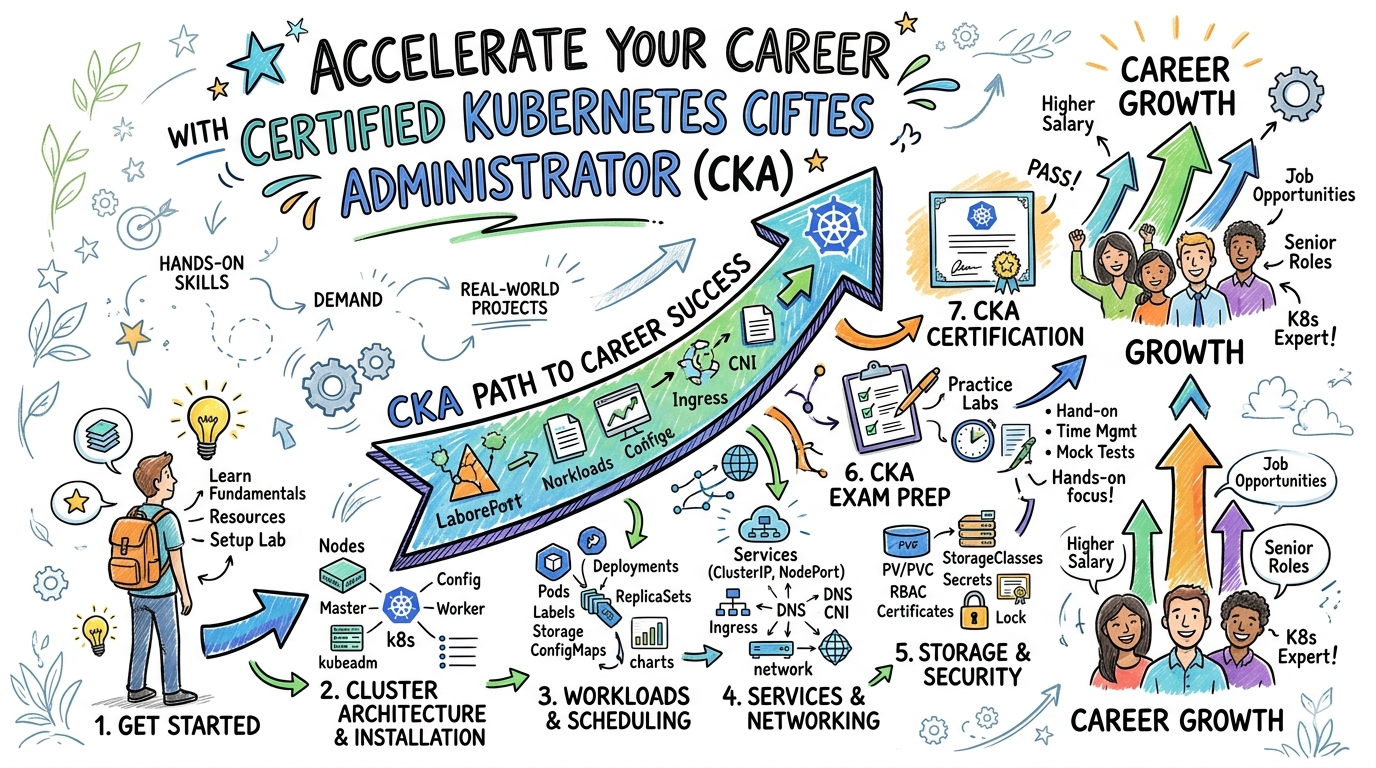
Introduction
The cloud-native landscape has shifted from basic virtualization to massive containerized orchestration. At the center of this architectural evolution sits Kubernetes, the de facto operating system of modern data centers. Managing these environments requires a verified, practical skillset that goes beyond theoretical knowledge. This guide is crafted for working software engineers, system administrators, site reliability engineers, and engineering managers who need to navigate the complexities of container orchestration. Understanding the ecosystem allows professionals to make informed career decisions and choose the right educational trajectories. Whether you are aiming to stabilize enterprise platforms or accelerate your engineering career, mastering this ecosystem provides a definitive technical path. Professionals looking to expand their expertise into cutting-edge domains can explore specialized training platforms like aiopsschool to align their infrastructure skills with automated operations. You can explore the comprehensive curriculum and training options through the official Certified Kubernetes Administrator (CKA) program hosted on devopsschool to kickstart your validation journey.
What is the Certified Kubernetes Administrator (CKA)?
The Certified Kubernetes Administrator (CKA) designation represents the industry benchmark for core Kubernetes expertise. It exists to certify that an engineer can handle the day-to-day operations, configuration, and troubleshooting of production-grade clusters. Unlike traditional multiple-choice examinations, this program focuses entirely on hands-on performance-based tasks in a live CLI environment. This practical approach aligns directly with modern engineering workflows, where uptime, declarative configurations, and rapid troubleshooting are critical. Enterprises rely on this standard to ensure their engineering teams can maintain cluster reliability, manage application deployments, and implement robust networking policies across hybrid cloud environments.
Who Should Pursue Certified Kubernetes Administrator (CKA)?
This infrastructure program benefits a wide spectrum of technical professionals across India and global markets. Core DevOps engineers, system administrators, cloud engineers, and Site Reliability Engineers (SREs) will find it immediately applicable to their daily production responsibilities. Security practitioners and data engineers who manage data workloads on cloud-native infrastructure also gain deep visibility into underlying resource constraints. While beginners with strong Linux fundamentals can use it as a foundational stepping stone, experienced engineers use it to validate their architectural competency. Technical leaders and engineering managers pursue this path to better estimate project timelines, assess infrastructure risks, and lead high-performing platform teams.
Why Certified Kubernetes Administrator (CKA)
The demand for container orchestration expertise continues to outpace the supply of qualified infrastructure engineers. As enterprises migrate legacy applications to microservices architectures, Kubernetes remains the stable foundation beneath fluctuating software trends. Investing time in this certification offers a high return on investment because the core concepts of scheduling, networking, and storage remain identical across all major cloud providers. Achieving this level of competency ensures that your skills remain highly relevant even as higher-level abstractions are built on top of the orchestrator. It establishes a resilient baseline for career progression, protecting professionals from rapid tooling obsolescence in the volatile tech market.
Certified Kubernetes Administrator (CKA) Certification Overview
The formal preparation and enablement program is delivered via the devopsschool platform, which serves as the primary training and hosting infrastructure provider. The certification model focuses entirely on performance-based assessments conducted within a timed, simulated terminal environment. Candidates are tested on their ability to solve real-world infrastructure problems, fix broken clusters, configure network policies, and manage persistent volumes. This rigorous assessment approach ensures that certificate holders possess actual operational competence rather than simple memorization skills. The program is widely respected across corporate enterprises because it serves as an objective verification of an engineer’s technical execution capabilities.
Certified Kubernetes Administrator (CKA) Certification Tracks & Levels
The cloud-native administrative journey is structured across clear operational baselines, specific functional domains, and advanced architectural paths. The foundational track ensures familiarity with basic object creation, application execution, and managed cloud environments. The professional administrative tier forms the core operational layer, focusing deeply on cluster lifecycle management, networking, and deep troubleshooting. Advanced and specialization tracks branch out into dedicated fields like container security, application development, and cloud-native cost optimization. This multi-tiered structure allows engineers to systematically align their learning paths with their specific daily workloads and long-term career progression goals.
Complete Certified Kubernetes Administrator (CKA) Certification Table
| Track | Level | Who it’s for | Prerequisites | Skills Covered | Recommended Order |
| Cloud-Native Core | Foundational | Aspiring Developers, App Support | Linux Basics, Containers | Pod creation, basic kubectl, YAML syntax | First |
| Platform Administration | Professional | DevOps Engineers, SREs, SysAdmins | Strong Linux, Networking | Cluster setup, CoreDNS, ETCD backup, Storage | Second |
| Infrastructure Security | Advanced | DevSecOps, Security Engineers | Professional Admin Level | RBAC, NetworkPolicies, Auditing, Hardening | Third |
| Application Delivery | Specialist | Cloud Developers, Automation Engineers | Foundational Core Level | Helm, deployment strategies, configmaps | Fourth |
Detailed Guide for Each Certified Kubernetes Administrator (CKA) Certification
Certified Kubernetes Administrator (CKA) – Professional Administration
What it is
This level validates the practical capability to configure, manage, maintain, and troubleshoot production-ready Kubernetes clusters from scratch.
Who should take it
Systems administrators, DevOps practitioners, platform engineers, and SREs who are responsible for maintaining production infrastructure uptime.
Skills you’ll gain
- Manual cluster deployment using kubeadm tools
- Comprehensive troubleshooting of control plane components
- Custom application scheduling and resource allocation management
- Cluster backup restoration using ETCD snapshots
Real-world projects you should be able to do
- Provision a multi-node cluster on bare metal or cloud instances manually
- Diagnose and repair broken CNI network plugins and core DNS resolutions
Preparation plan
- 7–14 Days: Focus heavily on mastering standard kubectl imperative commands, managing YAML syntaxes, and configuring basic pod abstractions.
- 30 Days: Set up multi-node local environments using virtual machines, practice control plane upgrading, and perform ETCD backup restorations.
- 60 Days: Conduct timed mock exams, simulate complex networking failures, practice custom troubleshooting scenarios, and optimize configuration speeds.
Common mistakes
- Spending excessive time manually typing out complex YAML files instead of generating them using imperative command flags.
- Mismanaging the exam environment context switches, which leads to executing correct tasks on completely wrong target clusters.
Best next certification after this
- Same-track option: Certified Kubernetes Security Specialist
- Cross-track option: Certified Kubernetes Application Developer
- Leadership option: Certified Cloud-Native Platform Architect
Choose Your Learning Path
DevOps Path
The operational roadmap focuses heavily on continuous integration, automated infrastructure deployments, and declarative configuration management models. Engineers learning this path prioritize standardizing application lifecycles, managing dynamic helm charts, and ensuring predictable deployments. Mastery of core cluster objects allows DevOps practitioners to design robust deployment pipelines that interface smoothly with container environments. This path ensures that application updates flow smoothly from local repositories to live production environments with zero downtime.
DevSecOps Path
The security-first path integrates strict access controls, compliance scanning, and runtime isolation policies directly into cluster lifecycles. Engineers working along this trajectory focus on role-based access control configurations, secret management abstractions, and network isolating policies. They learn how to audit API server logs, scan container images for vulnerabilities, and enforce secure security contexts for pods. This guarantees that infrastructure remains completely resilient against internal lateral movements and external security vectors.
SRE Path
The reliability trajectory concentrates on cluster high availability, performance optimization, deep observability, and disaster recovery strategies. Professionals on this path deep dive into cluster component metrics, control plane stability, and proactive logging configurations. They master advanced troubleshooting techniques to resolve complex networking bottlenecks and underlying storage latency issues quickly. The primary objective is maximizing cluster uptime, maintaining strict service level objectives, and establishing predictable automated scaling behaviors.
AIOps Path
The automated operational pathway leverages machine learning models to analyze cluster log metrics, predict systemic anomalies, and automate remediation tasks. Engineers study how automated intelligent agents interact with cluster APIs to optimize workloads dynamically based on historic consumption trends. This specialization bridges data intelligence with core platform engineering to eliminate manual troubleshooting steps in massive infrastructure footprints. It represents a forward-looking evolutionary step for modern enterprise scale administration.
MLOps Path
The machine learning operations roadmap focuses explicitly on orchestration, scheduling, and scaling specialized training workloads across distributed clusters. Engineers on this path manage large data sets, configure GPU resource allocations, and deploy specialized operator patterns like Kubeflow. They ensure that heavy computational training pipelines run efficiently without starving other critical microservices of cluster resources. This track connects raw machine learning code with production-grade, highly scalable distributed hardware systems.
DataOps Path
The data orchestration path addresses the unique challenges of running complex stateful applications, databases, and big data pipelines inside containers. Professionals master persistent volume claims, statefulsets architectures, and custom storage class integrations across diverse hardware systems. They ensure data consistency during unexpected node failures, handle database clustering, and optimize storage performance for high-throughput transactional engines. This eliminates the traditional risks associated with hosting critical enterprise data layers inside ephemeral container spaces.
FinOps Path
The financial management framework centers around resource optimization, cost allocation metrics, and minimizing waste across cloud clusters. Engineers learn to implement strict resource requests and limits, configure horizontal autoscalers efficiently, and track precise namespace spend. They utilize specialized monitoring tools to identify over-provisioned worker nodes and optimize cloud spend without compromising application performance profiles. This guarantees that cloud-native transformations remain highly cost-effective for enterprise balance sheets over long-term operations.
Role → Recommended Certified Kubernetes Administrator (CKA) Certifications
| Role | Recommended Certifications |
| DevOps Engineer | Certified Kubernetes Administrator, Certified Kubernetes Application Developer |
| SRE | Certified Kubernetes Administrator, Certified Kubernetes Security Specialist |
| Platform Engineer | Certified Kubernetes Administrator, Cloud-Native Platform Architect |
| Cloud Engineer | Cloud-Native Core Foundational, Certified Kubernetes Administrator |
| Security Engineer | Certified Kubernetes Security Specialist, Certified Kubernetes Administrator |
| Data Engineer | Certified Kubernetes Administrator, Stateful Cloud Workloads Specialist |
| FinOps Practitioner | Cloud-Native Cost Optimization Specialist, Foundational Core Level |
| Engineering Manager | Cloud-Native Core Foundational, Certified Kubernetes Administrator |
Next Certifications to Take After Certified Kubernetes Administrator (CKA)
Same Track Progression
Advancing further along the administrative track involves diving deeply into advanced infrastructure security principles. The logical next phase tests your ability to secure containerized applications, protect cluster components, and manage complex runtime environments. This deep specialization ensures that your administrative capabilities expand into advanced hardening techniques required by enterprise banking, healthcare, and government systems.
Cross-Track Expansion
Broadening your engineering horizons involves moving into application development orchestration or specialized multi-cloud networking architectures. Transitioning into developer-focused validations helps you understand how engineers pack, distribute, and scale applications from an internal perspective. This cross-training creates a well-rounded professional who bridges the gap between raw software code and underlying bare-metal infrastructure.
Leadership & Management Track
Moving into technical management requires shifting focus from daily command-line executions to long-term architectural visions and financial management. Aspiring technical leaders should focus on enterprise cloud-native architecture paths, governance models, and FinOps frameworks. This strategic transition ensures you can evaluate infrastructure investments, mitigate compliance risks, and guide engineering teams through complex digital transformations.
Training & Certification Support Providers for Certified Kubernetes Administrator (CKA)
DevOpsSchool provides comprehensive instructor-led training bootcamps designed specifically around hands-on real-world cluster management practices. Their course syllabus focuses intensely on the command-line interface speed, practical troubleshooting scenarios, and complex configuration setups required to clear enterprise-level performance evaluations.
Cotocus delivers specialized enterprise infrastructure consulting and structured training bootcamps targeted directly at working professionals. Their operational curriculum emphasizes production-grade deployment strategies, multi-node cluster networking setups, and real-world disaster recovery protocols.
Scmgalaxy hosts an extensive community repository of technical blogs, practical tutorials, and interactive step-by-step guides for cloud-native tools. Their learning materials provide engineers with excellent reference architectures for configuring persistent storage engines and debugging complex control plane components.
BestDevOps focuses on delivering practical, job-oriented platform engineering bootcamps that bridge theoretical concepts with daily operational realities. Their structural approach ensures candidates build deep confidence running production environments smoothly.
devsecopsschool offers deep educational tracks focusing entirely on integrating strict security frameworks directly into modern automated infrastructure pipelines. Their programs guide professionals through cluster hardening, secret encryption, and advanced access controls.
sreschool provides targeted training courses focusing primarily on infrastructure high availability, deep observability setups, and complex troubleshooting workflows. Their technical programs teach engineers how to minimize platform downtime systematically.
aiopsschool leads the industry in training engineers to apply data science insights and automated machine learning intelligence directly to infrastructure monitoring layers. Their courses empower professionals to build self-healing cloud environments.
dataopsschool specializes in delivering educational paths focused on managing complex distributed databases, stateful workloads, and big data architectures within container ecosystems. Their guides ensure enterprise data stability.
finopsschool provides structured educational modules centered around container resource optimization, cloud spend transparency, and structural cost reduction frameworks. They help teams eliminate infrastructure resource wastage.
Frequently Asked Questions (General)
- What makes performance-based certifications different from traditional multiple-choice exams?Traditional exams test memorization through multiple-choice selections, whereas performance-based exams require candidates to solve actual technical problems in live environments.
- How much time do working professionals typically need to prepare for this administrative evaluation?Most working professionals dedicate between six to eight weeks of consistent daily practice to master the terminal speed and architectural concepts.
- Are there strict prerequisite certifications required before attempting the professional level?There are no formal administrative prerequisites required, allowing candidates to jump directly into the professional certification if they possess sufficient experience.
- Why is hand-on command-line terminal speed considered so crucial for passing the exam?The evaluation is strictly timed, meaning candidates who rely heavily on documentation searches will run out of time before finishing tasks.
- How long does the achieved certification status remain valid for industry professionals?The certification credentials remain formally valid for a period of three years, reflecting the rapid updates within the software ecosystem.
- Can an application developer benefit from taking an administrative-focused infrastructure exam?Yes, developers gain deep visibility into how their application code behaves under resource constraints, leading to better architectural designs.
- What happens if a candidate fails the practical performance evaluation on their first attempt?Most standard registration paths include one complimentary retake attempt, allowing professionals to reassess their weak spots and try again.
- How does understanding core networking concepts impact success in cluster administration?Networking forms the foundation of container communication, meaning engineers must understand routing, DNS, and switching to solve cluster failures.
- Is it necessary to memorize all the YAML configuration syntaxes from scratch?No, candidates can utilize the official documentation during the exam, but they must master imperative commands to generate templates quickly.
- What is the financial return on investment for securing an advanced infrastructure credential?Certified professionals frequently command higher compensation packages and secure senior architectural roles due to verified independent technical capability.
- How do enterprise organizations verify the authenticity of a candidate’s certification status?Organizations use unique validation hashes provided by hosting platforms to confirm credentials against official tracking databases securely.
- Should I build local virtual machines or use managed cloud instances for daily practice?Building local virtual machines via tools like VirtualBox provides deeper insight into underlying OS networking configurations than managed cloud instances.
FAQs on Certified Kubernetes Administrator (CKA)
- What specific percentage weight is allocated to troubleshooting domains within the official curriculum?Troubleshooting issues commands a major share of the total curriculum weight, often accounting for thirty percent of the overall evaluation score. This high concentration ensures that certified professionals can recover failing production environments systematically under tight enterprise timelines.
- Can I use third-party alias plugins or custom shells during the live administrative exam?The exam environment restricts the use of third-party auto-completion plugins, but candidates are free to configure standard built-in shell aliases directly inside the provided terminal. Master the native autocompletion setups to maximize speed.
- How does the evaluation handle cluster upgrades across distinct control plane versions during tests?Candidates are frequently required to upgrade control nodes and worker components sequentially using specific versions of administrative tools without dropping active workloads. This tests your understanding of version compatibility matrix rules.
- What strategy should I use when a specific persistent volume fails to mount during tasks?Inspect the underlying storage class configuration, verify physical path allocations, and check container access modes within the declarative resource definitions systematically. Most mounting errors stem from access definition mismatches.
- Are candidates allowed to open multiple browser tabs to access general internet search engines?No, candidates are strictly limited to accessing the official documentation domains within a single integrated browser tab during the evaluation session. Accessing unauthorized external websites results in immediate disqualification.
- How are custom network policies evaluated within the simulated cluster environment partitions?The grading systems verify network policies by executing automated traffic ping tests across isolated namespaces to ensure ingress and egress rules match criteria. Syntax accuracy alone will not guarantee passing marks.
- What is the most effective method to back up cluster states before performing disruptive maintenance?Connect directly to the active control plane node, utilize the etcdctl command-line tool utility, and export a secure cryptographic snapshot of the datastore. Always verify your snapshot file size to ensure completeness.
- How do I handle context switching effectively across multiple cluster environments during the exam?Always execute the specific context configuration switch commands provided at the top of each question text before running any subsequent administrative actions. Forgetting this step leads to zero marks.
Final Thoughts: Is Certified Kubernetes Administrator (CKA) Worth It?
Investing time and effort into securing this administrative credential is fully worth the commitment for any engineer serious about infrastructure engineering. The technology has matured from an experimental framework into the foundational architecture powering modern enterprise software platforms globally. The performance-based nature of the evaluation ensures that your achievement represents true operational competence rather than simple test-taking skills. This recognition translates directly into increased project responsibility, technical authority, and career resilience within the engineering market. Focus on building deep foundational habits, practice troubleshooting under realistic time constraints, and let your hands-on execution speak for itself.
