Introduction
Modern travel often herds us into glossy, sanitaried shopping malls where every storefront looks identical. But the true soul of a historical region reveals itself in the bustling, sensory-rich local bazaars. Amaravati and its surrounding riverside districts offer an escape from predictable commercialism, inviting you into vibrant, authentic neighborhood markets.
Here, the air carries the rich aroma of roasted spices and handloom fabrics, while friendly local vendors share stories woven into every artifact. Choosing local market exploration means discovering genuine regional crafts while directly supporting the grassroots artisans of coastal Andhra.
Why Amaravati is a must-visit city
Amaravati serves as a fascinating anchor where ancient Satavahana history meets a dynamic regional marketplace. Geographically framed by the Krishna River and connected smoothly to commercial centers like Vijayawada and Guntur, this region provides effortless accessibility for value-seeking travelers, culture lovers, and curious shoppers.
The local trade circuit weaves together historical artisan clusters, bustling grain and textile lanes, and vibrant weekly street bazaars. Excellent rail connections via Vijayawada Junction and well-maintained state highways make navigating these lively shopping districts exceptionally straightforward for every type of visitor.
| Aspect | Details |
|---|---|
| Location | Palnadu/NTR District corridor, Andhra Pradesh |
| Nearest Transport Hub | Vijayawada Junction (BZA) ~30 km |
| Primary Shopping Themes | Handlooms, Brassware, Wooden Toys, Spices |
| Best Shopping Season | October to March |
| Ideal Trip Duration | 2 Days / 1 Night |
Best Places or Experiences
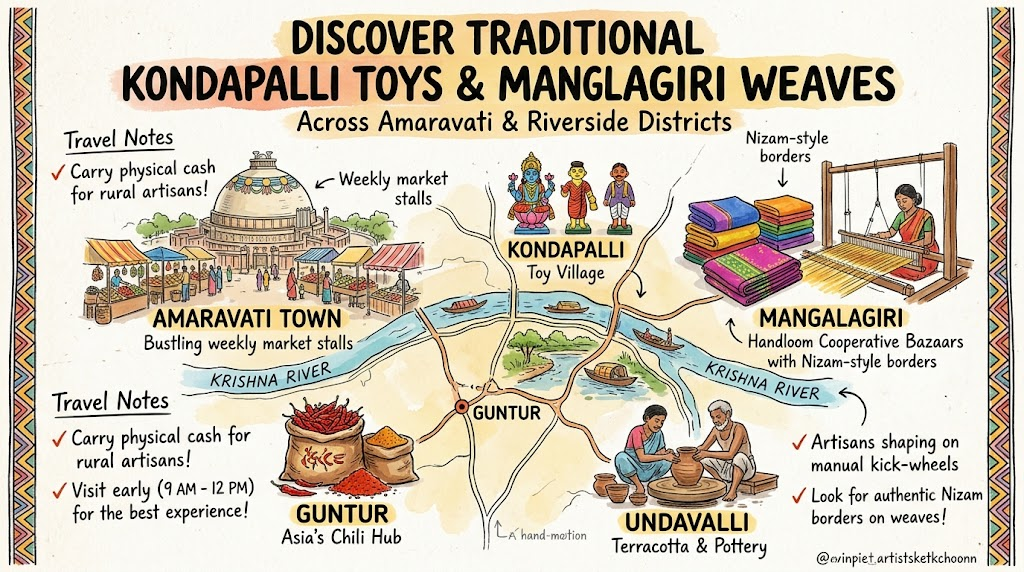
Amaravati Town Weekly Market & Handloom Bazaars
The local markets clustered around central Amaravati offer an authentic glimpse into everyday rural trade and traditional craftsmanship. Stalls overflow with locally woven cotton textiles, brass pooja artifacts, and fresh regional produce brought in directly by farming communities. Walking through these alleys lets you engage directly with village artisans and discover affordable, genuine keepsakes.
The vibrant atmosphere is filled with friendly barter banter, bright colors, and timeless community rhythms. It serves as an ideal spot to pick up utilitarian handlooms and regional tokens without paying the inflated markups of city tourist shops.
Rich heritage surrounding the Amaravati marketplace.
- Location: Central Amaravati Town, adjacent to the main bus stand area.
- Why it is worth visiting: It provides direct access to unbranded local handlooms and authentic rural handicrafts at wholesale prices.
- Best things to do: Browse handwoven cotton fabrics, inspect traditional brass household items, and sample local street snacks from neighboring vendors.
- Best time to visit: 9:00 AM to 12:00 PM when morning market stalls are fully set up and active.
- Ideal for whom: Budget shoppers, cultural anthropologists, and texture-seeking photographers.
- Travel tip: Carry small denomination cash notes, as rural vendors rarely operate digital card terminals for small transactions.
Kondapalli Toy Village Markets
Nestled at the foot of the historic Kondapalli Fort, this specialized artisan cluster is world-renowned for its traditional lightweight wooden toys. Crafted from soft Tella Poniki wood sourced from nearby hills, master artisans carve miniature figures depicting mythological characters, birds, animals, and rural village scenes. Buying directly from these home workshops guarantees authentic craftsmanship and supports generational artisan families.
Watching craftsmen delicately paint these intricate toys with natural vegetable dyes is a mesmerizing cultural experience. The sheer variety of affordable, eco-friendly keepsakes makes this an unmissable stop for thoughtful souvenir collectors.
- Location: Kondapalli Village, 24 km east of Amaravati.
- Why it is worth visiting: It is the exclusive manufacturing hub of GI-tagged Kondapalli handmade wooden toys.
- Best things to do: Visit artisan co-op workshops, watch natural toy painting demonstrations, and purchase direct-from-maker wooden figurines.
- Best time to visit: 10:30 AM to 4:00 PM on weekdays to see artisans actively carving in their courtyards.
- Ideal for whom: Families, art collectors, and conscious souvenir shoppers.
- Travel tip: Pack delicate wooden items carefully in bubble wrap or soft cloth to prevent chipping during transit.
Prakasam Road Textile & Brass Markets
Stretching outward from the iconic Krishna riverfront toward the bustling commercial lanes of Vijayawada, this sprawling market district is a bargain hunter’s paradise. Shops line the avenue offering exquisite Mangalagiri cotton sarees, dress materials, gleaming brass lamps, and traditional pooja essentials at unbeatable manufacturer prices. The energetic rhythm of local commerce makes every shopping excursion an adventure.
Navigating these packed lanes reveals hidden wholesale corners where you can source high-quality regional textiles for a fraction of retail mall costs. Friendly shopkeepers are always ready to demonstrate the fine weave quality of authentic handlooms.
Lively transport corridors connecting regional markets.
- Location: Governorpet and Eluru Road commercial corridor, 30 km from Amaravati.
- Why it is worth visiting: Exceptional wholesale pricing on authentic Mangalagiri handloom fabrics and brassware.
- Best things to do: Shop for reversible cotton sarees, bargain for brass temple bells, and explore old-city spice merchant alleys.
- Best time to visit: 4:00 PM to 8:00 PM when evening breeze cools the crowded market lanes.
- Ideal for whom: Fashion enthusiasts, home decor lovers, and dedicated bargain hunters.
- Travel tip: Always inspect stitched seams and fabric borders closely before finalizing bulk textile purchases.
Mangalagiri Handloom Cooperative Bazaars
Situated just a short drive from Amaravati, Mangalagiri is legendary across India for its distinctive cotton fabrics characterized by unique “Nizam” borders and vibrant checks. The cooperative markets and weaver lanes here allow buyers to purchase directly from the looms where master weavers have practiced their craft for centuries. The fabrics are lightweight, durable, and exceptionally comfortable for tropical climates.
Choosing items here cuts out middleman retail markups, ensuring your shopping budget directly empowers local weaver families. The sheer spectrum of color palettes available is staggering.
Sacred heritage framing local trade districts.
- Location: Mangalagiri Town center, 20 km from Amaravati.
- Why it is worth visiting: Direct access to pure cotton Mangalagiri fabrics straight from primary weaver societies.
- Best things to do: Visit cooperative weaving sheds, check fabric thread counts, and purchase unstitched dress material sets.
- Best time to visit: 10:00 AM to 1:00 PM for the best lighting and unhurried interactions with weavers.
- Ideal for whom: Textile historians, designers, and practical clothing shoppers.
- Travel tip: Pure handloom cotton shrinks slightly on its first wash, so buy an extra half-meter if tailoring fitted garments.
Guntur Local Spice & Chili Bazaars
As one of Asia’s largest trading centers for red chilies and agricultural spices, the bustling wholesale markets of nearby Guntur offer an intense sensory experience. Stacks of vibrant red chili sacks perfume the air, while merchants trade spices, turmeric, and jaggery in high-volume auctions. Purchasing culinary spices here guarantees unmatched freshness and robust regional flavor.
Exploring these fragrant merchant quarters provides deep insight into the agricultural backbone of coastal Andhra cuisine. Friendly spice vendors are happy to grind custom spice blends on the spot for traveling food lovers.
- Location: Old Guntur Market Yard, 35 km south of Amaravati.
- Why it is worth visiting: Access to world-famous Guntur chilies, authentic pickling spices, and farm-fresh jaggery blocks.
- Best things to do: Sample authentic pickle spices, purchase export-grade chili powder packs, and observe lively regional commodity trading.
- Best time to visit: 8:00 AM to 11:00 AM during peak wholesale auction hours.
- Ideal for whom: Culinary enthusiasts, foodies, and home chefs.
- Travel tip: Pack dry spices in airtight zip-lock containers to prevent pungent aromas from escaping into your luggage.
Undavalli Pottery & Craft Clusters
Nestled around the base of the ancient rock-cut cave hills, small traditional pottery clusters preserve centuries-old terracotta crafting techniques. Local artisans spin raw clay into exquisite water pots, decorative planters, terracotta lamps, and minimalist home decor items using traditional kick-wheels. These handcrafted earth pieces add rustic elegance to any living space at minimal cost.
Interacting with these skilled potters offers a grounding, authentic counterpoint to commercial retail therapy. Packing a small terracotta token makes for a uniquely earthy souvenir
.
Ancient stone backdrops framing rural artisan hamlets.
- Location: Undavalli Village foothills, near the cave entrance road.
- Why it is worth visiting: Authentic terracotta and clay pottery crafted using traditional low-fire kilns.
- Best things to do: Watch master potters shape clay on manual wheels, select lightweight terracotta decor, and support local craftspeople.
- Best time to visit: 2:00 PM to 5:00 PM after completing your morning cave exploration.
- Ideal for whom: Interior decorators, craft lovers, and eco-conscious travelers.
- Travel tip: Terracotta is fragile; request extra straw or newspaper wrapping from the vendor for safe transit.
Offbeat Exploration: Hidden Gems Tourists Miss
Prakasam Barrage Fisherman Flea Markets
Gathering quietly at dawn along the river embankments near the barrage, local fishing communities set up informal fresh-catch and river-artifact markets. Beyond seafood, observant travelers can find antique brass fishing floats, hand-twisted hemp ropes, and rustic river tools that reflect generations of riparian life. It offers an evocative glimpse into local maritime culture far removed from modern commercial stalls.
Nelapadu Bird Sanctuary Handicraft Stalls
Located near the famous wetland bird sanctuary just outside the main capital corridor, small seasonal stalls run by forest fringe communities sell handmade reed baskets, bamboo mats, and organic honey. Purchasing these sustainable goods directly aids local conservation-dependent families while providing unique, eco-friendly rural handicrafts for your home.
Amaravati Old Town Antique Coin Alleys
Tucked behind the main pilgrimage temples of Amaravati town, antique dealers and local collectors occasionally display weathered Satavahana-era replica coins, vintage temple tokens, and historical brass lock collections. Sifting through these minor curio displays rewards patient history buffs with fascinating conversation pieces and low-cost historical tokens.
Detailed Practical Guidance for Travelers
| Destination | Standard Entry Fee | General Timings | Best Local Food Options Nearby | Recommended Nearby Attractions |
|---|---|---|---|---|
| Amaravati Weekly Market | Free Access | 8:00 AM – 6:00 PM (Weekly specific days) | Hot Punugulu and spicy peanut chutney stalls | Amaravati Maha Stupa (1 km) |
| Kondapalli Toy Village | Free Access | 9:00 AM – 6:00 PM Daily | Traditional Andhra meals at village messes | Kondapalli Fort Ruins (2 km) |
| Governorpet Textile Hub | Free Access | 10:00 AM – 9:00 PM Daily | Mirchi bajji carts and fresh sugarcane juice | Prakasam Barrage (2 km) |
| Mangalagiri Weaver Co-ops | Free Access | 9:30 AM – 6:30 PM Daily | Local tiffin centers serving Pesarattu | Mangalagiri Panakala Temple (1 km) |
| Guntur Spice Market | Free Access | 7:00 AM – 5:00 PM (Mon–Sat) | Spicy Andhra meals with Gongura pickle | Guntur Gandhi Park (2 km) |
| Undavalli Pottery Stalls | Free Access | 9:00 AM – 6:00 PM Daily | Filter coffee and local snack kiosks | Undavalli Cave Temples (Adjacent) |
Logistics & On-Ground Navigation
Local Transport Options
- State Bus Networks: Frequent APSRTC buses connect Vijayawada, Guntur, Mangalagiri, and Amaravati town at highly economical fares, making market hopping easy.
- Auto-Rickshaws: Essential for navigating local market lanes and village artisan clusters where larger vehicles cannot park easily. Always agree on fares upfront.
- Two-Wheeler Rentals: Renting a scooter or motorbike in Vijayawada offers maximum flexibility to explore scattered craft villages like Kondapalli and Mangalagiri at your own pace.
Budget Planning
- Backpacker / Budget Tier: ₹1,000 – ₹1,500 per day. Covers public bus transit, budget guesthouse stays near bus terminals, local mess meals, and small souvenir trinkets.
- Mid-Range / Comfort Tier: ₹3,000 – ₹5,000 per day. Covers private scooter or car rentals, comfortable hotel stays in Vijayawada, full-scale regional dining, and moderate textile shopping budgets.
Safety and Inclusivity Tips
- Family Shoppers: Market lanes can be crowded and noisy; keep a close eye on children and secure bags against pickpockets in dense crowds.
- Solo Travelers: Local markets are generally safe and welcoming, though conservative attire helps blend in respectfully with traditional trading communities.
- General Safety: Stay hydrated under the coastal sun during midday market walks and keep emergency cash stored separately from digital wallets.
Strategic Travel Planning Guardrails
Travel Planning Tips for Amaravati
- Carry Plenty of Cash: While digital UPI payments are common in city shops, rural artisans and weekly market vendors strongly prefer cash.
- Bargain Respectfully: Gentle, polite negotiation is welcomed in local textile and handicraft markets, but avoid aggressive low-balling with primary makers.
- Check Weave Quality: Inspect handloom fabrics against daylight to verify thread count consistency and authentic border weaving before purchasing.
- Protect Fragile Souvenirs: Always ask pottery and toy vendors for extra newspaper packing to ensure delicate items survive bumpy bus or train rides.
- Start Shopping Early: Morning hours offer cooler temperatures and unhurried interactions with vendors before afternoon heat peaks.
Common Mistakes to Avoid
- Overpaying in Tourist Traps: Avoid buying souvenirs at airport or highway souvenir stops where markups can exceed 200% over village prices.
- Ignoring Washing Instructions: Forgetting to ask weavers if cotton handlooms require dry cleaning or gentle cold water hand-washing.
- Packing Heavy Items First: Buying bulky brassware or heavy clay pots at the start of your day rather than right before heading back to your hotel.
- Skipping Regional Co-ops: Relying exclusively on modern retail malls rather than exploring authentic weaver cooperatives in Mangalagiri and Kondapalli.
- Rushing Market Visits: Treating artisan workshops like quick photo stops rather than taking time to appreciate the intricate craftsmanship.
Suggested Itinerary Blueprints
1-Day Quick Dash (The Artisan Express Route)
Designed for travelers with limited time who want a fast-paced survey of the region’s premier handicraft and textile hubs.
- Morning: Arrive early at Mangalagiri cooperative weaver lanes to shop for pure cotton handloom sarees and dress materials.
- Afternoon: Drive to Kondapalli village to explore artisan toy-making workshops and purchase authentic wooden collectibles.
- Evening: Conclude with a quick shopping sweep through Vijayawada’s bustling Governorpet textile and brass markets.
2-Day Deep-Dive (The Complete Craft & Culture Loop)
Ideal for dedicated shoppers and cultural explorers looking for an unhurried immersion into regional trade and heritage.
- Day 1: Spend the morning exploring Amaravati town’s weekly markets and ancient stupa ruins. Afternoon dedicated to Guntur wholesale spice markets and local food tasting.
- Day 2: Explore Undavalli pottery stalls and cave temples in the morning. Spend the afternoon browsing Mangalagiri weaver sheds and Kondapalli toy cooperatives.
Complete Weekend Travel Plan (The Ultimate Heritage Trade Circuit)
- Friday Evening: Check into your hotel in Vijayawada. Stroll through evening street markets near Prakasam Barrage and sample local snacks.
- Saturday: Dedicate a full day to exploring Mangalagiri handlooms, Kondapalli toy village, and rural artisan cooperatives.
- Sunday: Visit Guntur spice yards and Amaravati craft markets in the morning, pack your purchases, and depart by evening.
Common Tourist Mistakes to Avoid
- Geographic Blunders: Trying to visit distant spice yards in Guntur and remote craft hamlets in Kondapalli within a single tight hour without factoring in traffic.
- Commercial Traps: Spending your entire shopping budget in air-conditioned urban shopping malls while ignoring authentic artisan village co-ops.
- Neglecting Modern Alternatives: Overlooking contemporary boutique art cafes in urban expansions that showcase modern regional design fusion.
- Transport Overpayment: Accepting inflated taxi quotes without checking standard auto-rickshaw meter rates or consulting hotel desk staff.
- Luxury Dining Bias: Missing out on local street-side tiffin and snack vendors while sticking exclusively to high-end hotel dining rooms.
Frequently Asked Questions
1. Where is the best place to buy authentic handloom sarees near Amaravati?
Mangalagiri town, located about 20 km from Amaravati, is the premier destination for purchasing authentic handloom cotton sarees and fabrics directly from weaver cooperative societies. Prices here are significantly lower than standard retail showrooms.
2. Are digital UPI payments accepted in local Amaravati markets?
While digital payments are widely accepted in urban Vijayawada shops, rural weekly markets, small pottery stalls, and individual toy artisans in Kondapalli strongly prefer physical cash. Always keep small cash denominations handy.
3. What are the famous Kondapalli toys made from?
Kondapalli toys are carved from Tella Poniki, a soft-wood species found locally in the nearby hills. The figures are lightweight and hand-painted using natural vegetable dyes and safe water-based colors.
4. Can I bargain when shopping in local Andhra markets?
Polite and respectful bargaining is common in open-air weekly markets and traditional textile shops. However, bargaining is generally discouraged when purchasing directly from primary artisans and cooperative societies who quote fair baseline prices.
5. What is the best time of day to visit outdoor local markets?
Morning hours between 8:00 AM and 11:00 AM offer the most pleasant weather, uncrowded alleys, and fresh stock displays before midday coastal temperatures peak.
6. Are there shipping services available for heavy brass or pottery purchases?
Most small local vendors do not provide direct courier services. Travelers purchasing heavy brass items or fragile terracotta pots should arrange safe packing materials and carry them personally or use local postal services.
7. How do I distinguish genuine Mangalagiri handlooms from powerloom fakes?
Authentic handloom fabrics feature slight irregularities in the weave, distinct interlocking warp-and-weft textures, and reversible borders where the pattern looks identical on both sides.
8. What spices should I buy when visiting Guntur markets?
Guntur is globally famous for its fiery red chilies, turmeric powder, and traditional pickling spice blends including mustard seeds, fenugreek, and high-grade unrefined palm jaggery.
9. Is bargaining expected at the Mangalagiri weaver cooperative societies?
No, cooperative societies operate on fixed, transparent pricing structures that ensure fair wages go directly to the weaving families rather than middlemen.
10. What packaging precautions should I take for delicate wooden toys?
Ask the artisan or shopkeeper for bubble wrap or soft newspaper layers. Pack them snugly in rigid outer boxes to prevent delicate protruding limbs or carved features from snapping during travel.
11. Are local markets safe for solo female shoppers?
Yes, local markets throughout the Amaravati and Vijayawada corridor are generally safe and family-friendly. Standard urban awareness, such as keeping purses zipped and being mindful of dense crowds, is sufficient.
12. What local snacks should I try while shopping in the bazaars?
While exploring the markets, do not miss tasting hot crispy Punugulu, savory Mirchi Bajji, and traditional green gram Pesarattu served with fresh ginger chutney at local tiffin centers.
Conclusion
Choosing to explore the local markets and artisan villages around Amaravati transforms a standard vacation into a deeply enriching cultural exchange. Bringing home a hand-carved Kondapalli toy, a pure Mangalagiri cotton weave, or aromatic Guntur spices connects you to living traditions that have thrived along the Krishna River for centuries. By supporting these grassroots makers, you take home far more than mere souvenirs—you carry forward the authentic, beating heart of coastal Andhra’s timeless heritage.
