Introduction
Stepping away from predictable factory-made fashion hubs leads the discerning traveler straight into the vibrant textile heartland of coastal Andhra Pradesh. While typical tourist trails focus solely on ancient stones, the true cultural soul of Amaravati and its surrounding districts is woven directly into yards of exquisite handloom silk and cotton.
Here, generations of master weavers spin magic on traditional wooden looms, producing legendary drapes that carry centuries of royal patronage. Choosing to shop for traditional attire near Amaravati means embracing raw authenticity, supporting grassroots artisan families, and taking home a timeless piece of living heritage.
Why Amaravati is a must-visit city
Amaravati and its surrounding economic corridor serve as a legendary epicenter for South Indian handlooms, bridging ancient craft traditions with modern regional artistry. Geographically anchored near the bustling commercial hubs of Vijayawada, Guntur, and Mangalagiri, the region offers exceptional connectivity through robust rail networks, national highways, and well-maintained state transport corridors.
This unique textile circuit allows visitors to combine archaeological exploration with immersive shopping experiences, moving effortlessly from ancient river ghats to bustling artisan clusters. The accessible local transport infrastructure, warm local hospitality, and straightforward navigation make this cultural shopping trail stress-free for solo buyers, couples, and family groups alike.
| Aspect | Details |
|---|---|
| Location | Palnadu, NTR, and Guntur District corridor, Andhra Pradesh |
| Nearest Major Hub | Vijayawada Junction (BZA) ~30 km |
| Primary Textile Specialty | Mangalagiri Cotton/Silk Sarees, Uppada Jamdani, Handloom Dhotis |
| Best Shopping Season | October to March (Festive and Wedding Season) |
| Ideal Trip Duration | 2 Days / 1 Night |
| Payment Ecosystem | Digital UPI widely accepted alongside traditional cash |
Best Places or Experiences
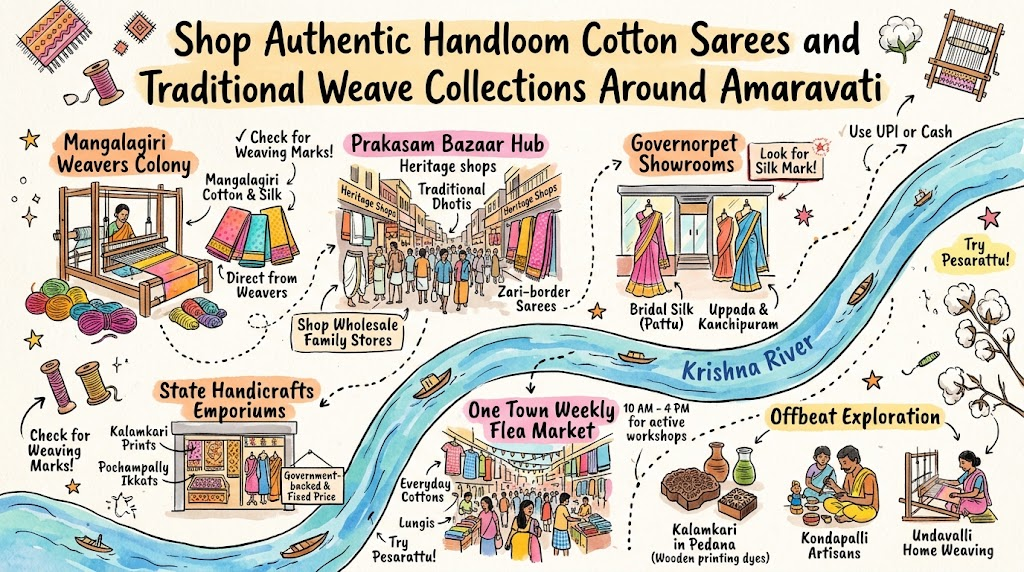
Mangalagiri Handloom Weavers Colony
Nestled just a short drive from Amaravati, the historic town of Mangalagiri is world-famous for its distinct cotton and silk handloom saris featuring crisp checks and rich zari borders. Visiting the artisan co-operatives and weaver homes allows you to watch skilled craftsmen operate traditional pit looms with breathtaking precision. The town markets offer direct-from-loom pricing on authentic Mangalagiri pattu drapes and breathable cotton dress materials.
Walking through these bustling lanes exposes you to the hypnotic clatter of shuttles and vibrant bundles of dyed yarn drying in courtyards. Purchasing directly from primary weaver societies ensures maximum financial support reaches the artisan families who keep this GI-tagged craft alive.
Master weaver at work in a traditional loom shed.
- Location: Mangalagiri Town, 18 km east of Amaravati center.
- Why it is worth visiting: It is the exclusive home of authentic GI-tagged Mangalagiri cotton and silk handlooms.
- Best things to do: Inspect loom mechanics in cooperative sheds, select direct-from-weaver silk drapes, and purchase custom-dyed fabric lengths.
- Best time to visit: 10:00 AM to 4:00 PM when active weaving workshops are fully operational.
- Ideal for whom: Textile historians, saree connoisseurs, cultural shoppers, and families.
- Travel tip: Always verify the authentic weaver mark or cooperative tag to ensure you are buying genuine handloom rather than power-loom imitations.
Prakasam Bazaar Textile Hub
Located in the historic commercial heart of neighboring Vijayawada, Prakasam Bazaar is a legendary maze of multi-generational textile emporiums and wholesale fabric houses. This bustling marketplace has served regional shoppers for decades, offering an incredible inventory of traditional dhotis, wedding silk collections, and daily-wear handloom cottons.
The lively atmosphere buzzes with energetic local trade, giving visitors an unfiltered look at traditional retail culture in coastal Andhra. Friendly shopkeepers take pride in unfurling yards of shimmering silk, explaining intricate weaving techniques with infectious enthusiasm
- Location: Prakasam Bazaar, One Town area, Vijayawada, 30 km from Amaravati.
- Why it is worth visiting: Historic commercial district housing wholesale family-run textile stores with unmatched variety.
- Best things to do: Explore multi-story silk showrooms, bargain politely for bulk festive purchases, and examine pure Zari borders.
- Best time to visit: 11:00 AM to 7:00 PM (avoid peak afternoon rush hours on weekends).
- Ideal for whom: Wedding shoppers, families, fashion designers, and cultural explorers.
- Travel tip: Wear comfortable slip-on footwear as you will need to remove your shoes frequently when stepping onto raised seating platforms inside traditional shops.
Governorpet Saree Showrooms
Governorpet represents the modern upscale retail face of the Amaravati capital region, hosting premier showrooms dedicated exclusively to exquisite traditional drapery. Here, you can find high-end Kanchipuram pattu, Uppada silks, Dharmavaram masterpieces, and designer ethnic wear displayed in air-conditioned comfort.
The knowledgeable staff in these curated boutiques provide expert styling advice, personalized draping demonstrations, and certified purity assurances for precious metal zari threads. It is the ideal destination for travelers seeking luxury-grade wedding collections and heirloom textiles.
- Location: Governorpet commercial district, Vijayawada central zone.
- Why it is worth visiting: Offers certified luxury silk collections and premium regional ethnic designer wear under one roof.
- Best things to do: Browse curated bridal silk collections, examine certified purity hallmarks, and select matching blouse fabrics.
- Best time to visit: 2:00 PM to 6:00 PM for a relaxed, unhurried shopping experience.
- Ideal for whom: Brides-to-be, luxury shoppers, couples, and festival gift buyers.
- Travel tip: Request a written authenticity bill specifying pure silk and gold zari percentages for high-value purchases.
Governerpet Handicrafts & Handloom Emporiums
State-run and verified artisan emporiums in the capital region act as treasure troves for authentic, ethically sourced regional textiles. These fixed-price outlets feature curated collections from remote weaving clusters across Andhra Pradesh, including Kalamkari printed fabrics, Pochampally ikkats, and Uppada jamdanis.
Shopping here removes the need for hard bargaining while guaranteeing that your money directly supports state artisan welfare boards. The peaceful ambiance allows for close inspection of intricate hand-blocked vegetable dye patterns.
- Location: Main arterial roads, Governorpet and Eluru Road corridor.
- Why it is worth visiting: Government-backed assurance of authentic regional craftsmanship at standardized, fair prices.
- Best things to do: Shop for genuine Kalamkari stoles, examine hand-woven Ikat dupattas, and pick up authentic craft books.
- Best time to visit: 10:30 AM to 7:30 PM daily (except public holidays).
- Ideal for whom: Ethical shoppers, souvenir collectors, and solo travelers.
- Travel tip: These emporiums often run seasonal handloom exhibitions with special promotional discounts during festival months.
One Town Weekly Friday Textile Flea Market
For adventurous travelers seeking raw local color, the historic One Town weekly and daily street markets offer a fascinating glimpse into grassroots textile trade. Local vendors lay out large spreads of affordable cotton fabrics, printed bed linens, traditional lungis, and semi-silk garments favored by local families.
While it requires patience to sort through bulk piles, savvy shoppers can uncover vintage-style prints and incredible bargains on everyday traditional wear. The surrounding street food stalls add an extra sensory layer to the shopping expedition.
Exploring traditional street markets in the One Town distri
- Location: Old Town market lanes near Besant Road and One Town, Vijayawada.
- Why it is worth visiting: An authentic, non-commercialized window into everyday local clothing trade and budget shopping.
- Best things to do: Hunt for vintage-patterned cotton fabrics, sample street snacks, and interact with grassroots vendors.
- Best time to visit: 4:00 PM to 7:00 PM when evening market energy peaks.
- Ideal for whom: Budget backpackers, street photographers, and adventurous explorers.
- Travel tip: Keep small cash denominations ready for easy transactions as street vendors rarely process digital micro-payments.
Offbeat Exploration: Hidden Gems Tourists Miss
Kalamkari Artisan Workshops of Pedana
Located a short excursion away from the core Amaravati region, the coastal town of Pedana preserves the ancient art of block-printed and hand-painted Kalamkari using natural vegetable dyes. Visiting these quiet rural home-workshops lets you watch artisans boil Myrobalan fruit solutions and stamp intricate floral motifs using hand-carved wooden blocks.
Kondapalli Wooden Toy Artisan Lane
Tucked away at the foot of Kondapalli Fort, this cluster of artisan homes specializes in lightweight wooden toys alongside traditional wooden artifacts. Observing master craftsmen carve soft Tella Poniki wood and apply vibrant natural colors offers a wonderful complement to your textile shopping journey.
Undavalli Handloom Weaving Pockets
While most visitors rush to see the ancient rock-cut caves, the surrounding Undavalli residential lanes house quiet independent weaver families operating traditional frames. Purchasing directly from these residential doorsteps provides an intimate connection to the local craft community.
Detailed Practical Guidance for Travelers
| Destination | Standard Entry Fee | General Timings | Best Local Food Options Nearby | Recommended Nearby Attractions |
|---|---|---|---|---|
| Mangalagiri Weavers Colony | Free Access | 9:00 AM – 6:00 PM Daily | Local spicy Mirchi bajji and filter coffee stalls | Panakala Narasimha Swamy Temple |
| Prakasam Bazaar Hub | Free Access | 10:00 AM – 8:00 PM (Closed Sundays) | Traditional Andhra meals at iconic local messes | Kanaka Durga Temple |
| Governorpet Showrooms | Free Access | 10:30 AM – 9:00 PM Daily | Multi-cuisine family restaurants and bakeries | Indira Gandhi Municipal Stadium |
| State Handicrafts Emporiums | Free Access | 10:30 AM – 7:30 PM Daily | South Indian tiffin centers and juice bars | Rajiv Gandhi Park |
| One Town Street Markets | Free Access | 3:00 PM – 9:00 PM Daily | Street-side Punugulu and vendor snacks | Prakasam Barrage |
Logistics & On-Ground Navigation
Local Transport Options
- State Bus Connectivity: Frequent APSRTC bus services connect Amaravati, Mangalagiri, and Vijayawada bus stations at minimal cost.
- Auto-Rickshaws & E-Rickshaws: Ideal for navigating crowded bazaar lanes and moving between nearby textile shops in Mangalagiri and Governorpet.
- Private Taxi Hire: Booking a day-long private cab is the most convenient way to transport delicate saree purchases safely across multiple shopping zones.
Budget Planning
- Backpacker / Budget Tier: ₹1,500 – ₹2,500 per day. Covers public transit, budget lodging, local street food, and budget cotton fabric purchases.
- Mid-Range / Comfort Tier: ₹4,000 – ₹7,000 per day. Covers private cab rentals, comfortable mid-scale hotel stays, sit-down restaurant meals, and authentic handloom purchases.
Safety and Inclusivity Tips
- Family Shoppers: Major showrooms in Governorpet offer air-conditioned seating areas and family-friendly hospitality, making shopping with elders comfortable.
- Solo & Couple Travelers: The markets are warm and welcoming. Keep your handbags securely zipped in crowded wholesale bazaars like Prakasam Bazaar.
- General Safety: Stay hydrated during afternoon market walks and carry cloth shopping bags to reduce single-use plastic waste.
Strategic Travel Planning Guardrails
Travel Planning Tips for Amaravati
- Verify Silk Mark Certification: Always check for official Silk Mark and Handloom Mark tags when investing in high-end pattu sarees.
- Carry Digital and Physical Cash: While showrooms accept UPI and cards, small artisan cooperatives and street vendors appreciate exact cash.
- Shop During Weekdays: Visit wholesale markets on weekday mornings to avoid heavy weekend crowds and secure undivided attention from store staff.
- Inspect Fabric in Natural Light: Step near shop doorways or windows to check true color tones of silk threads under natural sunlight.
- Pack Extra Tote Bags: Bring sturdy canvas bags for your textile hauls to keep fragile saree boxes protected during transit.
Common Mistakes to Avoid
- Rushing Through Weaver Colonnades: Avoid treating artisan visits as quick photo stops; take time to understand the complex weaving process.
- Ignoring Local Cooperative Stores: Do not rely solely on luxury malls when authentic cooperative societies offer superior direct-from-loom value.
- Forgetting Care Instructions: Always ask shopkeepers about specific dry-cleaning or hand-washing requirements for pure zari and vegetable-dyed fabrics.
- Overpacking Itineraries: Avoid combining heavy textile shopping sprees with strenuous temple stair climbs on the exact same afternoon.
- Skipping Regional Breakfasts: Fuel your shopping mornings with local Andhra breakfast staples like hot Pesarattu and ginger chutney.
Suggested Itinerary Blueprints
1-Day Quick Dash (The Mangalagiri Textile Express)
Designed for travelers with limited time who want to secure authentic handlooms in a single focused day of shopping.
- Morning: Arrive early at Mangalagiri Weavers Colony to watch pit-loom demonstrations and shop direct-from-loom cotton sarees.
- Afternoon: Enjoy a traditional Andhra thali lunch and head to Governorpet showrooms for premium silk exploration.
- Evening: Conclude the day with a stroll through Prakasam Bazaar textile lanes before departing.
2-Day Deep-Dive (The Complete Regional Weave Loop)
Ideal for serious textile enthusiasts and shoppers looking for an immersive cultural retail experience.
- Day 1: Spend the morning exploring Mangalagiri’s cooperative weaving sheds. Afternoon dedicated to Governorpet luxury emporiums and state craft boards.
- Day 2: Explore wholesale heritage markets in Prakasam Bazaar, visit nearby artisan toy and block-printing workshops, and enjoy a relaxed evening by the river.
Complete Weekend Travel Plan (The Ultimate Artisan Capital Circuit)
- Friday Evening: Arrive in the Amaravati capital region, settle into your hotel, and sample local street snacks near the riverfront.
- Saturday: Dedicate a full day to extensive textile shopping across Mangalagiri weaver colonies and Governorpet showrooms.
- Sunday: Explore offbeat artisan lanes in Pedana or Kondapalli, pick up final souvenirs, and depart in the evening.
Common Tourist Mistakes to Avoid
- Geographic Blunders: Trying to visit distant craft clusters like Pedana and central Mangalagiri in a single rushed hour without planning transit time.
- Commercial Traps: Spending all your shopping time in modern glass-front malls rather than authentic weaver cooperatives and heritage bazaars.
- Neglecting Modern Extensions: Forgetting to explore the modern boutique studios opening in the new capital expansion zones.
- Transport Overpayment: Failing to negotiate auto-rickshaw fares beforehand when traveling between local bazaar stops.
- Luxury Dining Bias: Missing out on local street-side tiffin centers and small town messes while searching exclusively for high-end restaurants.
Frequently Asked Questions
1. What makes Mangalagiri handloom fabrics unique?
Mangalagiri fabrics are famous for their distinct durable cotton texture, crisp geometric checks, and rich zari borders. They are woven using traditional pit looms without electrical power, making each piece an authentic work of grassroots art and heritage.
2. Where is the best place to buy pure silk sarees near Amaravati?
The premier showrooms in Governorpet, Vijayawada, offer extensive collections of certified pure silk sarees. Additionally, visiting primary weaver cooperatives in Mangalagiri guarantees authentic silk drapes straight from the artisan families.
3. Are digital UPI payments accepted in traditional textile markets?
Yes, while digital UPI payments are widely accepted across urban showrooms and established shops in Governorpet and Prakasam Bazaar, carrying physical cash remains helpful when visiting rural artisan doorsteps.
4. How can I verify if a saree is genuine handloom?
Look for the official government-issued Handloom Mark and Silk Mark tags attached to the fabric. Genuine handlooms also feature slight, beautiful irregularities in weave texture that machine-made power-loom items lack.
5. What is the best time of year for textile shopping here?
The cooler months from October to March coincide with the peak festive and wedding seasons. During this period, weaver societies roll out their finest new festive collections and host special handloom expos.
6. Can I request custom color combinations from local weavers?
Many traditional weaver cooperatives in Mangalagiri welcome custom color requests if you place orders in advance. However, production time depends heavily on loom availability and yarn preparation schedules.
7. Are there fixed prices in traditional textile bazaars?
While state emporiums and branded showrooms operate on strict fixed-pricing models, traditional wholesale markets like Prakasam Bazaar allow for polite, respectful price negotiation on bulk purchases.
8. What care instructions should I follow for handloom silk?
Pure silk sarees with gold zari require professional dry cleaning to maintain their luster. Pure cotton handlooms should be hand-washed gently in cold water using mild soap without harsh chemical detergents.
9. Can I visit weaver homes directly to purchase clothes?
Yes, many traditional weaving families in Mangalagiri operate small retail spaces attached to their home loom sheds, welcoming visitors who wish to purchase directly from the makers.
10. Do local shops ship purchases internationally?
Major upscale showrooms in Governorpet offer secure international shipping services for bridal and festival purchases, while smaller street-side vendors usually require you to carry your items.
11. What other traditional crafts can I buy alongside textiles?
In addition to handloom drapes, you can purchase hand-carved Kondapalli wooden toys, traditional Kalamkari painted fabrics, brass artifacts, and intricate handmade jewelry from nearby artisan clusters.
12. Is parking available near the major textile markets?
While designated parking exists near modern Governorpet showrooms, heritage wholesale markets like Prakasam Bazaar have narrow lanes where parking is limited, making auto-rickshaws the preferred choice.
Conclusion
A journey through the traditional clothing markets near Amaravati offers far more than a simple retail excursion; it is a profound celebration of living heritage and enduring artistry. Running your fingers over fabric woven by families who have preserved their craft for generations connects you directly to the cultural soul of Andhra Pradesh. Choosing to invest in these authentic handlooms ensures that ancient traditions continue to thrive while you return home wrapped in timeless elegance.
