Introduction
Swapping overcrowded, commercialized tourist hubs for authentic cultural sanctuaries opens a doorway into India’s soul. Nestled along the serene bends of the sacred Krishna River, Amaravati stands as a profound testament to ancient spirituality, regal heritage, and architectural mastery. While popular hill stations and modern metropolises draw noisy crowds, this timeless cradle of civilization offers quiet grandeur and pristine heritage.
Walking through Amaravati feels like stepping across centuries of living history. Here, limestone carvings whisper ancient Buddhist philosophies, grand temple towers echo with sacred chants, and rock-cut sanctuaries showcase early artistic brilliance. For the curious traveler seeking depth over surface-level sightseeing, this cultural gem promises a deeply immersive and transformative travel experience.
Why Amaravati is a must-visit city
Amaravati holds immense historical, spiritual, and architectural weight in Southern India. Once the thriving capital of the Satavahana Dynasty and a global center for Hinayana and Mahayana Buddhist learning, it served as a bustling trade hub and intellectual sanctuary. Geographically positioned along the fertile banks of the Krishna River in Palnadu district near Vijayawada and Guntur, it bridges ancient heritage with modern regional accessibility. Excellent highway connectivity, nearby major railway junctions, and seamless hospitality infrastructure make it an effortless destination for solo wanderers, heritage buffs, and families alike.
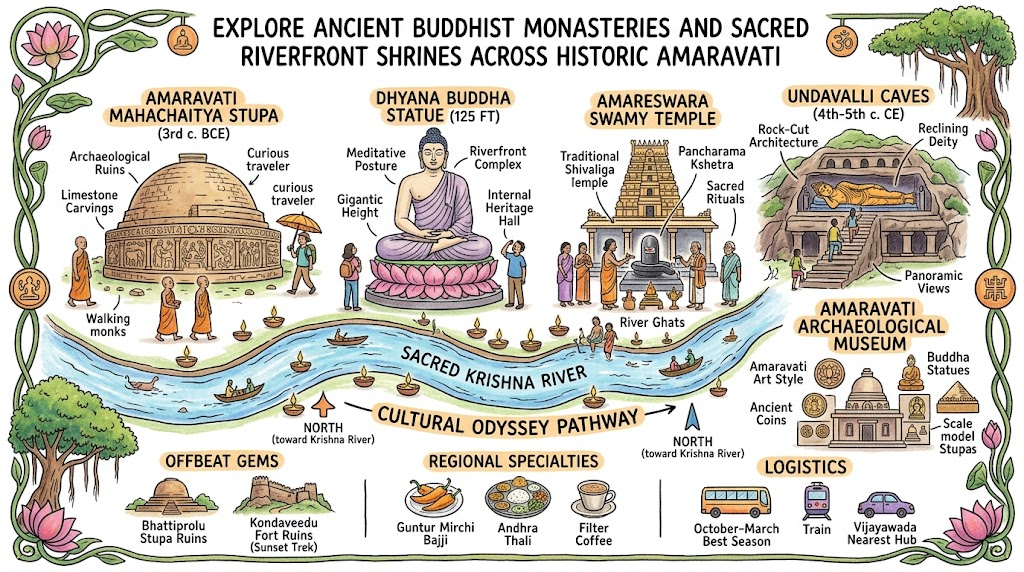
The travel circuit across Amaravati forms an inspiring arc connecting ancient stupa mounds, giant riverbank statues, multi-tiered rock-cut caves, and riverside temples. Travelers can effortlessly move from tranquil Buddhist meditation spaces to vibrant temple corridors, culminating in scenic river vistas and hilltop fortress viewpoints.
| Feature Category | Key Fact / Regional Specification |
| State & Zone | Andhra Pradesh (Palnadu / Capital Region) |
| Primary Significance | Ancient Buddhist Learning Center & Pancharama Shiva Site |
| Nearest Airport | Vijayawada International Airport (VGA) (~55 km) |
| Nearest Rail Hub | Vijayawada Junction (BZA) & Guntur Junction (GNT) (~35 km) |
| Best Travel Season | October to March (Pleasant winter temperatures) |
| Regional Specialty Food | Guntur Mirchi Bajji, Andhra Thali, Gongura Pachadi |
Best Places or Experiences
Amaravati Mahachaitya Stupa
The Amaravati Mahachaitya, also known as the Great Stupa of Amaravati, is a legendary archaeological wonder originally founded during the 3rd century BCE under Emperor Ashoka’s reign. Later expanded under the patronage of the Satavahana and Ikshvaku dynasties, this massive monument once boasted a soaring 27-meter dome encased in intricately carved limestone slabs portraying the Jataka tales and life events of Lord Buddha. It stood as one of ancient India’s grandest Buddhist monuments, drawing monks, scholars, and pilgrims from across South and East Asia.
Today, visiting the excavated stupa mound allows travelers to walk alongside ancient marble railings, carved drum slabs, and historic brick foundations preserved by the Archaeological Survey of India (ASI). The tranquil atmosphere surrounding the ruins offers an unforgettable glimpse into the spiritual fervor and artistic craftsmanship of ancient Andhra.
- Location: Amaravati Village, 35 km from Guntur City and 40 km from Vijayawada.
- Why it is worth visiting: It is one of India’s oldest and historically significant Buddhist stupa complexes.
- Best things to do: Examine marble bas-relief carvings, take a guided perimeter walk around the ancient stupa drum, and photograph the serene garden ruins.
- Best time to visit: Early morning between 8:00 AM and 10:30 AM for soft sunlight and peaceful ambiance.
- Ideal for whom: History enthusiasts, archaeology lovers, spiritual seekers, and architecture photographers.
- Travel tip: Wear slip-on shoes for easy walking around the open-air archaeological site and carry a sun umbrella.
Dhyana Buddha Statue
Standing at an awe-inspiring height of 125 feet (38 meters), the colossal Dhyana Buddha statue dominates the landscape along the picturesque banks of the Krishna River. Commissioned to celebrate the timeless Buddhist heritage of the region, the massive structure depicts Buddha seated in the meditative Dhyanamudra posture atop a giant lotus pedestal. The base of the statue is built over a three-story museum hall decorated with sculpted relief panels based on traditional Amaravati art styles.
The surrounding 4.5-acre landscaped park complex provides manicured lawns, paved walkways, and direct views of the rolling river waters. Visiting during sunset offers an almost ethereal visual experience as golden light bathes the giant stone statue against the evening sky.
- Location: Riverfront Complex, Amaravati Village, Palnadu District.
- Why it is worth visiting: It is one of the tallest meditative Buddha statues in Asia, featuring an internal heritage hall.
- Best things to do: Explore the interior exhibition hall, walk through the riverfront gardens, and catch the evening light show.
- Best time to visit: Late afternoon around 4:30 PM to stay through golden hour and dusk lighting.
- Ideal for whom: Families, photographers, meditation practitioners, and leisure travelers.
- Travel tip: The stone garden pathways get hot during midday; time your visit after 4:00 PM for maximum comfort.
Amareswara Swamy Temple
Dedicated to Lord Shiva as Amareswara, this historic temple is revered as one of the sacred Pancharama Kshetras of Southern India. Situated right on the southern banks of the Krishna River, the temple houses a uniquely tall 15-foot white marble Shivalinga. According to local lore and temple chronicles, the base of the linga extends deep into the riverbed, requiring priests to climb a stair platform to perform sacred daily rituals.
The architectural layout showcases classic Dravidian features, including soaring gopurams, pillared mandapas, and detailed stone sculptures added during the Satavahana era and renovated by local kings like Raja Vasireddy Venkatadri Naidu. The holy river ghats adjoining the temple offer a soul-stirring spot to witness morning rituals and traditional lamps floated on the water.
- Location: Amaravati Town center, adjacent to the Krishna River ghats.
- Why it is worth visiting: A key Pancharama Shiva pilgrimage site housing a rare 15-foot marble Shivalinga.
- Best things to do: Attend the morning Abhishekam ritual, walk the riverfront Krishna Ghats, and admire the historic gopuram stone carvings.
- Best time to visit: Early morning between 6:00 AM and 8:30 AM for traditional temple arati.
- Ideal for whom: Cultural explorers, spiritual pilgrims, and architecture admirers.
- Travel tip: Dress modestly in traditional attire (covered shoulders and knees) as strict temple decorum applies.
Undavalli Caves
Carved out of solid sandstone hills in the 4th and 5th centuries CE, the Undavalli Caves represent a remarkable transition from early Buddhist rock-cut monasteries to ancient Hindu cave architecture. The standout highlight of this multi-tiered complex is the massive four-story cave temple featuring a gigantic, single-block monolithic sculpture of Lord Anantha Padmanabha Swamy reclining on the cosmic serpent Adishesha.
As you ascend through the rock-carved staircases and pillared verandas, each story unfolds detailed bas-reliefs depicting deities, mythical lions, and ancient monks. The top level offers sweeping panoramic views across emerald green agricultural fields extending toward the Krishna River.
- Location: Undavalli Village, near Penumaka, 22 km from Amaravati core zone.
- Why it is worth visiting: It is a prime example of Indian rock-cut architecture housing a monolithic reclining deity.
- Best things to do: View the reclined Padmanabha statue on the 3rd floor, examine rock carvings, and shoot landscape photos from upper verandas.
- Best time to visit: Morning between 9:00 AM and 11:30 AM when sunlight illuminates the cave chambers.
- Ideal for whom: Art lovers, rock-architecture enthusiasts, photographers, and history buffs.
- Travel tip: Mind the steep rock-hewn steps; wear comfortable rubber-soled footwear for good grip.
Amaravati Archaeological Museum
Maintained by the Archaeological Survey of India (ASI), the Amaravati Archaeological Museum is a treasure house containing priceless artifacts salvaged from the ancient Buddhist Mahachaitya site. The museum’s three curated galleries showcase exquisite limestone panels, lotus medallion carvings, Buddha statues, gold coins, and ancient pottery dating back to the 3rd century BCE.
The central courtyard houses a scaled model reconstruction of the original intact Great Stupa, helping visitors visually comprehend the magnificent scale of the original monument. The artistic finesse displayed in the intricate carvings reflects the world-famous “Amaravati Style of Art” that deeply influenced South-East Asian Buddhist iconography.
- Location: Opposite Mahachaitya Stupa Site, Guntur–Amaravati Road.
- Why it is worth visiting: It displays original ancient sculptures, limestone friezes, and relic caskets from the Satavahana era.
- Best things to do: View the lotus-carved Purnakumbha slabs, study the ancient Brahmi inscriptions, and inspect the stupa model.
- Best time to visit: 11:00 AM to 1:30 PM (Avoid Fridays as the museum remains closed).
- Ideal for whom: Academic researchers, students, history enthusiasts, and indoor culture lovers.
- Travel tip: Photography rules are strictly enforced inside galleries; verify ticket guidelines at the entrance desk.
Offbeat Exploration: Hidden Gems Tourists Miss
Bhattiprolu Buddhist Stupa Site
Located approximately 45 km southeast of the core Amaravati hub, Bhattiprolu is an ancient offbeat site housing the Vikramarka Stupa ruins. Excavations here revealed bone relics of the Buddha enclosed in crystal caskets inscribed in the historic Bhattiprolu alphabet—a unique script variant that gave rise to the modern Telugu script. Walking among these quiet, uncrowded brick ruins offers an intimate connection to early Buddhist monastic history far removed from mainstream crowds.
Kondaveedu Fort Ruins & Ridge
Perched atop a rugged hill range near Guntur, the 14th-century Kondaveedu Fort was built by the Reddi Dynasty kings. Featuring ancient ramparts, ruined granaries, stone gateways, and hilltop reservoirs, it provides a thrilling escape for nature trekkers and outdoor lovers. A newly developed ghat road now allows easy vehicular access, making it a fantastic offbeat viewpoint to catch dramatic sunsets over the surrounding valleys.
Uppalapadu Bird Sanctuary
Tucked away in Uppalapadu village, this serene wetland sanctuary serves as a vital nesting refuge for migratory birds, including spot-billed pelicans, painted storks, and white ibises. Traveling here during the winter months (November to February) reveals thousands of birds roosting on fenced swamp islands, creating an enchanting natural spectacle for nature photographers and bird watchers.
Detailed Practical Guidance for Travelers
| Destination | Standard Entry Fee | General Timings | Best Local Food Options Nearby | Recommended Nearby Attractions |
| Mahachaitya Stupa | ₹20 (Indians) / ₹250 (Foreigners) | 9:00 AM – 5:00 PM (Daily) | Traditional Andhra Meals at local tiffin centers | ASI Archaeological Museum |
| Dhyana Buddha Statue | ₹15 per person | 8:00 AM – 6:00 PM (Daily) | Hot Mirchi Bajji & Punugulu stalls along the park | Amareswara Swamy Temple |
| Amareswara Temple | Free (Special Darshan ₹50) | 6:00 AM – 1:00 PM & 4:00 PM – 8:00 PM | Prasadam counters & temple street South Indian tiffins | River Krishna Ghats |
| Undavalli Caves | ₹25 (Indians) / ₹300 (Foreigners) | 9:00 AM – 5:30 PM (Daily) | Local tiffin centers serving Idli, Dosa & Filter Coffee | Prakasam Barrage & Bhavani Island |
| ASI Heritage Museum | ₹5 (Free for under 15) | 9:00 AM – 5:00 PM (Closed Fridays) | Local highway dhabas & tea stalls | Amaravati Stupa |
| Kondaveedu Fort | ₹20 per entry | 9:00 AM – 5:00 PM (Daily) | Hilltop snack counters & coconut water vendors | Mangalagiri Temple |
Logistics & On-Ground Navigation
Local Transport Options
- State Transport Buses (APSRTC): Frequent green regional buses run between Vijayawada Pandit Nehru Bus Station (PNBS), Guntur Bus Stand, and Amaravati town every 20-30 minutes.
- Auto-Rickshaws & E-Rickshaws: Ideal for short hops between the Amaravati Stupa, Dhyana Buddha park, and local market streets. Always agree on fares before boarding.
- Taxi & Cab Rentals: App-based cabs (Ola/Uber) operate smoothly across Vijayawada and Guntur, making them the most comfortable option for full-day sightseeing.
- Self-Drive Vehicles: Renting a car or scooter from Vijayawada provides total freedom to explore outlying sites like Undavalli and Kondaveedu at your own pace.
Budget Planning
- Backpacker Tier (₹1,200 – ₹2,000 / day): Stay in budget guest houses or homestays in Guntur/Vijayawada, travel via public buses/autos, and dine at authentic local tiffin centers.
- Comfort & Mid-Range Tier (₹3,500 – ₹6,500 / day): Stay in 3-star hotels in Vijayawada/Guntur, hire a private AC car for full-day tours, and enjoy casual dining at regional thali restaurants.
Safety and Inclusivity Tips
- Family Comfort: Amaravati is exceptionally safe, quiet, and welcoming for multi-generational families. Keep hydration supplies handy for elderly travelers during sunny afternoon walks.
- Couple-Friendly Exploration: Scenic locations like Dhyana Buddha park and Undavalli upper verandas are peaceful and safe for couples seeking quiet moments.
- General Safety & Hydration: Keep cash handy for small vendors, stay hydrated with fresh coconut water, and wear lightweight cotton clothing.
Strategic Travel Planning Guardrails
Travel Planning Tips for Amaravati
- Seasonality: Plan your trip strictly between October and March to enjoy pleasant weather and comfortable outdoor exploration.
- Friday Planning: Never schedule museum visits on Fridays as the ASI museum remains closed.
- Payment Essentials: Carry sufficient cash; while UPI/digital payments work in Vijayawada, rural stalls around heritage monuments prefer cash transactions.
- Footwear Choice: Slip-on shoes or sandals make temple visits and monument exploration much easier.
- Hydration Prep: Carry reusable water bottles to avoid heat fatigue during outdoor ruin walks.
Common Mistakes to Avoid
- Overpacking Daily Itineraries: Do not try to compress Kondaveedu Fort, Bhattiprolu, and core Amaravati into a single afternoon.
- Confusing Cities: Do not confuse Amaravati in Andhra Pradesh with Amravati city in Maharashtra.
- Bypassing Regional Foods: Avoid sticking strictly to hotel dining; missing out on Guntur’s famous Mirchi Bajji and spicy Andhra Thali deprives you of local culinary soul.
- Assuming Direct Metro Transit: Amaravati relies on road transport; do not expect metro rail connection to rural heritage sites.
- Ignoring Sun Protection: Visiting open-air stupa ruins during midday without hats or sunscreen can lead to severe sunburn.
Suggested Itinerary Blueprints
1-Day Quick Dash (The Sacred Heritage Loop)
- Morning: Arrive early from Vijayawada/Guntur. Visit Amareswara Swamy Temple at 7:30 AM for morning arati. Walk to the adjacent Amaravati Mahachaitya Stupa and ASI Museum.
- Afternoon: Enjoy an authentic Andhra lunch thali nearby. Head to the Dhyana Buddha Statue complex for a relaxing stroll.
- Evening: Stop by Undavalli Caves on your return drive to Vijayawada during late afternoon light.
2-Day Deep-Dive (Ancient Stupas & Rock-Cut Wonders)
- Day 1: Explore core Amaravati heritage—Mahachaitya Stupa, ASI Museum, Amareswara Temple, and Dhyana Buddha park. Spend evening enjoying riverfront views along the Krishna banks.
- Day 2: Morning visit to Undavalli Caves. Drive to Mangalagiri Panakala Narasimha Swamy Temple in the afternoon. End the day watching sunset from Kondaveedu Fort ridge.
Complete Weekend Travel Plan (The Grand Amaravati & Krishna Valley Odyssey)
- Friday Evening: Check into your hotel in Vijayawada/Guntur, visit Prakasam Barrage for evening city lights, and sample local street food.
- Saturday: Complete the immersive core Amaravati Buddhist and Hindu temple circuit (Stupa, Museum, Amareswara Temple, and Dhyana Buddha).
- Sunday: Take a scenic morning drive to Bhattiprolu Buddhist ruins, head to Uppalapadu Bird Sanctuary for wildlife watching, and conclude with sunset at Kondaveedu Fort before departure.
Common Tourist Mistakes to Avoid
Geographic Blunders
Attempting to group geographically distant places like Kondaveedu Fort and Bhattiprolu Stupa into the exact same morning window causes unnecessary travel stress. Cluster your visits logically into northern riverfront sites and southern hill fortress circuits.
Commercial Traps
Spending your limited travel days inside modernized urban malls in Vijayawada deprives you of the atmospheric, historic charm of old Amaravati’s riverside village lanes and artisan markets.
Neglecting Modern/Alternative Zones
Many travelers skip the expanding eco-parks, quiet riverside promenades, and artistic installations surrounding the modern capital region, missing out on the unique interplay between past heritage and futuristic planning.
Transport Overpayment
Failing to verify auto-rickshaw fares or neglecting to check app-based ride services (like Ola or Uber) often leads to overpaying local drivers for simple inter-city transfers.
Luxury Dining Bias
Opting solely for international hotel buffets means missing out on legendary street-side culinary gems—such as Guntur’s fiery chili snacks, Gongura rice delicacies, and hot local filter coffee.
Frequently Asked Questions
1. What is the best season to visit Amaravati for sightseeing?
The ideal time to explore Amaravati is during the cooler winter months between October and March. Temperatures are pleasant and perfect for walking around open-air archaeological ruins and temples.
2. How far is Amaravati from Vijayawada and Guntur?
Amaravati is located approximately 40 km from Vijayawada and about 35 km from Guntur City. Both cities serve as convenient transit bases connected by excellent highway roads.
3. Is the Amaravati Archaeological Museum open every day?
No, the ASI Archaeological Museum in Amaravati remains closed every Friday. It is open from Saturday through Thursday between 9:00 AM and 5:00 PM.
4. What is the historical connection between Amaravati and Buddhism?
Amaravati was a world-famous center for Buddhist learning and pilgrimage from the 3rd century BCE to the 14th century CE. Lord Buddha is traditionally believed to have delivered the Kalachakra teachings in this region.
5. Are there dress code requirements for Amareswara Temple?
Yes, visitors should dress modestly in traditional Indian attire or clothing that fully covers shoulders and knees when entering the temple complex.
6. Can Undavalli Caves be visited on the same day as Amaravati Stupa?
Yes, Undavalli Caves are situated along the transit route connecting Vijayawada and Amaravati, making them an easy addition to a single-day trip itinerary.
7. Is Amaravati suitable for family travel with children and seniors?
Absolutely. The manicured gardens around Dhyana Buddha statue, accessible museum galleries, and serene river ghats offer comfortable experiences for all age groups.
8. How much time is needed to explore the core attractions of Amaravati?
A full day (8 to 10 hours) is sufficient to cover the Mahachaitya Stupa, ASI Museum, Amareswara Temple, and Dhyana Buddha Statue comfortably.
9. What local food dishes should travelers try in the Amaravati region?
Travelers should try local Guntur Mirchi Bajji, spicy Andhra Thali meals served on banana leaves, Gongura Pachadi, and traditional South Indian tiffins like Idli and Punugulu.
10. What is the entry fee for the Dhyana Buddha Statue complex?
The standard entry fee is ₹15 per person. The complex includes access to the surrounding riverfront gardens and the internal museum hall.
11. Which airport is closest to Amaravati?
Vijayawada International Airport (VGA) in Gannavaram is the closest airport, located roughly 55 km away with regular domestic flight connections.
12. Is photography allowed at the Amaravati heritage sites?
Photography is generally allowed in open garden areas and outside monuments. However, flash photography and tripod usage inside museum galleries are restricted.
Conclusion
Choosing Amaravati over ordinary vacation spots offers more than just a getaway; it provides a profound journey into ancient art, spiritual history, and enduring heritage. Standing before centuries-old stupa stones, gazing up at the serene Dhyana Buddha against the Krishna River, and exploring rock-hewn cave verandas instills a deep sense of wonder and connection. Amaravati is not merely a destination on a map—it is a living cultural odyssey waiting to reward every curious traveler.
