Introduction
When most travelers plan a trip to Southern India, their minds immediately drift to bustling corporate hubs, modern architectural high-rises, or crowded coastal getaways. But tucked away beautifully on the banks of the sacred Krishna River lies a destination that flips the script entirely. Welcome to Amaravati, an ancient land in Andhra Pradesh where history, culture, nature, and profound spiritual peace converge.
Far from being just another spot on the map, Amaravati is a vibrant living testament to India’s diverse heritage. Long before it became the focal point of modern urban planning, it was a thriving epicentre of global learning and intense spiritual devotion. Whether you are seeking a deeply reflective solo soul-searching trip, planning a quiet family pilgrimage, looking for a cultural getaway with your partner, or backpacking across historical landscapes, Amaravati offers a profound sense of peace that stays with you long after you leave.
It is a place where the rhythmic chiming of Hindu temple bells seamlessly harmonizes with the serene, silent echoes of ancient Buddhist chants. Beyond the spiritual energy, visitors find locally sourced food experiences, lush riverfront paths, and profound architectural wonders, making it a perfect weekend travel plan for any mindful traveler.
Why Amaravati is a Must-Visit City
Amaravati stands out because it doesn’t force you to choose between history and spirituality—it combines them effortlessly. It is one of the very few destinations in India where both Shaivism (the worship of Lord Shiva) and Buddhism flourished side by side for centuries, leaving behind architectural marvels that still stand today.
Best places to visit
The city is anchored by the historic Amareswara Swamy Temple and the breathtaking, modern Dhyana Buddha Statue. Together with ancient archaeological ruins and the scenic Krishna River, the entire landscape forms a sanctuary for exploration.
Things to do
Visitors can enjoy scenic boat rides along the Krishna River, meditate under the shadow of massive monuments, and explore thousands of years of art at the local museums.
Entry fees if applicable
Most spiritual sites are entirely free to enter, though minor charges (around ₹10 to ₹30) apply at museum galleries and specific parks.
Travel tips
To enjoy the outdoor walking areas and historical sites comfortably, dress in lightweight cotton clothing and make sure to wear slip-on footwear, as you’ll be removing shoes frequently.
Nearby attractions
If you have extra time, you can easily combine your trip with visits to the magnificent Undavalli Caves and the sacred hill town of Mangalagiri, both located under an hour’s drive away.
Food options
The town offers authentic, budget-friendly South Indian meals. You can savor traditional Andhra meals, crispy dosas, and steaming hot idlis at local eateries right outside the main temple complexes.
Budget planning
Amaravati is exceptionally pocket-friendly. A budget of ₹1,500 to ₹2,500 per day easily covers local transport, wholesome meals, and comfortable guesthouse accommodations.
Safety tips
The town is highly secure and welcoming. However, be cautious around the river ghats during high tides or heavy rainfall, and always follow local safety signs.
Local transport options
Auto-rickshaws are widely available and serve as the best mode of transport for hopping between attractions. You can also comfortably cover shorter distances between the monuments on foot.
Family-friendly suggestions
The open lawns surrounding the Dhyana Buddha Statue offer a wonderful, safe environment where children can run around while elders sit down to relax and meditate.
Couple-friendly suggestions
Couples will find a serene retreat walking along the Krishna Riverfront during sunset, taking in the peaceful horizon away from typical city crowds.
Hidden or less-crowded options
For a truly quiet experience, visit the ancient Amaravati Mahachaitya ruins during the early morning hours just as the gates open.
Best Places or Experiences
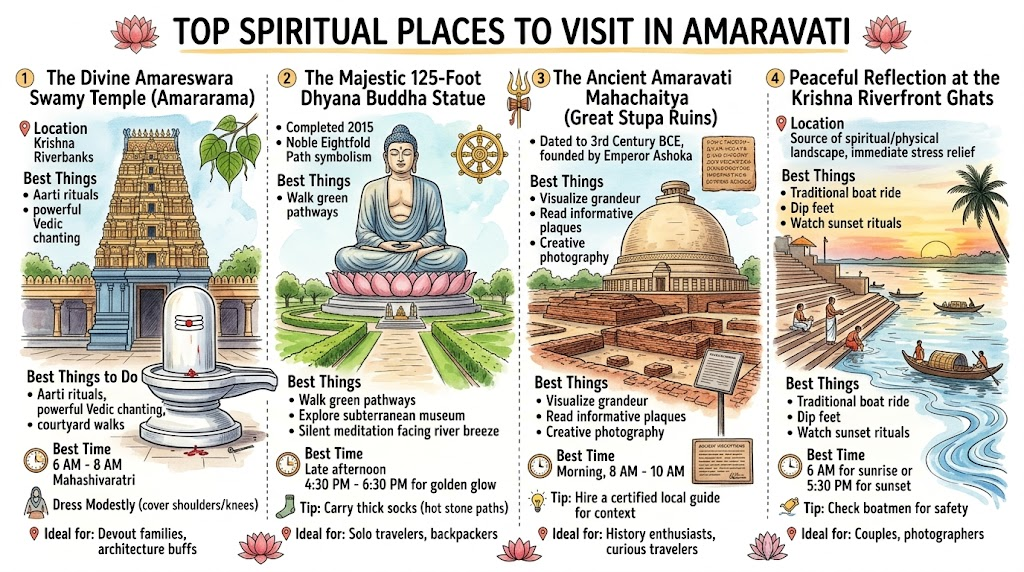
1. The Divine Amareswara Swamy Temple (Amararama)
Location
Situated prominently on the southern banks of the Krishna River in the heart of Amaravathi village.
Why it is worth visiting
As one of the revered Pancharama Kshetras (five sacred abodes of Lord Shiva) in Andhra Pradesh, this temple holds immense mythological and architectural importance. The temple houses a massive, 15-foot-tall white marble Shiva Lingam. According to local lore, the Lingam grew so tall that a nail had to be driven into its top to halt its growth, leaving a distinct red stain that devotees can still view today. The energy within the ancient Dravidian-style structure is intensely spiritual.
Best things to do
- Participate in the morning or evening Aarti rituals to hear the powerful vedic chanting.
- Walk around the massive outer courtyards and admire the historic inscriptions carved on the walls.
- Sit quietly near the inner sanctum to experience the calming stone-cooled atmosphere.
Best time to visit
The early morning hours from 6:00 AM to 8:00 AM offer a peaceful experience. If you enjoy vibrant festivals, visiting during Maha Shivaratri or the holy month of Kartika Masam is unforgettable.
Ideal for whom
Devout families, architecture buffs, and cultural travelers.
Travel tip
Ensure you dress modestly; both men and women should wear clothing that covers their shoulders and knees out of respect for local traditions.
2. The Majestic 125-Foot Dhyana Buddha Statue
Location
Sprawled across a scenic 4.5-acre park right on the banks of the Krishna River.
Why it is worth visiting
Completed in 2015, this monumental marvel is one of the tallest meditative Buddha structures in the world. The Buddha sits gracefully in the Dhyana (meditative) posture on a massive lotus pedestal supported by eight pillars, which symbolize Buddhism’s Noble Eightfold Path. Underneath the statue is a remarkable three-layered museum filled with authentic replicas of ancient Amaravati school art reliefs, offering a profound visual lesson in mindfulness and ancient craftsmanship.
Best things to do
- Walk along the beautifully manicured green pathways of the Dhyana Buddha Park.
- Explore the subterranean museum to admire intricate relief panels depicting stories of the Buddha’s life.
- Spend an hour practicing silent meditation on the open steps facing the river breeze.
Best time to visit
Late afternoon from 4:30 PM to 6:30 PM is ideal, as the setting sun casts a gorgeous golden glow across the giant statue.
Ideal for whom
Solo travelers, backpackers, meditation practitioners, and families seeking leisure.
Travel tip
The stone paths can get quite hot under the midday sun, so carry a pair of thick socks to wear while walking around the open monument areas.
3. The Ancient Amaravati Mahachaitya (The Great Stupa Ruins)
Location
Located less than a kilometer from the main bus station, right opposite the local archaeological museum.
Why it is worth visiting
Dating back to the 3rd century BCE, this historic site was once one of the largest and most significant Buddhist stupas in all of ancient India, founded during the Mauryan Empire under Emperor Ashoka. Though the physical structure is now in ruins, walking through the foundational layout gives you an incredible sense of scale. It was a globally renowned center for spiritual learning where sacred relics were once preserved, attracting monks from across Asia for centuries.
Best things to do
- Walk along the ancient brick foundations and visualize the original structural grandeur.
- Read the informative plaques installed by the Archaeological Survey of India (ASI) to learn about the site’s 1796 excavation.
- Take creative landscape photographs of the historic mounds against the open sky.
Best time to visit
Morning time between 8:00 AM and 10:00 AM, before the afternoon heat sets in.
Ideal for whom
History enthusiasts, solo backpackers, and curious weekend travelers.
Travel tip
Hire a certified local guide at the entrance or read up on the history beforehand; understanding the context completely transforms how you view the physical ruins.
4. Peaceful Reflection at the Krishna Riverfront Ghats
Location
Adjoining the outer walls of the Amareswara Temple along the edge of town.
Why it is worth visiting
The Krishna River is the lifeblood of Amaravati’s spiritual and physical landscape. The steps (ghats) leading down to the water provide a calm setting where you can watch local religious rituals take place. The gentle flow of the river combined with the vast horizon offers immediate stress relief and a space to clear your mind.
Best things to do
- Take a peaceful, traditional boat ride on the river to view the town’s spiritual skyline from the water.
- Dip your feet safely in the designated steps while enjoying the cool evening breeze.
- Watch the beautiful ritual interactions of local residents during sunset.
Best time to visit
6:00 AM for sunrise or 5:30 PM onwards for sunset.
Ideal for whom
Couples looking for a peaceful walk, photographers, and solo travelers.
Travel tip
Always check with local boatmen regarding water depths and current conditions before stepping close to the edge of the riverbank.
Travel Planning Tips for Amaravati
To ensure your Amaravati trip planning goes off without a single hitch, keep these highly practical, field-tested Amaravati vacation tips in mind:
- Book stays early during peak season: Accommodation options within the immediate historical town are limited. If you are planning a trip around major festivals like Maha Shivaratri, secure your guesthouse weeks in advance, or base yourself in nearby Guntur or Vijayawada.
- Rent vehicles with proper documents: If you choose to rent a two-wheeler or car from Vijayawada to drive down to Amaravati, double-check that the registration, insurance, and pollution certificates are fully valid to avoid police checks.
- Respect river safety rules: The currents of the Krishna River can be deceptively fast. Stick strictly to the designated bathing ghats and avoid swimming into deep waters.
- Avoid isolated spots late at night: While Amaravati is safe and friendly, the historical sites and riverfront paths get very dark and isolated after 8:00 PM. Stick to well-lit market areas during late hours.
- Carry cash for local markets: Street food vendors, auto-rickshaw drivers, and small souvenir shops rarely accept international credit cards. Always keep sufficient hard cash handy.
- Check weather updates: Since a major part of exploring Amaravati involves walking outdoors through ruins and parks, avoid planning outdoor trips during peak midday heat in summer.
- Respect local culture and environment: Remember that these are active places of worship and heritage. Always remove your footwear where indicated and maintain low, respectful speaking volumes.
- Keep heritage sites clean: Do your part to protect India’s heritage. Always pack your trash out with you and avoid leaving plastic bottles or wrappers behind at the Stupa or Buddha Park.
Common Mistakes to Avoid
- Treating it as a rushed half-day trip: Many people make the error of driving in from Vijayawada, snapping two quick pictures of the statue, and leaving. Amaravati deserves a slow, deliberate pace to absorb its peaceful energy.
- Ignoring South Amaravati’s local food scene: Don’t stick purely to commercial packed snacks. Missing out on the hot, freshly steamed local Punugulu (deep-fried rice flour snacks) and spicy ginger chutneys at local stalls is a major culinary loss.
- Not checking museum holiday schedules: The Archaeological Museum remains closed on specific national holidays and Fridays. Always verify the current opening days before finalizing your itinerary so you don’t face locked gates.
- Overpaying for local transport: Auto-rickshaw drivers occasionally quote higher rates to obvious tourists. Always politely negotiate the fare before you step into the vehicle.
- Skipping the ancient history: If you view the Mahachaitya Stupa as just a collection of old bricks without learning about its Mauryan origins, you miss out on the magic of the experience.
Suggested Amaravati Itinerary Angle
Here is how you can easily integrate a spiritual tour of Amaravati into your broader travel plans, depending on your schedule:
1-Day Plan (The Spiritual Express)
- 07:00 AM: Arrive and experience the morning Aarti at the Amareswara Swamy Temple.
- 09:00 AM: Enjoy an authentic breakfast of Idli and Filter Coffee nearby.
- 10:00 AM: Explore the historic ruins of the Amaravati Mahachaitya Stupa.
- 11:30 AM: Visit the Archaeological Museum to see recovered ancient art pieces.
- 01:00 PM: Traditional Andhra lunch at a local eatery.
- 03:30 PM: Head to the Dhyana Buddha Statue and explore the underground museum galleries.
- 05:30 PM: Enjoy a relaxing sunset boat ride along the Krishna Riverfront before departure.
2-Day Plan (Deep Heritage Exploration)
- Day 1: Follow the complete 1-day plan outlined above to fully absorb the core sights of Amaravati town at a relaxed pace.
- Day 2: Branch out to nearby historic spots. Take a morning drive to the magnificent multi-storied Undavalli Caves to see the giant reclining Vishnu statue, followed by an afternoon visit to the hilltop Mangalagiri Temple, famous for its panakam offerings and traditional handloom markets.
Weekend Travel Plan (The Ultimate Cultural Getaway)
- Friday Evening: Arrive at your hotel, relax, and take a casual night walk around the local markets.
- Saturday: Dedicate the entire day to the spiritual sights, meditation parks, and river boat rides within Amaravati.
- Sunday: Explore the nearby Kondapalli Fort or shop for iconic handcrafted wooden toys before heading back home refreshed.
FAQs
1. Where exactly is Amaravati located?
Amaravati is a historic town situated on the banks of the Krishna River in the Palnadu/Guntur district of Andhra Pradesh, India. It lies around 35 kilometers away from Guntur city and about 40 kilometers from Vijayawada.
2. What is the best time of year to plan a visit to Amaravati?
The winter months from October to March are the absolute best time to visit. The weather stays pleasant and cool, making it perfect for walking around outdoor ruins and enjoying river activities comfortably.
3. How do I reach Amaravati using public transport?
The town is exceptionally well-connected by frequent state-run (APSRTC) buses running from both Vijayawada and Guntur bus stations. The nearest major railway stations and domestic airport are located in Vijayawada.
4. Are there any entry ticket fees for the Dhyana Buddha Statue?
Entering the open park grounds is free or requires a nominal maintenance token. However, a small fee of around ₹10 to ₹20 is charged to access the indoor museum galleries underneath the statue structure.
5. Can I take photographs inside the spiritual sites?
Photography is generally permitted on the outer grounds of the Stupa and the Buddha Park. However, it is strictly prohibited inside the inner sanctum of the Amareswara Swamy Temple and inside specific museum galleries. Always look for signage.
6. Is Amaravati a family-friendly travel destination?
Yes, absolutely. The destination is highly peaceful, completely safe, and holds great educational and cultural value for children and elderly family members alike.
7. What kind of food options should I expect here?
The local cuisine is primarily traditional, vegetarian South Indian fare. You will find excellent tiffin items like upma, dosa, and idli, alongside traditional Andhra meals served with spicy chutneys and lentils (pappu).
8. Why is the historical town of Amaravati famous in Buddhist history?
Amaravati was home to the Mahachaitya, one of ancient India’s largest Buddhist stupas built around the 3rd century BCE. It served as a global center for the Mahayana school of Buddhism and developed its own unique school of art.
9. How much time do I need to tour the main sights of Amaravati?
A single well-planned day is usually sufficient to comfortably explore the main temple, the Great Stupa, the museum, and the Dhyana Buddha statue without rushing.
10. Can I find luxury hotels inside Amaravati town?
Most stay options within the immediate town consist of budget-friendly guesthouses, local lodges, and pilgrim amenities. For premium or luxury accommodations, it is best to book your stay in nearby Vijayawada or Guntur.
Conclusion
Amaravati is far more than a simple historical destination; it is a serene oasis where time slows down to let your mind breathe. By offering a beautiful balance of architectural wonders, ancient history, and calming riverfronts, it serves as a powerful reminder of India’s rich spiritual roots.
Instead of planning a standard, chaotic vacation this weekend, take a step off the beaten path. Use Amaravati orbit.com as your trusted Amaravati travel guide to plan your journey smartly, discover hidden local spots, and make travel decisions that truly enrich your soul. Pack your bags, leave the urban stress behind, and come experience the profound peace of this ancient riverbank sanctuary.
