Planning your first trip can feel like trying to solve a puzzle with half the pieces missing. If you are looking at a map of Andhra Pradesh and wondering how to anchor your next journey, let’s talk about a city that beautifully bridges the ancient past with tomorrow: Amaravati.
Often mischaracterized by quick-glance itineraries as just a quiet political hub, Amaravati is a vibrant cultural epicenter resting on the banks of the sacred Krishna River. It is a destination that gracefully outgrows expectations. Whether you are traveling as a couple looking for quiet riverfront sunsets, a family chasing ancient history, a solo backpacker collecting local heritage stories, or a weekend traveler looking for a quick, soulful escape—this city has a space carved out just for you.
This deep-dive Amaravati travel guide will show you that the region offers far more than just administrative buildings. It is a land rich in deep-rooted culture, rock-cut architecture, spiritual heritage, peaceful nature, and incredible local food. Let’s get into how you can map out the perfect journey with practical Amaravati trip planning advice.
Why Amaravati is a Must-Visit City
Amaravati isn’t just another pin on a map; it is a historical marvel whose foundations date back over 2,000 years to the ancient Satavahana dynasty. For a first-time traveler, the city delivers a profound sense of scale and time.
Here, ancient Buddhist roots peacefully coexist with grand Hindu shrines, while modern architectural marvels take shape along a sweeping riverfront. It is a highly practical destination too: it is incredibly safe, highly affordable for budget travelers, and remarkably well-connected to major transit hubs like Vijayawada and Guntur. It provides a rare traveling experience where you can dodge massive commercial crowds while still standing in front of world-class heritage monuments.
Essential Travel Insights for First-Timers
Before diving into specific locations, let’s look at some foundational rules to ensure your trip runs smoothly.
- Best Places to Visit & Things to Do: Focus your itinerary on a mix of the central historic core and the nearby rock-cut marvels across the riverbanks. Always pair a morning temple run with an evening sunset cruise.
- Local Transport Options: Auto-rickshaws are the local lifeline. For more freedom, renting local cabs or using app-based rides from nearby Vijayawada is highly efficient.
- Budget Planning: Amaravati is remarkably kind to your wallet. Mid-range accommodation and top-tier local meals will rarely stretch a modest daily budget.
- Food Options: Prepare your palate for authentic, fiery Andhra cuisine. Do not skip local favorites like Pesarattu (green gram dosa), spicy Gongura pickles, and traditional Andhra meals served on banana leaves.
- Safety & Family Tips: The city is deeply peaceful and culturally conservative. It is exceptionally family-friendly, with low-stress navigation and well-maintained heritage parks that give children plenty of room to move around safely.
Best Places or Experiences Related to the Topic
To help you build a brilliant Amaravati itinerary, here are the absolute must-visit highlights that bring the city’s story to life.
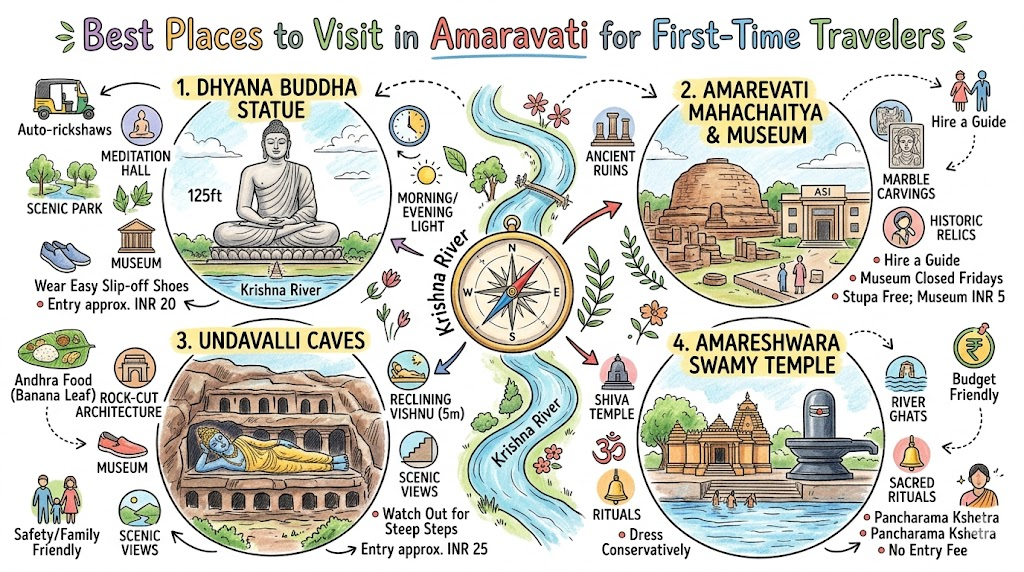
1. Dhyana Buddha Statue
- Location: On the scenic banks of the Krishna River, Amaravati Village.
- Why it is worth visiting: Standing at a breathtaking 125 feet, this colossal statue is one of the most magnificent sights in southern India. It depicts Lord Buddha in a classic meditative posture (Dhyana mudra) and sits atop a beautifully sculpted three-story structure filled with relief work showcasing scenes of historic artistic brilliance.
- Best things to do: Walk through the museum housed beneath the statue base, stroll through the manicured lawns of the surrounding park, and find a quiet spot for personal reflection or meditation.
- Entry fees: Approximately INR 20 per person.
- Best time to visit: Early morning (8:00 AM – 10:00 AM) or late evening to catch the soft golden light reflecting off the monument.
- Ideal for whom: Solo travelers seeking peace, photography enthusiasts, and families looking for scenic open spaces.
- Travel tip: Wear shoes that are easy to slip off, as you will need to remove them if you choose to enter the inner meditation hall.
2. Amaravati Mahachaitya Stupa & Archaeological Museum
- Location: Core historic zone, Amaravati Town.
- Why it is worth visiting: This is the spiritual heart of the ancient Amaravati tourist places. Built around the 2nd to 3rd century BCE during the Mauryan empire, this was once one of the largest Buddhist stupas in all of India. While the main structure exists as a protected ruin today, the adjacent ASI (Archaeological Survey of India) Museum holds a spectacular array of original relief medallions, intricate marble carvings, and historic relics that rival collections found in global museums.
- Best things to do: Explore the ancient ruins of the Mahachaitya mound, examine the incredible Purnakumbha (abundance vase) designs in the museum galleries, and learn about the region’s ancient global trade connections.
- Entry fees: Stupa entry is free; Museum entry is roughly INR 5 for adults (closed on Fridays).
- Best time to visit: 10:00 AM to 4:00 PM (avoid mid-day heat by exploring the indoor museum galleries first).
- Ideal for whom: Backpackers, history buffs, and curious students.
- Travel tip: Hiring a certified local guide at the site for even 30 minutes will completely transform how you view the stone carvings, turning bare ruins into a rich historical narrative.
3. Undavalli Caves
- Location: Penumaka-Vijayawada road, roughly 25 kilometers from central Amaravati village.
- Why it is worth visiting: A testament to ancient Indian rock-cut architecture, these monolithic sandstone caves date back to the 4th and 5th centuries. The crowning jewel is the massive four-story cave structure that houses a monumental, 5-meter-long reclining statue of Lord Vishnu (Anantasayana Vishnu), masterfully carved out of a single block of sandstone.
- Best things to do: Climb to the upper tiers for a stunning, sweeping view of the green emerald crop fields and the distant Krishna River; inspect the delicate carvings of mythical beasts and ancient deities cut directly into the cave walls.
- Entry fees: Around INR 25 per person.
- Best time to visit: 3:00 PM to 5:30 PM, when the setting sun illuminates the front facades beautifully.
- Ideal for whom: Adventure seekers, couples looking for stunning views, and architecture fans.
- Travel tip: The steps leading to the higher floors can be steep and slick in spots. Hold onto the guide rails tightly and take your time climbing.
4. Amaralingeswara Swamy Temple (Amareswara)
- Location: Directly on the riverbank of the Krishna River, Amaravati.
- Why it is worth visiting: An incredibly sacred spiritual pillar, this temple is revered as one of the elite Pancharama Kshetras (five holy shrines dedicated to Lord Shiva across Andhra Pradesh). The temple features a towering, 15-foot-tall white marble Shiva Lingam that rises through two distinct floors of the temple structure. Its unique positioning on the riverbank where the water shifts direction makes it architecturally and spiritually unique.
- Best things to do: Witness the morning Abhishekam rituals, admire the ancient Dravidian architectural carvings added by historic rulers like Zamindar Vasireddy Venkatadri Naidu, and take a peaceful walk down to the river ghats.
- Entry fees: No entry fee (special quick-darshan tickets are available during busy festival seasons).
- Best time to visit: 6:00 AM – 11:30 AM or 4:00 PM – 8:00 PM.
- Ideal for whom: Families, elderly travelers, and cultural explorers.
- Travel tip: Dress conservatively to respect the local traditions (men should wear full trousers or traditional attire, and women should wear sarees or salwar suits).
Travel Planning Tips for Amaravati
To keep your journey smooth, safe, and entirely stress-free, remember these key Amaravati vacation tips:
- Book Stays Early During Peak Season: The winter months from October to February bring gorgeous weather and a steady stream of cultural travelers. Book your accommodation in advance if you want to secure rooms with great river views.
- Rent Vehicles Responsibly: If you plan to rent scooters or local cars from nearby Vijayawada to zip around the historical paths, ensure you carry a valid driving license and proper documentation. Always wear helmets on the highways.
- Respect River Safety Rules: The Krishna River is beautiful but possesses surprisingly strong, silent undercurrents. Stick to the designated bathing ghats near the Amaralingeswara temple and avoid swimming out into open, unmarked waters.
- Avoid Isolated Ruins Late at Night: While the local villages are deeply welcoming and peaceful, historical ruins and remote cave paths lack heavy lighting. Finish up your sightseeing by dusk and head to town centers for dinner.
- Carry Cash for Local Markets: While digital payments like UPI are common in hotels and larger restaurants, small auto-rickshaw drivers, street food vendors, and local handicraft stalls prefer cold, hard cash. Keep plenty of small changes handy.
- Respect Local Culture and Environment: Many of these spots are active places of worship or protected archaeological zones. Keep your volume low, do not touch delicate ancient carvings, and actively keep the historical sites clean by disposing of plastics responsibly.
Common Mistakes to Avoid
- Treating it Like a 2-Hour Pitstop: Many travelers make the mistake of rushing out of Vijayawada, snapping a single photo of the Dhyana Buddha, and darting back. They completely miss the magic of sitting by the river ghats or exploring the museum collections.
- Ignoring the Dynamic Geography: First-timers often fail to realize how things are laid out. Sites like the Undavalli Caves sit between the old Amaravati village and Vijayawada. Not looking at a map can cause you to backtrack constantly and waste precious daylight hours.
- Overpaying for Unmetered Transport: Always agree on a fixed price with auto-rickshaw drivers before you sit down, or use estimated smartphone route distances to keep pricing transparent.
- Skipping the Local Food Culture: Don’t just stick to standard hotel menus. Step out into small, clean local eateries to try authentic Andhra breakfasts. It is highly affordable, freshly made, and tastes incredible.
Suggested Amaravati Itinerary Angle
Here is how you can easily weave these remarkable attractions into your upcoming Amaravati trip planning, depending on how much time you have:
1-Day Plan (The Heritage Express)
- Morning: Start early at 7:30 AM with a peaceful visit to the Amaralingeswara Swamy Temple, followed by a breakfast of hot Pesarattu nearby.
- Mid-Day: Walk over to the Amaravati Mahachaitya Stupa and spend an hour cooling off inside the Archaeological Museum.
- Afternoon: Head over to the towering Dhyana Buddha Statue and explore the peaceful park grounds.
- Evening: Drive down to the spectacular Undavalli Caves to watch the golden hour sun drop below the horizon before heading back.
2-Day Plan (The Culture & Nature Blend)
- Day 1: Follow the 1-day heritage route covering the core monuments inside old Amaravati village (Temple, Stupa, Museum, and Dhyana Buddha). Enjoy a quiet evening boat ride along the riverfront.
- Day 2: Branch outward. Dedicate your morning to exploring the multi-story Undavalli Caves. Spend your afternoon crossing the massive Prakasam Barrage to visit the nearby Bhavani Island or explore the vibrant handloom stalls of Mangalagiri for unique local shopping.
Weekend Travel Plan (The Unhurried Explorer)
- Settle into a comfortable hotel overlooking the riverfront. Spend your mornings absorbing the ancient history of the Buddhist trail, and keep your afternoons open for slow culinary exploration. Use your evenings to catch gorgeous sunsets from the hillsides, experiencing the slow, beautiful rhythm of local life without any rush.
FAQs
1. Where exactly is Amaravati located?
Amaravati is located on the southern banks of the Krishna River in the Guntur district of Andhra Pradesh, India. It serves as an essential historical, spiritual, and administrative center for the state.
2. How do I reach Amaravati by air?
The nearest airport is Vijayawada International Airport (VGA), located roughly 50-55 kilometers away. From the airport, you can easily hire a direct pre-paid taxi or take a bus to reach Amaravati.
3. Is there a train station in Amaravati?
Amaravati village itself does not have a major railway station. The closest major rail junctions are at Guntur (approx. 32 km) and Vijayawada Junction (approx. 35 km), both of which connect seamlessly to all major cities across India.
4. What is the absolute best time of year to visit?
The absolute best window is during the winter months, from October to February. The weather is comfortably cool, with temperatures hovering between 18°C and 30°C, making outdoor exploration and temple walks highly enjoyable.
5. Can I visit the Dhyana Buddha Statue inside?
Yes! The base of the structure features a multi-level exhibition hall displaying historical prints and beautiful relief work. There is also a quiet, spacious hall inside dedicated entirely to silent meditation.
6. Are the historic ruins accessible for elderly travelers?
The central Mahachaitya Stupa and Dhyana Buddha Park feature flat walkways that are relatively easy to navigate. However, the Undavalli Caves require climbing steep rock-cut stairs to access the upper tiers, which may be challenging for individuals with limited mobility.
7. What kind of clothing should I pack for this trip?
Pack lightweight, breathable cotton clothing to stay comfortable in the warm climate. Because you will be visiting deeply revered spiritual sites, ensure you pack modest clothing that covers your shoulders and knees.
8. Is Amaravati a good destination for a solo woman traveler?
Yes, it is exceptionally safe. The local community is warm, respectful, and helpful. Standard safety rules apply: avoid exploring unlit, isolated archaeological sites alone after dark, and keep your transport pre-arranged for late-night travel.
9. What should I buy as a local souvenir here?
Head to nearby Mangalagiri (just a short drive away) to pick up world-famous, traditional Mangalagiri cotton sarees and fabrics, known for their distinctive golden zari borders and brilliant handwoven textures.
10. Can I get non-vegetarian food easily in Amaravati?
While the immediate areas surrounding the primary temples serve delicious, purely vegetarian Andhra meals, mid-range hotels and restaurants just outside the core religious zones offer iconic, spicy Andhra chicken and fish delicacies.
Conclusion
Amaravati is a destination that rewards travelers who slow down. By stepping past the standard tourist checklists, you’ll discover a city where grand ancient history gracefully meets a quiet, beautiful riverside lifestyle. It offers an travel experience that stays with you long after the bags are unpacked.
When you are ready to sketch out your upcoming journey, let Amaravatiorbit.com serve as your personal compass. We are dedicated to delivering real, practical insights, uncovering stunning local highlights, and helping you make smarter travel choices every single step of the way. Pack your curiosity, respect the local heritage, and get ready to fall in love with the timeless charm of Amaravati.
