Introduction
When planning a getaway in Andhra Pradesh, most travelers automatically default to the breezy beaches of Vizag or the crowded temple queues of Tirupati. However, if you bypass the standard commercial hotspots and look toward the heart of the Krishna River valley, you will discover a completely different travel experience. The historic core around Amaravati is an area deeply intertwined with ancient dynasties, dramatic hill fortresses, and early Buddhist legacies.
As night retreats over this expansive riverine plains environment, the entire region transforms into an ethereal canvas of orange, violet, and deep gold. Catching a sunrise here is not just about watching the sun cross the horizon; it is an immersive local ritual that grounds you in the natural rhythm of a centuries-old cultural landscape. If you are tired of sterile holiday packages and seek a genuine connection to history, nature, and the open road, waking up early in Amaravati will reward you with views that generic travel brochures completely miss.
Why Amaravati is a Must Visit City
Amaravati, along with its twin anchor hubs of Vijayawada and Guntur, represents one of India’s most geoculturally significant regions. Positioned perfectly on the banks of the sacred Krishna River, this territory has served as a center for political power, international trade, and spiritual philosophy since the Satavahana era over two millennia ago. The geography itself is a striking mix of fertile alluvial plains cut through by jagged, abrupt granite hills—each topped with either an ancient fort, a cave complex, or a sacred shrine.
For modern travelers, the accessibility of the Amaravati circuit is exceptionally seamless. The area is thoroughly connected by national highways (such as NH-16) and major rail junctions, with Vijayawada Junction serving as one of the busiest railway hubs in the country. Vijayawada International Airport at Gannavaram offers regular flights for long-distance visitors. Whether you are a backpacker hopping on local state transport or a luxury traveler booking private road transit, the infrastructure can comfortably accommodate your itinerary.
| Metric / Feature | Region Details |
| Primary Hub Airport | Vijayawada International Airport (Gannavaram – AJA) |
| Major Railway Anchors | Vijayawada Junction (BZA), Guntur Junction (GNT) |
| Best Transit Mode | Private two-wheelers or rented cars for flexible early-morning access |
| Historical Epochs | Satavahana, Ikshvaku, Vishnukundina, Reddi Dynasty, Vijayanagara |
| Top Regional Flavors | Guntur Mirchi Bajji, Idli with Karappodi, Gongura Pachadi |
Best Places or Experiences
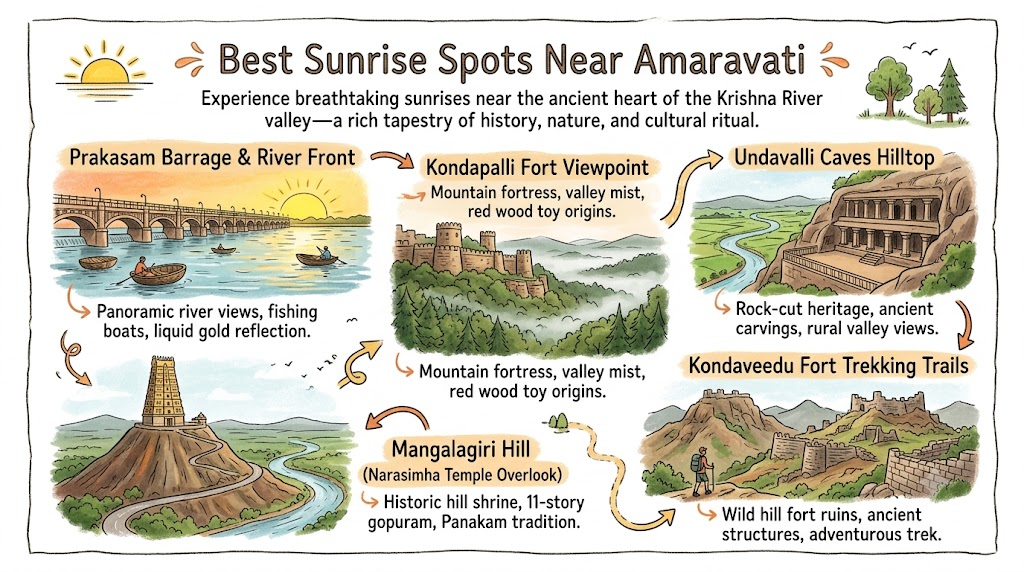
1. Prakasam Barrage & River Front
Spanning over a kilometer across the massive expanse of the Krishna River, the Prakasam Barrage is an incredible engineering marvel that binds the cities of Vijayawada and Guntur together. Originally conceptualized in the 19th century by Sir Arthur Cotton and completed in its modern form in the 1950s, this massive regulatory dam creates an expansive lake-like backwater that catches the light beautifully. The early morning environment here feels active yet deeply serene, as fishermen cast their nets into calm waters while the distant bells of ancient temples begin to ring out across the water.
Watching the sunrise from the pedestrian pathways of the barrage provides an uninterrupted panoramic view of the eastern horizon. As the sun lifts itself above the water line, the entire river turns into a shimmering sheet of liquid gold, reflecting the bridge’s signature yellow archway pillars. The cool breeze rising directly from the river creates a refreshing atmosphere, making it a favorite gathering point for local morning walkers, photography enthusiasts, and travelers looking to experience the authentic heartbeat of the river front.
- Location: Spans the Krishna River, connecting Vijayawada city limits to Guntur district, roughly 32 km from the core Amaravati capital site.
- Why it is worth visiting: Unmatched lakeside reflections and an easily accessible, wide panoramic perspective of the sun climbing over the river.
- Best things to do: Walk along the dedicated pedestrian path, photograph traditional fishing boats against the early dawn sky, and grab fresh ginger tea from local morning vendors.
- Best time to visit: Arrive by 5:15 AM to 5:45 AM, particularly during the crisp autumn and winter months from October to February.
- Ideal for whom: Street photographers, fitness walkers, couples, and casual travelers looking for a scenic view without a strenuous climb.
- Travel tip: Parking right on the bridge structure is strictly prohibited; leave your vehicle at the designated spaces on either the Seethanagaram or Canal Road entrances.
2. Kondapalli Fort Viewpoint
Perched high up on a rugged ridge of the Eastern Ghats, the Kondapalli Fort is a massive 14th-century mountain stronghold built by Prolaya Vema Reddi. The fortress was later fought over, strengthened, and utilized by the Vijayanagara empire, the Qutb Shahis, and British colonists, leaving behind a complex architectural layout hidden amidst dense forest. The road climbing up to the fort winds tightly through a protected hill reserve known for its light wood, which local artisans use to carve the famous, world-renowned wooden toys called Kondapalli Bommalu.
Reaching the summit ruins just before dawn lets you experience a spectacular highland sunrise. At this height, a dense blanket of morning mist often settles into the valley below, leaving the fortress towers rising like small islands out of a white sea. When the sun breaks over the distant horizon, it cuts through the forest canopy and bathes the ancient stone arches, granaries, and broken ramparts in a rich, warm amber light.
- Location: Krishna District, situated approximately 42 km north-west of the main Amaravati capital region.
- Why it is worth visiting: A great combination of military history and panoramic valley views from a high, mist-covered mountain top.
- Best things to do: Explore the massive Gaja Sala (elephant stables), climb the high ramparts for a 360-degree view, and check out the historic rock-cut water reservoirs.
- Best time to visit: November through March; make sure to start the mountain drive by 4:45 AM to reach the top before twilight ends.
- Ideal for whom: History buffs, avid trekkers, landscape photographers, and adventure travelers.
- Travel tip: Watch out for the large groups of wild macaques around the ruins; keep all food items securely packed inside your bags.
3. Undavalli Caves Hilltop
Carved directly out of solid sandstone hillsides between the 4th and 5th centuries CE during the reign of the Vishnukundina kings, the Undavalli Caves are a stellar example of Indian rock-cut architecture. This impressive four-story monument originally served as a quiet sanctuary for Jain and Buddhist monks before being adapted into a Hindu cave temple structure. The main architectural highlight is on the second floor, which houses a massive, 5-meter-long monolithic sculpture of Lord Vishnu in a peaceful, reclining posture, carved out of a single granite block.
While the interior caves open later in the morning, the public hillside pathways and the open rock terrace right above the cave facade face directly east. Standing on these ancient steps at dawn offers an incredible view of the sweeping curves of the Krishna River, framed by bright green rice paddies and banana plantations. The rising sun illuminates the cave’s ancient pillars, masterfully carved reliefs, and stone statues, showcasing the incredible work of ancient craftsmen.
- Location: Tadepalle Mandal, Guntur District, located just 24 km from the core Amaravati township area.
- Why it is worth visiting: Provides a view that blends rock-cut heritage with a peaceful look at the rural river valley.
- Best things to do: Take in the scale of the multi-story facade from the lower lawns, look for hidden carvings of mythical lions, and enjoy the clean morning air from the upper rock ledges.
- Best time to visit: All year round for sunrise views, though the valley looks its greenest right after the monsoon season (September to November).
- Ideal for whom: Architecture enthusiasts, spiritual travelers, and families seeking an educational yet scenic morning outing.
- Travel tip: The interior chambers are locked until the official opening time at 9:00 AM, but the exterior grounds and hillside viewpoints are accessible much earlier.
4. Mangalagiri Hill (Panakala Narasimha Swamy Temple Overlook)
Mangalagiri, which translates literally to “The Auspicious Hill,” is a prominent volcanic-shaped hill that rises sharply from the flat plains of Guntur. The hill is home to the ancient cave temple of Sri Panakala Narasimha Swamy, a unique shrine where the deity is traditionally offered sweet jaggery water (panakam). This historic site features a massive, towering 11-story Gopuram (temple tower) built by Raja Vasireddy Venkatadri Nayudu, standing as one of the tallest temple towers in South India.
The winding ghat road that goes up the side of the hill offers several viewpoint pull-offs that face east. Watching the sunrise from these high vantage points gives you an expansive view of the changing landscape below. You can see the urban skyline of Vijayawada, the winding transport lines of the highway, and the lush agricultural fields stretching out toward the horizon. The sunrise experience here is accompanied by the soft chanting of morning prayers and the smell of incense drifting up from the temple complex below.
- Location: Mangalagiri town, situated right on the NH-16 highway, roughly 18 km from Amaravati.
- Why it is worth visiting: Offers a dramatic high-altitude view of the valley combined with an immersive look into regional spiritual traditions.
- Best things to do: Climb the historic stone steps, photograph the massive temple tower against the morning sky, and pick up authentic Mangalagiri handloom sarees in the town below.
- Best time to visit: October to February; arrive by 5:30 AM to catch the early dawn colors before the daytime heat picks up.
- Ideal for whom: Cultural explorers, family groups, and spiritual travelers.
- Travel tip: Wear slip-on shoes that are easy to remove, as you will need to take off your footwear frequently if you step onto the sacred temple grounds.
5. Kondaveedu Fort Trekking Trails
For travelers looking to get off the beaten path, Kondaveedu Fort offers an incredible hilltop adventure deep in the hills of Guntur district. This expansive fortress complex was the capital of the Reddi Dynasty between 1328 and 1448 CE and contains 21 distinct structural towers, massive defensive walls, old granaries, and hidden palace ruins spread across three hills. The area feels wild and untouched, making it a great alternative to more commercialized heritage sites.
The newly laid ghat road and the older trekking trails that lead up to the fort fortifications provide a fantastic sunrise vantage point. The early morning climate up here is often crisp and cool, with thick blankets of mountain fog rolling through the gaps in the stone walls. As the sun rises, it clears away the low-lying valley fog, revealing the historic ruins, old bastions, and the surrounding wilderness in a soft, magical light that feels far removed from modern city life.
- Location: Kondaveedu Village, Chilakaluripet constituency, Guntur District, about 65 km south-west of Amaravati.
- Why it is worth visiting: A vast, non-commercialized hill fort ruin that offers a great sense of isolation and adventure.
- Best things to do: Hike along the stone fort walls, explore the historic ruins of the Raghunadha Swamy Temple, and look out over the sheer drop-offs from the western ramparts.
- Best time to visit: October to March; plan to start your ascent by 5:00 AM to catch the changing colors of the sky.
- Ideal for whom: Backpackers, trekkers, history enthusiasts, and solo adventurers.
- Travel tip: Ensure your vehicle has plenty of fuel before heading up the hill, as there are no petrol pumps or shops up on the high fort ridges.
Offbeat Exploration: Hidden Gems Tourists Miss
Seethanagaram Ghats & Hillock
Tucked away right at the base of a rocky hill on the southern bank of the Krishna River, the Seethanagaram Ghats offer a quiet, contemplative escape from the busy city. While most visitors head to the nearby Prakasam Barrage, this secluded riverbank spot remains mostly a local secret. The area features a small Vedic school and an old temple, where the sounds of morning chants softly drift over the water. Standing by the edge of the river as the sun comes up offers a beautifully peaceful view, with the early light breaking directly over the wide, slow-moving currents of the river.
Ibrahimpatnam Ferry Ghat Confluence
Located slightly upstream where the main irrigation canals branch off from the Krishna River, the Ibrahimpatnam Ferry Ghat provides a fantastic view of the area’s massive waterways. In the early morning hours, this spot is regularly enveloped in a thick, low-lying river mist that catches the light beautifully as dawn approaches. You can watch local fishermen paddle out into the quiet waters in small coracles, their silhouettes cutting through the fog against a background of changing orange and pink skies. It is a wonderfully simple, quiet slice of local river life that generic tour buses completely pass by.
Detailed Practical Guidance for Travelers
The following logistics table provides a quick reference for planning your morning visits across the primary landmarks discussed above:
| Destination | Standard Entry Fee | General Timings | Best Local Food Options Nearby | Recommended Nearby Attractions |
| Prakasam Barrage | Free Access | Open 24 Hours | Street side Idli & Dosa carts on Canal Road | Kanaka Durga Temple, Bhavani Island |
| Kondapalli Fort | ₹20 per person | 8:00 AM – 5:00 PM (Gates open early for walkers) | Local dhabas in Kondapalli village foothills | Kondapalli Toy Artisan Workshops |
| Undavalli Caves | ₹25 (ASI fee for interiors) | Grounds open at 6:00 AM; Interiors 9:00 AM | Traditional South Indian breakfast tiffins in Penumaka | Prakasam Barrage, Seethanagaram |
| Mangalagiri Hill | Free (Ghat toll may apply) | 5:00 AM – 4:00 PM | Famous local filter coffee stalls near the foothills | Lakshmi Narasimha Temple, Handloom markets |
| Kondaveedu Fort | ₹30 per vehicle | 6:00 AM – 5:00 PM | Small tea stalls and snack vendors at base village | Phirangipuram Church, Kotappakonda hill |
Logistics & On-Ground Navigation
Local Transport Options
- Two-Wheeler Rentals: Renting a scooter or motorbike from agencies in nearby Vijayawada is one of the most practical choices for early sunrise trips. It gives you the freedom to navigate narrow ghat roads and arrive well before public transport starts running.
- Auto-Rickshaws: Local auto-rickshaws are widely available across the region. For early morning travel, it is best to book a driver the night before and agree on a fixed round-trip rate, as finding on-demand rides at 4:30 AM can be difficult.
- Ride-Hailing Apps & Car Rentals: Services like Ola and Uber operate reliably within the city areas of Vijayawada and Guntur. For distant destinations like Kondaveedu Fort, renting a local taxi for a half-day trip is a much more dependable option.
Budget Planning
- Budget / Backpacking Tier: Expect to spend around ₹800 to ₹1,200 per day. This covers using a rented scooter, eating delicious meals at local street tiffin centers, staying in budget guesthouses or homestays, and paying minimal entry fees for historical monuments.
- Mid-Range / Comfort Tier: Budget around ₹3,500 to ₹5,500 per day. This allows for private air-conditioned car rentals, dining at established local restaurants, and staying in comfortable 3-star business hotels or regional heritage properties.
Safety and Inclusivity Tips
- For Families: Most of these viewpoints are very family-friendly, but places like Kondapalli and Kondaveedu Fort feature uneven stone steps and steep drop-offs. Keep a close eye on young children and carry plenty of drinking water, as there are no shops up on the high ridges.
- For Couples: Locations like the Prakasam Barrage and Undavalli grounds are popular and safe morning spots. For the more remote hill forts, it is best to plan your visits during daylight hours when there are plenty of other visitors around.
- General Safety: The ghat roads leading up to Mangalagiri, Kondapalli, and Kondaveedu require careful driving in the early morning fog. Keep your vehicle’s headlights on low beam, drive at a conservative speed, and watch out for sharp curves and unexpected wildlife.
Strategic Travel Planning Guardrails
Travel Planning Tips for the Amaravati Region
- Check Sunrise Timings Daily: Sunrise times shift from around 5:30 AM in June to 6:30 AM in January. Always check the local weather app the night before to plan your departure time accurately.
- Carry Cash for Tolls and Entry Fees: While digital payments via UPI are common at city shops, remote archeological sites and village parking lots often require small cash payments. Keep a supply of loose change on hand.
- Dress Appropriately for Heritage Sites: Many sunrise viewpoints are located near active religious shrines or historic temples. Out of respect for local customs, choose modest clothing that covers your shoulders and knees.
- Start Your Drives Early: Give yourself an extra 20 to 30 minutes of travel time for the hill destinations to account for unexpected morning mist and slower driving speeds on the winding ghat roads.
- Pack Essential Gear: Bring along a small pocket flashlight or ensure your phone is fully charged, as the paths around these historic ruins can be quite dark before the sun comes up.
Common Mistakes to Avoid
- Rushing Your Morning Itinerary: Don’t try to cram a hill fort trek and a river barrage visit into the same sunrise window; give yourself time to sit back and enjoy each location at a relaxed pace.
- Assuming All Sites Have Amenities: Many of these scenic viewpoints are intentionally kept minimal and non-commercial. Don’t expect to find clean public restrooms or food stalls at the top of remote historical ruins.
- Missing Out on Regional Breakfasts: Avoid eating breakfast at your hotel; the local street-side tiffin bands serve some of the freshest, most delicious idlis and k達成appodi dosas you will find anywhere.
- Underestimating the Midday Heat: The morning air can be pleasantly cool, but temperatures rise rapidly by mid-morning. Plan to finish your outdoor explorations and head indoors by 10:00 AM.
- Neglecting Bug Protection: The areas near the river banks and forest reserves can have plenty of mosquitoes around dawn. Be sure to apply a good quality insect repellent before heading out.
Suggested Itinerary Blueprints
1. Day Quick Dash (The River & Heritage Loop)
This rapid-routing plan is tailored for short-stay business travelers or weekend visitors looking to experience the area’s main highlights in a single morning. Start your morning at 5:15 AM with a walk across the Prakasam Barrage to watch the sun rise over the wide river waters. By 6:45 AM, take a short 15-minute drive over to the Undavalli Caves to explore the stone architecture and hillside paths in the cool morning light. Wrap up your mini-tour by 8:30 AM with a stop at a traditional tiffin center along Canal Road for fresh filter coffee and steaming idlis.
2. Day Deep-Dive (The Twin Forts Circuit)
- Day 1: Set your alarm early and make the morning drive up to Kondapalli Fort. Spend your dawn hours exploring the ancient stone ruins and valley viewpoints, then head down to the base village to see the traditional wooden toy workshops. Spend your afternoon relaxing at Bhavani Island.
- Day 2: Head southwest toward the expansive ruins of Kondaveedu Fort. Hike along the high ridge walls as the morning fog clears, explore the old temple structures, and enjoy a quiet picnic lunch amidst the hills before returning to Guntur.
3. Complete Weekend Travel Plan (The Grand Amaravati Circuit)
- Friday: Arrive in Vijayawada, check into your hotel, and spend a relaxed evening enjoying a sunset boat ride along the Krishna River near the Bhavani Island ghats.
- Saturday: Experience a memorable sunrise from the high viewpoints of Mangalagiri Hill, visit the historic Panakala Narasimha temple, and spend your afternoon exploring the ancient Buddhist Mahachaitya Stupa and museum in Amaravathi village.
- Sunday: Catch the early morning light at the Seethanagaram Ghats, enjoy a traditional breakfast in the city, and spend your afternoon exploring the historic ruins of Kondapalli Fort before heading home.
Common Tourist Mistakes to Avoid
- Geographic Blunders: Trying to visit both Kondapalli Fort (north of the river) and Kondaveedu Fort (south-west of Guntur) on the same morning is a recipe for frustration. These historical sites are far apart; separate them into different days to avoid spending your sunrise window stuck in traffic.
- Commercial Traps: Don’t waste your limited evening hours inside the modernized shopping malls of Vijayawada. Instead, spend your time exploring the atmospheric old bazaars around One-Town or taking a peaceful walk along the river banks.
- Neglecting Modern/Alternative Zones: Many visitors completely skip the quiet, well-planned residential extensions and green spaces of the new Amaravati capital region. Taking a drive through these expansive new layouts offers a fascinating contrast to the historic city centers.
- Transport Overpayment: Always check prevailing rates on ride-sharing apps like Ola or Uber before hiring street-side auto-rickshaws for long-distance trips. Agree on fixed prices beforehand to avoid unexpected fare increases at the end of your journey.
- Luxury Dining Bias: Relying solely on fine-dining hotel restaurants means missing out on the area’s best food. The true culinary soul of the region is found at local, street-level tiffin stalls and small family-run eateries that serve authentic regional classics.
Frequently Asked Questions
1. What is the absolute best month to plan a sunrise trip near Amaravati?
The ideal months are from November through February. During this winter period, temperatures are comfortably cool, and the atmosphere is clear, often with a beautiful morning fog over the river and hills.
2. Are the ghat roads leading up to Kondapalli and Kondaveedu safe for beginner drivers?
The roads are well-paved but feature several sharp hairpin turns and steep sections. If you are not confident driving a two-wheeler up steep hills, hiring a local taxi or car with an experienced driver is highly recommended.
3. Do I need to purchase entry tickets in advance for the Undavalli Caves sunrise view?
No, tickets can be easily purchased at the main entrance gate via a QR code scan or cash. The outer grounds open early, so you can enjoy the sunrise views before the interior cave chambers open.
4. Is photography allowed at all the sunrise spots, or are there specific restrictions?
Photography is permitted at all the locations mentioned in this guide. However, inside active temple shrines like Mangalagiri, camera usage is restricted in the inner rooms; always look for posted signs.
5. What should I wear when visiting the sunrise points located on temple hills?
It is best to choose modest clothing that covers your shoulders and knees. Avoid wearing clothes with inappropriate graphics, and be prepared to remove your footwear before entering sacred areas.
6. Can I find clean drinking water and food options at the top of Kondaveedu Fort?
No, Kondaveedu Fort is an expansive, non-commercialized historic site. There are no proper shops or restaurants on the upper ridges, so be sure to bring your own water and snacks.
7. Are there wild animals or safety concerns at Kondapalli Fort during the early morning?
The fort is home to a large population of wild macaques. They are generally harmless if left alone, but avoid carrying open food items in your hands, as they may try to grab them.
8. Is public transport available early enough to reach Mangalagiri Hill before sunrise?
Public buses do not run frequently during the early dawn hours. To ensure you arrive before sunrise, it is best to rent a private auto-rickshaw or use a personal vehicle.
9. Can we combine a visit to Prakasam Barrage and Bhavani Island on the same day?
Yes, they are located very close to one another. You can watch the sunrise at the barrage in the morning and take a ferry over to Bhavani Island later in the afternoon.
10. Do local street food vendors accept digital UPI payments for morning breakfast?
Yes, digital UPI payments are widely accepted by almost all tiffin centers and tea stalls across the region. However, keeping some cash on hand is always a good backup for remote areas.
11. Is there an entry fee for accessing the pedestrian walkways on Prakasam Barrage?
No, walking along the public pedestrian walkways of the Prakasam Barrage is completely free and accessible to everyone 24 hours a day.
12. What makes the sunrise view from Seethanagaram unique compared to other spots?
Seethanagaram offers a much quieter, less crowded riverbank experience right at the base of the hills, allowing you to enjoy a peaceful dawn away from the main city traffic.
Conclusion
Choosing to step off the well-worn tourist tracks and experience the early morning beauty of the Amaravati region is a deeply rewarding travel choice. Watching the sun rise over ancient stone fortresses, rock-cut caves, and the wide waters of the Krishna River offers a wonderful connection to the history and natural beauty of this unique landscape. These quiet morning moments provide a fresh perspective on a historic region, leaving you with lasting memories that a standard commercial holiday simply cannot match.
