Introduction
When most travelers plan their next big photography expedition, they instinctively look toward the crowded ghats of Varanasi, the heavily commercialized palaces of Rajasthan, or the hyper-touristy beaches of Goa. But for the visual storyteller who craves deep roots, architectural secrets, and unhurried authenticity, those mainstream spots often feel uninspiring. If you are tired of competing with armies of selfie sticks just to frame a single shot, it is time to pivot your lens toward a region where ancient empires and hyper-modern dreams quietly intersect along a massive riverbank. Welcome to Amaravati, the historic and evolving soul of Andhra Pradesh.
Stepping into this landscape feels like discovering an untamed archive of human devotion and design. Amaravati is a living canvas where 2,000-year-old Buddhist foundations rest beside majestic medieval fortresses, while contemporary architecture begins to sketch out a futuristic skyline. The air here carries the faint scent of river silt from the mighty Krishna River, mixed with the rich aroma of local spices. For photography lovers, it offers a rare luxury: the space and stillness required to chase perfect shadows, capture intense expressions, and build a portfolio that stands completely apart from the generic travel feed.
Why Amaravati is a must visit city
Amaravati is not merely a dot on a modern administrative map; it is an epic chapter in the history of the Indian subcontinent. Geographically situated on the fertile southern banks of the Krishna River, this region has served as a cultural crossroads for millennia. It achieved its highest historical weight under the Satavahana and Ikshvaku dynasties, evolving into one of ancient India’s most significant centers for Buddhist learning, art, and philosophy. The world-renowned “Amaravati School of Art” revolutionized Indian sculpture, introducing dynamic narrative reliefs carved into pristine white limestone that eventually influenced sacred art across Sri Lanka and Southeast Asia.
For the modern traveler, this profound history is paired with exceptional practical accessibility. Amaravati is seamlessly connected to major urban hubs via national highways and robust rail networks, with Vijayawada serving as the primary transit gateway just 30 kilometers away. Whether you are a solo backpacker relying on efficient public transit, a couple on a slow-paced road trip, or a professional landscape photographer carrying heavy gear, the region’s expanding hospitality infrastructure comfortably accommodates every style of travel.
The travel circuit here effortlessly weaves through distinct thematic layers, guiding your camera through towering spiritual monuments, rock-cut cave complexes, and high-altitude vantage points that overlook miles of lush, rural green fields.
| Key Metric / Fact | Regional Detail |
| Primary Geographic Feature | Southern banks of the Krishna River, Guntur district |
| Historical Peaks | Satavahana Dynasty (2nd Century BCE) to Ikshvaku Rule |
| Closest Major Transit Hub | Vijayawada Junction Railway Station (32 km) |
| Nearest Airport | Vijayawada International Airport (Gannavaram – 50 km) |
| Core Visual Themes | Buddhist Monastic Architecture, Rock-cut Sculptures, River Landscapes |
| Ideal Shooting Season | October to February (Pleasant winter light and clear skies) |
Best Places or Experiences
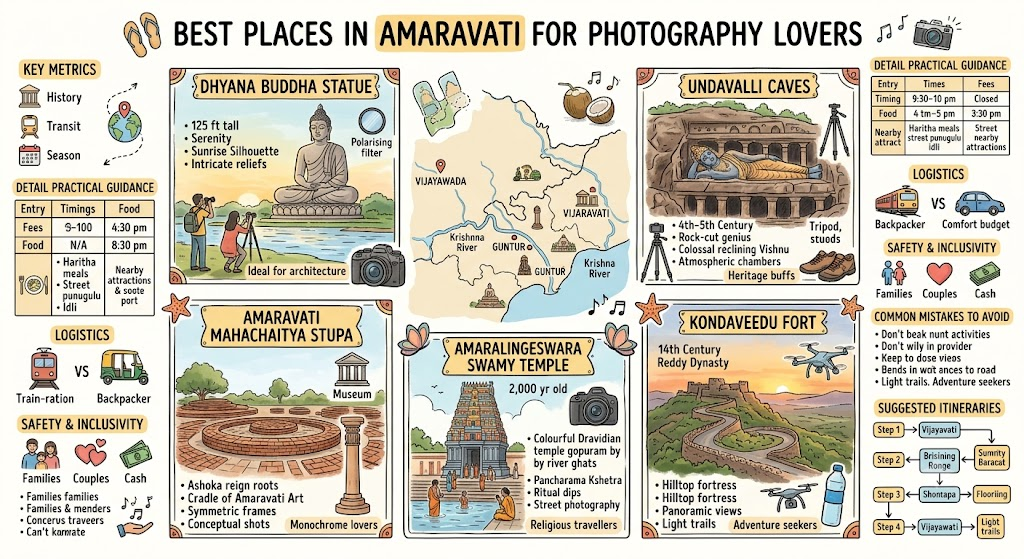
1. Dhyana Buddha Statue
The Dhyana Buddha Statue is an absolute masterpiece of modern spiritual engineering, standing as a towering beacon of serenity on a sprawling 4.5-acre complex right by the edge of the Krishna River. Rising to a staggering height of 125 feet, this monumental sculpture depicts Lord Buddha in the classic Dhyana mudra (meditative posture), symbolizing ultimate inner peace and intellectual awakening. The structure is built atop a massive, beautifully detailed three-tiered pedestal that cleverly doubles as a multi-level museum. The exterior walls of this base are adorned with exquisite relief sculptures inspired by the historic Amaravati Mahachaitya artwork, capturing scenes from the Jataka tales and life events of the Buddha.
For a photographer, the scale of this monument creates an incredible play of light and shadow throughout the day. Framing the immense white structure against the deep blue Andhra skies offers a striking lesson in minimalist composition. The surrounding beautifully manicured gardens provide excellent leading lines, while the upper terraces offer an elevated perspective of the winding river just beyond the complex. Inside, the quiet, dimly lit museum galleries challenge your low-light camera capabilities, revealing intricate replicas of ancient friezes that demand close-up, high-contrast framing.
- Location: Amaravati Village, approximately 33 km west of Vijayawada city center.
- Why it is worth visiting: It is one of the tallest meditative Buddha structures in the world, seamlessly blending ancient artistic styles with grand modern architecture.
- Best things to do: Capture a wide-angle silhouette of the statue during sunrise, photograph the intricate limestone-style relief panels around the base, and shoot the panoramic river view from the open upper deck.
- Best time to visit: Early morning between 6:30 AM and 8:30 AM for soft, golden light, or late afternoon just before sunset.
- Ideal for whom: Architecture photographers, solo travelers, spiritual seekers, and portrait enthusiasts.
- Travel tip: Leave your shoes at the designated counter near the gate, and bring a circular polarising filter to cut down on harsh glare from the white surface during the midday sun.
2. Undavalli Caves
Carved out of a solid sandstone hillside between the 4th and 5th centuries CE, the Undavalli Caves stand as an astonishing testament to the genius of ancient Indian rock-cut architecture. This monolithic four-storied cave temple complex represents a fascinating transition of religious art, originally utilized by Buddhist monks before being adapted into a Hindu sanctuary under the Vishnukundina kings. The absolute crown jewel of the complex is located on the third floor: a colossal, 5-meter-long monolithic sculpture of Lord Vishnu in his Ananthasayana posture (reclining on the cosmic serpent, Adishesha), meticulously sculpted out of a single continuous block of sandstone.
Photographing Undavalli is an adventure in mastering exposure variations. The multi-tiered facade features heavy, rock-cut pillars that frame deep, atmospheric chambers where natural light filters in gradually, creating a classic chiaroscuro effect. As you ascend the narrow stone steps from one level to the next, the open stone balconies provide breathtaking natural frames for the emerald-green paddy fields and lazy canal waters sprawling out below. The weathered textures of the ancient walls, combined with the detailed carvings of celestial beings, elephants, and lions, offer an endless playground for macro photography and architectural close-ups.
- Location: Undavalli Village, Tadepalle Mandal, roughly 22 km from Amaravati core capital region.
- Why it is worth visiting: An incredible specimen of monolithic rock-cut cave design featuring a magnificent 1,500-year-old reclining deity sculpture.
- Best things to do: Use the cave’s ancient pillars to frame the green valley outside, capture detailed low-light shots of the giant reclining Vishnu sculpture, and document the intricate elephant friezes lining the lower basements.
- Best time to visit: 3:00 PM to 5:30 PM, when the setting warm sun directly illuminates the west-facing cave entrance.
- Ideal for whom: Heritage buffs, history students, landscape photographers, and art historians.
- Travel tip: The stairs inside the caves can be quite steep and smooth from centuries of footsteps; wear sturdy, high-grip shoes and carry an external flash or a fast prime lens ($f/1.8$ or lower) for the dark interiors.
3. Amaravati Mahachaitya Stupa
The Amaravati Mahachaitya, or the Great Stupa of Amaravati, is a sacred archaeological site that whispers stories of a glorious past when this very spot was a thriving global epicenter of early Buddhism. Originally founded during the Mauryan reign of Emperor Ashoka in the 3rd century BCE, the stupa was expanded over generations by the Satavahanas into a massive monument that was actually larger than the famous stupa at Sanchi. Though the original structural dome has weathered away over centuries, the expansive, circular foundation layout, the voter stupa remains, and the beautifully restored brick patterns offer a profound sense of scale and spatial design.
For the landscape and documentary photographer, the Mahachaitya site requires an eye for abstract patterns, symmetry, and historical context. Walking along the ancient stone pradakshinapatha (circumambulation path), you can capture the geometric beauty of the circular base surrounded by perfectly manicured green lawns. The site is a fantastic location for conceptual photography, utilizing the weathered stone ruins to contrast the impermanence of human structures against the enduring beauty of nature. The adjoining ASI Archaeological Museum displays the authentic, incredibly intricate marble-limestone relief panels salvaged from this site, which are perfect for capturing high-definition details of ancient lifestyle and Buddhist mythology.
- Location: Guntur-Amaravati Road, core Amaravati Village area.
- Why it is worth visiting: It is one of the oldest and largest Buddhist structural ruins in India, representing the absolute cradle of the legendary Amaravati art style.
- Best things to do: Shoot wide-angle symmetric frames of the circular brick foundation, document the Ashokan pillar fragments, and photograph the masterful ancient carvings inside the adjacent ASI museum.
- Best time to visit: 8:00 AM to 11:00 AM when the morning sun crisply highlights the textures of the ancient bricks and stone fragments.
- Ideal for whom: Archaeology enthusiasts, monochrome photography lovers, and spiritual history travelers.
- Travel tip: The ASI Museum is strictly closed on Fridays; plan your trip across the circuit accordingly to avoid missing the best carving details.
4. Amaralingeswara Swamy Temple
Perched majestically on the southern bank of the Krishna River, where the river uniquely takes a holy northward turn, the Amaralingeswara Swamy Temple is the spiritual heartbeat of the region. Dedicated to Lord Shiva, this ancient temple is revered as one of the sacred Pancharama Kshetras (five holy abodes of Shiva) across Andhra Pradesh. The temple is famous for its colossal, 15-foot-high white marble Shiva Lingam, which rises through two distinct floors of the temple structure. According to fascinating local folklore, the Lingam grew continuously until a small nail was driven into its top to halt its growth, leaving a red stain that devotees still revere today.
From a cultural and street photography standpoint, this temple is an absolute treasure trove. The multi-tiered, brilliantly painted Dravidian Gopuram (entrance tower) pierces the sky, offering a colorful subject against passing monsoon clouds or twilight hues. The temple courtyards are filled with continuous motion—devotees dressed in vibrant traditional attire, pandits performing elaborate rituals with burning camphor, and smoke gracefully curling around ancient brass bells. Stepping onto the temple’s private river ghats allows you to capture raw, emotional storytelling images of pilgrims taking ritual dips in the sweeping waters of the Krishna River.
- Location: Riverbank road, Amaravati town area, easily accessible from the main bus stand.
- Why it is worth visiting: A highly revered 2,000-year-old pilgrimage site showcasing magnificent Dravidian temple architecture right on the edge of the river.
- Best things to do: Photograph the reflection of the temple gopuram in the river waters, document the lively energy of the morning rituals, and capture the detailed expressions of artisans selling brass offerings outside.
- Best time to visit: 5:30 AM for the morning Aarti and sunrise over the river, or during the grand evening prayers around 6:30 PM.
- Ideal for whom: Street photographers, cultural documentary filmmakers, and religious travelers.
- Travel tip: Respect the local customs by dressing conservatively (shoulders and knees covered). Photography inside the absolute innermost sanctum is strictly prohibited, so focus your lens on the rich, atmospheric interactions in the outer courtyards and river ghats.
5. Kondaveedu Fort
For the adventurous landscape photographer who loves rugged terrain, dramatic vistas, and medieval ruins, Kondaveedu Fort is an absolute paradise. Perched high on a hilltop at an elevation of nearly 1,700 feet above sea level, this expansive fortress was constructed by the Reddy Dynasty rulers in the 14th century. The fort features massive granite ramparts, ruined granaries, deep stepwells, and ancient entry gateways that snake along the ridges of the dense green hills. The recently developed, smooth hill-ghat road leading up to the fortress features 21 thrilling hairpin bends, making the journey up just as visually stunning as the destination.
The photographic draw of Kondaveedu is its sheer raw scale and panoramic viewpoints. Standing on the crumbling battlements during the golden hour, you can frame the ancient, moss-covered stone walls cutting across rolling hills that fade into blue mist on the horizon. The fort’s deep, overgrown stone stepwells create moody, atmospheric compositions that work exceptionally well in monochrome. The dramatic twists and turns of the modern ghat road winding down through the valleys offer a perfect opportunity for long-exposure light trail photography after sunset.
- Location: Kondaveedu Village, Yadlapadu Mandal, approximately 48 km southwest of the Amaravati capital region.
- Why it is worth visiting: A sprawling, high-altitude hill fortress offering some of the most dramatic panoramic views and defensive military ruins in southern India.
- Best things to do: Capture the winding hairpin bends of the ghat road from the top viewpoint, shoot the textures of the ancient stone ramparts at sunset, and explore the hidden, overgrown ruins of the royal magazines.
- Best time to visit: 3:30 PM to 6:30 PM. The sunset views from the western ridge are absolutely legendary.
- Ideal for whom: Trekking enthusiasts, landscape photographers, drone hobbyists, and adventure seekers.
- Travel tip: There are very few shops or stalls up on the hill fortress; ensure you pack plenty of drinking water, snacks, and extra camera batteries before starting your ascent.
Offbeat Exploration: Hidden Gems Tourists Miss
Moghalrajpuram Caves
Tucked away inside a bustling, residential neighborhood just outside the main highway lines, these 5th-century rock-cut caves are heavily overshadowed by Undavalli, meaning you will often have the entire site to yourself. The cave features a unique triple-celled layout with beautifully carved pillars and a weathered, exterior relief sculpture of Lord Shiva in his Nataraja form that has stood the test of time.
The lack of crowds means you can set up a tripod undisturbed to execute long exposures, capturing the beautiful way urban city life directly presses against the ancient, dark stone thresholds.
Prakasam Barrage at Dawn
While thousands of commuters cross this massive 1.2-kilometer-long bridge daily, very few stop to appreciate its incredible visual beauty during the quiet hour before dawn. The barrage regulates the massive flow of the Krishna River, creating an enormous, lake-like expanse of water on one side that mirrors the sky beautifully.
Position yourself on the southern banks with a telephoto lens to capture local fishermen casting their circular nets into golden, shimmering waters as the sun slowly rises behind the distant hill shrine of Mangalagiri.
The Mangalagiri Weaver Hamlets
Just a short drive from the main capital tracks lies the historic town of Mangalagiri, famous not just for its hill temple, but for its traditional weaving communities. Walking into the narrow side streets of these traditional neighborhoods, you will hear the rhythmic, musical clicking of wooden pit looms operating inside almost every house.
The local weavers are incredibly welcoming, allowing photographers to document the fascinating, vibrant process of hand-dyeing long spools of yarn and weaving the world-famous, crisp Mangalagiri cotton sarees with their signature golden zari borders.
Detailed Practical Guidance for Travelers
| Destination | Standard Entry Fee | General Timings | Best Local Food Options Nearby | Recommended Nearby Attractions |
| Dhyana Buddha Statue | Free (₹10 for Museum) | 7:30 AM – 7:00 PM | Authentic Andhra Meals at Haritha Resort | Amaravati Mahachaitya Stupa |
| Undavalli Caves | ₹25 (ASI Charges) | 8:30 AM – 6:00 PM | Punugulu & Mirchi Bajji from local street vendors | Prakasam Barrage |
| Amaravati Mahachaitya | Free | 6:00 AM – 6:00 PM | Traditional Filter Coffee & Idli at local tiffin rooms | ASI Site Museum |
| Amaralingeswara Temple | Free | 5:00 AM – 8:00 PM | Puliora (Tamarind Rice) temple prasadam | Krishna River Boat Point |
| Kondaveedu Fort | ₹20 per vehicle | 8:00 AM – 5:30 PM | Pack food from Guntur city eateries | Phirangipuram Church |
Logistics & On-Ground Navigation
Local Transport Options
- Railways: Vijayawada Junction (BZA) is a massive A1-classified railway station connected to every major city in India. From there, local passenger trains run regularly to Guntur, which is another excellent base for exploring Amaravati.
- Auto-Rickshaws: For moving between close landmarks within Amaravati village or Tadepalle, traditional three-wheeler auto-rickshaws are readily available. Always negotiate and fix a final fare before boarding, as they do not run on digital meters.
- E-Rickshaws: These silent, eco-friendly battery-operated rickshaws are rapidly growing across the flat capital tracks, perfect for quick, budget-friendly hops between the Dhyana Buddha statue and local tiffin centers.
- Car Rentals / Cabs: For a dedicated photography trip carrying heavy tripods and lens bags, hiring an air-conditioned app-based cab (like Ola or Uber from Vijayawada) or booking a private rental car for the entire day is highly recommended for maximum flexibility.
Budget Planning
- Budget / Backpacking Tier (₹1,500 – ₹2,500 per day): Staying in clean local homestays or budget lodges in Guntur/Vijayawada, eating at traditional street-side tiffin rooms, and utilizing public buses and shared auto-rickshaws for transit.
- Mid-Range / Comfort Tier (₹4,500 – ₹7,500 per day): Staying in comfortable 3-star business hotels or state-run AP Tourism (Haritha) properties, dining at air-conditioned regional restaurants, and hiring a dedicated private cab for hassle-free point-to-point transit.
Safety and Inclusivity Tips
- For Families: The major heritage sites like the Dhyana Buddha complex and Undavalli feature large open spaces and steps. Keep children close near steep drops at cave balconies or river ghats. Clean public restrooms are available at the Dhyana Buddha complex.
- For Couples: Amaravati is largely a conservative, rural-cultural region. While completely safe for couples, it is best to avoid public displays of affection to prevent unwanted local attention. The sunset viewpoints at Kondaveedu Fort are highly romantic but try to head down before it gets completely dark.
- General Safety: The local people are exceptionally warm and helpful. Keep your expensive camera gear zipped up in weather-proof bags when walking through busy temple crowds or dusty rural paths, and stay well-hydrated to tackle the coastal Andhra humidity.
Strategic Travel Planning Guardrails
Travel Planning Tips for Amaravati
- Book Your Base Early: If you plan to travel during the festive winter peak or long weekends, book your hotels in Vijayawada or Guntur well in advance, as local business travel keeps quality rooms in high demand.
- Embrace Digital Payments but Keep Cash: Unified Payments Interface (UPI) apps like Google Pay and PhonePe work flawlessly at almost every tiny tiffin stall and entry counter. However, keep around ₹1,000 in physical cash for remote parking fees or tips for local boatmen.
- Dress for Heritage Sites: Several spots on this itinerary are active places of worship. Always pack clothing that covers your shoulders and knees. Carrying a light cotton scarf is incredibly useful for shielding your head from the afternoon sun.
- Prepare for Steps: Exploring the Undavalli Caves and climbing the remnants of Kondaveedu Fort requires walking up a significant number of uneven stone steps. Start building your stamina a few weeks prior if you carry heavy camera equipment.
- Get a Local Data SIM: High-speed 5G data networks are robust across the capital tracks, but inside deep sandstone caves or up on remote fort hills, connectivity can dip. Download your Google Maps offline for the region beforehand.
Common Mistakes to Avoid
- Over-packing Your Daily Itinerary: Trying to shoot sunrise at Prakasam Barrage, explore Undavalli, travel to the Great Stupa, and catch sunset at Kondaveedu all on the exact same day will leave you exhausted and missing the best light windows.
- Ignoring the Extreme Midday Heat: The afternoon sun in coastal Andhra can be incredibly intense even during winter. Do not schedule open-sky shoots between 12:00 PM and 3:00 PM; use this window for indoor museums or lunch breaks.
- Assuming Transport is Always Available at Remote Sites: Places like Kondaveedu Fort are located away from major highway lines. Never head up there expecting to easily book an app-based cab for your return trip; always ensure your transport is booked for a round-trip.
- Skipping the Authentic Regional Street Food: Don’t restrict your dining to generic hotel buffets. Missing out on freshly fried Babai Hotel idlis or piping hot mirchi bajjis means missing a core element of the region’s cultural identity.
- Overpaying for Local Souvenirs: When buying traditional Mangalagiri fabrics or local wooden toys, do not buy from tourist counters directly outside major temple gates. Walk a few blocks into the actual weaver streets to get authentic quality at fair prices.
Suggested Itinerary Blueprints
1-Day Quick Dash (The Heritage Lens)
- Target Audience: Time-constrained business travelers or quick weekend day-trippers.
- Morning (07:00 AM – 10:30 AM): Start early at the Undavalli Caves to capture the fresh morning shadows stretching across the valley, followed by a quick breakfast of hot tiffins nearby.
- Midday (11:30 AM – 02:30 PM): Drive down to the Dhyana Buddha Statue. Explore the cool, air-conditioned museum inside the base during the harshest sun hours and enjoy a traditional Andhra lunch.
- Evening (03:30 PM – 06:30 PM): Walk across to the historic ruins of the Amaravati Mahachaitya Stupa and conclude your day catching the spectacular sunset colors over the Amaralingeswara Swamy Temple river ghats.
2-Day Deep-Dive (The Culture & Contrast Circuit)
- Day 1: Ancient Roots: Start your morning documenting the industrial architecture of the Prakasam Barrage at dawn. Head straight to Undavalli Caves for detailed exploration. Spend your afternoon immersed in the historic treasures of the ASI Archaeological Museum in Amaravati village, wrapping up with a beautiful twilight boat ride on the Krishna River.
- Day 2: Textures & Horizons: Spend your morning exploring the fascinating, colorful Mangalagiri Weaver Hamlets, capturing close-ups of the handloom process. Have a relaxed lunch, and then head out by afternoon for an adventurous drive up to Kondaveedu Fort, dedicating your entire evening to landscape photography across the high-altitude ruins.
Complete Weekend Travel Plan (The Ultimate Visual Loop)
- Friday: Modern Horizons & Hidden Caves: Arrive in Vijayawada by morning. Spend the afternoon exploring the offbeat, quiet chambers of the Moghalrajpuram Caves. As evening falls, set up your tripod on the banks facing the Prakasam Barrage to shoot long exposures of the bridge lights reflecting across the vast river.
- Saturday: The Spiritual Heart of Buddhism: Dedicate the entire day to the core Amaravati village circuit. Capture the sunrise at the Amaralingeswara Swamy Temple, move to the Amaravati Mahachaitya Stupa for structural patterns, and spend the late afternoon framing the colossal silhouette of the Dhyana Buddha Statue against sunset skies.
- Sunday: Fortresses & Handlooms: Start your morning inside the vibrant lanes of Mangalagiri, capturing the street life and artisans. After a hearty lunch of local spicy biryani, embark on the scenic drive to Kondaveedu Fort. Spend the evening capturing the dramatic 21 hairpin bends and the setting sun melting into the distant hills.
Common Tourist Mistakes to Avoid
- Geographic Blunders: Many travelers look at a flat map and try to club the remote hills of Kondaveedu Fort with the far northern river tracks of the Dhyana Buddha Statue on the exact same morning. These zones are geographically opposed and separated by significant rural driving time, so separate them into distinct days.
- Commercial Traps: Spending your precious evening hours inside the flashy, modernized shopping malls or food courts of central Vijayawada rather than walking through the authentic, atmospheric local spaces like the river ghats or ancient bazaar lanes.
- Neglecting Modern / Alternative Zones: Don’t forget to explore the quieter, residential, and green expansions of the transitioning capital region. The wide roads and upcoming administrative structures offer fantastic modern minimalist architectural framing.
- Transport Overpayment: Avoid walking out of the railway station and accepting arbitrary, inflated transport prices from aggressive touts. Always cross-reference fares on ride-sharing mobile apps or check with a local peer to ensure you are paying official local rates.
- Luxury Dining Bias: Restricting your meals strictly to high-end luxury hotel dining rooms. The true soul of Andhra cuisine thrives in street-level culinary vendors and traditional mess halls where food is served fresh on banana leaves.
Frequently Asked Questions
1. Is professional photography permitted inside the Undavalli Caves site?
Yes, photography for personal use is fully permitted at the Undavalli Caves. The Archaeological Survey of India (ASI) allows handheld cameras and smartphones without any extra charge. However, using professional tripods, commercial video setups, or flying drones requires special prior permission from the ASI regional office.
2. What is the absolute best lens to pack for a dedicated photography trip to Amaravati?
A versatile 24-70mm $f/2.8$ zoom lens is the absolute workhorse for this region, as it allows you to capture wide architectural landscapes like the Dhyana Buddha and quickly zoom in on structural details. Additionally, pack a fast prime lens like a 50mm $f/1.8$ to handle the dark interior chambers of the sandstone caves and temple corridors.
3. Are drones allowed to be flown around the 125-foot Dhyana Buddha Statue?
Flying drones directly inside or over the Dhyana Buddha Statue complex is strictly restricted for security and administrative reasons. If you wish to capture aerial perspectives of the monument against the river, you must operate your drone from public zones well outside the fenced perimeter of the state-run complex, while ensuring you adhere to standard national drone regulations.
4. How accessible are these photography spots for travelers with limited mobility?
Accessibility varies across the circuit. The Dhyana Buddha Statue gardens and the outer paths of the Mahachaitya Stupa are flat and easy to navigate. However, the Undavalli Caves and Kondaveedu Fort feature steep, uneven stone steps without ramp access, making them quite challenging for individuals with mobility limitations.
5. Do I need to hire a local guide to explore the historical sites effectively?
While you can easily explore the sites independently using this guide, hiring an authorized local guide at the Undavalli Caves or the Amaravati Museum adds immense value. They can point out hidden stone carvings and share regional folklore stories that will help you add meaningful narrative context to your visual portfolio.
6. Is it safe to conduct night landscape photography up at Kondaveedu Fort?
While the modern ghat road is well-laid, the actual hill fort ruins are isolated and do not have extensive artificial lighting after dark. It is completely safe to shoot up there until sunset, but it is highly recommended to head down the hill immediately after twilight rather than staying late into the night.
7. What should I wear when photographing inside the Amaralingeswara Swamy Temple?
As an active, highly revered Hindu place of worship, traditional and conservative attire is mandatory. Men should wear trousers or traditional dhotis, and women should wear traditional Indian attire or modest clothing that fully covers the shoulders and knees. Footwear must be removed entirely before entering the outer temple complex.
8. Can I easily find quality accommodation options right inside Amaravati village?
Amaravati village itself offers limited budget guest houses and a state-run AP Tourism Haritha resort. For a wider selection of high-quality premium or mid-range business hotels, it is best to set up your primary travel base in the neighboring cities of Vijayawada or Guntur, which are just a 45-minute drive away.
9. Are there any specific camera restrictions inside the ASI Archaeological Museum?
Like most ASI-maintained museums across India, photography inside the indoor galleries of the Amaravati Archaeological Museum is strictly prohibited to protect the ancient artifacts from continuous flash damage. You can, however, take photographs of the structural exhibits displayed out in the open courtyard galleries.
10. What is the local language spoken here, and can I manage with English or Hindi?
Telugu is the primary local language spoken across the region. In urban hubs like Vijayawada and Guntur, as well as at major tourist counters, English and Hindi are widely understood and spoken by hotel staff, transport drivers, and guides, making navigation smooth for domestic and international travelers.
11. How do I capture the best reflections of the monuments along the Krishna River?
To capture pristine, mirror-like reflections of the riverside shrines, head out to the banks early in the morning between 6:00 AM and 7:30 AM. This is when the river waters are calmest, wind speeds are low, and the rising sun provides a spectacular, soft golden side-light on the structures.
12. Is the tap water safe to drink while exploring rural paths in the region?
It is strongly advised to avoid drinking raw tap water during your excursions. Stick exclusively to sealed, branded mineral water bottles available at local shops, or carry your own reusable water bottle equipped with a built-in purification filter to ensure you stay healthy throughout your photography trip.
Conclusion
Choosing to journey through Amaravati as a photography lover is an incredibly rewarding alternative to standard, mass-produced vacation circuits. This region does not hand you obvious, predictable frames on a silver platter; instead, it invites you to slow down, look closer, and actively engage with your surroundings. The true intellectual and creative reward of this trip lies in the fascinating contrasts your camera will capture—the profound silence of ancient Buddhist brick foundations resting peacefully beside the vibrant, living devotion of riverfront temples, all while a bold new modern landscape begins to take shape right on the horizon. When you pack your bags and head home, you won’t just leave with standard postcard snapshots. You will carry away a unique, deeply moving visual story of a historic region that has managed to preserve its authentic soul across millennia.
