Introduction
When modern travelers seek an escape, they often succumb to the siren song of over-commercialized hill stations and overcrowded coastal resorts. These generic destinations offer little more than long traffic jams and cookie-cutter hospitality. However, true replenishment lies not in manufactured leisure, but in places with deep roots, profound ecological authenticity, and intimate cultural connections.
For those navigating the fast-paced development of Andhra Pradesh’s capital region, the surrounding landscape offers an unexpected antidote. Right on the fringe of this nascent metropolis lies an ancestral terrain where majestic river systems, ancient monadnocks, and rich avian corridors converge. Choosing a short trip to the nature spots near Amaravati is an invitation to swap concrete corridors for whispering forests, sacred groves, and pristine wetlands that have remained untouched for centuries.
Why Amaravati is a must visit city
Amaravati is not merely a political capital in the making; it is a geographic and historical epicentre that has anchored the Deccan region for over two millennia. Situated on the fertile plains of the Krishna River, this region represents a highly unique chapter in Indian travel. Its physical geography balances dramatic granite hills with lush alluvial valleys, creating microclimates that shelter rare migratory wildlife and dense deciduous flora.
For the modern explorer, the regional travel circuit is masterfully balanced. It seamlessly weaves pristine environments with centuries-old heritage, allowing you to trace the steps of ancient Buddhist monks in the morning and kayak through serene river channels by afternoon.
Accessibility is exceptionally practical. The region is bisected by the National Highway 16 (NH16) and an ultra-efficient network of state expressways. The high-speed rail junctions at Vijayawada (BZA) and Guntur (GNT) act as perfect launchpads, while the Vijayawada International Airport (VGA) connects global travelers to these green escapes. Backed by exceptional local hospitality ranging from rugged eco-camps to refined riverfront resorts, Amaravati stands as a premier regional hub for weekend micro-adventures.
Amaravati Regional Circuit at a Glance
| Matrix Indicator | Regional Circuit Details |
| Primary Landscape Types | Riparian river islands, tropical dry deciduous hill forests, wetland sanctuaries, and ancient rock-cut monadnocks. |
| Average Travel Time Radius | 20 to 90 minutes from the core Amaravati capital area. |
| Transit Connectivity | NH16, Amaravati Seed Access Road, Chennai-Kolkata rail corridor, and Vijayawada Airport. |
| Top Travel Archetypes | Trekking enthusiasts, wildlife photographers, family picknickers, and slow-travel advocates. |
Best Nature Places or Experiences
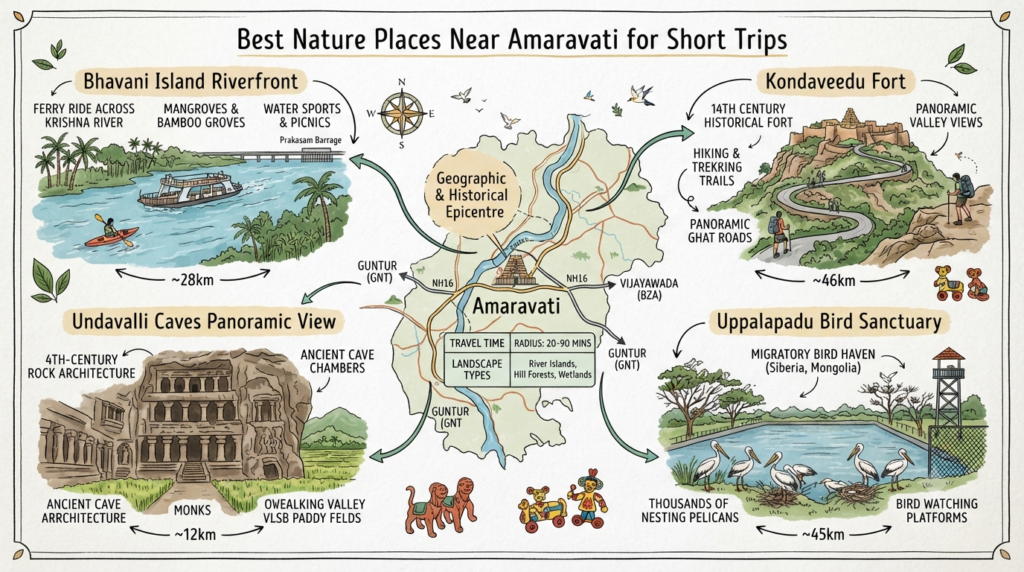
Bhavani Island Riverfront.
Uppalapadu Bird Sanctuary.
Undavalli Caves Panoramic View.
Bhavani Island
Floating majestically in the middle of the roaring Krishna River, Bhavani Island stands as one of India’s largest natural river islands, spanning across more than 130 acres of pristine, fertile terrain. The journey begins with a scenic ferry ride across the shimmering river waters, instantly isolating travelers from the mainland’s chaotic hum. Enveloped by thick mangrove extensions, towering bamboo groves, and lush manicured lawns, the island operates as a crucial green lung for the capital region, offering a serene sanctuary where the river breeze rustles endlessly through the canopy.
Managed efficiently by the state tourism department (APTDC), this riverine island perfectly merges raw natural beauty with engaging recreational features. Its expansive boardwalks wind past quiet water bodies, while the riverfront provides breathtaking views of the massive Prakasam Barrage. It is a dynamic ecosystem where visitors can immerse themselves in calm nature walks or look out for local riverine birds nesting along the marshy banks.
- Location: Located in the Krishna River channel near Vijayawada, roughly 28 kilometers from the central Amaravati capital zone.
- Why it is worth visiting: It is an isolated riverine island ecosystem providing a unique combination of dense foliage, sweeping river vistas, and water-based recreational facilities.
- Best things to do: Kayak through the calm river channels, walk along the extensive elevated wooden canopy bridge, and catch the dramatic sunset over the Prakasam Barrage from the western banks.
- Best time to visit: October to February, specifically between 3:30 PM and 6:30 PM when the evening lighting reflects softly off the river.
- Ideal for whom: Families with young children, couples seeking a scenic escape, and water sports enthusiasts.
- Travel tip: The final return ferry departs the island promptly at 5:30 PM to 6:00 PM depending on river currents, so track your time carefully to avoid being stranded.
Kondaveedu Fort
Perched atop a rugged mountain range rising nearly 1,700 feet above sea level, Kondaveedu Fort is an incredible testament to medieval engineering wrapped in breathtaking natural beauty. Originally constructed by the rulers of the Reddi Dynasty in the 14th century, the historic fortress features massive ramparts, ancient stone gateways, and crumbling granaries hidden beneath a thick blanket of tropical dry deciduous jungle. The approach to the fort features a newly laid, thrilling ghat road with multiple sharp hairpin turns that carve straight through steep, forested ravines.
As you reach the breezy summit, the sheer natural grandeur of the Eastern Ghats unfolds. The mountain air here is notably crisp, and the sweeping views look down upon vast agricultural valleys, rolling green hills, and quiet upland reservoirs. It is a brilliant location for hikers and nature enthusiasts who wish to explore wild, overgrown forest pathways while discovering ancient rock-cut cisterns that still store crystal-clear rainwater.
- Location: Located in the Guntur District, approximately 46 kilometers southwest of the Amaravati capital region.
- Why it is worth visiting: A stunning mountain fortress offering a mixture of deep historical heritage, dense wilderness trekking, and panoramic valley views.
- Best things to do: Hike up to the old fort ramparts, explore the hidden Gopinatha Temple ruins at the base, and photograph the jaw-dropping views from the highest watchtower.
- Best time to visit: November to January, preferably in the early morning around 6:30 AM to catch the low mountain mist rising from the valleys.
- Ideal for whom: Trekking enthusiasts, history buffs, landscape photographers, and adventure seekers.
- Travel tip: There are no fully stocked food stalls or clean drinking water stations on the mountain summit; bring sufficient refreshments and hydration packs with you.
Uppalapadu Bird Sanctuary
Uppalapadu Bird Sanctuary is a thriving, compact wetland ecosystem that plays a vital role on the global avian migration route. Centered around a series of old village water tanks filled with native aquatic weeds, this sanctuary transforms into a dense, buzzing nursery every winter. The local forest department has intelligently installed unique wire-mesh trees and artificial nesting platforms right inside the shallow waters, maximizing the space available for thousands of globally threatened migratory birds.
The air here is constantly filled with the loud, wild calls of majestic avian species like Spot-billed Pelicans and Painted Storks, which fly all the way from the cold regions of Siberia, Mongolia, and Australia to breed here. Walking along the protected watch-corridors gives nature lovers an incredibly close view of complex bird behaviors, from elaborate courtship rituals to parents feeding their newborn chicks right in their massive nests.
- Location: Situated in Uppalapadu Village near Guntur, about 45 kilometers from the Amaravati central zone.
- Why it is worth visiting: It is an internationally recognized bird nesting ground where you can view rare migratory pelicans and storks from arm’s length.
- Best things to do: Spot newborn chicks through high-powered viewing binoculars, photograph birds mid-flight from the main observation towers, and walk along the peaceful perimeter path.
- Best time to visit: December to February is peak nesting season; visit around 7:00 AM or 5:00 PM to see the spectacular sight of thousands of birds leaving or returning to the tanks.
- Ideal for whom: Wildlife photographers, avid birdwatchers, conservationists, and family groups.
- Travel tip: Avoid wearing extremely bright, neon-colored clothing as it can startle the nesting birds; maintain a quiet whisper throughout the viewing platforms.
Undavalli Caves
Carved directly into the face of a solid sandstone hillside overlooking the wide Krishna River valley, the Undavalli Caves are a masterclass in ancient rock-cut architecture, dating back to the 4th and 5th centuries AD. The main structure is a massive, four-story rock cave that showcases the incredible transition from early Buddhist monastic design to classical Hindu temple craftsmanship. The surrounding grounds are exceptionally green, featuring terraced hillside lawns, wild flowering vines, and ancient trees that cling tightly to the raw sandstone cliffs.
The top floor of the cave complex opens into a breezy stone balcony that offers an unparalleled look at the local geography. From this elevated vantage point, you can gaze out across endless emerald-green paddy fields, small rural villages, and the wide curves of the historic river down below. The interior of the third floor houses a massive, 15-foot-long monolithic sculpture of Lord Anantha Padmanabha Swamy, carved meticulously out of a single granite block.
- Location: Located in Tadepalle Commune, a brief 15 to 20-minute drive (around 12 kilometers) from the core of Amaravati.
- Why it is worth visiting: An architectural wonder that provides a historic look into ancient monastic life alongside breathtaking views of the regional river valley.
- Best things to do: Explore the hidden rock chambers across all four levels, admire the ancient stone relief carvings, and sit quietly on the top deck to watch the river boats drift by.
- Best time to visit: Throughout the year, but late afternoons (3:00 PM to 5:00 PM) offer perfect natural lighting that beautifully illuminates the ancient cave carvings.
- Ideal for whom: Architecture enthusiasts, heritage explorers, spiritual seekers, and slow travelers.
- Travel tip: The stone staircases connecting the upper stories are quite steep, narrow, and worn down by time; wear sturdy walking shoes with excellent grip.
Mangalagiri Reserve Forest & Hills
The Mangalagiri Hills rise up sharply like an elephant’s silhouette against the flat coastal plains of the Guntur district. While the lower slopes are famous for the historic Panakala Narasimha Swamy Temple, the surrounding ridges are wrapped in the dense, protected Mangalagiri Reserve Forest. This wilderness zone features rugged rocky trails, native dry-forest trees, and small seasonal streams that spring to life during the seasonal monsoon rains.
It serves as a vital green barrier and sanctuary for local wildlife, including peacocks, jungle fowl, and rare medicinal plants. For nature enthusiasts, hiking along the quiet forest paths provides a wonderful escape filled with the soothing sounds of chirping crickets and rustling leaves. The hilltop overlooks provide clear, unfiltered views of the rapidly developing capital city layout down below, highlighting the beautiful contrast between urban expansion and protected natural ecosystems.
- Location: Situated in the Mangalagiri municipality, roughly 16 kilometers from the central Amaravati capital complex.
- Why it is worth visiting: A unique ecosystem combining steep hill trails, rich forest biodiversity, and great views of the new capital landscape.
- Best things to do: Trek along the designated forest perimeter paths, watch for wild peacocks early in the morning, and view the massive temple tower (Gopuram) from the nature trails.
- Best time to visit: October to March, particularly in the early morning hours before the tropical sun warms up the rocky slopes.
- Ideal for whom: Fitness enthusiasts, morning walkers, nature hikers, and religious tourists.
- Travel tip: Ensure you register or check with local forest checkpoints if you plan to venture deep into the interior woodland trails.
Offbeat Exploration: Hidden Gems Tourists Miss
Kondapalli Reserve Forest & Toy Village
Located just north of the river, this expansive woodland is famous for its unique Ponnuku wood trees, which grow naturally in the hilly ravines. Local artisans gather this extremely light softwood to carve the world-renowned Kondapalli Toys. Exploring the dense forest trails reveals a quiet world of small waterfalls and wild orchids, entirely missed by mainstream tourists who only visit the main fort ruins.
Hamsaladeevi Estuary Point
A slightly longer drive towards the coast leads to the peaceful spot where the mighty Krishna River finally empties into the vast Bay of Bengal. Known locally as Sagara Sangamam, this offbeat coastal destination features wild beach grass, mangrove thickets, and a endless horizon line where muddy river water blends into the deep blue ocean. It remains delightfully wild and free of commercial shacks.
Detailed Practical Guidance for Travelers
| Destination | Standard Entry Fee | General Timings | Best Local Food Options Nearby | Recommended Nearby Attractions |
| Bhavani Island | INR 120 per adult (includes round-trip ferry ride) | 9:30 AM to 5:30 PM | Freshly fried river fish, bamboo chicken, and local Andhra thalis at the island restaurant. | Prakasam Barrage, Kanaka Durga Temple. |
| Kondaveedu Fort | INR 20 per person; INR 50 for cars | 8:00 AM to 6:00 PM | Traditional spicy Guntur Mirchi Bajji and sweet Pootarekulu from stalls at the hill base. | Phirangipuram Church, Kotappakonda Hills. |
| Uppalapadu Sanctuary | INR 30 per person; INR 100 for camera | 6:00 AM to 6:00 PM | Local tiffins like Pesarattu with Ginger Chutney in neighboring Uppalapadu village. | Guntur Spice Markets, Amaravati Stupa. |
| Undavalli Caves | INR 25 per person (ASI charges) | 9:00 AM to 6:00 PM | Fluffy Idlis and traditional filter coffee at local eateries along the Tadepalle main road. | Prakasam Barrage, Dhyana Buddha Statue. |
| Mangalagiri Forest | Free entry to public hill trails | 6:00 AM to 5:00 PM | Iconic Mangalagiri Mysore Pak and traditional South Indian meals near the temple car street. | Panakala Narasimha Swamy Temple. |
Logistics & On-Ground Navigation
Local Transport Options
- Railways: The massive Vijayawada Junction (BZA) serves as the primary rail hub, connecting all major nature spots via short taxi or local train rides.
- Auto-Rickshaws: Widely available across the region; ideal for shorter point-to-point journeys like traveling from Vijayawada city to the Undavalli Caves. Always negotiate the fare before boarding.
- E-Rickshaws: Operating extensively in eco-sensitive zones and town centers like Mangalagiri, offering an affordable and green transit choice.
- Car Rentals: Self-drive or chauffeur-driven car rentals are highly recommended for traveling to distant spots like Kondaveedu Fort, as they ensure easy navigation on steep ghat roads.
Budget Planning
Budget / Backpacking Tier
- Estimated Cost: INR 1,200 to INR 1,800 per day.
- Breakdown: Utilizing local RTC public buses or shared autos for transport, dining at authentic local street-side mess halls, and staying in clean budget homestays or railway retiring rooms.
Mid-Range / Comfort Tier
- Estimated Cost: INR 3,500 to INR 6,000 per day.
- Breakdown: Hiring a private air-conditioned cab for the day, dining at established regional restaurants or APTDC properties, and staying in standard 3-star business hotels or eco-resorts.
Safety and Inclusivity Tips
- For Families: When visiting Bhavani Island, always ensure children wear life jackets during the ferry crossing, as river currents can change rapidly.
- For Couples: Stick to the designated, main pathways at Kondaveedu Fort and avoid exploring isolated, unmarked forest ruins after 5:00 PM.
- General Safety: Carry dynamic insect repellents when visiting wetland areas like Uppalapadu, and always keep your vehicle windows rolled up on mountain roads to prevent local macaque monkeys from grabbing loose belongings.
Strategic Travel Planning Guardrails
Travel Planning Tips for Amaravati
- Digital vs. Cash Payments: While digital UPI payments are widely accepted across most ticket counters, keep at least INR 500 in physical cash for remote forest checkpoints and rural food stalls.
- Hydration Metrics: The coastal tropical humidity can cause rapid dehydration; always carry a reusable insulated water bottle filled with electrolyte-enriched water.
- Footwear Etiquette: You will be crossing historical and sacred spaces; wear slip-on walking shoes that are easy to remove when entering ancient cave chambers or temple steps.
- Physical Preparation: Climbing the tiers at Undavalli or hiking the ramparts at Kondaveedu requires moderate stamina; pace yourself and take regular breaks under shade.
- Monsoon Alerts: Check local weather updates if traveling between July and September, as heavy rains can occasionally cause temporary trail closures near the river channels.
Common Mistakes to Avoid
- Over-packing Itineraries: Do not try to compress all nature zones into a single day; choose a maximum of two nearby spots to fully appreciate the serene environment.
- Ignoring Sub-regions: Failing to explore the unique artisan villages like Kondapalli leaves out a huge cultural aspect of the local landscape.
- Transport Assumptions: Do not assume you can easily book app-based cabs from remote spots like Kondaveedu Fort late in the evening; always book your return transit in advance.
- Skipping Regional Cuisine: Avoid ordering standard continental food at generic hotels; instead, experience authentic local culinary treasures like Gongura Mutton or Avakaya Biryani.
- Overpaying for Crafts: When buying famous local souvenirs like handwoven Mangalagiri sarees or Kondapalli toys, purchase directly from government co-op societies to support local weavers and avoid inflated tourist pricing.
Suggested Itinerary Blueprints
1. Day Quick Dash (The River & Rock Route)
Designed specifically for busy professionals or transit travelers looking for a quick nature fix. Focuses on the close riverine environments of the capital region.
- 08:00 AM: Arrive at the ancient Undavalli Caves to beat the afternoon heat. Explore the deep rock architecture for 2 hours.
- 10:30 AM: Drive across the iconic Prakasam Barrage and head straight to the Punnami Ghat ferry launch point.
- 11:30 AM: Board the speed ferry to Bhavani Island. Spend the afternoon walking through the bamboo groves and enjoy a traditional lunch.
- 04:00 PM: Take the return ferry back, capturing beautiful evening photographs of the river landscape before heading home.
2. Day Deep-Dive (The Wilderness & Wildlife Circuit)
An immersive two-day itinerary that perfectly splits your time between lush forest highlands and peaceful bird sanctuaries.
- Day 1 (Highland Trekking): Dedicate your entire morning to exploring Kondaveedu Fort. Drive up the scenic ghat road by 7:30 AM, hike the ancient ramparts, and picnic near the summit reservoirs. Head down by mid-afternoon and relax at a comfortable eco-stay near Guntur.
- Day 2 (Avian Wonders): Wake up early and reach Uppalapadu Bird Sanctuary by 6:45 AM to witness the spectacular morning flight of thousands of pelicans. Spend the afternoon exploring the nearby Mangalagiri Forest Reserve trails, finishing your trip with a classic South Indian tiffin session in town.
3. Complete Weekend Travel Plan (The Ultimate Capital Nature Loop)
A comprehensive Friday-to-Sunday loop covering the absolute finest green spaces, historical hills, and hidden coastal deltas.
- Friday Evening: Arrive in Vijayawada, enjoy a peaceful sunset walk along the bustling Krishna Riverfront, and try local street food near the barrage.
- Saturday (Rock-Cuts & River Islands): Spend your morning uncovering the multi-tiered chambers of Undavalli Caves. By midday, transfer over to Bhavani Island for an immersive afternoon of kayaking, canopy walking, and relaxed riverfront dining.
- Sunday (Mountain Forts & Bird Wetlands): Check out early and drive out to Uppalapadu Sanctuary for prime morning birdwatching. Wrap up your weekend adventure by climbing the majestic hills of Kondaveedu Fort, enjoying the breathtaking panoramic views as the sun sets over the Eastern Ghats.
Common Tourist Mistakes to Avoid
Geographic Blunders
A frequent mistake is attempting to bundle the northern Kondapalli forest trails with the southern Kondaveedu Fort into the exact same afternoon. These two locations sit on completely opposite sides of the massive Krishna River, and navigating through heavy city transit corridors will waste hours of valuable daylight.
Commercial Traps
Many visitors spend their valuable weekend evenings walking through modernized, air-conditioned shopping malls in Vijayawada or Guntur, rather than relaxing along the atmospheric, authentic riverfront ghats or taking a quiet walk through the ancient, protected groves of the region.
Neglecting Alternative Zones
Travelers often miss out by failing to explore the beautifully planned, green expansions of the new capital region, such as the expansive new eco-parks, lakeside walks, and quiet artistic spaces being developed carefully around the core Amaravati capital layout.
Transport Overpayment
Avoid accepting arbitrary, inflated fixed prices quoted by unauthorized transport operators at major transit hubs. Always cross-reference the rates on prominent ride-sharing applications or insist on using official prepaid taxi counters to prevent price gouging.
Luxury Dining Bias
Limiting your culinary choices exclusively to high-end luxury hotel buffets deprives you of the region’s true soul. The real magic of regional Andhra cuisine is found in simple, street-level tiffin centers and local mess halls serving perfectly spiced Gongura Pachadi and hot, ghee-laden Podi Idlis.
Frequently Asked Questions
1. What is the absolute best nature place near Amaravati for bird photography?
The Uppalapadu Bird Sanctuary is the premier destination for bird photography near the capital. It hosts thousands of migratory Spot-billed Pelicans and Painted Storks every winter, allowing photographers to capture incredible close-up shots from well-designed observation platforms.
2. Can we drive our own personal car up to the top of Kondaveedu Fort?
Yes, a well-engineered, wide ghat road with safety barriers has been constructed, allowing personal cars and two-wheelers to drive smoothly all the way to the fort summit.
3. Are there any specific water sports available at Bhavani Island?
Yes, the Andhra Pradesh Tourism Development Corporation (APTDC) runs an active water sports center on the island offering speed boating, kayaking, jet skiing, and relaxing pedal boat rides.
4. Is it safe to hike inside the Mangalagiri Reserve Forest area?
The main public nature trails are completely safe during daytime hours. However, it is highly recommended to stay on the designated paths and avoid entering deep, unmarked interior zones alone.
5. How much time do we need to fully explore the Undavalli Caves?
A duration of 1.5 to 2 hours is generally sufficient to fully explore all four rock-cut levels, admire the historic carvings, and take photographs of the surrounding river valley.
6. Are there any entry fees or camera charges at the nature locations?
Yes, minor entry fees apply at most locations, ranging from INR 20 at Kondaveedu Fort to INR 120 for Bhavani Island (which includes the ferry). Uppalapadu charges a small additional fee for professional DSLR cameras.
7. Can we find reliable luxury accommodation options directly inside the nature zones?
While the nature spots themselves focus on eco-tourism and have simple guest houses, premium 3-star and 4-star hotels are located a short 20 to 30-minute drive away in nearby Vijayawada and Guntur.
8. Which months offer the most pleasant weather for short nature trips near Amaravati?
The winter season, spanning from October to March, offers the absolute best weather, with pleasant morning temperatures ranging from 18°C to 25°C, making it ideal for outdoor trekking.
9. Are these nature destinations stroller and wheelchair accessible?
Bhavani Island and Uppalapadu have flat, accessible boardwalks. However, the ancient Undavalli Caves and Kondaveedu Fort feature steep, historic stone staircases that are not wheelchair accessible.
10. What is the most famous local dish we must try during these road trips?
You must try the iconic Pesarattu (a healthy green gram crepe) served with spicy ginger chutney for breakfast, and traditional Andhra thalis featuring authentic local spice powders (Podi) for lunch.
11. Do we need any special permits from the forest department to visit these places?
No special advance permits are required for the main attractions discussed in this guide, as they are all open to the general public during standard visiting hours.
12. Is public transport easily available to reach Kondaveedu Fort directly?
State-run RTC buses run frequently between Guntur and the base village of Kondaveedu. However, to travel up the scenic 5-kilometer ghat road to the top, it is best to hire a private auto or car.
Conclusion
Choosing to explore the pristine nature spots near Amaravati rather than a standard, commercialized vacation spot offers a deeply rewarding experience for the mind and soul. As you watch thousands of migratory pelicans glide gracefully over the quiet wetlands of Uppalapadu, or feel the cool river breeze atop the ancient stone balconies of Undavalli, you connect with something much larger than a typical tourist itinerary. This journey grounds you in the timeless rhythm of the Deccan landscape, where the powerful flow of the Krishna River and the silent majesty of the Eastern Ghats remind us that true travel is about discovery, heritage, and finding peace in the heart of nature.
