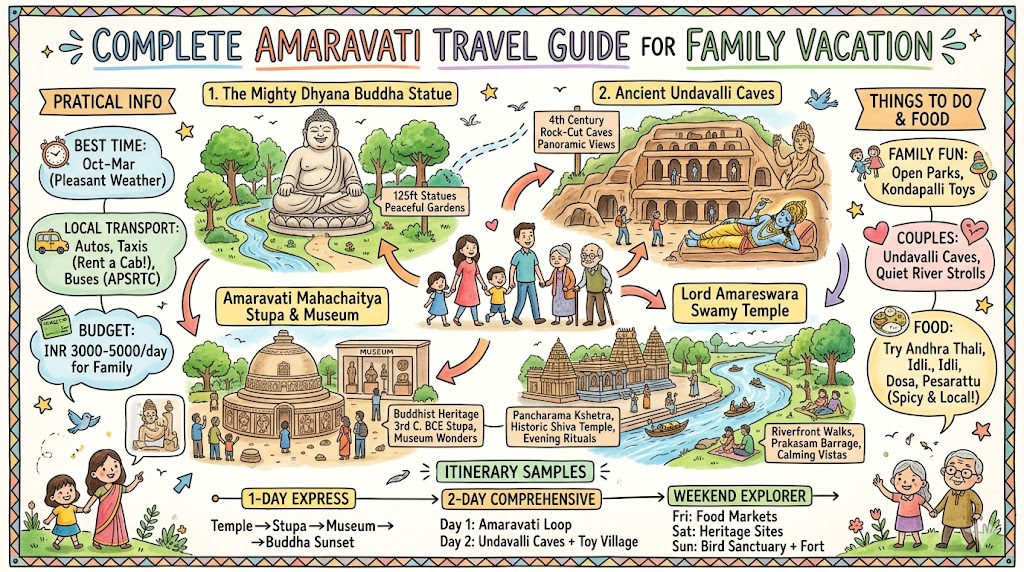
Planning a family holiday can sometimes feel like solving a complex puzzle. You need a destination that keeps the kids engaged, offers structural comfort for the elderly, provides peaceful moments for couples, and packs enough historical curiosity for the backpackers in the family. While many rush to typical beach resorts or overcrowded commercial hubs, a deeply enriching travel experience lies along the banks of the Krishna River in Andhra Pradesh.
Welcome to our definitive Amaravati travel guide. Amaravati is a captivating blend of ancient history and visionary modern planning. Far from being just a political focal point, this historic land is a sanctuary of profound spiritual heritage, spectacular ancient architecture, and calming riverside vistas. Whether you are traveling as a large family, a couple looking for a peaceful weekend, a solo backpacker chasing Buddhist history, or a weekend traveler looking for a quick reset, Amaravati offers a wholesome, distraction-free environment that grounds you.
Why Amaravati is a Must-Visit City
Amaravati isn’t your standard modern concrete landscape; it’s a place where the past and the future coexist. Known historically as the “Abode of the Gods,” this town boasts a continuous living heritage dating back over 2,000 years, serving as the ancient capital of the Satavahana dynasty in the 2nd and 3rd centuries BCE.
For families, it offers an incredible educational ecosystem wrapped in spiritual serenity. You can marvel at 125-foot monolithic statues in the morning, explore rock-cut caves from the 4th century by midday, and watch the sunset over a massive river barrage by evening. It provides a rare kind of slow-paced travel where family conversations flow naturally, local South Indian culinary flavors delight your palate, and historical trails ignite curiosity across generations. It’s practical, remarkably affordable, and highly accessible from major transit hubs like Vijayawada and Guntur.
Complete Overview & Practical Guidance
To help you seamlessly navigate your Amaravati trip planning, here is a snapshot of essential parameters you need to keep in mind to ensure a hassle-free vacation.
Best Places to Visit & Things to Do
The core travel experiences center around exploring the grand Buddhist heritage sites and historical Hindu temples. Must-visit locations include the Dhyana Buddha Statue, the Amaravati Mahachaitya Stupa, the ancient rock-cut Undavalli Caves, and the historic Amareswara Swamy Temple. For leisure, walking along the Krishna riverfront or taking a short drive to the Kondapalli Toy Village are highly recommended.
Entry Fees & Operational Timings
Most historical monuments in Amaravati are highly budget-friendly.
- Amaravati Archaeological Museum: INR 5 per person (Free for children under 15). Open 10:00 AM to 5:00 PM; closed on Fridays.
- Amaravati Mahachaitya / Great Stupa: INR 20 for Indians, INR 250 for foreign nationals. Open 9:00 AM to 6:00 PM; closed on Fridays.
- Dhyana Buddha Statue: INR 20 per person. Open 8:00 AM to 6:00 PM daily.
- Amareswara Temple: No entry fee. Open 6:00 AM to 1:00 PM and 4:00 PM to 8:00 PM.
Local Transport Options
The town of Amaravati is situated roughly 32 km from Guntur and about 35 km from Vijayawada. Auto-rickshaws are widely available for short local hops. For a family, renting a private taxi or cab for the day from Vijayawada or Guntur is the most practical and comfortable option. Public state transport (APSRTC) buses run highly reliable, frequent routes connecting Vijayawada and Guntur to the old Amaravati town.
Food Options
The local food scene is an absolute treat for food lovers. Expect authentic, fiery Andhra cuisine. You must try the iconic local Idli and Dosa varieties served with spicy ginger chutney (Allam Pachadi) for breakfast. For lunch, indulge in a traditional Andhra vegetarian thali loaded with Pappu (lentils), Avakaya (mango pickle), and pure ghee. If your family enjoys spicy food, look for local joints serving authentic regional biryanis. Continental or North Indian foods are readily accessible at mid-range family restaurants in nearby Vijayawada.
Budget Planning
Amaravati is incredibly gentle on your wallet. A mid-range family trip (assuming a family of four) can easily be managed within INR 3,000 to INR 5,000 per day, covering private cab rentals, entry tickets, mid-scale accommodation, and delicious local meals.
Traveler Adaptability: Families, Couples, and Solo Explorers
- Family-Friendly Suggestions: The vast open-air parks surrounding the Dhyana Buddha Statue and the lawns near the museum provide plenty of space for kids to walk safely without being overwhelmed by chaotic traffic. The flat paths make walking easier for elderly family members.
- Couple-Friendly Suggestions: Plan an early morning visit to the ancient rock-cut Undavalli caves or enjoy a serene evening stroll near the Prakasam Barrage. The peaceful riverfront setting is perfect for quiet conversations away from busy crowds.
- Hidden or Less-Crowded Options: To beat the typical tourist rush, head out to the Bhattiprolu Buddhist Stupa Site or spend an afternoon exploring the ancient ruins of Kondaveedu Fort. Both offer incredible archaeological context with a fraction of the mainstream crowds.
Best Places & Experiences in Amaravati
To help you pick the best spots for your itinerary, here is an in-depth breakdown of the primary Amaravati tourist places you should explore.
1. The Mighty Dhyana Buddha Statue
This breathtaking 125-foot (38-meter) tall monument sits majestically on the banks of the Krishna River, spread across a peaceful 4.5-acre complex. It stands as a profound visual marker of the region’s deep ancient Buddhist roots.
- Why it is worth visiting: It is one of the tallest meditative Buddha structures in India. The base of the structure is beautifully layered with relief sculptures mimicking ancient Amaravati art style. Inside the structure, a massive multi-level seminar hall and meditation center offer a wonderfully calm environment.
- Best things to do: Take a quiet family walk through the beautifully manicured green lawns, study the detailed relief panels carved at the structure’s base, and sit inside the meditation hall to experience absolute silence.
- Best time to visit: Early morning hours (8:30 AM to 10:30 AM) or late evenings when the sun goes down, as the open concrete pathways can get quite warm during midday.
- Ideal for whom: Perfect for families looking for an inspiring backdrop, spiritual seekers, and photography enthusiasts.
- Travel tip: Ensure you wear slip-on shoes since you will need to take off your footwear before climbing up closer to the main base platform.
2. The Ancient Undavalli Caves
Located roughly 20 minutes from the heart of the new capital region, these striking multi-storied rock-cut caves date back to the 4th and 5th centuries CE and represent an architectural transition from Buddhist monastic cells to Hindu structural design.
- Why it is worth visiting: Carved out of a solid sandstone hillside, the four-story cave complex is an engineering masterpiece of ancient Indian artisans. The top tier houses a magnificent, massive monolithic sculpture of Lord Vishnu in a reclining posture (Anantha Padmanabha Swamy), skillfully carved out of a single granite block.
- Best things to do: Climb safely up the stone staircases to explore each distinct level, view the beautifully preserved rock-cut pillars, and capture panoramic views of the green fields and the flowing Krishna River from the top balconies.
- Best time to visit: 3:00 PM to 5:30 PM. The afternoon light illuminates the inner cave carvings brilliantly for photography.
- Ideal for whom: History buffs, architecture lovers, backpackers, and families with older children who enjoy exploring unique structural spaces.
- Travel tip: The stairs inside can be somewhat steep and narrow. Keep a firm hand on small children, and encourage elderly family members to take their time or relax in the ground-floor cave sections.
3. Amaravati Mahachaitya Stupa & Archaeological Museum
The historic heart of ancient South Amaravati travel guide routes, the Mahachaitya Stupa was founded during the historic reign of Emperor Ashoka the Great in the 3rd century BCE. It served as a massive global center for Buddhist learning for centuries.
- Why it is worth visiting: Though the core monument is now a ruined heritage site, it stands as a monumental symbol of ancient Indian art and history. The adjacent ASI museum is an absolute treasure trove, housing life-size standing Buddha statues, centuries-old inscriptions, and magnificent marble-like limestone relief carvings that depict the intricate life stories of Gautama Buddha.
- Best things to do: Walk around the ancient stone foundations of the great stupa, visit the three distinct galleries inside the museum, and marvel at the famous Purnakumbha (vessel of plenty) motifs.
- Best time to visit: Late morning, ideally right when the museum opens at 10:00 AM, to beat the midday outdoor heat.
- Ideal for whom: Solo travelers, researchers, students, and families wanting to give their kids an immersive, real-world history lesson.
- Travel tip: Hire an authorized local guide at the entry gate. The ruins come alive with incredible depth once someone narrates the fascinating story of how British surveyor Colin Mackenzie first stumbled upon this hidden site in 1797.
4. Lord Amareswara Swamy Temple
This ancient temple dedicated to Lord Shiva sits right on the southern banks of the Krishna River. It is honored as one of the sacred Pancharama Kshetras (five holy Shiva temples) of Andhra Pradesh.
- Why it is worth visiting: The temple features a unique 15-foot-tall white marble Shiva Lingam that extends across two separate floors of the temple structure. The Dravidian architectural style, historical royal inscriptions, and peaceful river ghats make it deeply spiritual.
- Best things to do: Participate in the morning rituals, view the unique two-story temple architecture, and sit quietly on the nearby river steps observing the gentle flow of the river.
- Best time to visit: 6:00 AM for the peaceful morning Aarti, or during festival days like Mahashivratri when the temple is beautifully illuminated.
- Ideal for whom: Religious travelers, families traveling with elders, and anyone seeking peaceful cultural immersion.
- Travel tip: Dress modestly in traditional attire when visiting. Avoid carrying large bags into the inner sanctum to ensure a smooth movement through the queue.
Travel Planning Tips for Amaravati
To execute a flawless Amaravati trip planning blueprint with your loved ones, keep these highly practical, boots-on-the-ground tips in mind:
- Book Stays in Advance Around Peak Hubs: Because the core old Amaravati town has limited premium hotel options, it is smart to book your family stay in nearby Vijayawada or Guntur. Both cities offer excellent luxury and mid-range family hotels and are just a short 35-minute drive away.
- Carry Sufficient Cash for Local Markets: While digital UPI payments are common in larger stores, small auto-rickshaw drivers, local tender coconut vendors, and rural souvenir artisans outside temples still prefer cold hard cash. Keep small denominations handy.
- Respect River Safety Protocols: The Krishna River looks serene but can have deceptively strong currents and sudden depth variations. Stick strictly to designated bathing steps (ghats) at the Amareswara Temple and never let children venture into unmonitored river sections.
- Plan Sightseeing Activities Around the Sun: The weather in coastal Andhra Pradesh can get intensely hot and humid. Keep your outdoor monument hopping confined to early mornings (7 AM to 10:30 AM) and late afternoons (3:30 PM to 6:30 PM). Use the hot midday hours for air-conditioned museum visits or enjoying an authentic local lunch.
- Pack Modest Clothing & Sun Protection: When visiting active religious shrines, wear clothing that covers your shoulders and knees. Additionally, ensure everyone in the family carries an umbrella, wide-brimmed hats, sunglasses, and high-SPF sunscreen to handle the bright daytime sun comfortably.
Common Mistakes to Avoid
Many visitors miss out on the true beauty of this historic region because of simple planning errors. Make sure your family avoids these common traps:
- Treating it as a Rushed 2-Hour Stopover: Many tourists drive past Amaravati, pausing only to click a quick photo of the Dhyana Buddha before leaving. This ruins the experience. Give the destination time so you can soak in the deep history of the Stupa and explore the layered rock carvings at Undavalli.
- Underestimating the Midday Heat: Walking across open historical stone complexes at 1:00 PM without an umbrella or water will exhaust your family, especially young kids or elderly parents. Plan your days with built-in midday rest periods.
- Skipping Local Culinary Staples: Don’t limit your meals to predictable hotel room service menus. Missing out on authentic local culinary highlights like hot Pesarattu (green gram dosa) or regional lentil powders (Podi) with hot rice means missing a massive part of the local culture.
- Failing to Verify Weekly Monument Closures: Arriving at the Amaravati Museum or the Mahachaitya Stupa on a Friday only to find the gates closed is a heartbreaking planning mistake. Double-check local schedules before hitting the road.
Suggested Amaravati Itinerary Matrix
Depending on your travel style and duration, you can easily integrate these key attractions into a well-paced Amaravati itinerary. Here are three simple conceptual paths:
1-Day Express Plan (Perfect for Quick Sightseeing)
- Morning: Arrive early from Vijayawada. Visit the grand Amareswara Swamy Temple by 7:30 AM, followed by a hearty breakfast of local tiffins nearby.
- Midday: Head over to the historic Amaravati Mahachaitya Stupa and spend a couple of hours exploring the adjacent Archaeological Museum away from the peak heat.
- Afternoon: Enjoy a traditional Andhra thali meal. Drive down to the massive Dhyana Buddha Statue complex around 3:30 PM to explore the grounds and enjoy the sunset by the riverfront.
2-Day Comprehensive Tour (Ideal for Families)
- Day 1: Follow the 1-day express plan to cover the spiritual and historical core of old Amaravati town. Stay overnight in Vijayawada.
- Day 2: Start your morning exploring the magnificent four-story rock-cut Undavalli Caves. Post-lunch, take a family drive out to the Prakasam Barrage or visit the Kondapalli Toy Village to watch local artisans handcraft legendary wooden toys—a perfect souvenir shopping stop for kids.
Weekend Travel Plan (Relaxed & Exploratory)
- Friday Evening: Check into your hotel, relax, and explore the local street food markets for spicy snacks.
- Saturday: Dedicate the entire day to the old Amaravati heritage loop (Amareswara Temple, Mahachaitya Stupa, Museum, and Dhyana Buddha Statue).
- Sunday: Spend your morning birdwatching at the nearby Uppalapadu Bird Sanctuary (famous for spotting migratory exotic birds like Pelicans), followed by a relaxed afternoon exploring the historic hill ruins of Kondaveedu Fort before heading home.
Frequently Asked Questions
1. What is the best season to plan a family vacation to Amaravati?
The ideal period is during the winter months, specifically between October and March. The weather during this phase is pleasant and comfortable for exploring outdoor monuments, with temperatures ranging between 18°C and 32°C.
2. How do we reach Amaravati by air or train?
The nearest major railway hub is Vijayawada Junction (BZA), which is exceptionally well-connected to all parts of India. The closest airport is Vijayawada International Airport (VGA) in Gannavaram, roughly 50 km from the old Amaravati town. You can easily hire a pre-paid airport taxi directly to the sites.
3. Is Amaravati an appropriate destination for families traveling with toddlers or elders?
Yes, absolutely. The heritage sites are calm, low-stress environments with wide open spaces. However, because some areas like the Undavalli Caves require climbing stone steps, elders should take things slowly, while toddlers will require a light stroller or carrying harness.
4. Are there good stay options inside the old historical town of Amaravati?
Accommodation options directly within the old temple town are mostly basic guest houses. For premium, comfortable family stays with multi-cuisine dining options, it is highly recommended to base yourself out of hotels in Vijayawada or Guntur.
5. What should we buy as authentic souvenirs from this region?
You should absolutely purchase world-famous, handcrafted Kondapalli Toys. These are lightweight, organic wooden toys painted with vibrant natural dyes, crafted beautifully by local families following a 500-year-old traditional woodcraft heritage.
6. Is English or Hindi widely understood by locals in Amaravati?
Telugu is the primary local language. However, hotel staff, authorized travel guides, and taxi drivers understand and speak decent English and basic Hindi. It is always helpful to keep a translation app handy for remote village shops.
7. Are the historical sites in Amaravati wheelchair accessible?
The modern park complex surrounding the Dhyana Buddha Statue has decent flat pathways. However, ancient sites like the rock-cut Undavalli Caves and the unpaved paths around the Mahachaitya Stupa ruins have limitations like old stone steps and uneven ground, which can make wheelchair navigation challenging.
8. Is the food in Amaravati safe for young children who cannot tolerate spicy meals?
Traditional Andhra food is famously high in spice and chili content. When ordering at local restaurants for children, always explicitly request the kitchen staff to prepare the food “non-spicy” (Karam Lekunda), or stick to safe defaults like curd rice, plain idli, or mild milk-based sweets.
9. Can we cover both Buddhist and Hindu historical landmarks in a single day?
Yes, very easily. The Amareswara Swamy Temple, the Mahachaitya Stupa, the ASI Museum, and the Dhyana Buddha Statue are located within a 2 to 3-kilometer radius of each other inside the old town layout, making a single-day historical circuit highly feasible.
10. Do we need to book entry tickets for the monuments online?
While physical ticket counters are readily available at the entry gates of the ASI Museum, Stupa, and Dhyana Buddha Statue, you can also easily scan the official government QR codes displayed at the entrances to purchase digital entry passes quickly via your smartphone.
Conclusion
Amaravati is far more than an emerging capital outline on a map; it is a profound journey back into the gold standard of ancient Indian art, philosophy, and architectural grandeur. Taking a slow family vacation here allows you to connect with centuries of living history while enjoying peaceful, unhurried moments along the river.
As you plan your next family getaway, let Amaravatiorbit.com be your ultimate companion. We are dedicated to bringing you authentic, boots-on-the-ground travel maps, local culinary insights, and smart travel strategies to help you discover hidden gems and make meaningful travel choices. Pack your bags, leave the fast-paced city stress behind, and come immerse your loved ones in the absolute tranquility of Amaravati!
