Introduction
Modern travelers frequently find themselves caught in the rush of homogenized tourist trails, navigating commercial gift arcades and selfie queues that obscure the true spirit of discovery. By contrast, along the broad, shimmering bends of the Krishna River, the historic soil of Amaravati offers something profoundly different: an unhurried communion with ancient kingdoms, philosophical revolutions, and sacred architectural heritage.
Here, two-thousand-year-old limestone carvings whisper chronicles of Buddhist monks, Roman maritime trade, and royal Satavahana dynasties. Exploring this hallowed landscape is not simply sightseeing; it is an intimate encounter with the intellectual and spiritual foundations that shaped early peninsular India.
Why Amaravati is a must-visit city
Amaravati is a cornerstone of Indian antiquity, serving as the storied capital of the Satavahana Empire and later flourishing under the Ikshvakus, Vishnukundinas, and Vijayanagara monarchs. As a preeminent cradle of Mahayana Buddhism, it drew scholars, pilgrims, and stone sculptors from across ancient Sri Lanka, China, and Southeast Asia. Geographically rooted in Andhra Pradesh’s fertile Krishna delta, the city connects deep antiquity with visionary state capital planning, providing travelers with an extraordinary sense of time travel.
Reaching this cultural treasure is effortless for all traveler archetypes. Situated just 32 kilometers from the massive transit hub of Vijayawada, Amaravati is linked by smooth expressways, frequent rail lines at Vijayawada Junction, and flights via Vijayawada International Airport. Whether you are an independent archival researcher, a cultural road-tripper, or a retired history enthusiast, the region offers clean road infrastructure, peaceful countryside circuits, and traditional Andhra hospitality.
The regional heritage circuit radiates from the riverbank stupa complexes to rock-cut Buddhist chaityas and monolithic riverside temples. It provides a comprehensive timeline spanning over two millennia of religious, artistic, and political history.
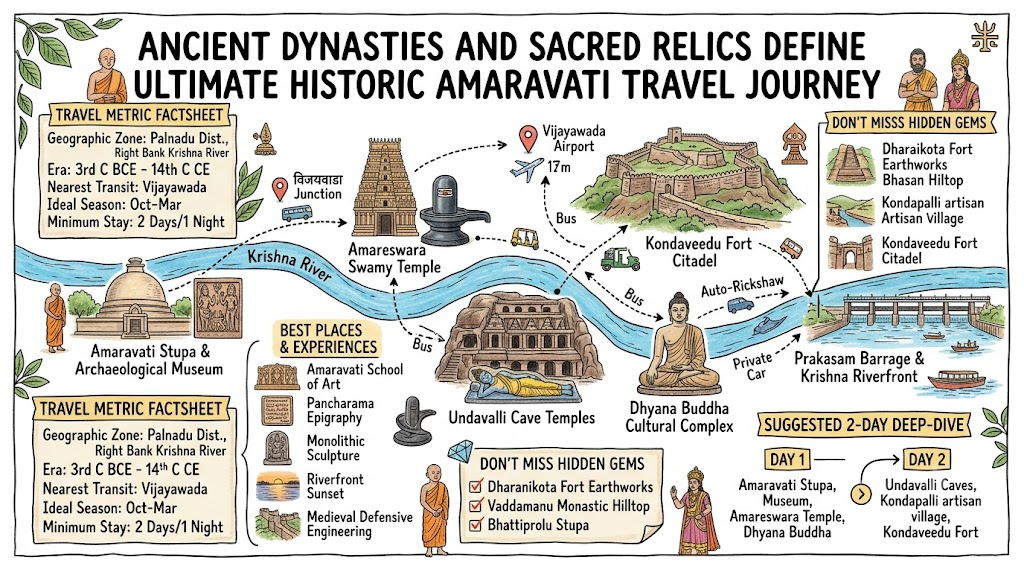
| Travel Metric | Destination Factsheet |
| Geographic Zone | Palnadu District, Right Bank of the Krishna River, Andhra Pradesh |
| Primary Era of Significance | 3rd Century BCE to 14th Century CE (Satavahana to Vijayanagara) |
| Nearest Transit Gateway | Vijayawada Junction Railway Station (30 km) / Airport (45 km) |
| Dominant Heritage Themes | Early Buddhist Architecture, Dravidian Pancharama Epigraphy, Rock-Cut Caves |
| Ideal Season for Exploration | October through March (Cool, dry, and walking-friendly) |
| Recommended Minimum Stay | 2 Full Days / 1 Night |
Best Places or Experiences
Amaravati Maha Stupa & Archaeological Museum
The Great Amaravati Maha Stupa, historically revered as the Deepaladinne (Mound of Lamps), represents the pinnacle of early Indian Buddhist art. Consecrated during the 3rd century BCE under Mauryan influence and dramatically expanded by the Satavahanas, this colossal monument once possessed a massive dome encircled by sculpted limestone railings that rivaled Sanchi. Though dismantled over centuries of excavation, the foundational drum and surviving pradakshina-patha still convey monumental architectural grandeur.
Directly adjacent to the excavation site, the Archaeological Museum preserves the world-renowned “Amaravati School of Art” in luminous Palnadu limestone. The galleries display narrative reliefs illustrating Jataka tales, intricate medallions, carved umbrellas, and sacred relics. Walking among these stones reveals dynamic figures, flowing garments, and expressive gestures that influenced Buddhist sculpture across Southeast Asia.
- Location: Amaravati Heritage Zone, Palnadu District, 32 km west of Vijayawada.
- Why it is worth visiting: It is the birthplace of the renowned Amaravati art style and one of the oldest monastic seats in Southern India.
- Best things to do: Trace the ancient circumambulatory path around the stupa base, examine the carved model of the original stupa in the museum, and decipher the Brahmi donor inscriptions on the limestone pillars.
- Best time to visit: 9:00 AM to 11:30 AM when natural morning light highlights the delicate relief carvings.
- Ideal for whom: Archival historians, epigraphy lovers, Buddhist scholars, and art students.
- Travel tip: The Archaeological Museum is strictly closed on Fridays; schedule your arrival between Saturday and Thursday.
Amareswara Swamy Temple
Overlooking the swirling waters of the sacred Krishna River stands the historic Amareswara Swamy Temple, celebrated as the first among the sacred Pancharama Kshetras. Legend states that when the demon Tarakasura was vanquished, the massive Shiva Lingam around his throat shattered into five shards, with the largest establishing itself here at Amaravati. The towering white marble Shiva Lingam measures an astonishing 15 feet in height, requiring priests to ascend a second-story platform within the sanctum to perform sacred abhishekam rituals.
The temple walls serve as an open stone archive, preserving royal inscriptions left by the Kota chiefs, Kakatiya rulers, and the Vijayanagara emperor Sri Krishnadevaraya. The surrounding courtyards feature four imposing Dravidian gopurams and concentric prakarams enclosing shrines dedicated to Bala Chamundika and Kalabhairava. The morning resonance of ancient Vedic hymns mingling with the river breeze offers a living portal into medieval devotional fervor.
- Location: Riverbank Road, Amaravati Town, approximately 1 km north of the Buddhist Stupa.
- Why it is worth visiting: It contains a towering two-story marble Lingam and valuable stone epigraphs tracing five centuries of royal patronage.
- Best things to do: Observe the upstairs milk-abhishekam at the sanctum, study the Vijayanagara-era wall carvings, and sit along the historical stone bathing ghats down to the Krishna River.
- Best time to visit: 6:30 AM to 8:30 AM to experience peaceful morning rituals without pilgrim crowds.
- Ideal for whom: Mythology researchers, architectural historians, and spiritual travelers.
- Travel tip: Traditional modest attire is mandatory (dhoti/kurta for men, saree or salwar for women); leather goods are barred inside the inner sanctum.
Undavalli Cave Temples
Chiseled out of a steep sandstone hillside, the four-story Undavalli Caves are an architectural triumph bridging Buddhist, Jain, and early Hindu rock-cut design. Attributed to the Vishnukundina dynasty between the 4th and 7th centuries CE, the multi-tiered facade mirrors the layout of early wooden Buddhist viharas, featuring sturdy pillared verandas, cell retreats, and carved balustrades.
The crowning gem resides on the third level: a majestic 16-foot monolithic sculpture of Lord Vishnu reclining on the serpent Adisesha (Anantasayana Vishnu), carved directly from the living bedrock. The walls retain faint remnants of ancient frescoes and relief carvings depicting scenes from the epics. Reaching the uppermost terrace yields breathtaking vistas over lush plantain groves and the winding Krishna River channel.
- Location: Undavalli Village, near Tadepalle, 22 km east of Amaravati and 6 km from central Vijayawada.
- Why it is worth visiting: It is one of the premier examples of monolithic rock-cut cave sanctuaries in coastal Andhra Pradesh.
- Best things to do: Examine the subterranean monk cells on the ground level, admire the massive reclining rock Vishnu monolith, and climb to the top gallery for panoramic delta views.
- Best time to visit: 9:00 AM to 12:00 PM when incoming sunlight illuminates the sculpted cave recesses.
- Ideal for whom: Geological history fans, ancient engineering buffs, and adventure photographers.
- Travel tip: The stone stairs between tiers are narrow and worn; wear sturdy, slip-resistant walking shoes and watch your footing.
Dhyana Buddha Cultural Complex
Towering 125 feet into the sky against the southern horizon, the colossal Dhyana Buddha Statue stands as a modern tribute to the ancient philosophical legacy that defined this landscape. Resting serenely in the meditative Dhyana Mudra atop an enormous eight-petaled lotus base, the monument pays homage to Acharya Nagarjuna and the profound Madhyamaka philosophy developed in this valley.
The interior of the hollow statue houses a three-tiered interpretive museum displaying 145 intricately carved stone panels depicting historical episodes from Buddha’s life and the dissemination of Dhamma across Asia. The landscaped park surrounding the statue borders the Krishna River, providing tranquil paths for contemplation amidst manicured lawns and sacred bodhi trees.
- Location: Amaravati Riverfront, 1.5 km south of the ancient Stupa.
- Why it is worth visiting: It seamlessly bridges ancient monastic philosophy with grand contemporary Buddhist memorial design.
- Best things to do: Walk through the three internal museum galleries, practice mindful meditation on the riverside terrace, and view the illuminated monument at dusk.
- Best time to visit: 4:30 PM to 6:30 PM for mild river breezes and golden-hour photography.
- Ideal for whom: Cultural travelers, philosophy enthusiasts, and meditative explorers.
- Travel tip: Climb to the upper interior balcony level for sweeping, elevated panoramas of the historic river basin.
Kondaveedu Fort Citadel
Rising dramatically out of the Guntur plains, the hill fortress of Kondaveedu stands as a testament to medieval defensive engineering. Established in the 14th century CE by the Reddy dynasty kings, this sprawling bastion boasts multiple defensive rings, 21 fortified bastions, grain magazines, and ancient water reservoirs built across two rugged hillocks. The strategic stronghold later saw fierce contests between the Vijayanagara Empire, Gajapatis of Odisha, and the Bahmani Sultanate.
The summit plateau preserves ruins of the Gopinatha Temple, royal palace foundations, granaries, and natural defensive ramparts looking out over miles of agrarian plains. Wandering along the stone battlements reveals the sophisticated rainwater harvesting system of rock-cut stepwells that sustained garrisons through prolonged medieval sieges.
- Location: Kondaveedu Village, Chilakaluripet road, 42 km southwest of Amaravati.
- Why it is worth visiting: It is a fortified medieval mountain citadel that reveals medieval Deccan military strategy and fortress engineering.
- Best things to do: Hike the ancient ramparts, explore the carved stone pillars of the summit temples, and inspect the rock-hewn stepwells.
- Best time to visit: Early morning between 7:00 AM and 10:30 AM before the sun heats the exposed granite boulders.
- Ideal for whom: Military history buffs, trekking enthusiasts, and ruins explorers.
- Travel tip: Carry your own supply of drinking water and sun protection, as tourist amenities atop the fortress hill remain minimal.
Prakasam Barrage & Krishna Riverfront
Spanning over 1.2 kilometers across the surging Krishna River, the Prakasam Barrage is both a triumph of modern hydraulic engineering and the living historical successor to early irrigation networks created by the Satavahanas and British colonial engineer Sir Arthur Cotton. The structure creates an expansive lake-like reservoir that has defined the trade, settlement patterns, and agriculture of the region for generations.
The riverfront promenade bordering the barrage serves as the evening gathering point for locals and heritage travelers alike. Strolling along the water’s edge at sunset offers views of historic hill temples on nearby Indrakeeladri hill, illuminated causeways, and fishermen plying the broad waters just as they have for centuries.
- Location: River Krishna, connecting Vijayawada with the capital region, 25 km east of Amaravati town.
- Why it is worth visiting: It illustrates the historical evolution of water engineering in coastal Andhra, framing dramatic river landscapes.
- Best things to do: Walk the pedestrian pathways of the barrage at twilight, take a boat ferry across the river channel, and photograph the sunset reflecting across the reservoir.
- Best time to visit: 5:30 PM to 8:00 PM for cool river breezes and evening illumination.
- Ideal for whom: Urban history enthusiasts, sunset watchers, and landscape photographers.
- Travel tip: Park on the southern riverbank near Tadepalle for quieter viewing points away from vehicular commuter rush hours.
Offbeat Exploration: Hidden Gems Tourists Miss
Dharanikota Fort Earthworks
Two kilometers west of the Maha Stupa lies Dharanikota, the legendary ancient walled city known in Greco-Roman records as Dhanyakataka. The site preserves massive circular earthen ramparts and brick foundations that once housed the imperial Satavahana palace and customs house for maritime trade. Standing atop these quiet, weed-covered ramparts, you can trace the defensive moat that once allowed seafaring vessels sailing up the Krishna River to dock directly at the imperial capital.
Vaddamanu Monastic Hilltop
Tucked away 10 kilometers from central Amaravati, the hilltop of Vaddamanu features excavated foundations of post-Mauryan and Satavahana-era rock structures. Excavations here uncovered ancient stupa foundations, stone viharas, and rare punch-marked coins associated with ancient Jain and early Buddhist ascetic communities. The short trek to the summit offers total isolation, panoramic vistas of emerald green paddy fields, and untouched stone foundations that generic tourists never encounter.
Bhattiprolu Stupa & Ancient Brahmi Inscriptions
Located approximately 45 kilometers downriver, the ancient stupa at Bhattiprolu is of immense epigraphical importance. It was here that archaeologists unearthed the famous crystal relic caskets inscribed with the Bhattiprolu script—an early regional variant of Southern Brahmi that served as the linguistic mother of the Telugu and Kannada scripts. Visiting the quiet mound allows history purists to stand at the linguistic birthplace of South Indian written culture.
Detailed Practical Guidance for Travelers
| Destination | Standard Entry Fee | General Timings | Best Local Food Options Nearby | Recommended Nearby Attractions |
| Amaravati Stupa & Museum | ₹25 (Indians), ₹300 (Foreigners) | 9:00 AM – 5:00 PM (Closed Fridays) | Authentic Andhra thali meals at local town messes | Amareswara Temple (1 km) |
| Amareswara Swamy Temple | Free (Special Darshan ₹50) | 6:00 AM – 1:00 PM, 4:00 PM – 8:00 PM | Traditional tiffins: Dibba Rotti & Punugulu outside temple gates | Krishna River Ghats (Adjacent) |
| Dhyana Buddha Statue | ₹20 per person | 8:00 AM – 6:00 PM Daily | Local garden kiosks serving freshly brewed filter coffee | Dharanikota Earthworks (2 km) |
| Undavalli Caves | ₹25 (Indians), ₹300 (Foreigners) | 9:00 AM – 5:30 PM Daily | Street vendors offering roasted corn and fresh tender coconut | Prakasam Barrage (3 km) |
| Kondaveedu Fort | ₹20 (Vehicle entry extra) | 8:00 AM – 5:00 PM Daily | Highway dhabas serving spicy Guntur chicken curry and rotis | Phirangipuram Church (15 km) |
| Prakasam Barrage | Free Access | Open 24 Hours (Illumination 6:30 PM – 9:30 PM) | Riverfront carts serving cut mirchi bajji and masala tea | Bhavani Island Ferry Ghat (1.5 km) |
Logistics & On-Ground Navigation
Local Transport Options
- State Express Buses: APSRTC operates regular shuttle buses connecting Vijayawada Pandit Nehru Bus Station (PNBS) and Guntur Old Bus Stand directly to the Amaravati temple bus terminal every 30 minutes.
- Auto-Rickshaws & E-Rickshaws: Shared and private auto-rickshaws provide convenient hops between the Stupa, Dhyana Buddha, and river ghats. Always establish the total fare before boarding.
- Private Car Rentals: Hiring a chauffeur-driven cab for the full day from Vijayawada remains the most time-efficient option for history lovers wanting to combine Amaravati with Undavalli and Kondaveedu Fort.
Budget Planning
- Backpacker / Independent Researcher Tier: ₹1,200 – ₹1,800 per day. Includes comfortable public transit, homestay or temple guesthouse accommodations in Amaravati, regional Andhra meals, and all archaeological entry tickets.
- Mid-Range / Comfort Scholar Tier: ₹3,800 – ₹6,000 per day. Covers private air-conditioned vehicle hire, mid-scale boutique hotel stays in Vijayawada, specialized local heritage guides, and full-service dining.
Safety and Inclusivity Tips
- Families with Seniors: The archaeological gardens around the Amaravati Stupa and Dhyana Buddha are flat and accessible, but historical cave staircases at Undavalli require hand support and slow pacing.
- Solo & Woman Travelers: The heritage towns along the river are culturally conservative, respectful, and safe. However, avoid walking the remote fortifications of Kondaveedu Fort or unlit riverbanks after twilight.
- Physical Safety: Tropical temperatures can cause dehydration quickly while exploring open stone ruins; always carry a reusable water bottle, wide-brimmed sun hat, and electrolytes.
Strategic Travel Planning Guardrails
Travel Planning Tips for Amaravati
- Check Museum Schedules: Never plan your primary museum visit on a Friday, as the Archaeological Survey of India museum remains strictly closed to visitors.
- Carry Liquid Cash for Rural Outposts: While digital UPI payments are widespread in Vijayawada, small village boat operators, guides, and temple flower sellers only accept paper currency.
- Begin Monument Walks at Dawn: The early morning hours between 7:00 AM and 9:30 AM provide mild temperatures, pristine lighting, and an absence of tourist coach groups.
- Embrace the Local Culinary Heat: Andhra cuisine is famously fiery; if you prefer mild food, request your curries with reduced red chilies or order cooling curd rice.
- Hire Registered ASI Guides: The museum panels feature subtle iconographic details; a knowledgeable local guide transforms ancient stone carvings into living history.
Common Mistakes to Avoid
- Treating Amaravati as a Rushed Half-Day Trip: Speeding through the stupa in under an hour misses the deep historical layers preserved in the surrounding excavation trenches and museum galleries.
- Skipping the Museum Relic Galleries: Many visitors tour the outer stupa mound and skip the museum, missing the finest limestone sculptures and relic caskets.
- Wearing Impractical Footwear: Exploring sandstone caves, brick mounds, and granite hill fortresses requires durable walking shoes with solid tread.
- Assuming Temple Timings Match Museum Hours: Temples close their sanctums between 1:00 PM and 4:00 PM, while museums remain open continuously through the afternoon.
- Overlooking Regional Craft Heritage: Leaving without exploring the wooden toy carving workshops of nearby Kondapalli or Mangalagiri handloom weavers misses half the cultural tapestry.
Suggested Itinerary Blueprints
1-Day Quick Dash (The Classical Antiquity Route)
Designed for travelers on a tight schedule who want to experience the core Buddhist and Hindu monuments in a single day.
- Morning: Depart Vijayawada at 7:30 AM. Arrive at Amaravati Maha Stupa and explore the ancient excavations, followed by the on-site Archaeological Museum. Walk 10 minutes to the riverside Amareswara Swamy Temple.
- Afternoon: Enjoy a traditional vegetarian thali meal in Amaravati. Tour the monumental Dhyana Buddha Statue and riverside meditation park.
- Evening: Drive east along the scenic river route to explore Undavalli Cave Temples before sunset. Conclude with street snacks overlooking the illuminated Prakasam Barrage.
2-Day Deep-Dive (The Dynastic Heritage Circuit)
Ideal for history lovers, photographers, and archaeology enthusiasts seeking an immersive exploration of royal dynasties.
- Day 1: Satavahana Monks & Riverfront SanctuariesDedicate the morning to the Amaravati Stupa, Archaeological Museum, and Dharanikota ramparts. After lunch, visit the Amareswara Temple, attend the evening river arati, and spend the sunset at the Dhyana Buddha complex. Stay overnight in Vijayawada or a riverfront resort.
- Day 2: Rock-Cut Monuments & Medieval FortressesStart early at Undavalli Caves to examine the monolithic Vishnu sculptures in the morning light. Drive southwest to the hill ramparts of Kondaveedu Fort. Spend the afternoon exploring medieval temples and stepwells before returning via the artisan village of Kondapalli.
Complete Weekend Travel Plan (The Grand Krishna Basin Odyssey)
- Friday Evening: Arrive in Vijayawada, settle into your hotel, and take an evening walk across Prakasam Barrage to watch the river illuminate against Indrakeeladri hill.
- Saturday: Spend a complete historical day across Amaravati town—exploring the Stupa, ASI Museum, Amareswara Temple, offbeat Vaddamanu monastic hilltop, and the Dhyana Buddha park.
- Sunday: Explore Undavalli Caves in the morning, tour the historic artisan quarters of Kondapalli, explore Kondaveedu Fort ruins in the afternoon, and complete the trip with dinner in Vijayawada.
Common Tourist Mistakes to Avoid
- Geographic Blunders: Attempting to visit Kondaveedu Fort and remote Amaravati river ghats on the same morning wastes precious hours in transit. Cluster your destinations by riverfront versus inland hill sectors.
- Commercial Traps: Spending hours in city center souvenir malls rather than buying directly from verified weavers in Mangalagiri or artisan cooperatives in Kondapalli.
- Neglecting Modern Capital Zones: Skipping the master-planned boulevards, administrative complexes, and sprawling botanical corridors of the new capital region deprives you of seeing the living bridge between antiquity and tomorrow.
- Transport Overpayment: Hailing random highway taxis without pre-negotiating rates or bypassing official pre-paid counters at Vijayawada Railway Station.
- Luxury Dining Bias: Eating exclusively within chain hotel dining rooms. The true culinary soul of the Krishna delta lives in simple messes serving piping-hot Pesarattu Upma, Gongura Pachadi, and freshly steamed rice with warm ghee.
Frequently Asked Questions
1. What makes the Amaravati School of Art unique in Indian history?
The Amaravati School of Art, flourishing from the 2nd century BCE to the 3rd century CE, pioneered an expressive, dynamic narrative style sculpted from local greenish-white limestone. Unlike the rigid postures of earlier art schools, Amaravati sculptures feature fluid human movements, crowded theatrical compositions, and naturalistic depictions of Buddhist parables.
2. How far is the Amaravati Stupa from Vijayawada, and how do I get there?
The Amaravati Maha Stupa is located approximately 32 kilometers west of Vijayawada. You can travel via frequent APSRTC express buses from Vijayawada PNBS bus terminal (taking around 75 minutes) or hire a private taxi via the Amaravati Ghat Road (45 minutes).
3. Is the Archaeological Museum at Amaravati open on weekends?
Yes, the Archaeological Museum is open on both Saturdays and Sundays from 9:00 AM to 5:00 PM. However, the museum is strictly closed on Fridays and designated national holidays.
4. What is the historical link between Amaravati and the Satavahana Empire?
Amaravati, historically known as Dhanyakataka, served as the imperial capital and commercial nerve center of the Satavahana dynasty after they shifted their focus toward the eastern Deccan. The Satavahana kings and their queens lavishly patronized both the Great Buddhist Stupa and riverine maritime commerce with the Mediterranean.
5. What is the spiritual significance of the Amareswara Swamy Temple?
The Amareswara Swamy Temple is the foremost of the five revered Pancharama Kshetras in Andhra Pradesh. It is celebrated for housing a sacred 15-foot marble Shiva Lingam said to have been installed by Lord Indra himself along the southern banks of the Krishna River.
6. Are the Undavalli Caves primarily Hindu or Buddhist in origin?
The Undavalli Caves showcase a fascinating religious transition. Originally carved out by Buddhist and Jain ascetics as monastic retreats (viharas) between the 4th and 5th centuries CE, the site was later expanded and adapted under the Vishnukundina dynasty into a Brahminical sanctuary dedicated to Vishnu and Shiva.
7. How much time is needed to properly tour the Amaravati heritage sites?
To thoroughly absorb the Maha Stupa, Archaeological Museum, Amareswara Temple, and Dhyana Buddha without rushing, allocate at least one full day. Adding Undavalli Caves, Kondaveedu Fort, and artisan hamlets requires a 2-day itinerary.
8. What authentic local handicrafts should history lovers buy in this region?
Travelers should look for authentic Kondapalli Bommalu (traditional wooden toys made from softwood and natural dyes), Mangalagiri handloom sarees woven with intricate zari borders, and miniature brass replicas of the Amaravati Buddha.
9. Can I visit the excavated ruins of Dharanikota?
Yes, the earthworks and ancient brick ramparts of Dharanikota are accessible free of charge just 2 km west of Amaravati. While uncurated compared to the main stupa, walking along the overgrown moats provides deep insight into early Deccan urban fortification.
10. What is the best season for comfortable walking tours of the ruins?
The best window is the winter season between October and March. Daytime temperatures hover comfortably between 22°C and 30°C, offering clear blue skies ideal for outdoor archaeology walks.
11. Is there an entry fee for the major monuments in Amaravati?
Yes, entry to the Amaravati Maha Stupa and Archaeological Museum costs ₹25 for Indian nationals and ₹300 for foreign citizens. Undavalli Caves have an identical fee structure, while the Amareswara Temple offers free general entry.
12. Are there quality accommodations located directly in Amaravati town?
Amaravati town has clean pilgrimage guest houses and budget lodges near the temple ghats. For full-service amenities, boutique comforts, and 4-star or 5-star properties, staying in Vijayawada (30 km away) is the most comfortable choice.
Conclusion
Stepping across the sacred soil of Amaravati leaves an indelible impression on anyone who values the deep, living roots of human history. Here, where ancient river currents flow past silent stupa ruins, carved marble pillars, and rock-cut sanctuaries, one senses an unbroken dialogue between ancient philosophical inquiry and human resilience. To choose this journey is to bypass the trivial distractions of conventional tourism and embrace a deeply enriching pilgrimage through the grand epics of early Indian civilization.
