Introduction
While most travelers flock to overcrowded beach resorts or commercial hill stations, Amaravati offers a serene escape into living history and profound spirituality. Resting along the banks of the sacred Krishna River, this historical realm blends centuries of Buddhist heritage, royal Satavahana grandeur, and quiet riverbank tranquility. Visiting here allows you to step off the noisy tourist grid into a space where ancient stone edicts and river breezes tell stories of spiritual enlightenment.
Why Amaravati is a must-visit city
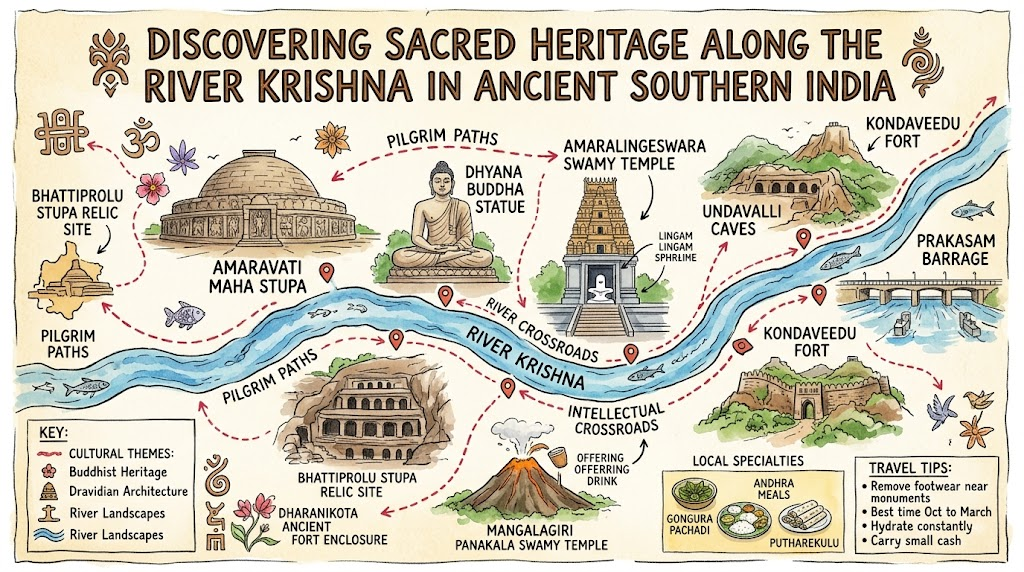
Amaravati occupies a legendary place in the cultural geography of Southern India. Serving as the imperial seat of the ancient Satavahana Dynasty over two millennia ago, it flourished as a premier center for Theravada Buddhist learning and international trade. Its geographic position along the Krishna River made it an intellectual crossroads, attracting scholars, monks, and artisans from across Asia. Today, it combines accessible modern highway networks from nearby Vijayawada with a deeply peaceful, unhurried rural charm.
The broader travel circuit seamlessly links ancient stupas, rock-cut cave architecture, medieval hilltop fortresses, and vibrant riverfront precincts. Whether you arrive via Vijayawada Airport (VGA) or the well-connected Vijayawada Junction railway station, getting into the heart of Amaravati takes less than an hour by road. The hospitality landscape ranges from traditional pilgrimage rest houses to modern river-view boutique stays.
| Key Metric | Destination Detail |
|---|---|
| Primary Region | Palnadu / Guntur District, Andhra Pradesh |
| Best Travel Season | October to March (Pleasant, mild winter weather) |
| Nearest Airport | Vijayawada International Airport (VGA) – ~55 km |
| Nearest Railway Hub | Vijayawada Junction (BZA) – ~35 km |
| Key Cultural Themes | Buddhist Heritage, Dravidian Architecture, River Landscapes |
| Local Culinary Specialty | Gongura Pachadi, Andhra Meals, Putharekulu |
Best Places or Experiences
Dhyana Buddha Statue and Maha Stupa
The ancient Amaravati Maha Stupa stands as a monumental masterpiece of early Buddhist art and architecture. Built between the 2nd century BCE and the 3rd century CE, its intricately carved marble relief panels once depicted the life stories of the Buddha, drawing monks from far corner of ancient Asia. Adjacent to this historical mound rises the awe-inspiring Dhyana Buddha Statue, a colossal 125-foot structure seated in deep meditation upon a lotus pedestal overlooking the river.
Inside the hollow base of the Dhyana Buddha structure, visitors can explore a serene museum gallery featuring relief carvings that mirror traditional Amaravati school of art. The surrounding manicured gardens provide a reflective space where the soft murmurs of the Krishna River set a tranquil backdrop. Walking between the ancient stupa foundation and the modern statue offers an extraordinary bridge across two thousand years of spiritual devotion.
Marble relief from the historic Amaravati Maha Stupa.
- Location: Main Town Center, Amaravati, ~35 km from Vijayawada Railway Station.
- Why it is worth visiting: It represents the birth of the distinctive Amaravati style of Buddhist art and features one of Asia’s tallest seated Buddha monuments.
- Best things to do: Examine the intricate marble carvings at the stupa site, explore the internal museum museum within the Dhyana Buddha structure, and enjoy the sunset from the riverfront park.
- Best time to visit: 8:00 AM to 10:30 AM for quiet contemplation, or 5:00 PM to 6:30 PM for mild weather and sunset views.
- Ideal for whom: History enthusiasts, spiritual seekers, photography lovers, and peaceful family outings.
- Travel tip: Wear slip-on shoes as footwear must be removed near the primary monument bases.
Amaralingeswara Swamy Temple
Dedicated to Lord Shiva, the Amaralingeswara Swamy Temple is one of the revered Pancharama Kshetras of Andhra Pradesh. According to ancient lore, the presiding 9-foot tall white marble Lingam was installed by Lord Indra himself. The temple complex stands directly on the south bank of the Krishna River, featuring towering Dravidian gopurams etched with intricate deity sculptures.
The architecture reflects contributions from multiple royal dynasties, including the Satavahanas, Ikshvakus, and the Vijayanagara Empire. Pilgrims descend the stone steps (ghats) leading directly into the sacred river waters for a ritual dip before stepping into the cool, incense-scented stone sanctum. The energy around the temple during morning prayers is deeply moving and spiritually electric
.
Intricate Dravidian tower of Amaralingeswara Swamy Temple.
- Location: Riverbank District, Amaravati Town, ~34 km from Vijayawada.
- Why it is worth visiting: It is a major pilgrimage site housing a uniquely tall marble Lingam overlooking the river ghats.
- Best things to do: Witness the morning Abhishekam ceremony, walk down the stone river ghats, and admire the medieval stone inscriptions along the inner courtyard walls.
- Best time to visit: Early morning (6:00 AM to 8:00 AM) to beat crowds and experience morning prayer chants.
- Ideal for whom: Cultural travelers, architecture lovers, and religious pilgrims.
- Travel tip: Maintain traditional modest dress code (covered shoulders and knees) inside the main temple premises.
Undavalli Caves
Carved out of solid sandstone hills in the 4th to 5th centuries CE, the Undavalli Caves stand as a fine example of Indian rock-cut architecture. Originally designed as Buddhist cell monastic retreats, the caves were later transformed into Hindu shrines during the Vishnukundina reign. The central multi-tiered structure rises four stories high, showcasing carved pillars, ornate facades, and cool subterranean chambers.
The crowning glory of Undavalli resides on the top floor: a massive 5-meter-long monolith statue of Lord Vishnu in a reclining posture (Anantasayana Vishnu), sculpted out of a single granite block. Standing on the upper balcony offers sweeping views over emerald paddy fields and winding river channels stretching toward the horizon.
Multi-tiered 5th-century rock-cut architecture of Undavalli Caves.
- Location: Undavalli Village, ~22 km from Amaravati core town and ~6 km from Vijayawada.
- Why it is worth visiting: Outstanding rock-cut cave architecture featuring a single-block reclining Vishnu sculpture.
- Best things to do: Explore the four cave tiers, photograph the monolithic sculptures, and view the lush countryside from the top balcony.
- Best time to visit: 3:00 PM to 5:00 PM when afternoon sun illuminates the sandstone facade.
- Ideal for whom: Architecture aficionados, history buffs, and adventure photography enthusiasts.
- Travel tip: Stairs can be steep and slick; wear shoes with good rubber grip.
Kondaveedu Fort
Perched atop rugged granite ridges, Kondaveedu Fort is a formidable 14th-century citadel built by the Reddi Dynasty. Spread across multiple hillocks, the fort complex includes defensive ramparts, ancient storehouses, royal prison ruins, and ancient stone gateways that have survived centuries of regional battles.
The drive up to the fort features a scenic ghat road with panoramic hairpin bends that slice through dense jungle cover. Once at the top, visitors can trek along stone pathways, explore forgotten stepwells (kalyani), and enjoy cool mountain breezes away from the lowland heat.
Grand gateway entrance to the historical Kondaveedu Fort.
- Location: Kondaveedu Village, Chilakaluripet region, ~45 km southwest of Amaravati.
- Why it is worth visiting: Dramatic hilltop vistas combined with expansive medieval fort ruins and scenic ghat road driving.
- Best things to do: Drive up the winding ghat road, hike to the inner citadel ruins, and explore ancient stone stepwells.
- Best time to visit: 7:00 AM to 10:00 AM for pleasant trekking weather and crisp hill photography.
- Ideal for whom: Trekkers, history lovers, road-trippers, and nature enthusiasts.
- Travel tip: Pack sufficient drinking water and snacks as shop options on top of the hill are very limited.
Prakasam Barrage & Krishna Riverfront
Spanning over 1.2 kilometers across the mighty Krishna River, the Prakasam Barrage is a marvel of regional water engineering. Originally constructed during the British era and upgraded in the 1950s, the structure forms a massive lake reservoir that creates a vibrant riverfront hub for the region.
As evening falls, the barrage lights up with multicolored illumination, reflecting across the vast waters. Strolling along the pedestrian footpaths or boarding a river cruise gives you a perspective on how the Krishna River sustains the fertile plains of the surrounding region.
Illuminated view of Prakasam Barrage spanning the Krishna River.
- Location: Connecting Vijayawada and Guntur district side near Amaravati approach, ~25 km from central Amaravati.
- Why it is worth visiting: Iconic engineering structure providing spectacular sunset views and riverfront leisure activities.
- Best things to do: Take an evening promenade, enjoy local street snacks, and photograph the illuminated barrage piers.
- Best time to visit: 5:30 PM to 8:00 PM for cool evening river breezes and lighting displays.
- Ideal for whom: Families, casual strollers, couples, and urban landscape photographers.
- Travel tip: Use designated pedestrian walkways and avoid parking along the main bridge lane.
Offbeat Exploration: Hidden Gems Tourists Miss
Bhattiprolu Stupa Relic Site
Tucked away from mainstream tourist trails, Bhattiprolu houses one of the oldest Buddhist stupas in South India, dating back to the 3rd century BCE. Excavations here revealed crystal relic caskets containing sacred bone fragments, along with the unique Bhattiprolu Script which served as the linguistic ancestor for modern Telugu scripts. Wandering through these quiet, weathered brick foundations offers an authentic connection to early Indian epigraphy without any commercial distraction.
Mangalagiri Panakala Swamy Temple
Located on a volcanic hill roughly 20 km from Amaravati, the Panakala Swamy Temple features a fascinating ritual: the deity is offered Panakam (a jaggery, cardamom, and black pepper water drink). Priests pour the sweet liquid directly into the mouth of the rock-carved deity, and as local tradition notes, half the liquid is mysteriously returned as prasadam. The base town is also famous for handloom cotton weaving, where you can watch artisan families create traditional Mangalagiri sarees on wooden looms.
Dharanikota Ancient Fort Enclosure
Before modern Amaravati took shape, Dharanikota served as the fortified citadel of the Satavahana rulers. Located just 2 km from the Amaravati stupa, the site retains earthen ramparts and ancient moat contours buried beneath foliage. It is a peaceful, uncrowded area ideal for walking along ancient mound perimeters and sensing the sheer scale of ancient urban planning.
Detailed Practical Guidance for Travelers
| Destination | Standard Entry Fee | General Timings | Best Local Food Options Nearby | Recommended Nearby Attractions |
|---|---|---|---|---|
| Maha Stupa & Museum | ₹25 (Indians), ₹300 (Foreigners) | 9:00 AM – 5:00 PM (Museum closed Fridays) | Local tiffin stalls (Idli, Dibba Rotti) | Dhyana Buddha Park |
| Dhyana Buddha Statue | Free entry (Nominal garden fee) | 6:00 AM – 8:00 PM | Riverfront coconut water vendors | Amaravati Ghats |
| Amaralingeswara Temple | Free (Special Darshan ₹50/₹100) | 5:00 AM – 1:00 PM, 4:00 PM – 8:00 PM | Traditional South Indian Meals hotels | Krishna River Ghats |
| Undavalli Caves | ₹25 per person | 9:00 AM – 5:30 PM | Andhra mess stalls serving spicy meals | Prakasam Barrage |
| Kondaveedu Fort | ₹20 per vehicle toll | 8:00 AM – 6:00 PM | Highway dhabas near hill base | Uppalapadu Bird Sanctuary |
| Prakasam Barrage | Free public access | Open 24 Hours (Best in Evening) | Punugulu & Mirchi Bajji stalls | Bhavani Island |
Logistics & On-Ground Navigation
Local Transport Options
- State Transit Buses (APSRTC): Frequent and budget-friendly buses connect Vijayawada, Guntur, and Amaravati town every 15-20 minutes.
- Auto-Rickshaws & E-Rickshaws: Ideal for short distance travel within Amaravati town and between the temple, stupa, and riverbank. Always fix the fare before boarding.
- Car Rentals & Cabs: Hiring an AC cab for the full day (~₹2,200 to ₹3,000) offers the greatest comfort when combining distant sites like Kondaveedu Fort and Undavalli Caves.
- Passenger Trains: Local commuter trains run between Vijayawada and Guntur, though road transport remains much more convenient for core tourist landmarks.
Budget Planning
- Backpacker / Budget Tier: ₹1,000 – ₹1,800 per day. Includes budget guesthouse stays, public bus transport, and dining at local tiffin centers and authentic Andhra messes.
- Mid-Range / Comfort Tier: ₹3,500 – ₹6,000 per day. Includes 3-star AC hotel accommodation in Vijayawada or river-view stays, private cab rentals, and dining at established family restaurants.
Safety and Inclusivity Tips
- For Families: The monument parks and riverfront areas are family-friendly. Keep kids close near open river ghat steps.
- For Couples: Public spaces are welcoming, but refrain from excessive public displays of affection near traditional religious temple zones.
- General Safety: Hydration is essential due to tropical humidity. Carry reusable water bottles, sun caps, and light cotton clothing.
Local Insight: Always carry small cash currency notes (₹10, ₹20, ₹50) as small vendors near temple ghats and offbeat spots often struggle with digital payments during network drops.
Strategic Travel Planning Guardrails
Travel Planning Tips for Amaravati
- Book Ahead for Peak Festivals: If visiting during Mahashivratri, secure accommodations weeks in advance as thousands of pilgrims visit the river temple.
- Carry Cash: While digital UPI is widely accepted in urban hubs, rural auto drivers and small souvenir shops prefer cash.
- Respect Sacred Customs: Remove footwear before entering temple inner courtyards and ancient stupa platforms.
- Plan Around Afternoon Heat: Schedule outdoor climbing (like Kondaveedu or Undavalli) for early morning hours to avoid peak mid-day tropical heat.
- Hydrate Constantly: Drink fresh tender coconut water available along the roadside to stay cool throughout your daytime sightseeing.
Common Mistakes to Avoid
- Over-packing your Daily Route: Do not try to cover Kondaveedu Fort and distant heritage sites on the same morning as core Amaravati monuments.
- Assuming Taxi Apps Work Everywhere: Ride-hailing apps work well in core Vijayawada but are rare in rural Amaravati areas; retain your cab driver for round trips.
- Skipping Local Street Foods: Missing out on local specialties like spicy Mirchi Bajji or Gongura Pachadi deprives you of the region’s culinary culture.
- Ignoring Sun Protection: Visiting stone monuments at midday without a hat or sunscreen will lead to fast exhaustion.
- Overpaying Unmetered Rides: Always verify standard rates with hotel staff before hiring non-metered auto-rickshaws at bus stations.
Suggested Itinerary Blueprints
1 Day Quick Dash (The Heritage Express)
- Target Audience: Day-trippers and business travelers with limited time.
- Morning: Start early at 7:30 AM with a visit to Amaralingeswara Swamy Temple, followed by a traditional breakfast of hot idlis and dibba rotti. Walk to the nearby Amaravati Maha Stupa and archaeological museum by 9:30 AM.
- Afternoon: Transfer toward Undavalli (45 min drive). Explore the 4-tiered Undavalli Caves around 1:30 PM and enjoy an authentic Andhra leaf lunch nearby.
- Evening: Wrap up your trip at Prakasam Barrage by 5:30 PM for sunset views across the Krishna River before departing from Vijayawada.
2 Day Deep-Dive (Heritage & Hills Circuit)
- Day 1: Dedicate the entire day to core Amaravati history. Visit the Amaralingeswara Swamy Temple, Maha Stupa, and the towering Dhyana Buddha Statue. Take an afternoon riverboat ride along the Krishna River and explore the uncrowded Dharanikota Fort ramparts.
- Day 2: Focus on rock-cut architecture and fortress views. Morning visit to Undavalli Caves, followed by an afternoon trip to Kondaveedu Fort. Enjoy trekking the fort walls and watching the evening sunset over the Western Ghats foothills.
Complete Weekend Travel Plan (The Ultimate Cultural Loop)
- Friday Evening: Arrive in Vijayawada/Amaravati region, check into your stay, and take a relaxing evening walk along the illuminated Prakasam Barrage.
- Saturday: Explore core Amaravati heritage—the Maha Stupa, Museum, Dhyana Buddha Park, and Amaralingeswara Temple. Spend late afternoon shopping for authentic Mangalagiri handloom sarees at nearby weaver cooperatives.
- Sunday: Morning trek up Kondaveedu Fort, followed by an afternoon detour to the ancient script site at Bhattiprolu Stupa. Enjoy a final dinner featuring authentic regional Andhra thali before heading home.
Common Tourist Mistakes to Avoid
- Geographic Blunders: Trying to combine geographically opposed zones like Kondaveedu Fort and remote coastal sites on the exact same day leads to exhaustion. Keep your itinerary grouped by geographic clusters.
- Commercial Traps: Spending excessive vacation time in modernized shopping malls in neighboring cities rather than walking through authentic weaver colonies and atmospheric village bazaars.
- Neglecting Modern/Alternative Zones: Forgetting to explore the quieter, residential, artistic, or cafe-centric modern expansions of the riverfront region.
- Transport Overpayment: Actionable advice on using official meters or cross-referencing ride-sharing apps to avoid price gouging when hiring private vehicles.
- Luxury Dining Bias: Explaining why missing street-level culinary vendors deprives the traveler of the destination’s true soul and local flavors.
Frequently Asked Questions
1. What is the best season to visit Amaravati?
The ideal period to visit Amaravati is between October and March when the weather is comfortably cool and pleasant for outdoor heritage exploration. Summers (April to June) can be extremely hot with temperatures exceeding 40°C.
2. How do I reach Amaravati from Vijayawada?
Amaravati is located approximately 35 km from Vijayawada. You can easily reach it by hiring a private taxi (45-minute drive), riding a state APSRTC bus from Vijayawada Central Bus Station, or taking an auto-rickshaw.
3. Are there entrance fees for the heritage monuments in Amaravati?
The Amaravati Maha Stupa site and archaeological museum charge a nominal entry fee of ₹25 for Indian citizens and ₹300 for foreign visitors. Entry to the Dhyana Buddha park and main temples is free.
4. What is the dress code for visiting temples in Amaravati?
Traditional and modest attire is recommended when visiting temples like Amaralingeswara Swamy. Men typically wear trousers or dhoti with shirts, while women wear sarees, salwar kameez, or long skirts. Shoulders and knees should remain covered.
5. How much time is needed to explore Amaravati fully?
A comprehensive tour of core Amaravati monuments takes 1 full day. However, spending 2 to 3 days allows you to comfortably explore nearby attractions such as Undavalli Caves, Mangalagiri, and Kondaveedu Fort without rushing.
6. Is Amaravati suitable for family trips with children and seniors?
Yes, Amaravati is very safe and family-friendly. Monuments like the Dhyana Buddha Park offer flat, well-paved walking paths suitable for seniors, though rock-cut sites like Undavalli Caves require climbing stairs.
7. What local dishes should travelers try in this region?
Do not miss authentic Andhra meals served on banana leaves, featuring Gongura Pachadi (sorrel leaf chutney), Pappu (dal), Mirchi Bajji, and local sweets like Putharekulu and Ariselu.
8. Can I find accommodation directly in Amaravati town?
Basic guest houses and pilgrimage lodges are available near the temple area in Amaravati town. For 3-star and luxury accommodations, most travelers prefer staying in Vijayawada and taking day trips to Amaravati.
9. Are photography and videography allowed at the heritage sites?
Still photography is permitted at most outdoor monuments and stupa grounds. However, photography is strictly prohibited inside the inner sanctum of temples and inside certain museum galleries.
10. What unique souvenirs can I buy near Amaravati?
The region is famous for Mangalagiri handloom sarees and dress materials, local Kondapalli wooden toys, brass temple souvenirs, and fresh regional spices and pickles.
11. Is digital payment widely accepted across Amaravati?
UPI payments (Google Pay, PhonePe, Paytm) are widely accepted at hotels, established restaurants, and shops. However, carrying physical cash is strongly advised for auto-rickshaws, small fruit vendors, and remote entrance booths.
12. Is it safe for solo female travelers to explore Amaravati?
Yes, Amaravati is culturally warm, conservative, and safe for solo travelers. Standard safety practices apply: avoid poorly lit isolated areas late at night and use verified local transport options.
Conclusion
Choosing a journey to Amaravati over an ordinary, commercialized getaway rewards you with something far deeper than mere snapshots. It offers a rare space where the quiet flow of the Krishna River mirrors the enduring peace of ancient Buddhist philosophy. Standing before stone carvings carved two millennia ago, enjoying the warm hospitality of local villagers, and watching the sunset light up ancient river ghats leaves an indelible mark on your soul. Amaravati is not just a destination to see; it is an authentic heritage experience to be remembered long after your trip ends.
