Introduction
While mainstream travel itineraries push tourists toward packed beaches and commercialized hill stations, the heritage corridor surrounding Amaravati offers a profound alterative. Resting on the tranquil banks of the Krishna River, this ancient center of power weaves together two millennia of Buddhist philosophy, Satavahana royal grandeur, and colonial legacy. Stepping away from rushed sightseeing, exploring the museum ecosystem here allows you to touch sculpted marble panels carved in 200 BCE and admire rock-cut monoliths that survived centuries of dynastic shifts.
Visiting the museums in and around Amaravati isn’t just about gazing at glass displays; it is an immersive walk through the spiritual and artistic epicenter of ancient South India. From intact relics of the Great Stupa to bronze icons and imperial weaponry, these cultural repositories provide an authentic, grounding connection to India’s deep heritage.
Why Amaravati is a Must-Visit City
Amaravati occupies a unique place in Indian history. As the historic capital of the Satavahana Dynasty and one of ancient India’s major Buddhist learning hubs, its soil nurtured groundbreaking developments in architecture, trade, and marble sculpture. Today, as part of Andhra Pradesh’s capital region alongside Vijayawada and Guntur, Amaravati acts as a bridge between ancient antiquity and modern urban planning.
Accessibility is remarkably seamless for modern travelers. The city is served directly by Vijayawada International Airport (VGA) and Vijayawada Junction (BZA)—one of South India’s busiest railway hubs—connected by well-paved four-lane expressways. Whether you are a solo solo backpacker, a family seeking educational experiences, or a culture enthusiast, the region offers luxury riverfront resorts, heritage homestays, and comfortable budget hotels.
| Metric / Aspect | Details |
| Primary Heritage Focus | Satavahana Dynasty, Mahayana Buddhism, & Andhra Sculpture |
| Nearest Airport | Vijayawada International Airport (VGA) ~40 km |
| Nearest Rail Hub | Vijayawada Junction (BZA) ~35 km |
| Peak Season | October to March (Pleasant, low humidity) |
| Ideal Trip Duration | 2 to 3 Days |
Best Places or Experiences
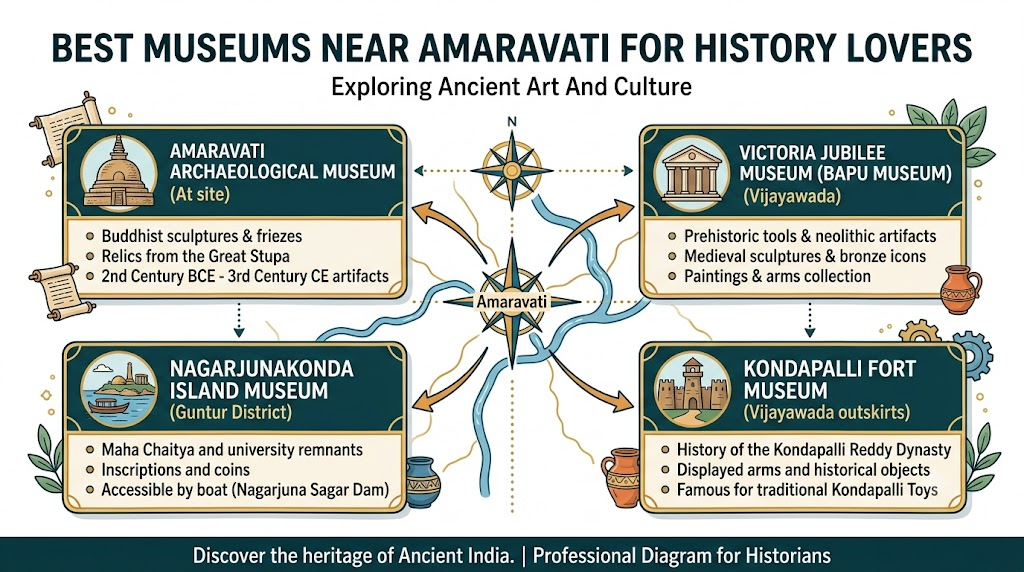
Amaravati Archaeological Museum
Located directly across from the historic site of the Mahachaitya Stupa, the Amaravati Archaeological Museum is managed by the Archaeological Survey of India (ASI) and holds one of the finest collections of Buddhist art in Asia. Spread across three indoor galleries and an open courtyard, this repository houses delicate limestone reliefs, inscribed stone pillars, and sacred relics gathered directly from ancient excavated ruins.
Walking through its halls, you will marvel at the mastery of ancient Satavahana sculptors. Highlights include carved drum-slabs portraying the original grandeur of the stupa, intricate Purnakumbha (vessel of abundance) motifs, and an imposing 8th-century bronze Buddha standing nearly life-sized. The outdoor gallery showcases reconstructed railings and carved friezes that vividly narrate tales from the Jataka fables.
- Location: Opposite Ambedkar Statue, Amaravati Village, Guntur District (~35 km from Vijayawada).
- Why it is worth visiting: It displays original 2nd-century BCE limestone carvings and intact structural relics from the Great Amaravati Stupa.
- Best things to do: Inspect the standing bronze Buddha in Gallery II, examine the Agniskanda (flaming pillar) panel, and view the reconstructed stupa railing model in the courtyard.
- Best time to visit: Between 10:00 AM and 1:00 PM for optimal natural lighting across outdoor exhibits.
- Ideal for whom: History buffs, archaeology enthusiasts, and scholars of Asian art.
- Travel tip: Photography rules are strict indoors; ensure you ask about camera passes at the ticket counter before entry.
Bapu Museum (Victoria Jubilee Museum)
Housed in a striking Indo-Saracenic structure built in 1887 to mark Queen Victoria’s Golden Jubilee, the Bapu Museum in nearby Vijayawada bridges ancient history with modern Indian art. Renamed in honor of the famed film director and artist Sattiraju Laxminarayana (Bapu), the museum features state-of-the-art climate-controlled galleries following a recent complete restoration.
The museum’s galleries trace the cultural evolution of the Krishna River Valley from the Paleolithic era through the Vijayanagara Empire and European colonial rule. Key exhibits display stone tools, ancient coins, Bidriware metalwork, European porcelain, and medieval weaponry. The lush surrounding gardens house an impressive open-air sculpture gallery featuring Jain Tirthankaras, Hindu deities, and Satavahana architectural pillars.
- Location: MG Road, Buckinghampeta, Vijayawada (~33 km from Amaravati core).
- Why it is worth visiting: It houses an expansive collection spanning pre-historic tools to royal Vijayanagara arms within a restored 19th-century colonial monument.
- Best things to do: Explore the ancient numismatic section, walk through the outdoor sculpture lawn, and view the historical tricolor flag design heritage associated with Pingali Venkayya.
- Best time to visit: Late afternoon (3:00 PM to 5:00 PM) to comfortably enjoy both indoor halls and garden displays.
- Ideal for whom: Families, culture lovers, students, and photography enthusiasts.
- Travel tip: Closed on Fridays; plan your urban Vijayawada routing accordingly to avoid missing it.
Kalachakra Museum and Interpretation Centre
Inaugurated in 2006 by the 14th Dalai Lama during the international Kalachakra initiation, this museum stands as a beacon of Vajrayana and Mahayana Buddhist philosophy. Situated close to the Krishna riverbanks, the interpretation center focuses specifically on the spiritual, cosmological, and artistic lineages that connected Amaravati with Tibet and East Asia.
Inside, visitors encounter detailed visual representations of the Kalachakra Mandala—symbolizing universe cycles and time—alongside restored Tibetan scroll paintings (Thangkas), bronze idols, and traditional ritual artifacts. Informative panels explain how monk-scholars traveled from this region across maritime routes to spread Buddhist teachings throughout East Asia.
- Location: Main Road near Ambedkar Statue, Amaravati Village (~2 km from town center).
- Why it is worth visiting: It offers an exclusive focus on Tibetan Buddhism and the esoteric Kalachakra Tantra philosophy rooted in Amaravati.
- Best things to do: View the intricate Kalachakra Mandala panels, read the historical exhibits on Tibetan-Andhra connections, and spend quiet moments in the landscaped courtyard.
- Best time to visit: 10:30 AM to 12:30 PM for a serene, uncrowded experience.
- Ideal for whom: Spiritual seekers, travelers interested in philosophy, and students of world religions.
- Travel tip: Combine this visit with the nearby Amareswara Temple and Mahachaitya in a single walking loop.
Undavalli Caves Rock-Cut Complex & Museum Site
Carved directly into a sandstone hillside during the 4th to 7th centuries CE, the Undavalli Caves are a masterclass in early Indian rock-cut architecture. Originally excavated as Buddhist monastery cells (viharas), they were later adapted into Hindu shrines under the Vishnukundina dynastic rulers. The main four-storied cave structure functions as an open-air architectural museum.
The crowning glory inside the cave complex is a massive 5-meter-long reclining statue of Lord Vishnu (Anantasayana Vishnu), sculpted out of a single piece of living granite on the second floor. As you explore the balconies, you will find carved pillars depicting scenes from the Ramayana, lotus medallions, and ancient Brahmi inscriptions that reveal centuries of monastic activity.
- Location: Penumaka – Vijayawada Road, Undavalli (~22 km from Amaravati core).
- Why it is worth visiting: A multi-layered 4-story monolithic cave temple showcasing seamless transition from Buddhist cave art to early Hindu monolithic sculpture.
- Best things to do: Marvel at the giant reclining Vishnu sculpture, climb to the top tier for panoramic Krishna River views, and examine the cave pillar friezes.
- Best time to visit: 8:30 AM to 11:00 AM to avoid mid-day heat while climbing cave stairs.
- Ideal for whom: Architecture enthusiasts, adventure travelers, and historical photographers.
- Travel tip: Wear slip-on shoes as footwear must be removed inside active shrine chambers along the cave tiers.
Kondapalli Fort Cultural & Heritage Interpretive Center
Perched on the Kondapalli Hill Range northwest of Vijayawada, Kondapalli Fort is a 14th-century citadel constructed by Prolaya Vema Reddy and expanded by the Qutb Shahi dynasty. The newly restored fort complex includes an on-site heritage museum that chronicles medieval fortification techniques, regional weaponry, and royal life in Andhra.
Beyond military history, the museum celebrates the centuries-old craft of Kondapalli Bommalu—hand-carved wooden toys made from local light Tella Poniki wood. Visiting the fort allows you to explore imperial granaries, the Gajashala (elephant stables), and the Zenana Mahal while gaining insight into how rural craftsmanship preserved medieval artistic traditions.
- Location: Kondapalli Village, Ibrahimpatnam Mandal (~40 km from Amaravati).
- Why it is worth visiting: Offers a rich blend of medieval military history, hilltop architecture, and authentic local toy-making heritage.
- Best things to do: Walk through the restored Dargah and Zenana Palace galleries, photograph the panoramic views of the valley, and watch artisan toy-makers at work in nearby Kondapalli village.
- Best time to visit: 3:00 PM to 6:00 PM to witness sunset from the fort ramparts.
- Ideal for whom: Heritage trekkers, handicraft lovers, and family groups.
- Travel tip: The hilltop road has winding turns; hire a local auto or driver experienced with hill ascents.
Baudhasree Archaeological Museum
Located in the heart of nearby Guntur city, the Baudhasree Archaeological Museum offers an intimate, highly focused look at Buddhist art and epigraphy collected across Guntur district. Though smaller than the main ASI museum, its curated exhibits contain extremely rare limestone inscriptions, terracotta figurines, and stone relics from sites like Nagarjunakonda, Bhattiprolu, and Chandavaram.
The museum is especially celebrated among historians for displaying early Brahmi script inscriptions that document royal donations to Buddhist monastic orders. Its quiet, studious atmosphere provides a serene space to examine delicate Satavahana pottery, ancient bronze idols, and intricate limestone carved panels without the crowds.
- Location: AC College Road, Kanna Vari Thota, Guntur (~32 km from Amaravati core).
- Why it is worth visiting: It holds rare regional epigraphical inscriptions and terracotta artifacts from lesser-known excavation sites across the Krishna basin.
- Best things to do: Study ancient Brahmi script inscriptions, inspect early Ikshvaku-era terracotta pieces, and view Satavahana coin hoards.
- Best time to visit: 11:00 AM to 2:00 PM.
- Ideal for whom: Epigraphy researchers, history enthusiasts, and quiet museum seekers.
- Travel tip: Combine this visit with a meal in Guntur town to sample authentic Andhra spice-infused local dishes.
Offbeat Exploration: Hidden Gems Tourists Miss
Ghantasala Buddhist Stupa Museum Site
Located roughly 60 km east of Amaravati near the coast, Ghantasala was once a thriving Roman maritime trade hub and Buddhist sanctuary. The local site museum displays excavated relief slabs, Roman gold coins, and unique brick stupa design models that prove ancient Andhra’s global trade connections with the Mediterranean.
Bhattiprolu Relic Stupa Center
Bhattiprolu is historical ground: it is where the Bhattiprolu Script—a direct ancestor of modern Telugu and southern Indian scripts—was discovered inscribed on stone relic caskets. Visiting the quiet excavation site and local collection gallery lets you stand where southern India’s written literary journey began.
Mogalarajapuram Cave Shrines
Tucked away in a residential neighborhood of Vijayawada, these 5th-century cave shrines receive a fraction of Undavalli’s visitors. The carved rock facades feature dynamic reliefs of Nataraja and Ardhanarishwara, offering a peaceful glimpse into early Chalukyan cliff sculpting.
Detailed Practical Guidance for Travelers
| Destination | Standard Entry Fee | General Timings | Best Local Food Options Nearby | Recommended Nearby Attractions |
| Amaravati ASI Museum | ₹10 (Indians) / ₹100 (Foreigners) | 9:00 AM – 5:00 PM (Closed Fridays) | Traditional Andhra Thali at local mess halls near bus stand | Amaravati Mahachaitya & Amareswara Temple |
| Bapu Museum | ₹10 (Adults) / ₹5 (Children) | 10:30 AM – 5:00 PM (Closed Fridays) | Punugulu street stalls on MG Road, Prakasam Barrage eateries | Kanaka Durga Temple, Prakasam Barrage |
| Kalachakra Museum | ₹10 (Indians) / ₹50 (Foreigners) | 10:00 AM – 5:00 PM (Closed Mondays) | Fresh tiffins (Idli, Dosa) near Amaravati Clock Tower | Dhyana Buddha Statue, Krishna River Ghats |
| Undavalli Caves | ₹25 (ASI ticket) | 9:00 AM – 5:30 PM (Open daily) | Highway dhabas serving Rayalaseema & Coastal Andhra specials | Prakasam Barrage, Seethanagaram Beach |
| Kondapalli Fort Museum | ₹20 per entry | 10:00 AM – 5:00 PM (Open daily) | Spicy chicken biryani and local sweets in Ibrahimpatnam | Kondapalli Toy Artisan Colony, Ferry Ghat |
| Baudhasree Museum | ₹10 per entry | 10:00 AM – 5:00 PM (Closed Fridays) | Iconic Guntur spicy Gongura Rice meals at Brodipet | Uppalapadu Bird Sanctuary, Kondaveedu Fort |
Logistics & On-Ground Navigation
Local Transport Options
- Auto-Rickshaws & E-Rickshaws: Excellent for short, intra-town distances within Amaravati town and Vijayawada city. Always agree on a fixed fare beforehand or insist on using digital ride apps where available.
- State Transit Buses (APSRTC): Frequent, budget-friendly buses connect Vijayawada Bus Station (PNBS) directly to Amaravati village and Guntur at 15-minute intervals.
- Car Rentals & Cabs: Hiring a private cab for a full day (8 hours/80 km) costs approximately ₹2,000–₹2,800 and offers the most seamless way to cover out-of-town spots like Kondapalli and Undavalli.
Budget Planning
Pro Tip: Entrance fees across ASI and state-managed heritage sites in Andhra Pradesh remain exceptionally affordable, making culture-focused itineraries light on your wallet.
- Backpacker / Budget Tier: ₹1,000 – ₹1,600 per day (Includes public transit, entry tickets, local tiffin dining, and budget guesthouse stays).
- Mid-Range / Comfort Tier: ₹3,200 – ₹5,500 per day (Includes private app cabs, mid-tier hotel accommodation, casual dining restaurants, and guided tours).
Safety and Inclusivity Tips
- For Families: Museums and sites like Bapu Museum and Undavalli have well-maintained lawns and paved paths, making them easy to navigate with children and seniors.
- For Solo Travelers & Couples: The region is warm, peaceful, and hospitable. Keep standard urban safety awareness during late hours around major transit hubs.
- Hydration Caution: Temperatures in the Krishna basin can rise quickly after 11:00 AM; always carry water bottles and wear brimmed hats during outdoor fort and cave explorations.
Strategic Travel Planning Guardrails
Travel Planning Tips for Amaravati
- Respect Museum Closures: Most state and ASI museums in this region are strictly closed on Fridays (with Kalachakra closed on Mondays). Structure your days carefully.
- Digital & Cash Balance: UPI payments are widely accepted at entry gates and city shops, but carry ₹500–₹1,000 in cash for rural auto rides and small fruit stalls.
- Footwear Prep: Expect frequent shoe removals when stepping into rock-cut cave shrines or sacred temple precincts adjacent to museums.
- Seasonal Timing: Schedule your visit between October and March to enjoy pleasant breezes along the river basin.
- Combine Destinations: Group Vijayawada-based museums (Bapu Museum, Undavalli) on one day, and rural Amaravati sites (ASI Museum, Kalachakra, Dhyana Buddha) on another.
Common Mistakes to Avoid
- Over-packing Itineraries: Don’t try to fit Kondapalli, Ghantasala, and rural Amaravati into a single afternoon; regional traffic and distances require realistic timing.
- Rushing Through Exhibits: ASI museums house intricate, detailed carvings; set aside at least 1.5 hours per museum to read curated plaques.
- Relying Only on App Cabs in Rural Zones: While Uber/Ola work seamlessly in core Vijayawada, booking return rides directly from rural Amaravati village can be tough—retain your driver for the return trip.
- Skipping Local Culinary Specialties: Avoid staying solely within hotel dining halls; miss out on street-side Punugulu or authentic Gongura Pachadi meals and you miss the soul of the region.
Suggested Itinerary Blueprints
1 Day Quick Dash (The Buddhist Heritage Express)
- Target Audience: Time-strapped travelers or weekend visitors based in Vijayawada.
- Morning: Depart Vijayawada early (8:00 AM) to reach the Amaravati ASI Archaeological Museum and adjacent Mahachaitya Stupa ruins by 9:00 AM.
- Mid-Day: Visit the Kalachakra Museum, followed by a short walk to admire the towering 125-foot Dhyana Buddha Statue. Enjoy an authentic Andhra thali lunch nearby.
- Afternoon: Drive back toward Vijayawada, stopping at the multi-tiered Undavalli Caves by 3:30 PM.
- Evening: Wrap up your trip watching the sunset over the Krishna River from Prakasam Barrage.
2 Day Deep-Dive (Imperial & Monastic Explorer)
- Day 1 (Buddhist Amaravati & Undavalli): Cover the rural Amaravati museum hub (ASI Museum, Kalachakra Center, Mahachaitya Stupa, and Amareswara Temple). In the afternoon, stop at Undavalli Caves before returning to Vijayawada for dinner.
- Day 2 (Vijayawada City & Citadel Heritage): Spend the morning touring the newly restored Bapu Museum. In the afternoon, drive out to Kondapalli Fort to tour its hilltop museum and buy hand-carved toys in the artisan village.
Complete Weekend Travel Plan (The Grand Krishna Basin Circuit)
- Friday: Arrive in Vijayawada. Spend a relaxing afternoon visiting Bapu Museum and enjoying evening tea along the river ghats.
- Saturday: Full-day excursion to Amaravati Village. Explore the Amaravati ASI Museum, Kalachakra Museum, and the quiet offbeat Buddhist collections at Baudhasree Museum in Guntur.
- Sunday: Morning visit to Undavalli Caves, followed by a scenic drive to Kondapalli Fort and its craft village, concluding with regional shopping on MG Road.
Common Tourist Mistakes to Avoid
Geographic Blunders
Attempting to group Ghantasala (far east) with Kondapalli Fort (far west) on the same day leads to hours trapped in transit. Keep your routing focused either along the Vijayawada-Amaravati river corridor or the eastern coastal heritage loop.
Commercial Traps
Spending precious afternoons in air-conditioned shopping malls in Vijayawada deprives you of the atmospheric charm of ancient sites like Undavalli Caves or the traditional toy-making lanes of Kondapalli.
Neglecting Modern/Alternative Zones
Don’t focus solely on ancient stone ruins! Take time to explore the peaceful modern waterfront developments along the Krishna River in new Amaravati and the vibrant cafe districts in Vijayawada’s Vijayapuri colony.
Transport Overpayment
Auto drivers waiting outside major transit hubs often quote inflated flat rates. Always cross-reference prices using ride-hailing apps or request local transit guidance from museum staff before paying upfront.
Luxury Dining Bias
Opting strictly for continental buffets in star hotels means missing out on legendary local culinary institutions. TheKrishna River basin is world-famous for its spicy, flavorful cuisine—embrace local tiffin centers and traditional mess halls!
Frequently Asked Questions
1. What is the single most important museum to visit near Amaravati?
The Amaravati Archaeological Museum (ASI) located in Amaravati village is the most critical. It directly displays original 2nd-century BCE carved marble reliefs, structural relics, and bronze sculptures excavated from the ancient Mahachaitya Stupa.
2. How far is Amaravati from Vijayawada city?
Amaravati village and its core archaeological zone sit approximately 35 kilometers west of Vijayawada city center. The drive takes roughly 45 to 60 minutes via the paved riverfront expressway.
3. Are museums near Amaravati open on all days of the week?
No. ASI and state government museums in Andhra Pradesh are typically closed on Fridays (e.g., Amaravati ASI Museum and Bapu Museum). The Kalachakra Museum is closed on Mondays.
4. Can I take photos inside the museums?
Still photography without flash is permitted in open areas and court yards, but indoor galleries often restrict photography or require a nominal camera permit purchased at the entrance counter.
5. Is the Bapu Museum suitable for visits with children?
Yes, the Bapu Museum in Vijayawada is exceptionally family-friendly, featuring wide open garden lawns, interactive historical exhibits, and well-lit galleries that appeal to all ages.
6. What is the historical significance of the Kalachakra Museum?
Inaugurated by the 14th Dalai Lama in 2006, the Kalachakra Museum highlights the deep historical ties between Amaravati’s Mahayana Buddhist heritage and Tibetan Buddhist traditions.
7. How much time should I dedicate to exploring the Amaravati ASI Museum?
Plan for at least 1.5 to 2 hours to comfortably browse all three indoor galleries and inspect the outdoor reconstructed stupa railings.
8. Are wheelchairs available at these heritage sites?
Major upgraded facilities like the Kalachakra Museum and Bapu Museum feature ramped entryways and basic wheelchair access. However, rock-cut sites like Undavalli Caves require climbing stone stairs.
9. What is the best season to plan a heritage trip around Amaravati?
The ideal window is from October through March. During these winter months, temperatures stay comfortable, making outdoor explorations and museum gardens very pleasant.
10. Do I need to book entry tickets online in advance?
While cash/UPI entry tickets are readily available at the gates, ASI tickets for sites like Undavalli Caves and the Amaravati ASI Museum can also be conveniently booked online via the official ASI portal to skip queue lines.
11. Is public transport readily available between museums?
APSRTC public buses run frequently between Vijayawada, Amaravati village, and Guntur. However, for multi-museum itineraries including Kondapalli, hiring a private taxi for the day is recommended.
12. What souvenirs should history lovers buy when visiting Amaravati?
Look for authentic hand-carved wooden Kondapalli toys, local handloom textiles, and miniature replicas of the Buddhist Purnakumbha or lotus medallion motifs crafted by regional artisans.
Conclusion
Choosing a heritage journey through Amaravati and the Krishna River valley rewards you with far more than standard holiday snapshots. Standing before intricately carved 2,000-year-old marble panels, stepping into cool rock-cut cave sanctuaries, and walking through tranquil museum gardens grounds you in an ancient, timeless story of human artistic brilliance. This isn’t just travel—it’s a meaningful bridge across centuries, offering profound artistic inspiration, quiet reflection, and an unforgettable encounter with South India’s cultural soul.
